


INTERNATIONAL. A new report from Kinetic Consultancy has been released, gauging the opinions of an international group of professionals on how commercial contracts at high-traffic locations will look in the reshaped business landscape after COVID-19.
The study – with nearly 50% of respondents directly linked to the airport sector – addresses how the nature and duration of commercial contracts may change and looks at how agreements between high-traffic commercial partners may evolve.
The focus of the wide-ranging report – Shaping high-traffic commercial contract strategies in a fast-changing world – is on issues related to commercial agreements facing airports, rail and public transport, shopping centres and other areas with overlapping business dynamics.
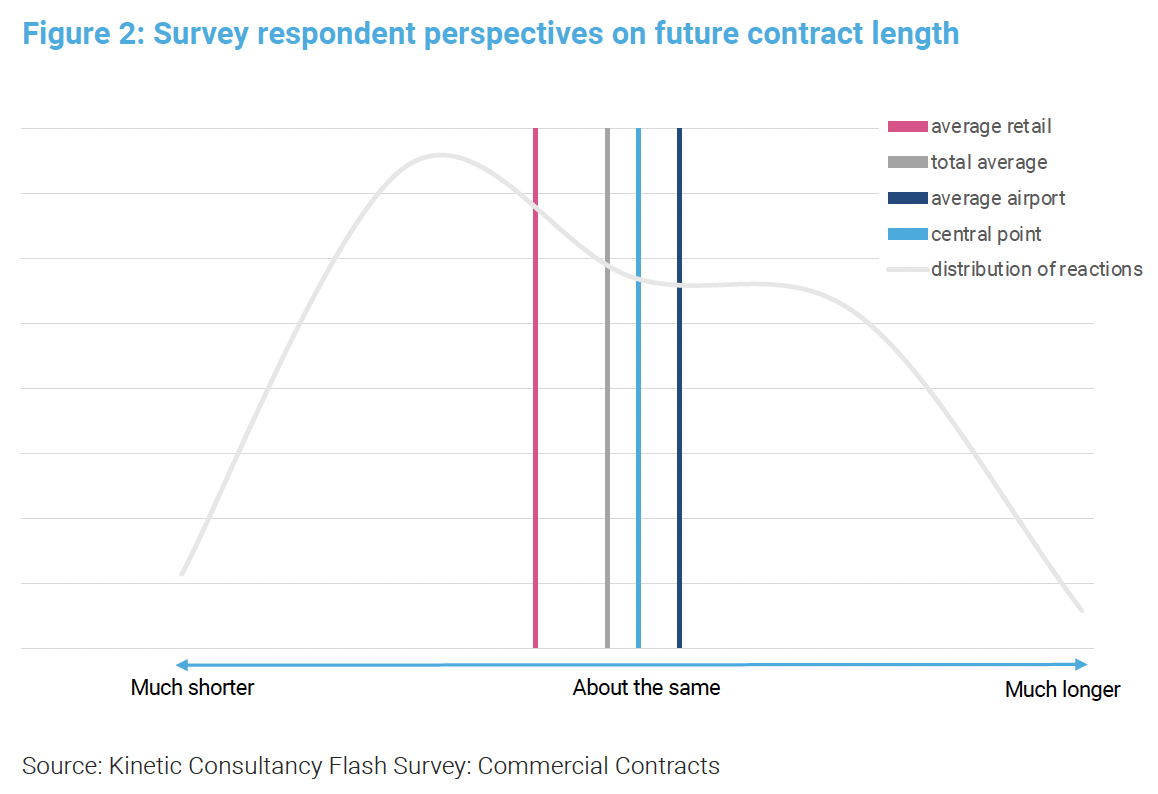
Asked about the future duration of commercial agreements, on average airport professionals believe that contract lengths will increase. That significantly differs from professionals directly involved in the retail industry who on average believe that commercial contract lengths will shorten.
“When looking at contract length from a financial perspective it is logical to think that when the debt increases and the ability to pay back each month does not, that total length needs to increase” – Kinetic Consultancy Managing Director Martijn Steur
In the report, Kinetic Consultancy observes that shorter retail contracts are already much in evidence, spurred by an ongoing pop-up trend that has been fuelled by the pandemic.
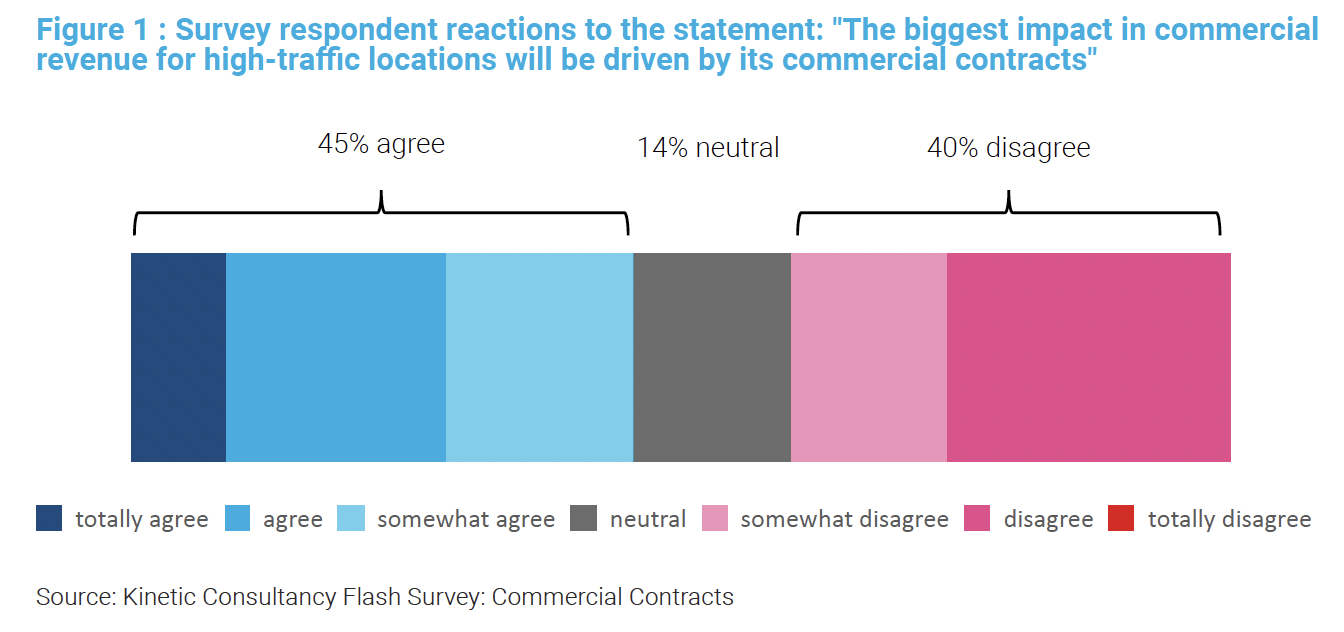
Survey respondents were asked about the role of commercial contracts and their impact on commercial revenue for high-traffic locations. Some 45% agreed that contracts would be the major shaper of revenues, 40% disagreed and 14% gave a neutral response (see chart above).
The report goes on to discuss in detail the key commercial contract areas of investment responsibilities and contract flexibility, with a particular focus on airports.
Co-author Martijn Steur, Managing Director of Kinetic Consultancy, said: “COVID forced real estate owners and operators to be more flexible in write-offs and in payments. These actions were necessary but also resulted in a higher debt and an uncertainty leading to a longer duration required to earn back lost income and pay those debts, which in turn will require longer contracts.
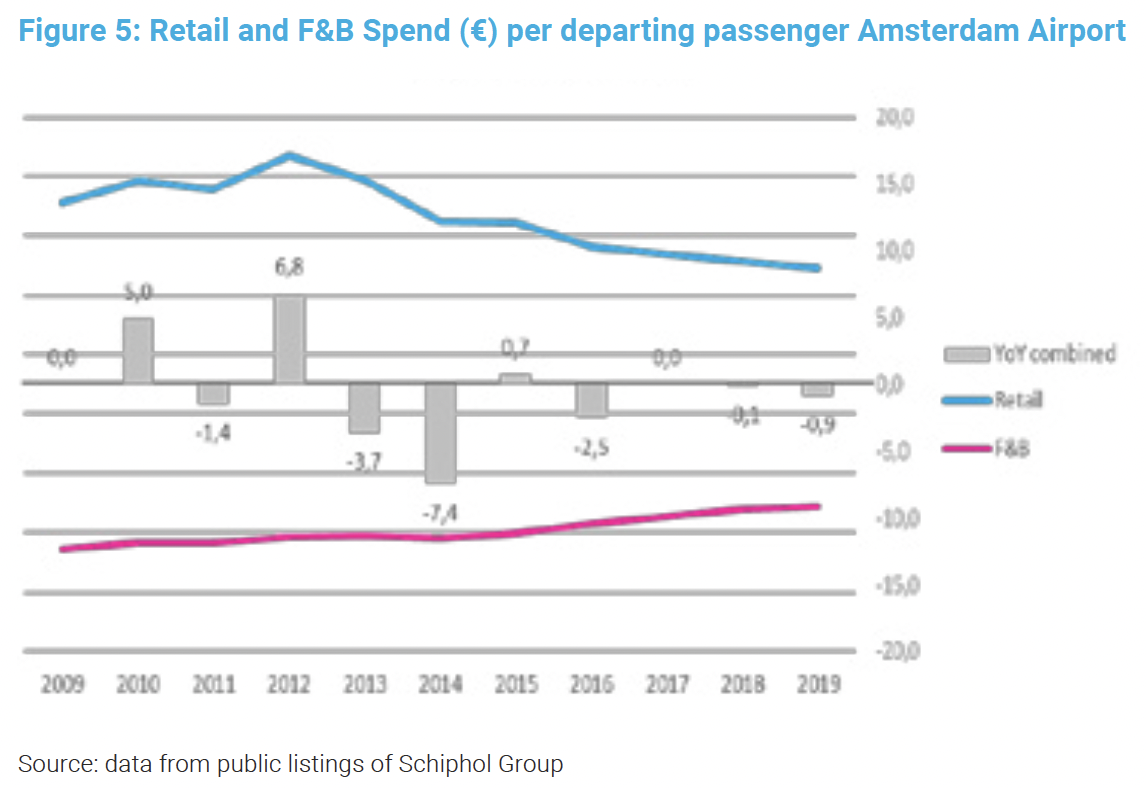
“Revenue growth for many high-traffic locations has been dependent on visitor and passenger growth. Revenue per passenger for most airports, for example, is under great pressure. There seems to be a difficulty monetising the once unique retail offer of combining big brands and a large audience, towards a customer base that has all the products one click away at home and on the go.
“The demise of this retail revenue is offset only partially by an increase in customer spending on direct consumable goods. When looking at contract length from a financial perspective it is logical to think that when the debt increases and the ability to pay back each month does not, that total length needs to increase.”
On the subject of contract flexibility, Steur said: “Slowly, commercial contracts are moving away from just the transactional towards a more purposefully ‘experience design’ perspective, including a more holistic approach to the location.”
Asked about the most prominent shift they believe they will see in high-traffic commercial contracts in the future, the two options most selected by survey respondents were ‘the increasing number of partnerships through, for instance, joint ventures’ (42%) and ‘the increasing use of a more flexible rent base’ (39%).
The report also explored a potential new revenue area for high-traffic locations such as airports, with survey respondents giving views on data sharing as a driver in commercial contracts. The most popular view (59%) was that they would be a part of future contractual agreements.

The second most selected view was that data will ‘be a primary source of value creation between partners’ (22%), underlining the probability that data/data sharing will be a central element of future commercial contract agreements.

The report also notes an alternative opinion, in that almost 20% of survey respondents believe that this sharing of data will not happen in the next five years and some question if it will happen at all.
Several case studies pertinent to the airport retail industry appear in the report, with focuses on Incheon International Airport, Schiphol Airport Retail and travel retailer Gebr Heinemann.
The report’s co-author, Kinetic Consultancy Business & Insights Consultant Juriaan van Waalwijk, said: “There is nothing like a deep crisis to prompt taking a good hard look at the things we have always done and see if they still make sense.”
He added: “A sense of urgency has been created to start moving and innovating for both landlord and retailer and we have set out with our report to highlight what the nature of these changes needs to be.”
Steur gave his view on what lies ahead for high-traffic location commercial contracts: “There is no cookie-cutter solution. Most likely, more than ever before we’ll see multi-faceted solutions for commercial contracts and partnerships. New solutions are emerging next to existing models.”