
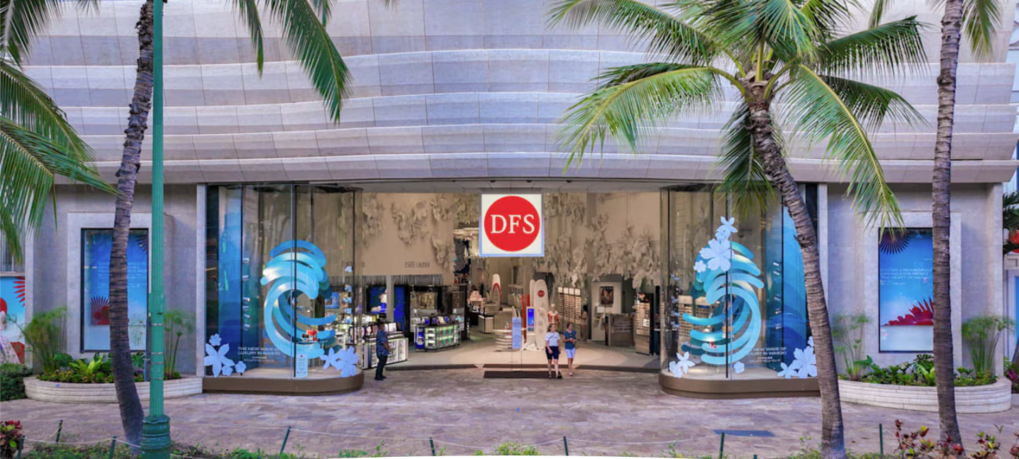
HAWAII, USA. DFS Group has decided to quit its long-standing Hawaiian downtown and airport business, bringing the curtain down on one of the most remarkable chapters in travel retail history.
The move is in line with a review of the company’s global store network revealed by Chairman & CEO Ed Brennan in an interview with The Moodie Davitt Report in November 2024 and underlines how profoundly trading conditions have changed in Hawaii over recent years.

The company said, “After 63 remarkable years in Hawaii, DFS has made the difficult decision to exit the market.
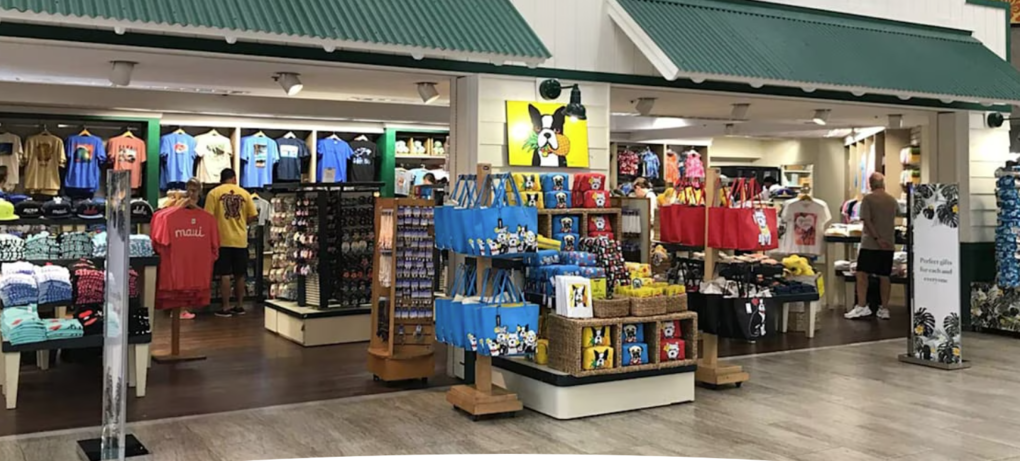
“We will close our Waikiki downtown store on January 28 and our Honolulu International Airport store on March 31. Our lease at Kahului Airport will end on August 31 with the last day of trading to be determined.
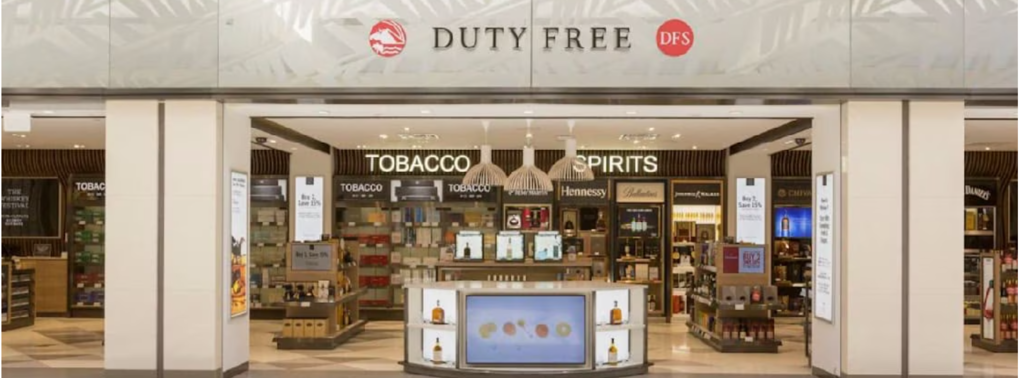
“Hawaii has played a significant role in DFS’ history since we opened our Honolulu airport store in 1962 – the first duty-free shop in the US, establishing DFS as a leader in travel retail. Our downtown store in the heart of Waikiki has also been our home in Hawaii for decades, and we extend our best wishes for the next evolution of growth realised in Waikiki in the coming years.
“We extend our heartfelt gratitude to our employees in Hawaii, many of whom have long tenures with DFS and have returned after DFS Waikiki’s post-COVID reopening. Their dedication has underpinned our success, and we are committed to supporting them through this transition.
“We also thank our partners and customers for their trust and support over the decades. The relationships we have built are integral to DFS’ legacy in Hawaii.”
DFS said it is committed to providing exceptional service to customers in Hawaii until the company’s last day of operations.
 A golden era draws to a close
DFS’s decision to quit its Hawaii business is a momentous – and poignant – one seen in an historical context, writes Martin Moodie.
As documented in Miller’s Tale, my biography of DFS Co-Founder (and still significant minority shareholder) Robert (‘Bob’) Miller, the young entrepreneur was alerted to a forthcoming public tender for an airport duty-free store by an old Cornell Hotel School friend, Honolulu-based Peter Fithian, in the spring of 1962.
With just a week to prepare a bid, Miller and fellow Co-Founder Charles (‘Chuck’) Feeney worked around the clock to gather the necessary documents and calculate what they hoped would be a winning offer.
Miller took the long flight from Hong Kong, landing just in time to submit the proposal – as Tourists International Sales Ltd. Against long odds, the company secured the business, offering the Hawaii Department of Transportation a minimum annual guarantee (MAG) totalling US$146,000 over the full five-year contract commencing 1 January 1963.
The first full year MAG was US$24,500 peaking at US$32,000 by 1967 – at the time big, life-changing amounts for Miller and Feeney.
While Japanese tourism to Hawaii was in its infancy, the far-sighted young businessmen recognised its vast potential, knowing that the few Japanese who did come were hungry to buy branded liquor, beauty and luxury products that were punitively taxed at home.
Just how hungry, Miller and Feeney would discover over a golden period in the history of what would soon become Duty-Free Shoppers.

Prior to 1964 the Japanese government had imposed severe foreign travel restrictions, only allowing exemptions for businessmen, government officials, study missions and sporting teams.
But from 1 April that year – in anticipation of the Tokyo Olympics in October 1964, every Japanese citizen was free to travel overseas. What had been a mere trickle of tourists quickly became a flood. In 1964, just 127,749 Japanese citizens travelled abroad, a number that had rocketed to 2.3 million within nine years. And it just kept on rocketing.
In Honolulu and Hong Kong (where the company was operating at the old Kai Tak International Airport), Duty-Free Shoppers was there to greet them with the likes of Kent cigarettes, Courvoisier Napoleon Cognac and the biggest seller of all, Johnnie Walker Black Label Scotch whisky, or ‘Johnnie Kuro’ as it was dubbed.
With Japanese inbound duty-free allowances generous — by now increased to six bottles of spirits — the modest Honolulu airport shop couldn’t cope with the influx of Japanese shoppers, especially at key festive periods such as Oseibo and Ochugen (winter and summer gift giving).
The company needed a downtown store and duly got one in the form of a 900sq ft space in the Waikiki Business Plaza — slap bang on top of the local headquarters of Japan Airlines, the retailer’s biggest source of customers. Over the ensuing two-plus decades, DFS’s business both on-airport and downtown kept on growing.
However, the liberalisation of the Japanese domestic market in the 1990s — accompanied by softer travel retail spending — allied to a plethora of discount stores in Honolulu began to erode this long-time powerbase.
There were still some high points, notably in January 2001 when DFS opened a US$65 million Waikiki store on the corner of Kalakaua Avenue and Royal Hawaiian Avenue, a literal landmark within an extraordinary retail narrative that today’s announcement brings to a close. ✈