

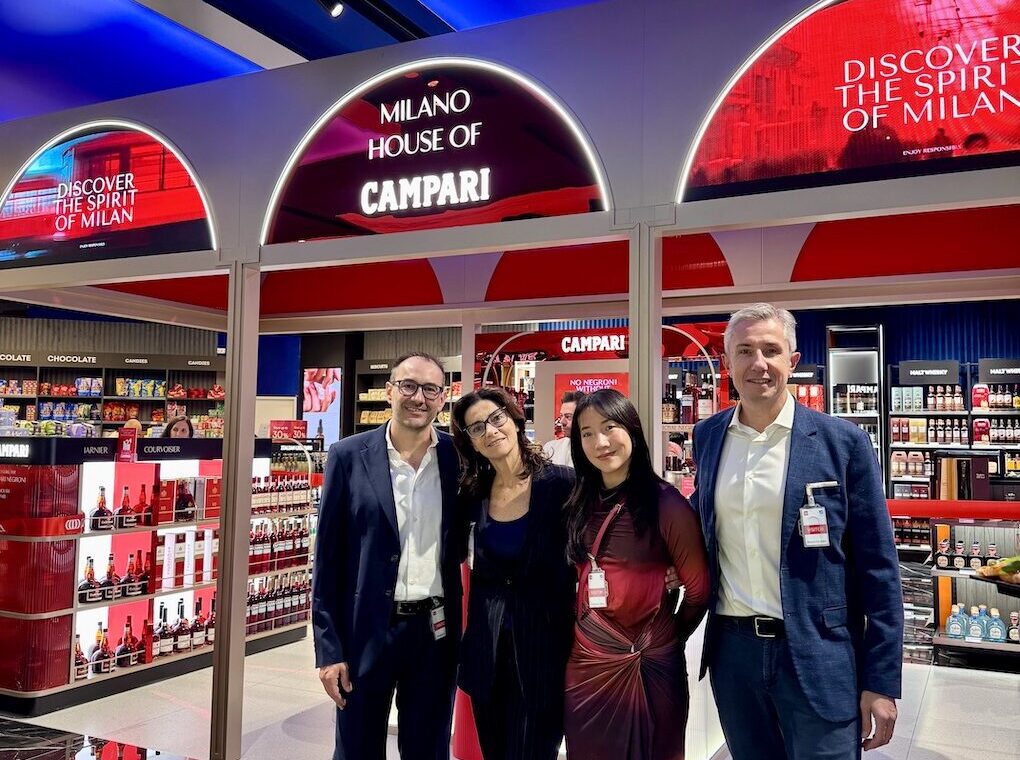
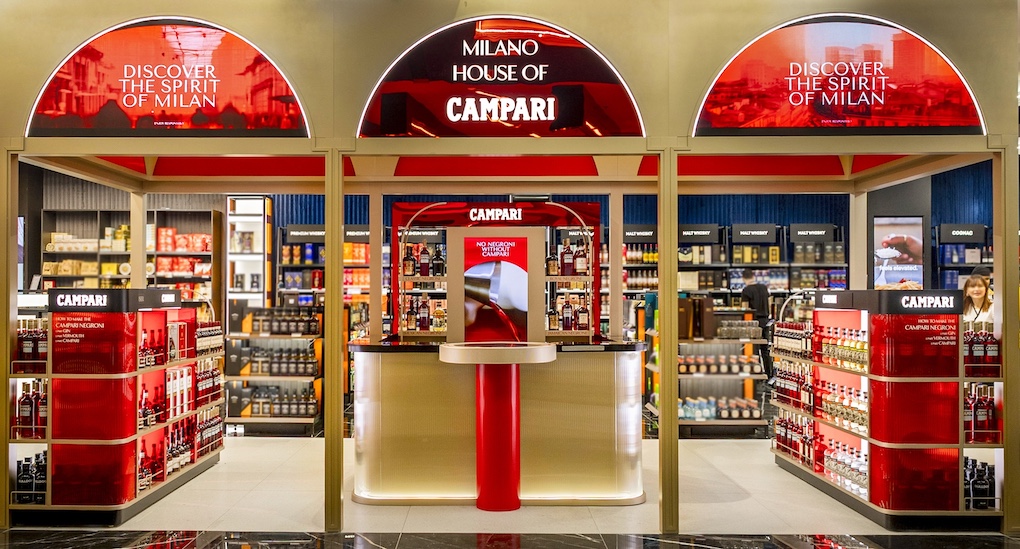
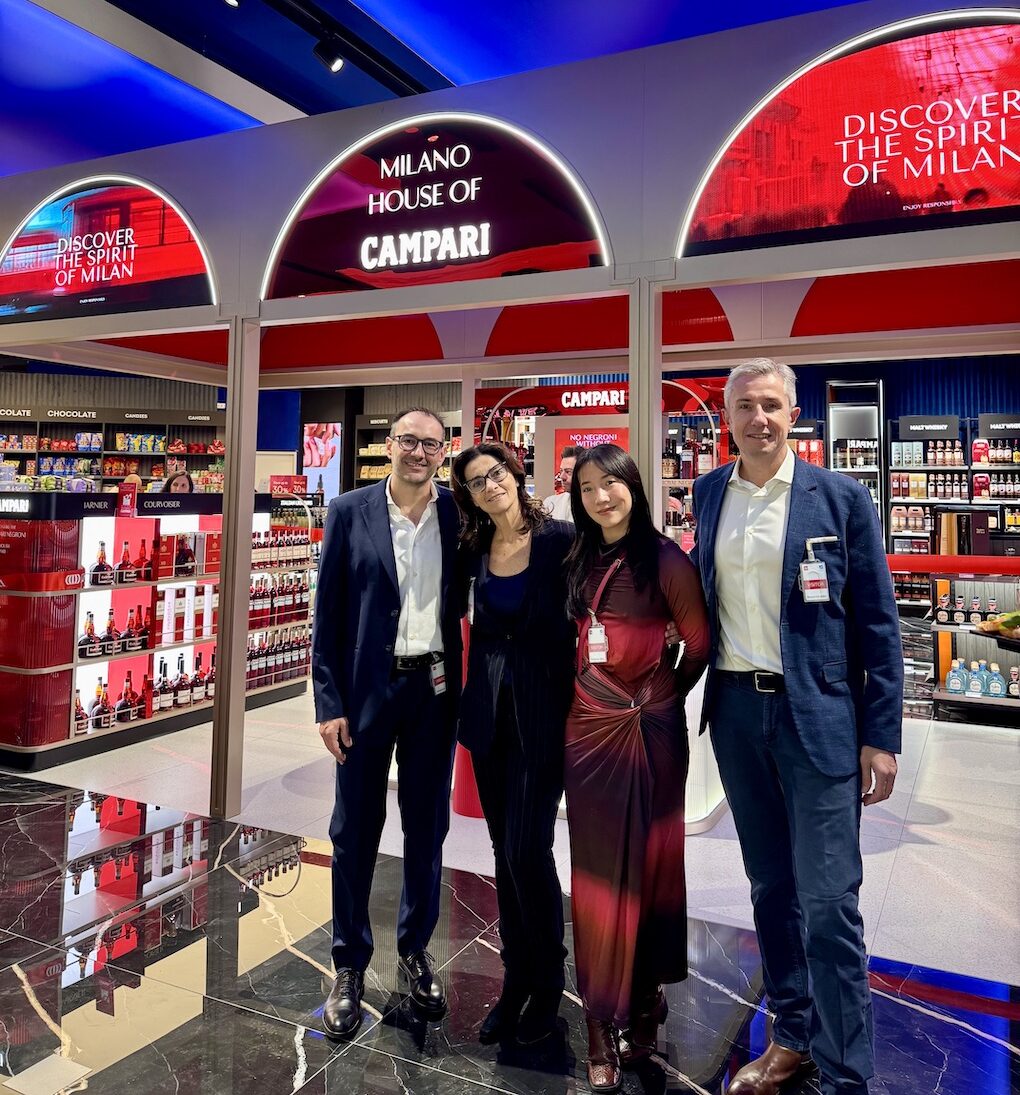
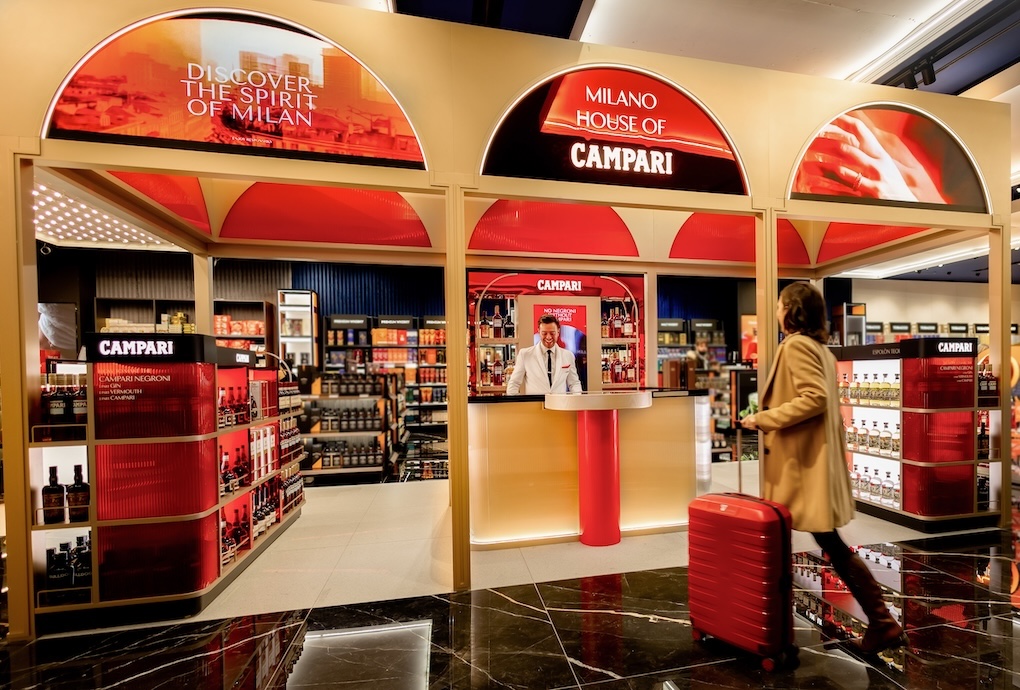
Introduction: ‘There’s no Negroni without Campari’. That statement is at the heart of the Milano House of Campari, Campari Group’s latest shop-in-shop at Malpensa Airport.
Rooted in Milanese design codes and aperitivo rituals, the concept positions Campari not only as an integral part of Negroni and Italian cocktail culture, but as a strategic gateway into the wider Campari Group portfolio.
In this Q&A, Campari Group Global Strategic Travel Retail Managing Director Marco Cavagnera and Global Head of Marketing & Customer Channel Marketing Director Biancamaria Sansone outline how the concept leverages Negroni culture to drive education, discovery and multi-brand exploration. The discussion also explores the role of digital infotainment in extending dwell time and engagement, and the shift towards hybrid retail and food & beverage concepts in travel retail.
Crucially, the duo frames travel retail as an important brand-building platform where sense of place, experience and portfolio storytelling converge. In this view, the Milano House of Campari becomes both a symbolic homecoming and a blueprint for future activations, using the Negroni as a tool to maximise synergies within the Campari portfolio.
The Moodie Davitt Report: Let’s talk about the inspirations and key themes of the Milano House of Campari. How are Milan’s aperitivo culture, architectural and cultural heritage reflected in the space.
Biancamaria Sansone: The shop-in-shop clearly recalls Milanese style in both look and feel. The design is clean, refined and premium, expressing Milan’s effortless sophistication and elegance. This is rooted not only in art and design, but also in fashion, for which Milan is globally known.
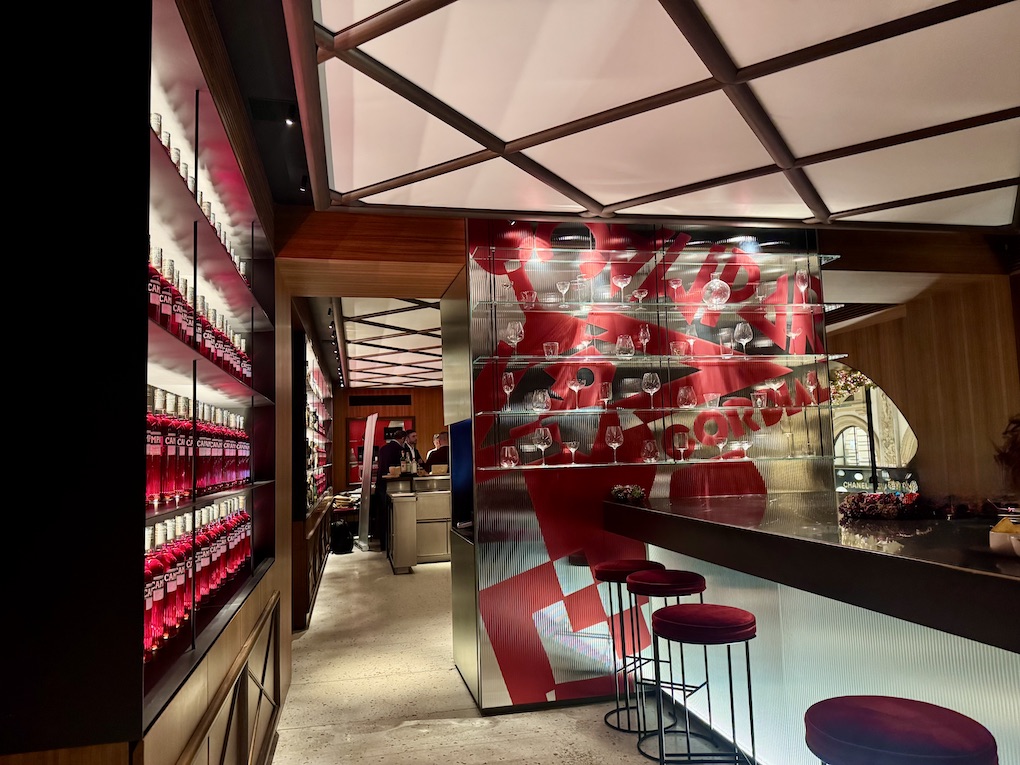
The intention was to recreate that environment while anchoring it in a core Italian ritual: aperitivo. This is brought to life through the central bar, which recalls our historic Camparino in the Galleria in terms of aesthetics, proposition and experience.
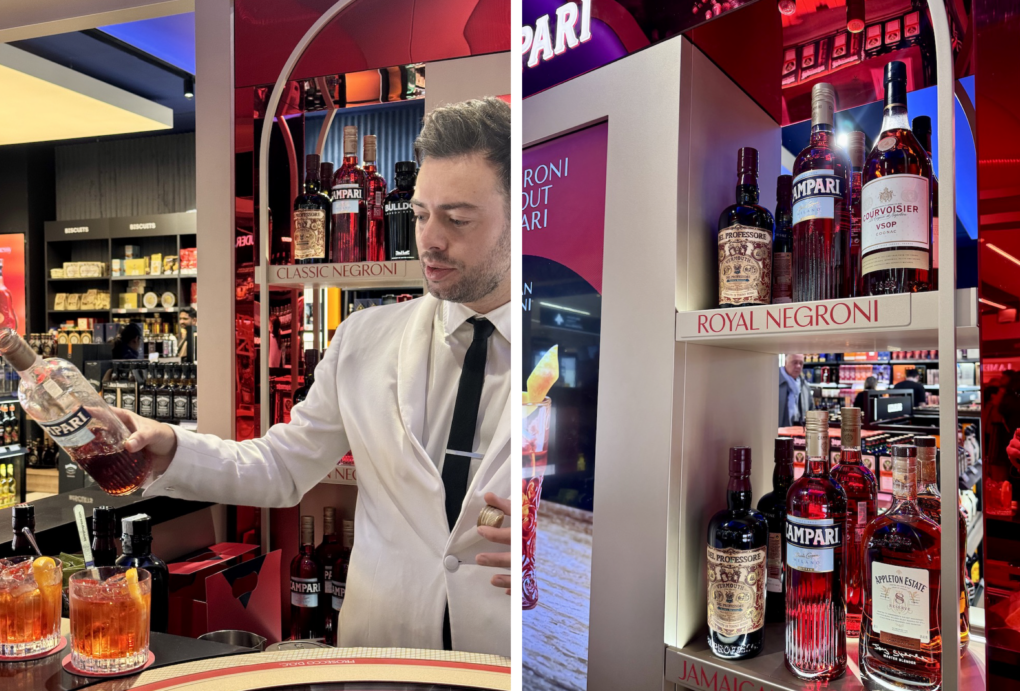
The space is designed to offer travellers a final ritual moment before continuing their journey. At the centre is the Negroni platform, where we showcase the drink as an iconic Italian cocktail. From the classic serve – Campari, gin and vermouth – we introduce multiple twists, offering travellers fresh interpretations of a timeless cocktail.
Marco Cavagnera: We wanted to offer something deeply rooted in Milanese culture and in Campari’s DNA: the aperitivo ritual. Our vision is for travellers to browse, stop by and discover something new, whether it’s the Negroni, our Negroni platform, or learning to recreate Negroni cocktails at home and exploring how they can be twisted with just one ingredient.
Ultimately, we hope they take home a small, authentic piece of Milan with them, no matter where they are returning to.
We’ve talked a lot about the Negroni and how Campari sits at the heart of Negroni culture. The shop-in-shop reinforces that leadership, particularly through the message ‘There’s no Negroni without Campari’. How does the space bring that message to life?
Marco Cavagnera: ‘There’s no Negroni without Campari’ is simply a fact. If you look at the recipe, Campari is essential alongside gin and vermouth. Without Campari, by definition, there is no Negroni.
This is a powerful platform for the brand. The Negroni is the number one classic cocktail globally (source: Drinks International), which gives us a very strong opportunity. It was central to the concept when we developed the shop-in-shop.
The Negroni also demonstrates how easy it is to make delicious cocktails at home as it is made with three ingredients, ice and garnish. It is also easy to personalise by changing just one element. This makes the Negroni a gateway not only to Campari, but to the wider Campari Group portfolio.
Through variations such as the Royal Negroni, the Mexican Negroni, the Negroni Sbagliato or the Jamaican Negroni, we showcase premium and super-premium brands across categories. This reinforces Campari’s central role in the cocktail while opening up exploration of the wider portfolio.
What other Campari brands are featured in the Milano House of Campari? Can you elaborate more on how the Negroni Twists promote a wider exploration of the group’s portfolio?
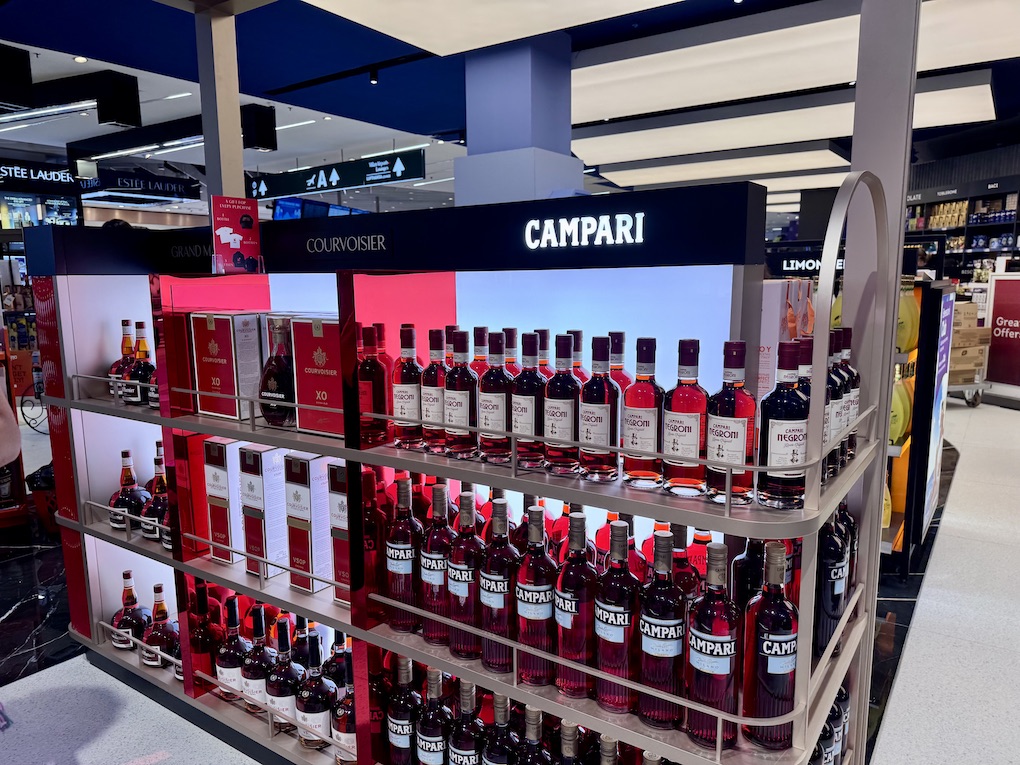
Marco Cavagnera: We featured Espolòn tequila, a key priority for us. Courvoisier Cognac is another major focus following the acquisition and features in the Royal Negroni.
Appleton Estate rum, the key ingredient in the Jamaican Negroni, has strong potential in travel retail. Rum can be a challenging category for consumers due to varying regulations across Caribbean countries. Appleton Estate stands out because of its transparency and strong credentials, such as minimum age statements and tropical ageing. Consumers can read it using similar codes to Scotch or single malts, which helps in terms of education and positioning.
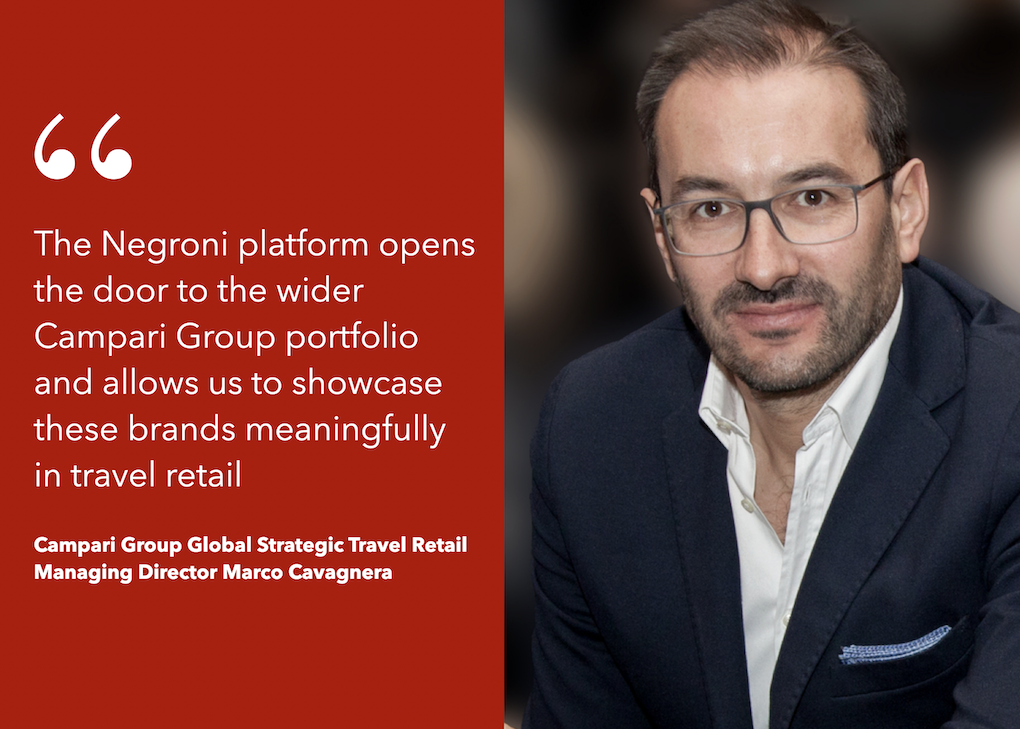
This is why the Negroni platform works so well. It opens the door to the wider Campari Group portfolio and allows us to showcase these brands meaningfully in travel retail.
Biancamaria Sansone: This spirit of exploration is highly relevant in travel retail, where consumers are open to discovery.
The Negroni Twist concept aligns closely with our ‘educate to explore’ approach, inviting consumers to experience the versatility of Campari. By changing the supporting spirit, you move from the classic Negroni to a Royal Negroni with Courvoisier, to a Mexican Negroni with Espolòn tequila, to deeper expressions with Jamaican rum, or to a Negroni Sbagliato.

Education clearly plays a big role, especially when encouraging portfolio exploration. What part does digital interactivity have in supporting that?
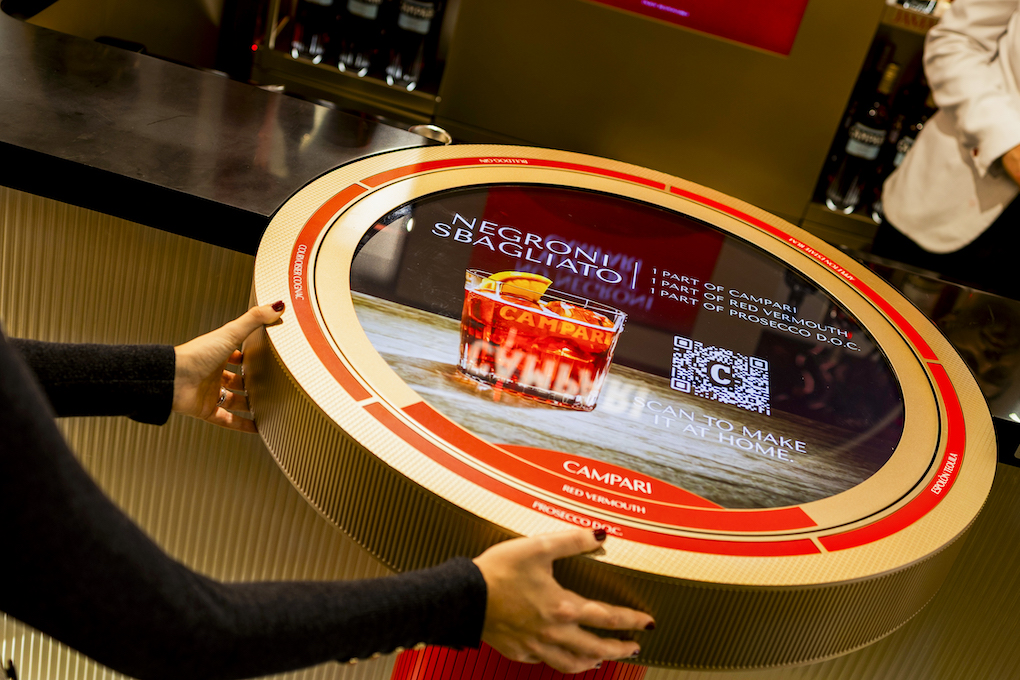
Biancamaria Sansone: Digital plays a key role, particularly from an educational perspective. We refer to it as infotainment. Around the central Negroni platform, digital elements support immersive and interactive experiences while educating in a natural way.
This also helps extend dwell time in the shop, creating opportunities to engage, educate and entertain travellers before departure.
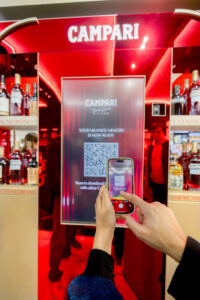
How are you communicating the concept before travellers arrive, and how do you maintain engagement after they leave?
Biancamaria Sansone: We are adopting an omnichannel approach, with the physical shop at the centre. Digitally, we aim to engage travellers throughout the journey.
With Avolta, we are exploring pre-trip invitations to visit the shop. In-store, the Negroni experience is complemented by photo and video opportunities, allowing travellers to take photos and share them on social media.
Beyond the store, we engage travellers through different touchpoints across the journey, including destination and post-trip moments. The experience is phygital, modular and designed to connect with travellers at key stages.
What does this shop-in-shop signal for your activation strategy moving forward?
Biancamaria Sansone: We are constantly experimenting and taking a dynamic approach to how we interact with travellers both physically and digitally.
The LATAM Aperol takeover is a good example, where we engaged travellers pre-flight, during the flight and at destination, offering local tips and experiences. When travellers return home, we invite them back into our ecosystem through retail and on-trade moments.
Marco Cavagnera: The power of our brands plays a key role. Aperol, for example, is a love brand. People naturally gravitate towards it.
These activations work because they are part of a broader omnichannel journey that already exists in domestic markets. Campari was born in a bar and so the on-trade is in our DNA. Travel retail simply becomes another natural extension of that ecosystem.
The Milano House of Campari is the result of your great Trinity partnership with Avolta and Milan airports. Can you tell us about the journey from idea to execution?
Marco Cavagnera: The original idea actually came from Avolta. During portfolio presentations in Madrid last year, we discussed Campari activations, mainly from domestic markets, and Avolta highlighted a refurbishment opportunity at Malpensa.
From there, we worked together to develop the concept and so our partnership with Avolta was crucial in bringing this to life.
Biancamaria Sansone: Developed in close partnership with Avolta, the concept strengthens our Negroni leadership with a setting that pairs authentic local design with digital tools created to drive discovery and creativity. The opening reinforces our ambition to curate culturally relevant experiences in travel retail that introduce travellers to the versatility and diversity of Campari’s world of aperitifs and spirits.
This project reflects the growing hybridisation of food & beverage and retail. For both Avolta and Campari, the opportunity lies in creating immersive, emotional connections rather than purely transactional retail.
This project is the physical expression of that shared journey, developed side by side and brought to life together.

Aside from sales, what are the key success metrics for this project?
Biancamaria Sansone: Equity building is key as is strengthening the connection between Campari and Milan. Equally important is traveller satisfaction and engagement.
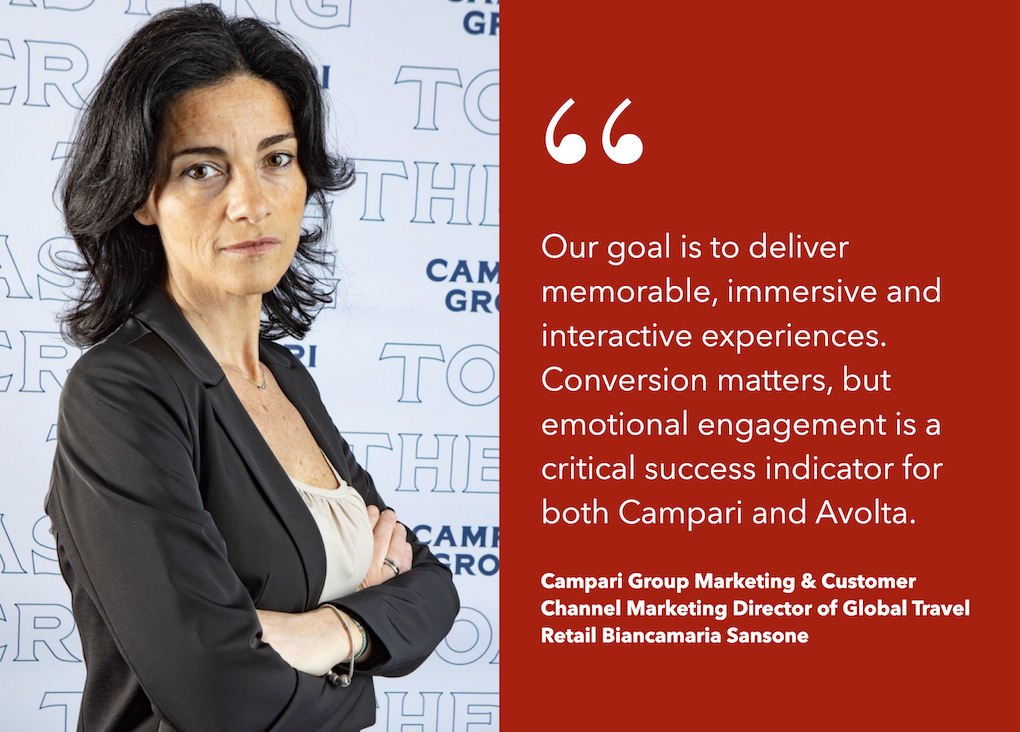
Our goal is to deliver memorable, immersive and interactive experiences. Conversion matters, but emotional engagement is a critical success indicator for both Campari and Avolta.
Given current market conditions, what does this investment say about Campari’s confidence in travel retail?
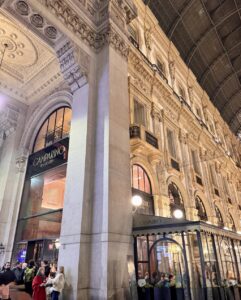
Marco Cavagnera: This is our tribute to Milan, home to Campari since 1860. Campari was born in the Galleria Vittorio Emanuele II and the city remains a major source of inspiration for us. It is part of a long-term mission to strengthen Campari’s links to Milan. The shop-in-shop at Malpensa is an investment in Milan, our home.
For us, travel retail presents significant opportunity to build on that. Consumer expectations are evolving and we believe our portfolio is well positioned to address new demands, particularly among younger travellers. Investing in travel retail now reflects our confidence in long-term returns aligned with clear market trends.
View this post on Instagram
Do you see growing demand for cocktail-led brands and experiences in travel retail?
Marco Cavagnera: Definitely, as there are still many markets where cocktail brands are under-represented.
In my view, Aperitivo culture offers a perfect bridge. Consumers are increasingly seeking experiences rather than just gifting our high-priced bottles. Cocktails and mixology offer a strong entry point, while F&B can also help drive retail penetration.The growth of hybrid F&B and retail concepts in travel retail supports this.
Finally, now that this has opened, what are your next priorities?
Marco Cavagnera: In terms of portfolio Campari remains a core focus, alongside our other brands Espolòn tequila, Wild Turkey bourbon, Appleton Estate rum and the recently acquired Courvoisier Cognac.
We also have another brand launching its first-ever travel retail-exclusive range in Asia next year. This underlines how important travel retail is in building both brands and categories for the group.
Biancamaria Sansone: I am totally aligned with Marco. Aperitivo opens the door, the acquisition of Courvoisier has expanded the portfolio, and the rest of our brands complement the journey. Some are currently regional, but the ambition is global expansion over time. ✈
View this post on Instagram