

Introduction: Heathrow Airport Retail Director Fraser Brown confirmed the airport has signed a multi-year contract extension with Pret A Manger across its estate and will, for the first time, introduce a flagship Pret shop in Terminal 5 Arrivals this summer. The move brings Pret’s total presence at Heathrow to nine outlets and positions grab-and-go food more firmly as a core component of the airport’s commercial strategy.
The airport’s decision to extend and deepen its relationship with Pret A Manger reflects a broader shift in how the London gateway is thinking about food & beverage: less about novelty and spectacle, and more about scale, speed, consistency and operational discipline – all framed around improving the passenger journey.
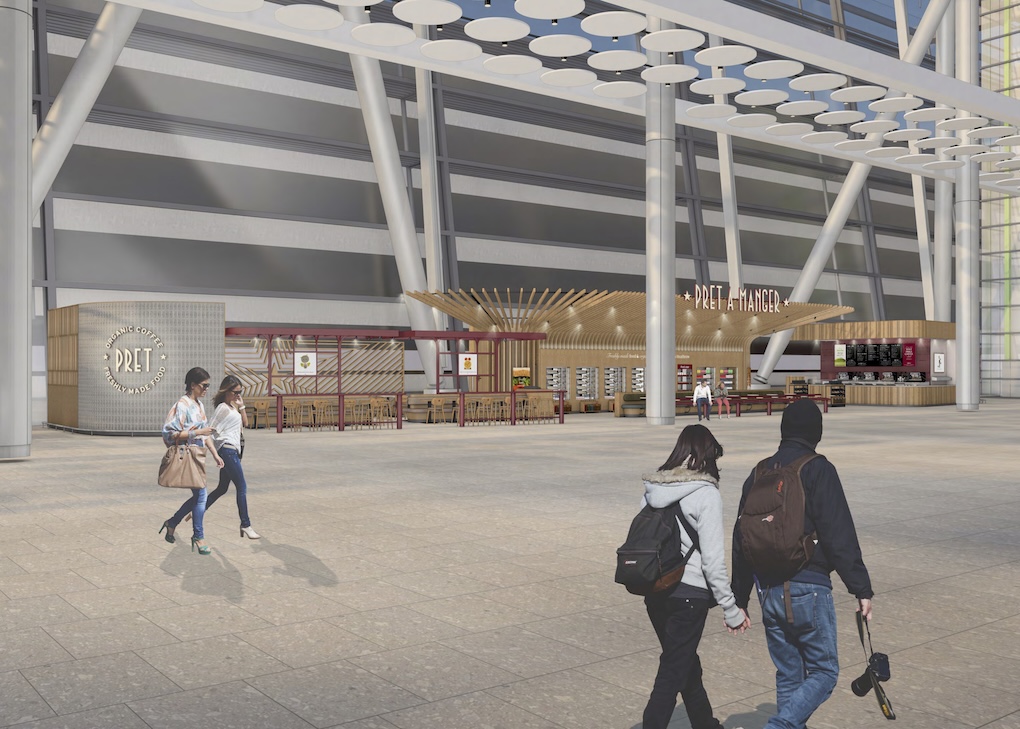
“For the first time, we’ve got a big Pret coming to an arrivals area,” Heathrow Airport Retail Director Fraser Brown says. “Terminal 5 is one of Europe’s busiest single terminals, making arrivals there a prime location. We’re very excited to have Pret in that space.”
Pret a Manger CEO Pano Christou adds: “We’re delighted to be growing our partnership with Heathrow. Airports are a natural home for Pret, allowing us to reach more customers looking for freshly made food and fast, friendly service while they travel.
“Expanding in major travel hubs is a key part of our growth strategy in the UK, and there’s no better place to do that than one of the world’s busiest airports. We look forward to welcoming customers to our new Terminal 5 Arrivals shop very soon.”
From contract to capability
Brown describes the agreement as having two distinct elements. “Firstly, we’re reaffirming our relationship with Pret by signing a multi-year contract extension across terminals. The second is that we’re bringing Pret into arrivals at scale for the first time, which is an important development for us.”
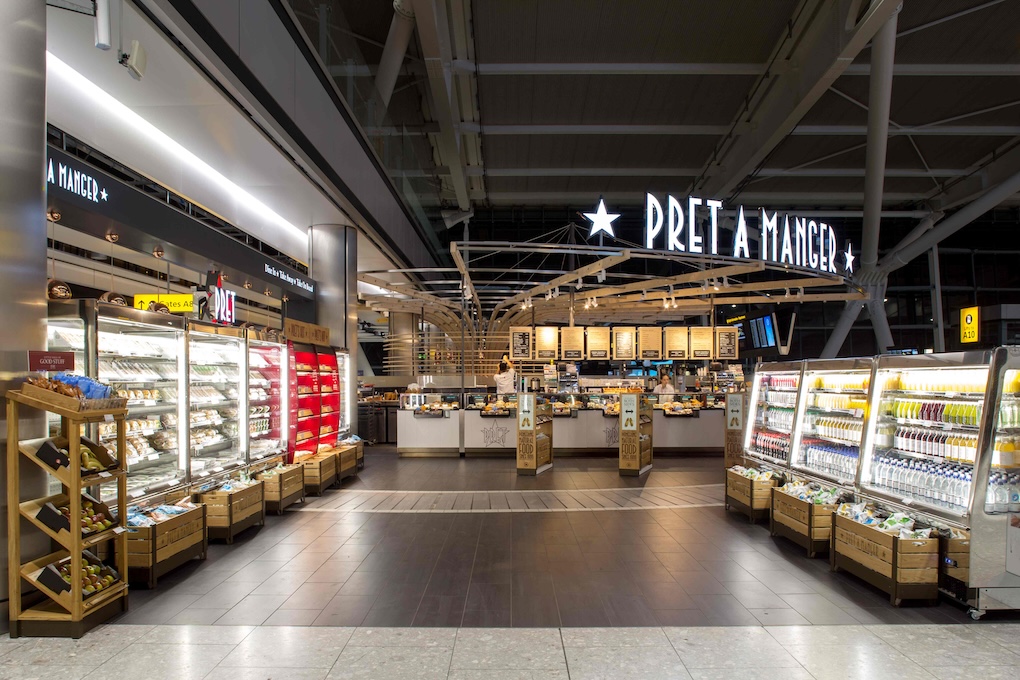
The rationale, he explains, is rooted in the breadth and reliability of the offer. “What you get with Pret is range,” Brown says. “It’s not just grab-and-go coffee and teas. It’s their famously fresh, made-on-site food, which is a big part of why the brand resonates so strongly with passengers. All Pret shops are supported by dedicated kitchens, which is key to maintaining quality and consistency.”
Brown is clear that everyday food offers play a fundamental role in shaping passenger satisfaction. “Grab-and-go has a very high penetration rate, and a significant percentage of passengers engage with the category.”
This engagement has now evolved. He says: “Passengers are more mindful of what they eat and they expect more. Pret is a business that’s been around for over 40 years, and they’ve continued to develop their offer in response to customer expectations.”
Brown points to the way the range has expanded over time. “They have introduced items such as their ‘Super Plates’ nutritionally dense salads range and a hot food offer – all of which didn’t exist when the business started.
“At the same time, they’ve retained the products people know and trust, whether that’s porridge at breakfast or a tuna mayo sandwich. The common thread is that it’s fresh.”
For Brown, freshness is particularly important in an airport context. “It’s a long way from the old perception of airport food,” he says. “And it’s something our passengers genuinely value, especially when they’re travelling.”
Pret’s appeal extends beyond passengers. “Any grab-and-go shop serves two markets: it’s primarily there for passengers, but it also serves colleagues working at the airport.”
Local roots, global reach
Brown emphasises Pret’s identity as a British brand operating on an international stage – something he sees as strategically aligned with Heathrow’s role.
“We’re very proud that Pret is a British business,” he says. “It started in the 1980s, and as the UK’s hub airport, we see real value in supporting British brands that have gone on to achieve global recognition.”
Travel retail plays a distinct role in Pret’s international strategy. Brown says: “They see travel retail as a key part of their growth. They’ve expanded internationally, with franchise partners in places such as South Africa and India, as well as operations in France, Hong Kong and the USA.”
Heathrow Airport’s global connectivity strengthens that proposition. “We talk internally about ‘millionaire routes’ – routes that cater to more than 1 million passengers a year,” Brown says. “New York John F. Kennedy International Airport is our biggest single route by passenger numbers. We know that American passengers understand the Pret offer and thus it performs very strongly.”
One of the complexities of airport F&B, Brown explains, is catering to distinct audiences within the same terminal footprint.
“Landside, you have a very different customer profile,” he says. “That includes meeters and greeters, professional drivers and people waiting for friends or family. In that environment, coffee plays a prominent role, and much of the consumption is takeaway.”
Airside, by contrast, brings a different set of behaviours. “In departures, it’s travelling passengers,” Brown says. “Some are looking for a light meal – a salad, a sandwich, something sweet – and others are what we describe as ‘double dippers’.”
Double dipping, he explains, is when a passenger eats in a restaurant and then makes an F&B purchase to take onboard. Brown notes: “Pret has become very good at aligning its range and availability to that demand. The offer itself isn’t fundamentally different, but the volume, staffing levels and speed of service are carefully calibrated.”
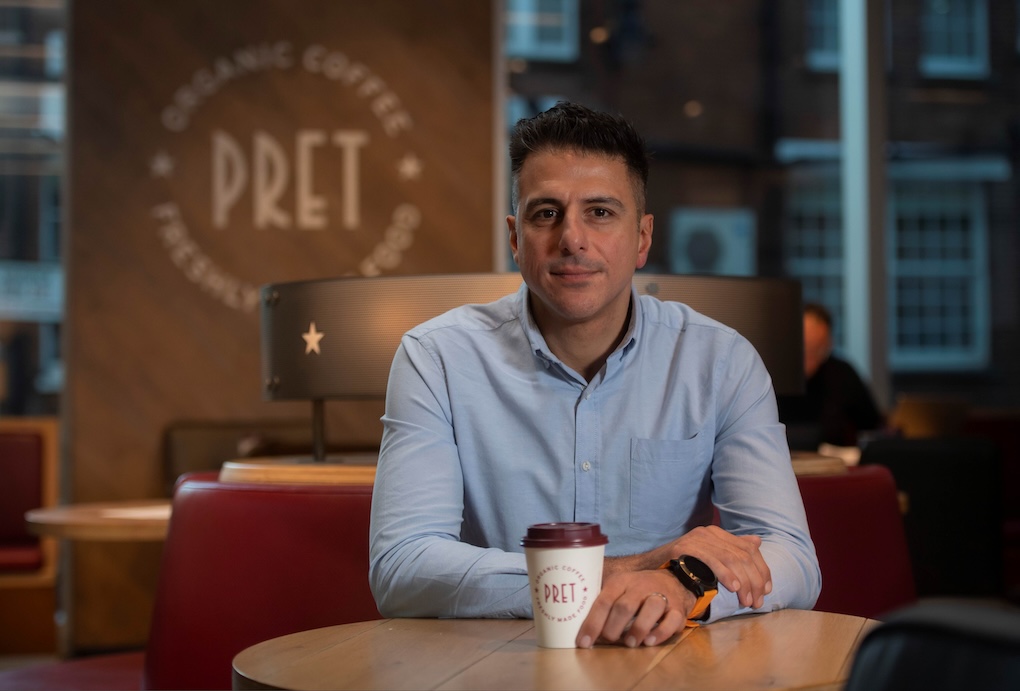
From a passenger perspective, those differences may not be immediately visible. “As a customer, the store doesn’t look radically different airside versus landside. The distinction is in the operational detail – how many colleagues there are, how the range is managed, and how quickly transactions move.”
Terminal 5 airside, he adds, has become a benchmark operation. “That store is Pret’s biggest and most productive in the world,” Brown says. “It operates on a relatively constrained footprint, which means they’ve had to become extremely efficient. It’s effectively their Formula 1-level shop, and they’ve learned a lot from it.”
Optimising service at scale
Under the extended agreement, Pret will invest further in its Heathrow estate, including refreshed designs and operational enhancements. Brown is clear that the emphasis is on performance rather than gimmicks.
“In a high-volume environment like Terminal 5, saving even a couple of seconds per transaction matters,” he says. “When you multiply that across thousands of transactions a day, it has a real impact on passenger experience.”
Technology plays a role, but Brown is cautious about applying it indiscriminately. “There’s a lot of debate in the industry around touchscreens,” he says. “In an airport environment, where you’ve got infrequent users and multiple languages, we don’t believe fully touchscreen models always work well.
“The driver for technology is improving speed and service. That’s what ultimately makes the experience better for passengers.”
Human interaction, he adds, remains central. “There’s a misconception that younger customers don’t want human contact,” Brown says. “But when you look at the research, Gen Z value interaction. That’s why experience still matters, even in grab-and-go.”
Pret will use the new Terminal 5 Arrivals site to trial digital upgrades aimed at improving speed of service and the overall passenger experience. The outlet will introduce mobile handheld tills, allowing staff members to take payments directly on the shop floor during peak periods, while maintaining emphasis on personal, face-to-face service.
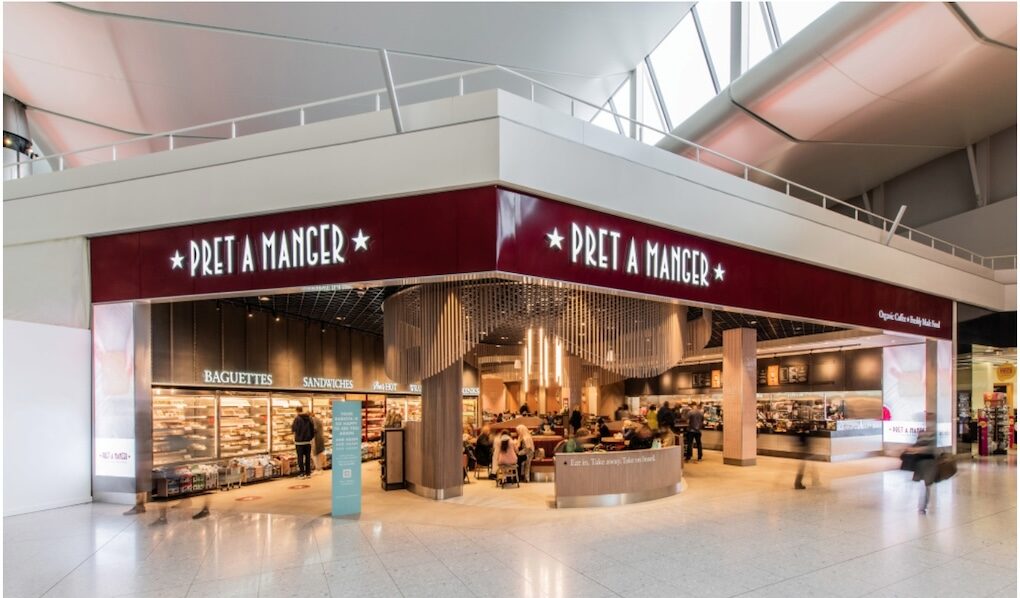
The arrivals location will also test digital menu boards, designed to support dynamic storytelling and give Pret flexibility to highlight freshness, product quality and key menu items.
The prominence of brands such as Pret inevitably raises questions about the integration of local character in airport F&B. Brown says: “It’s a difficult balancing act. When people travel infrequently, especially internationally, food is an area where they look for familiarity and reassurance. International brands provide that.”
At the same time, Heathrow continues to curate a broader mix across its terminals. He adds, “We also operate concepts that are more distinctly British or regionally specific.”
Pret’s role within that ecosystem is well defined. “It sits on the more ubiquitous, brand-led side of the offer. If you know Pret, you know what you’re getting. For brand credibility, they are not looking for us to fundamentally change that.”
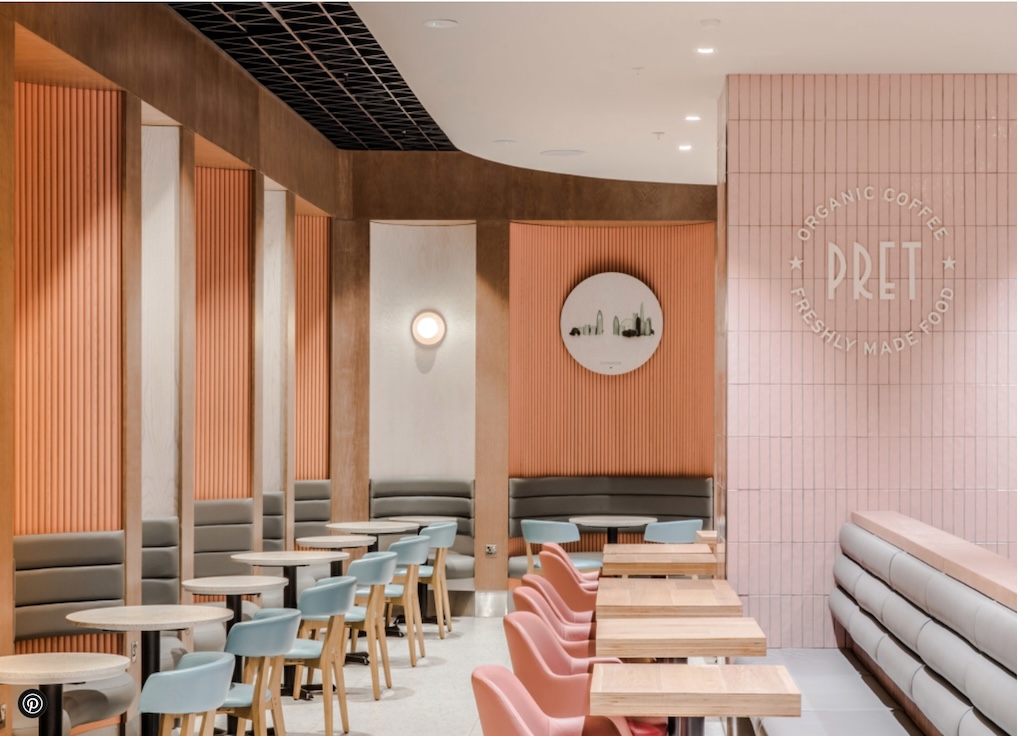
There is, however, room for nuance. “We ask partners to add subtle touches,” Brown says. “And Pret already adapts elements of its menu depending on location. A sense of place can also be conveyed through design, such as the Terminal 5 Departures landside Pret shop, which features wall art of the London skyline.”
Making a “real difference to the journey”
The expansion of Pret’s presence into Terminal 5 Arrivals at Heathrow Airport was not automatic. Brown says, “This was a competitive tender process – Pret won the through open competition.”
Evaluation is structured around Heathrow’s core criteria. “We look at our four pillars – digital, experience, space and offer,” he adds. “To deliver a great airport experience, we need strong retail and F&B within the time and space constraints of an airport.”
Those criteria include range, pricing, service model and use of technology. “The Pret service ethos aligns very closely with Heathrow’s ambition of making every journey better.”
Commercial performance also plays a role, particularly food attachment. He explains: “With some coffee-led brands, coffee performs very strongly but food attachment can be weaker. Pret has been able to combine a strong food offer with a well-regarded Barista-prepared beverage proposition, and that’s important.”
The renewed agreement also comes with expectations. “We’ve challenged Pret to continue investing,” Brown says. “What’s good today isn’t necessarily good tomorrow. If we’re serious about making every journey better, the Pret of tomorrow needs to be better than the Pret of today.”
The collaboration captures Heathrow’s evolving approach to food & beverage – pragmatic, passenger-focused and operationally disciplined.
“Grab-and-go might not be glamorous,” Brown says. “But when you get it right, it makes a real difference to the journey.”