
UK. Conjure up the names of European airports that stand out for dynamic passenger growth, design and commercial creativity, high average spends and a track record of long-term investment, and London Luton Airport (LLA) might not immediately spring to mind.
But there are good reasons to reconsider perceptions of London’s fourth largest airport. Its catchment area stretches from North London to the east Midlands, with rail and bus connections that are regular and swift and that build on the airport’s ambitious sustainability credentials.
These connections are also much improved since March 2023 when the £300 million electrically powered DART (Direct Air-Rail Transit) service to Luton Parkway Rail Station opened – consigning firmly to the past the grim shuttle bus service that ran previously between station and terminal.

A multi-million-pound programme of terminal upgrades has also taken shape in recent years, beginning with a transformation of consumer and commercial facilities in 2017. That programme is now in its next phase of evolution, with a fresh look for check-in, upgraded toilets, smoother security processes plus importantly the next wave of retail and dining – 18 new or refurbished outlets opened in 2023 – to cater to a growing audience.
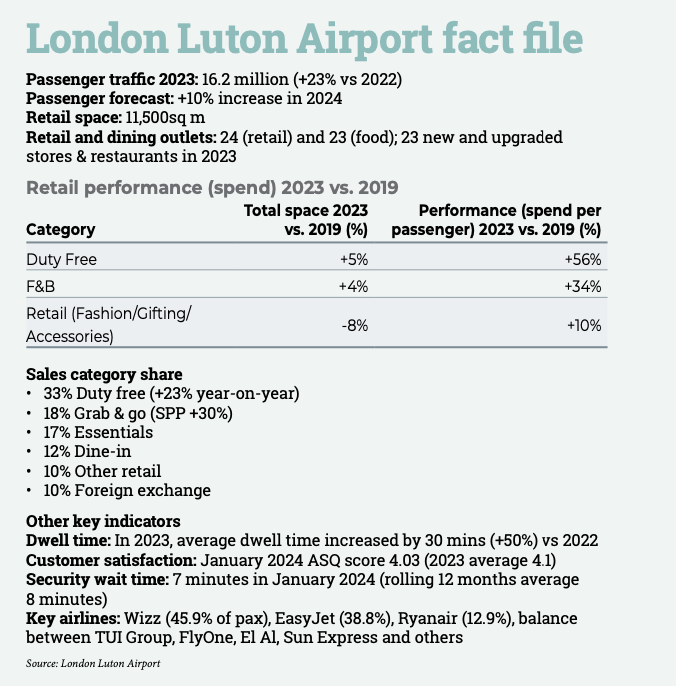
That audience has swelled from around 9.6 million passengers in 2013 to 16.2 million last year – 90% of 2019 levels – with at least +10% growth expected year-on-year in 2024. Already, January has delivered a positive start with over 1 million passengers, driven by leisure demand and a strong low-cost carrier base, which is led by Wizz (45.9% of traffic), easyJet (38.8%) and Ryanair (12.9%).
The airport’s 11,500sq m of retail space includes a well-developed landside area that caters both to arriving and departing travellers – an unusual feature at UK airports – with recent F&B brand additions and improvements preceding further opportunities to come.
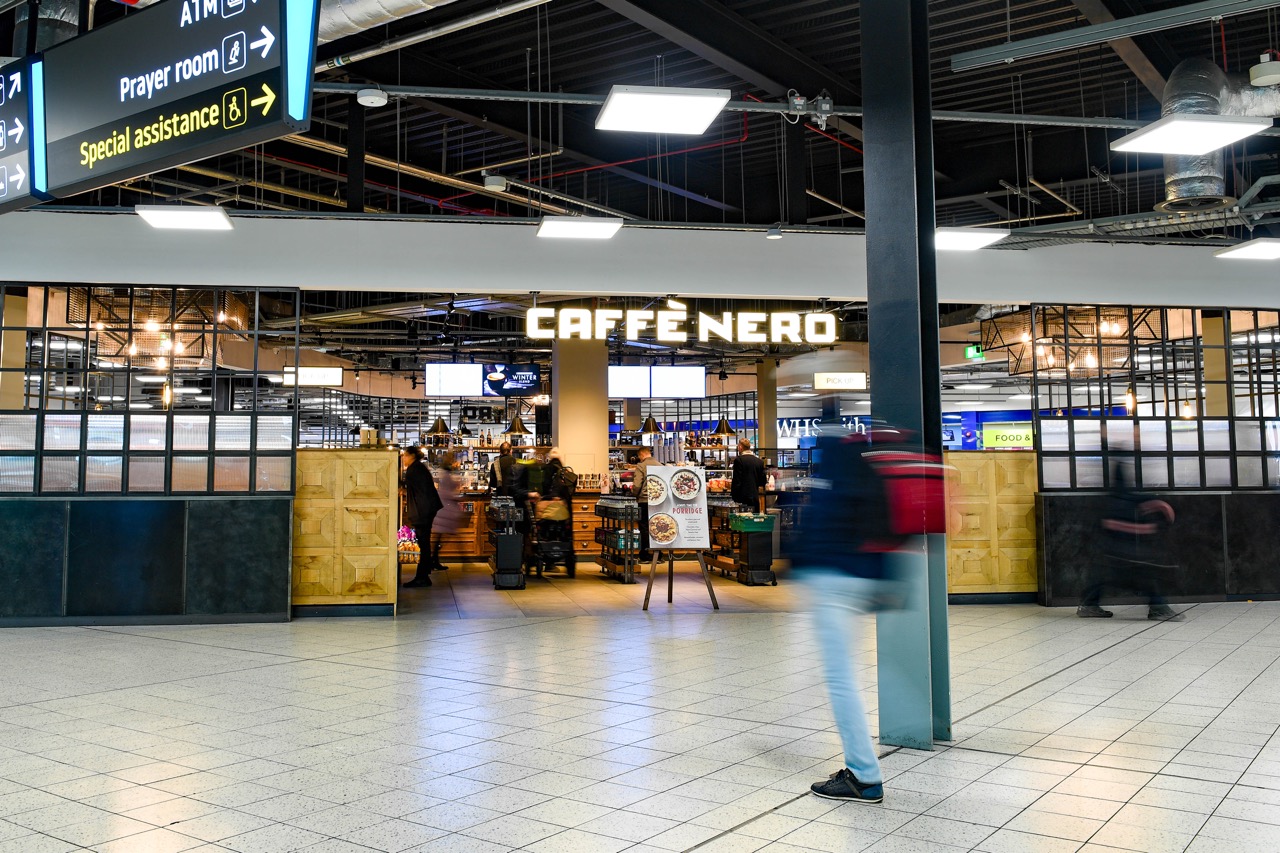
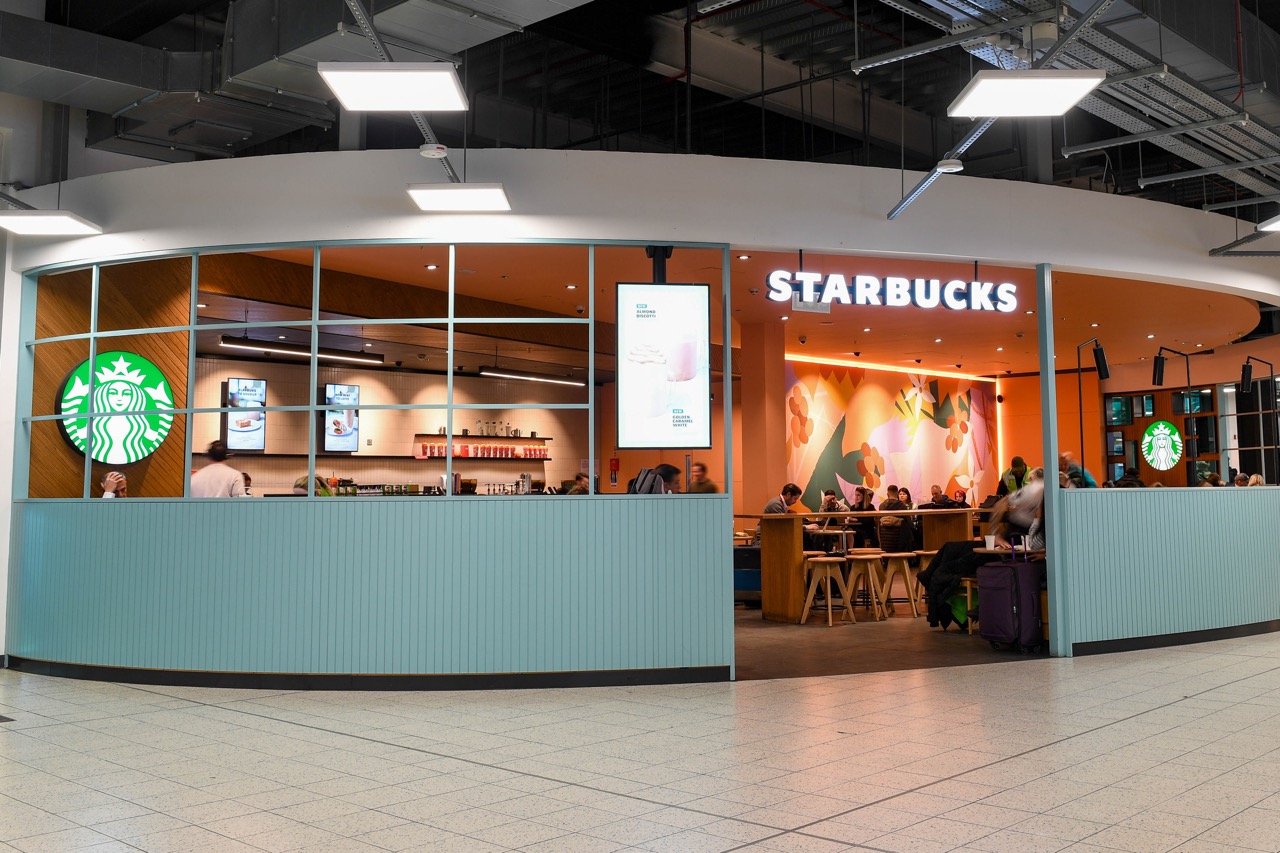
London Luton Airport Head of Retail & Surface Access Mark Jennings says: “The strategy in 2016/17 was to grow both F&B and retail categories at the time; now we have been through much of the tendering cycle for the next phase, with refits and some new brands. Landside, Nero were successful in the bid and opened last July, while Pret A Manger and Starbucks retained their contracts and recently refitted.”
The landside space that straddles arrivals and departures on the same level under one roof will offer further options soon. One of these is a proposed landside bar catering not only to waiting travellers but also as a place for staff on the airport campus to socialise after work.
This is just one of several dining and retail contract opportunities in the pipeline. These include two airside and two landside F&B concessions (one of them the bar noted above); two travel essentials concessions, one covering the news category (airside plus landside) and the other in convenience (landside); plus one speciality retail concession airside. These should go into operation in 2025.
Improving the duty free experience
Then there is the duty free contract, managed currently by Lagardère Travel Retail. With less than two years remaining the concession is already on the radar for potential bidders. The airport company is beginning a review of its space planning and productivity with one of three short-listed consultants – to be selected soon – looking closely at performance and benchmarking the category against other airports. With this input, a decision on how to proceed is likely in late 2024.
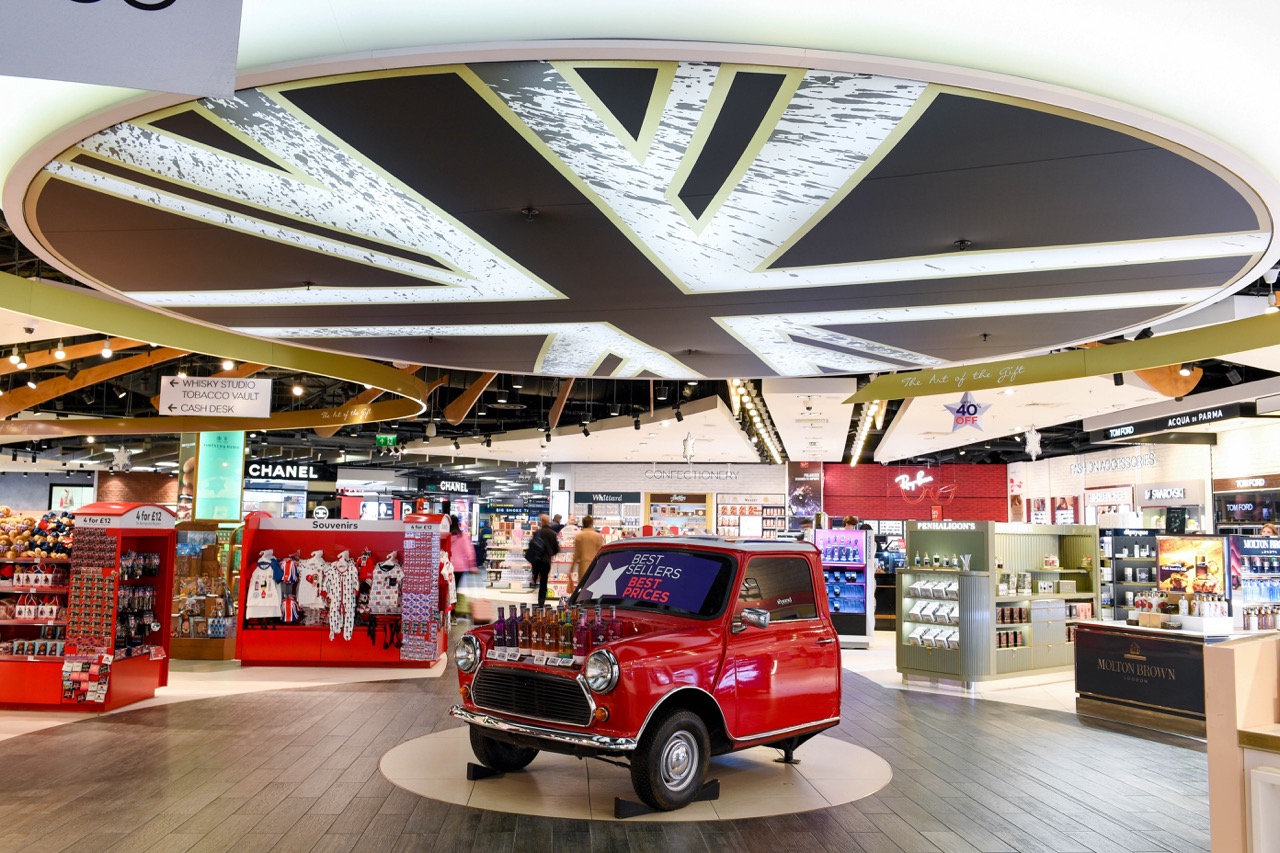
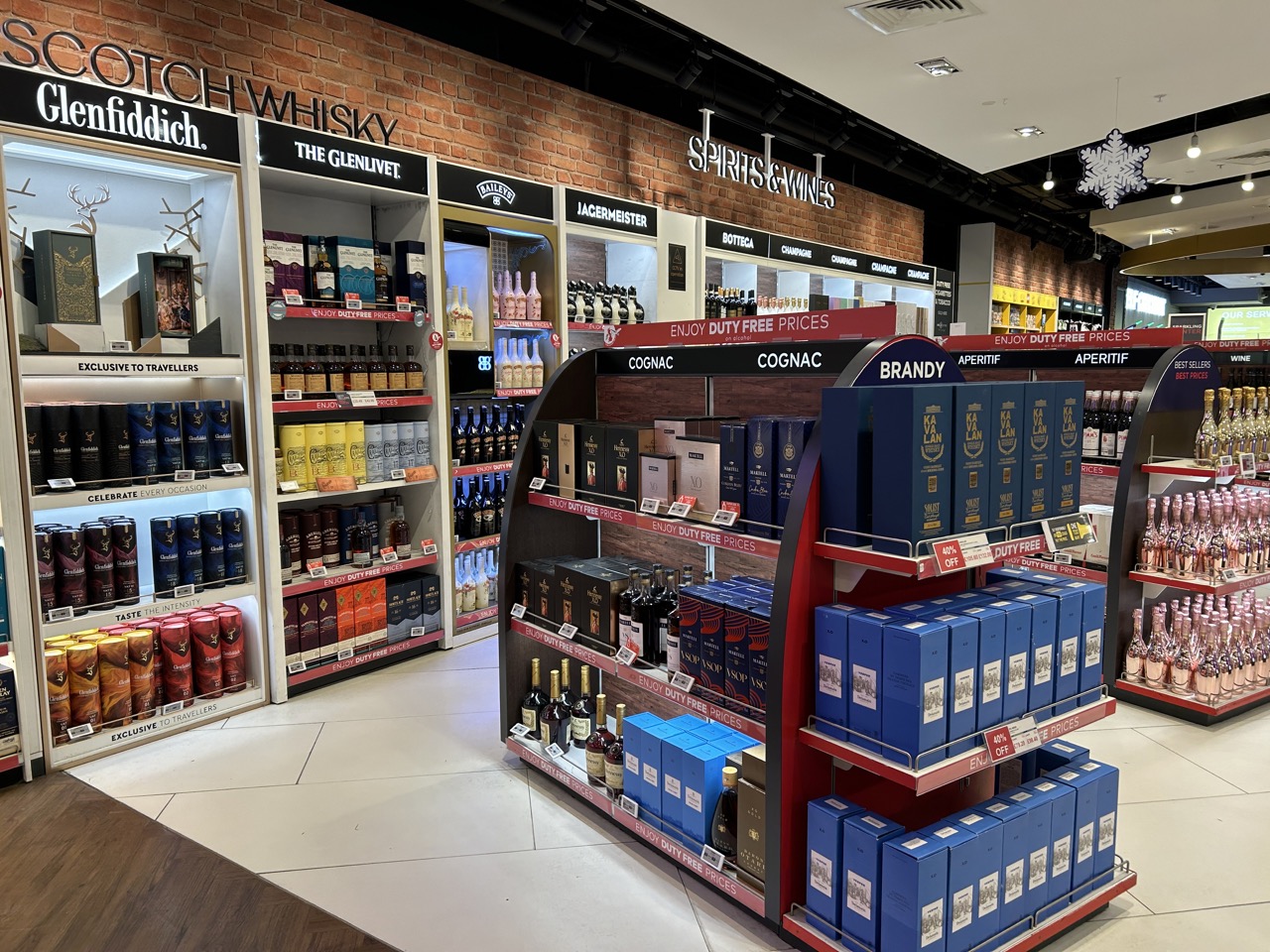
Jennings says: “The whole duty free category since Brexit has had a good performance. We were already heavily skewed towards EU routes anyway, but that converted instantly to a duty free market for liquor & tobacco. Like other airports we focused on expanding duty free capacity and have added 120sq m in a second store closer to gates that offers bestsellers and is an easy-to-shop space.
“We have a great relationship with Lagardère Travel Retail. They are very adaptive and always keen to innovate. We were the first store in their group worldwide to trial self-service kiosks for check-out. They understood that you can add value to the customer journey by having fewer people at the till and more on the shop floor as sales ambassadors to improve, not reduce, service.”
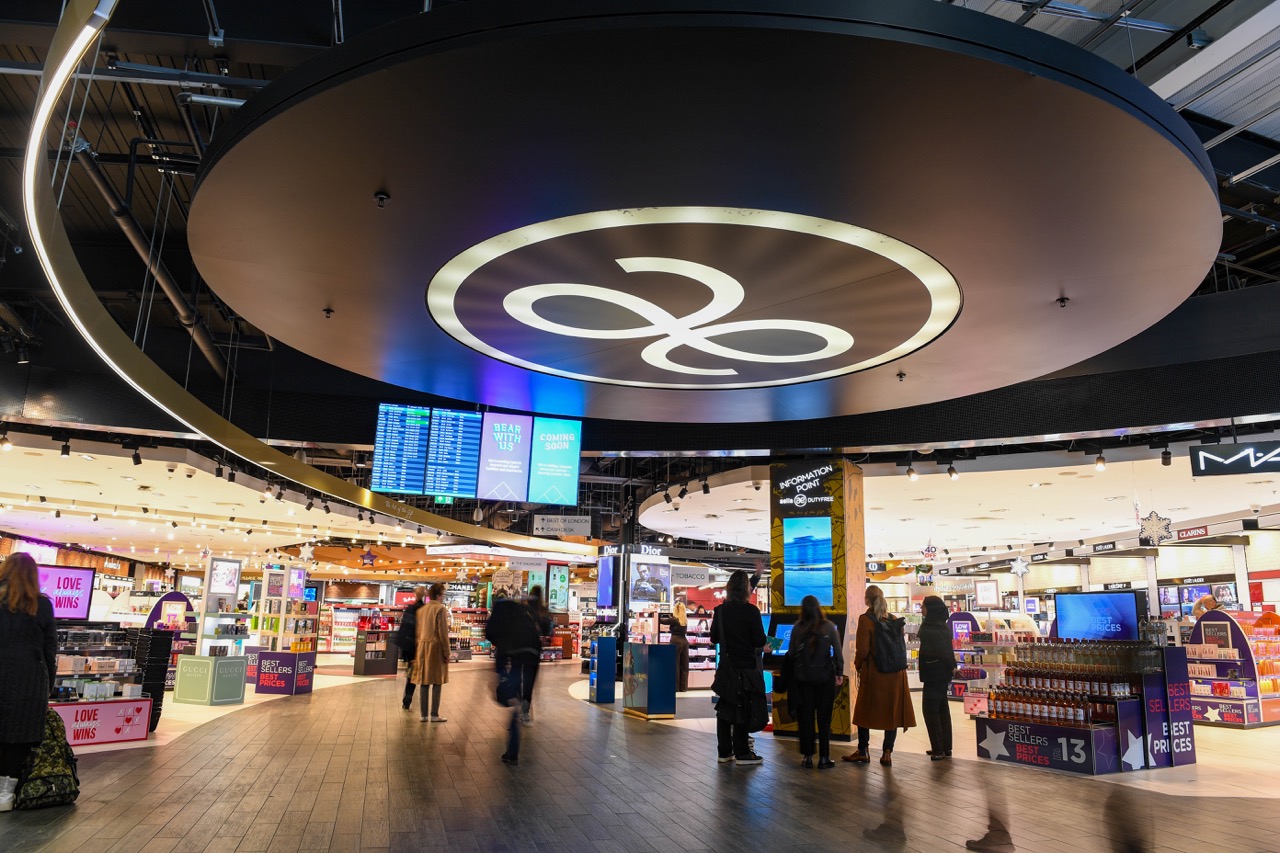
The existing walkthrough store offers good visibility from the moment you come up the escalator airside after security, with some eye-catching stop points for engagement. The main store was among the big beneficiaries of the 2017 expansion and reconfiguration of the passenger flow.
The retailer has also attracted brands that might once have been reluctant to open here in the past. Today you will find a range of brands as attractive as at any larger airport, with elegant installations for Tom Ford in beauty and Fortnum & Mason – which recently doubled its footprint – among the recent additions.
Chanel opened a standalone boutique beyond the store boundary amid the terminal upgrade in 2017, making a statement about the luxury beauty opportunity at the airport.
The airside space at LLA is broadly inviting, spacious, with more seating and a coherent commercial offer in place across retail and F&B. Some of this stemmed from the previous investment, with further evolution since COVID.
This includes a blend of travel essentials and speciality retail, including fashion & accessories, on the path from duty free to the main departures lounge.
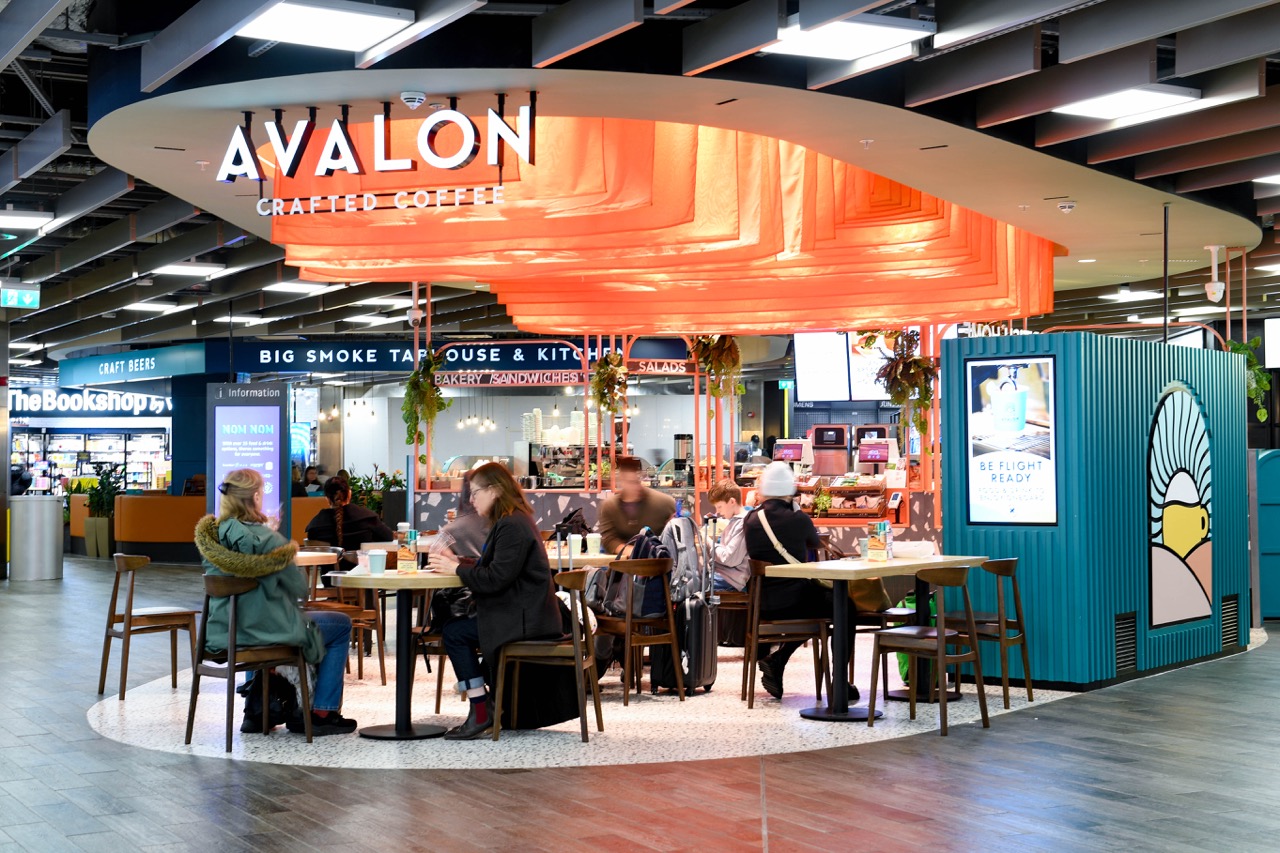
Once a zone that travellers walked straight past, its mixed offer ranging from Big Smoke Taphouse and the colourful craft coffee outlet Avalon (both managed by Airport Retail Enterprises UK) to boutiques from Ted Baker, Kurt Geiger, Rituals, Hugo Boss (upgraded in 2023), and Best of Brands (both pictured below) now encourages longer dwell.

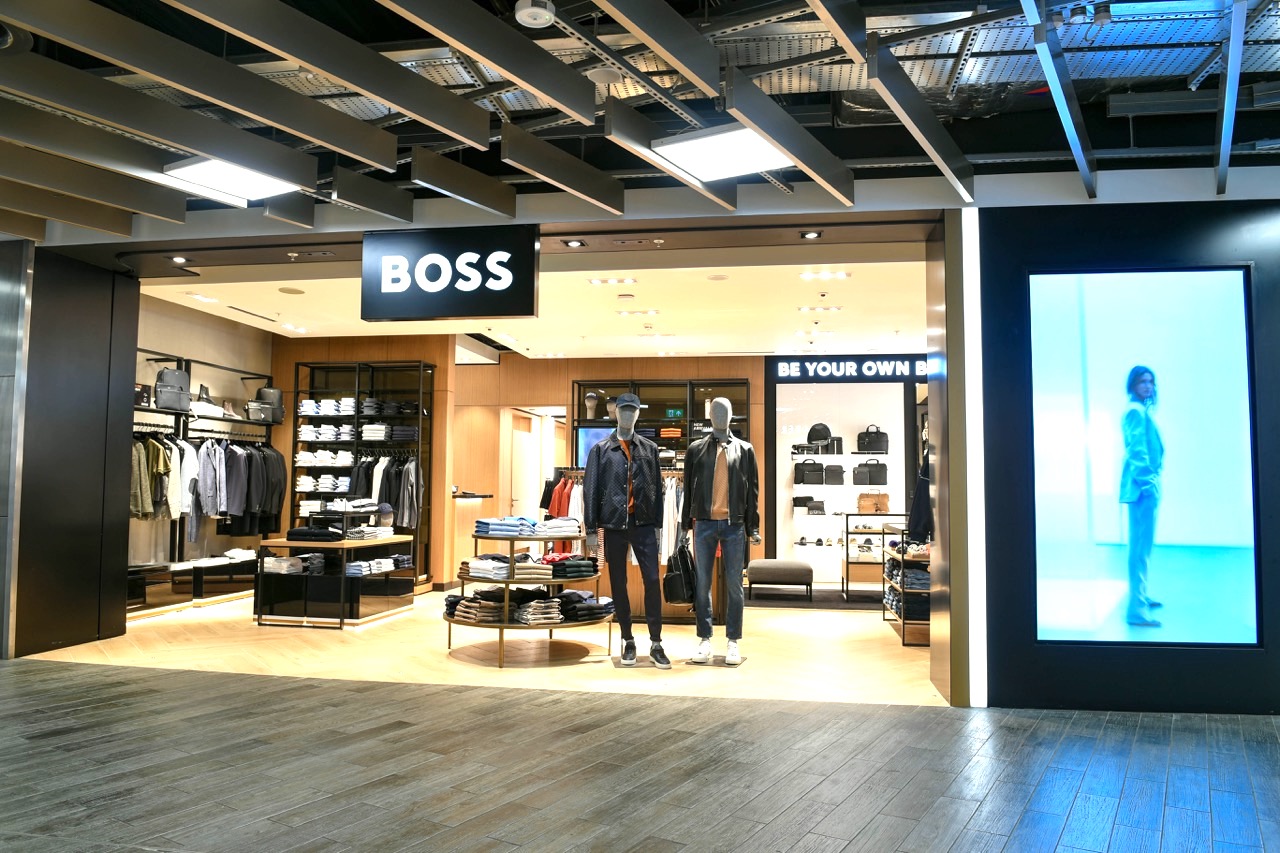
Jennings says: “Post-COVID, after we lost Casual Dining Group and other partners, we made some changes to this space, adding more F&B, with a coffee shop and an essentials offer by Boots last December to ensure we filled that need just after walk-through duty free.
“It is now a much better-used space between duty frere and the main retail concourse. We have seen better dwell times, higher spend and it alleviates space pressure in the main departures lounge.”
Of the fashion range, he notes: “It is not high-end luxury but it is the top end of the high street offer with Accessorize, Ted Baker, Hugo Boss and Kurt Geiger plus our multibrand fashion store. They are all travel experts, they range according to our base, and they understand the importance of accessories at airports.”
While LLA is not a destination for luxury in the same way as Heathrow Airport traditionally is, the company remains strongly supportive of a return to a tax free shopping regime airside – and a reversal of the government’s decision to axe this for overseas visitors since the UK left the EU.
“Although there will have been some impact of that decision, it will not have been as high at Luton Airport,” says Jennings. “But we recognise the value that a reversal of that decision will have on inbound tourism. We also strongly support industry efforts to introduce arrivals duty free in the UK.”
The airport has also sought to rebalance retail to cater to emerging categories. With the sports and athleisure sector universally popular, JD Sports doubled its space after a tender last year and also sits in the zone between duty free and the main departures area.
Among the latest retail additions are Discover London and LEGO stores from Lagardère Travel Retail, as the duty free partner extends its presence at the location.
Growing appetite for dine-in
The extension of airside food & beverage styles and formats has been among the other transformations.
“We proved during the post-COVID recovery that there is appetite for the dine-in experience rather than simply functional eating options,” says Jennings.
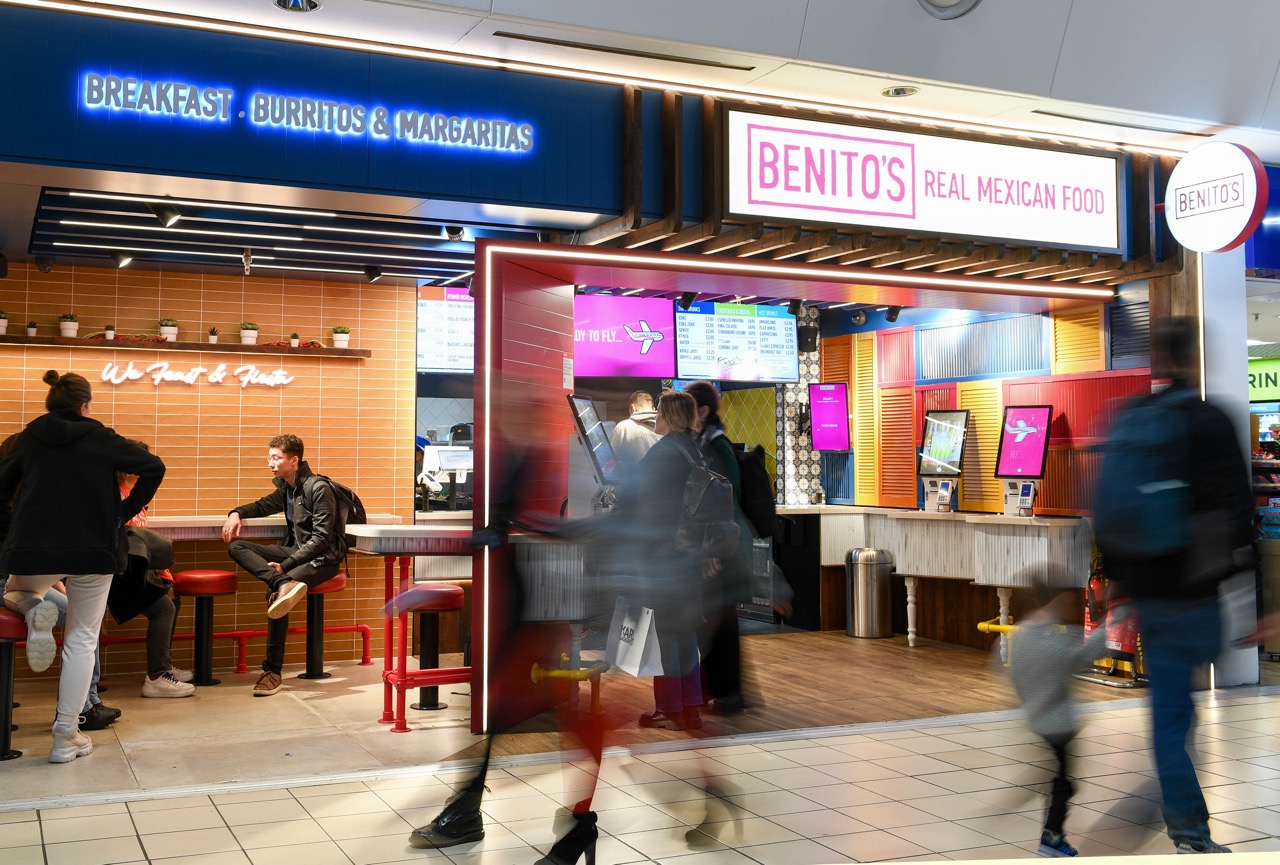
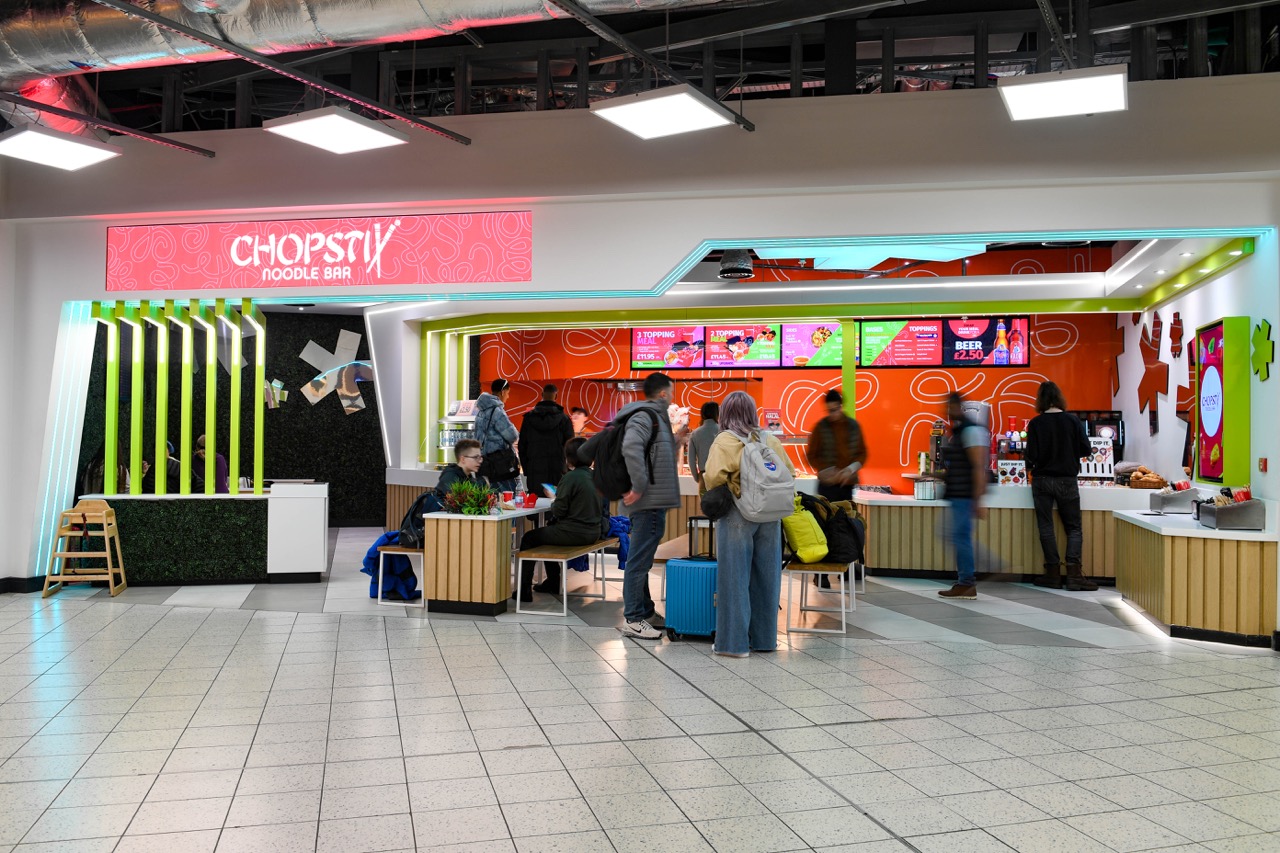
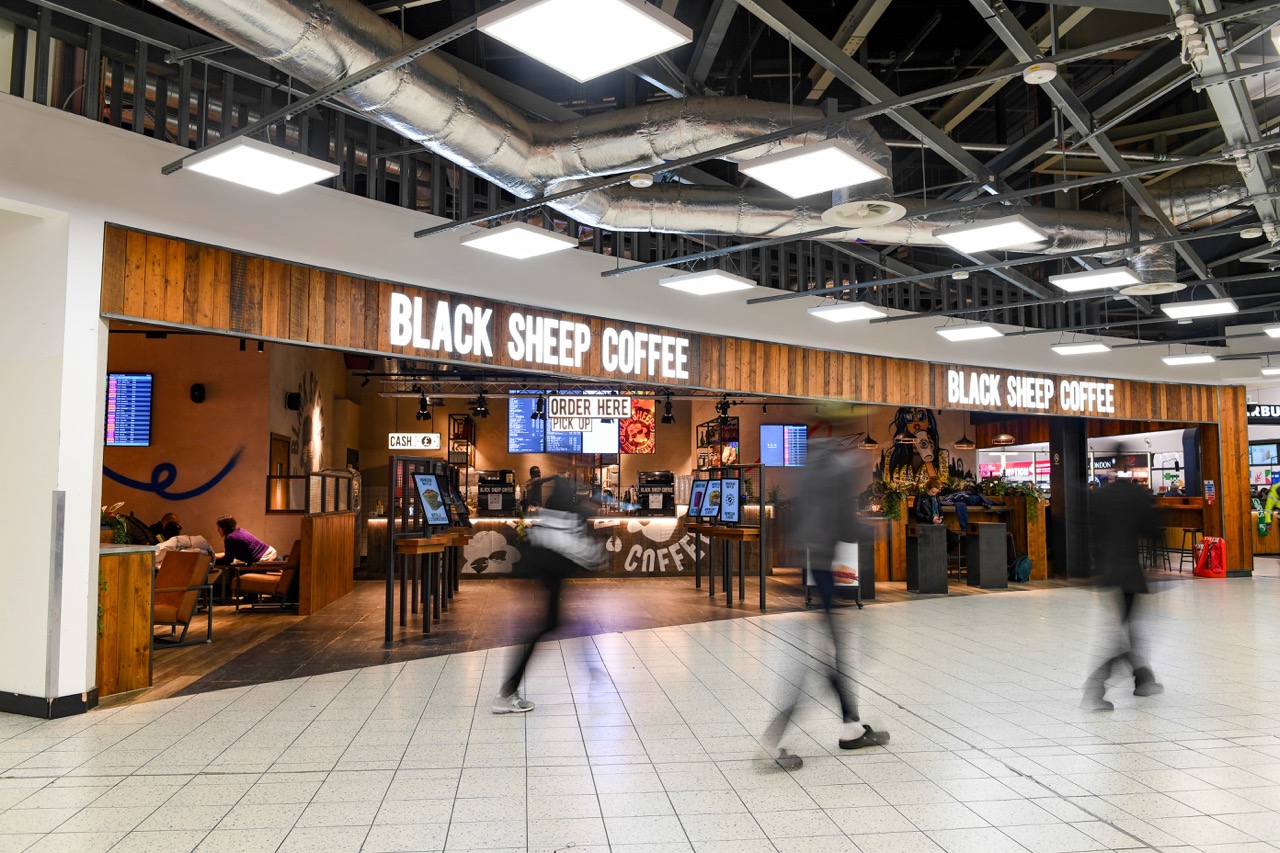
“We were well stocked previously with sandwich grab and go-style offers and we saw that people spent £9-10 in a transaction but that was the ceiling. Once you offer a sit-down menu and chance to relax and order a second drink or add to your meal, that figure can easily climb to £17-18 on average.
“Part of our strategy is to have a range of products and price points so people can grab and go to take food onboard, or sit down and have a meal. In broad terms we are looking at dialling down the grab and go offer in exchange for enhanced dine-in options where it makes sense.”
That plan led to the introduction of Italian style outlet Nolito, which is complemented by the Smithfield Bar across the concourse, each with ample seating space.
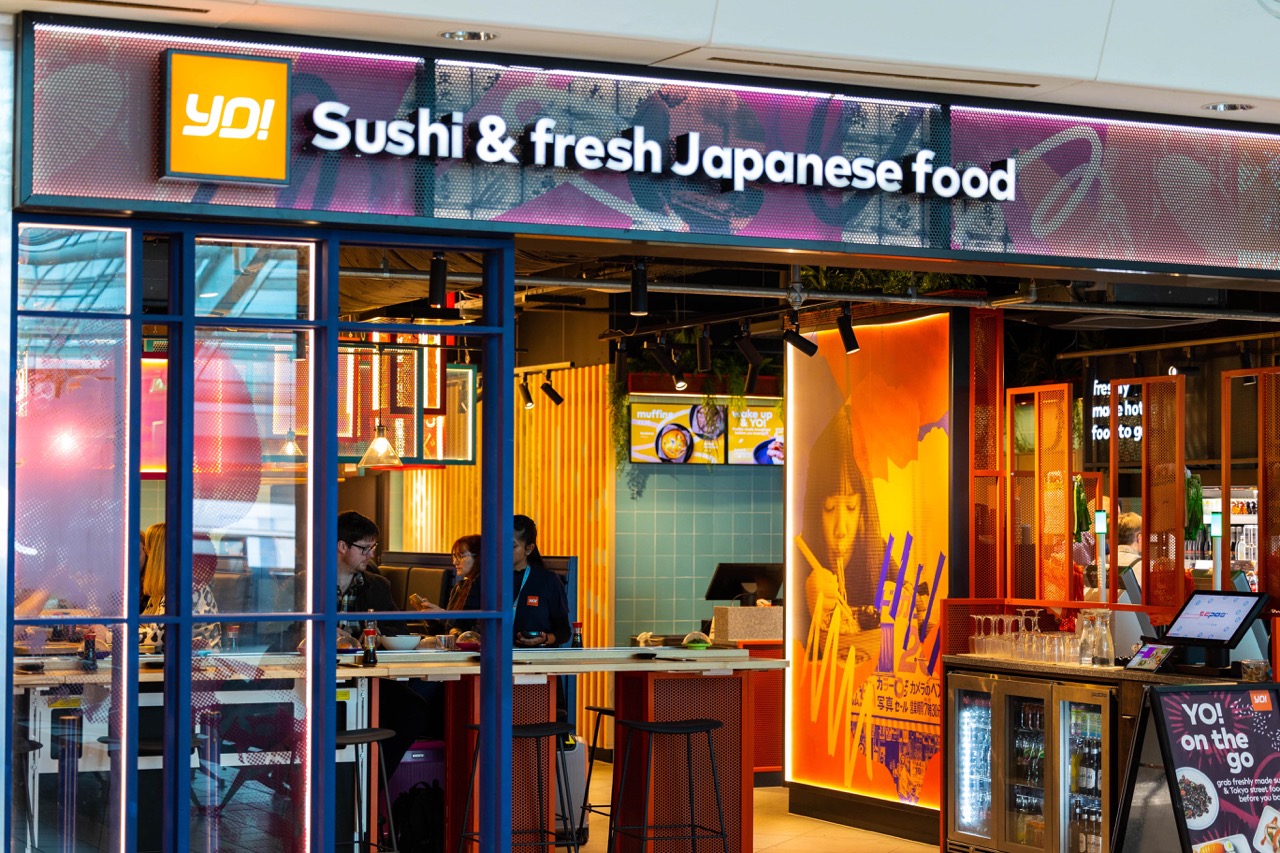
Alongside staples such as BurgerKing and Pret A Manger (undergoing a refit soon), plus a relocation planned for Starbucks, there is newness aplenty in the food offer. Recent additions include YO! Sushi, which is duty free partner Lagardère Travel Retail’s first F&B location at the airport. (It also manages a well-ranged Discover London store and opens a LEGO outlet on 7 March.)
Other openings in recent months include coffee house chain Black Sheep Coffee’s first awarded UK airside unit, with a funky design featuring reclaimed timber, black metalwork, corrugated-metal wall cladding with a rusted effect finish, plus neon feature lights and vibrant wall art.
Close by, Chopstix delivers an Asian fusion food offer but does so in an innovative format. To fulfil the demand for a morning offer, the concept begins the day as Breakfast Box, offering a breakfast menu, with the digital signage at the front of the store changing by time of day. Jennings says: “We are happy to listen to ideas and are delighted with the way this works, especially as it’s a digital innovation.”
The airport company will broaden choice further this summer with an airport debut for Chaiiwala, a fast-emerging Indian grab and go concept from the UK, family owned and with ambitions to expand internationally.
LLA is examining the opportunity to introduce other vegetarian and halal options as part of a widening of the mix, while the question of how F&B service is best delivered is an ever-present one for management.
Jennings says: “One question we are asking is how the bar concept develops. There is always demand for the cooked breakfast, the fish and chips, the pint of beer, but where does it go next? How do you innovate with specific areas in the bar, the food style, the format, to lift transaction values?
“Something else we have not cracked yet is pre-order food. We are keen to learn more. Our guests order Uber Eats all the time from home but ordering ahead of the airport journey is still alien behaviour for many.”
The ‘wow factor’
The innovations noted above will be complemented by one of the most ambitious F&B projects we have seen in progress at a UK airport, one that will deliver the ‘wow factor’ to the airside arena.
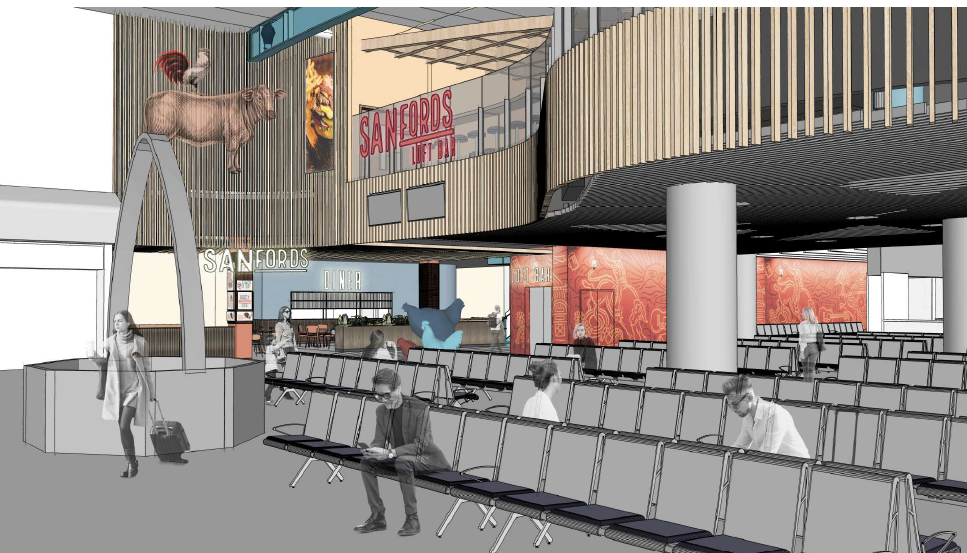
A former Frankie & Benny’s run by TRG Concessions is being transformed into a split-level American-style diner and loft bar named Sanford’s, developed just for this location.
It involves a combined £8 million investment from the airport shareholders [the airport is owned by the local council and operated by a consortium led by AENA and InfraBridge –Ed] and TRG, with capacity for 500 guests. The 900sq m space will be handed over to the operator for fitout on 1 June after initial reconstruction, with opening slated for early December.
“Frankie & Benny’s served us well but the offer needed refreshing and that family market is an important one for us,” says Jennings. “The downstairs will be more family-led and the loft bar upstairs aimed at couples and small groups who want light bites and a drink.
“We wanted to grow F&B and our space planning showed us the opportunity to add around 500sq m here as we move towards 18 million passengers a year and beyond. It will be a vast space with wonderful natural light flooding in through glass panels on the mezzanine, with views outside and to the departures area below.
“We are working closely with TRG from the design to the menu. Given the joint investment our shareholders are taking a close interest in every aspect of the project. It’s a statement location and reflects our shareholder view that experiences will shape the future at airports. That also makes this an exciting change for us.”
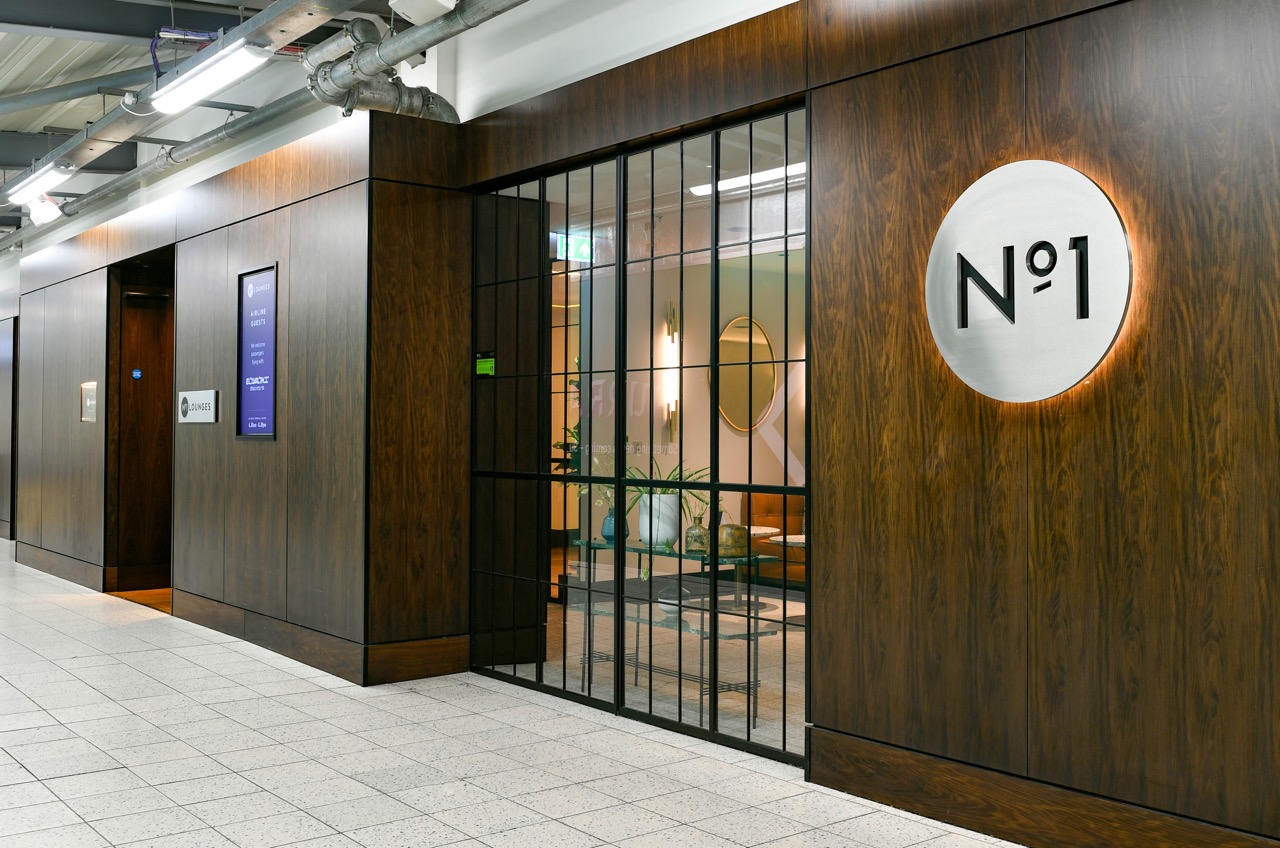
The delivery of experiences across dining and retail has already boosted the airport’s commercial performance.
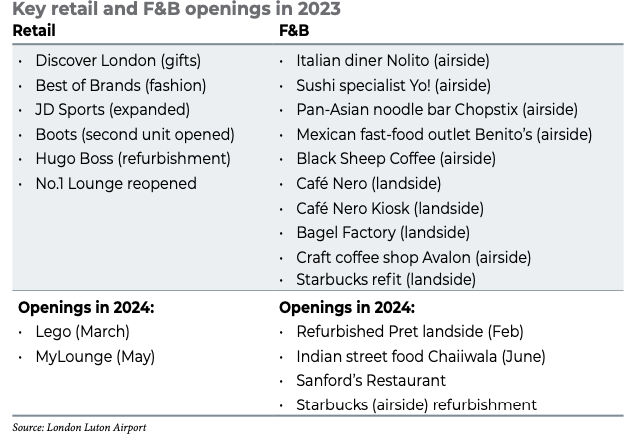
Compared to pre-pandemic 2019, space in duty free has been expanded by +5% but spend per passenger in 2023 leapt by +56%.
The number of transactions also grew by +20% last year over 2019, despite fewer travellers. In other retail, space decreased by -8% compared to 2019 but spend rose +10% and in F&B, space grew +4% but spend climbed by +34%.
At one-third of the total retail business, duty free plays a major role in driving perceptions of the airport offer. Encouragingly in 2023, sales in this channel climbed +23% year-on-year, with +25% more transactions than in 2022.
F&B represented 30% of sales in 2023, with grab and go (18%) showing the biggest category uplift as spend per passenger rose by +30% year-on-year (see chart).
These factors in turn were buoyed by an average 30-minute increase in dwell time (+50%) in 2023 compared to the year before, notable especially in peak Easter, half-term and summer periods. Penetration was a more than healthy 77% last year.
The focus on improving the experience continues through a number of key initiatives, which build on the highest-ever ACI Airport Service Quality scores achieved last year, including in retail and F&B.
‘The LLA Way’ training programme aims to lift service culture to new heights. It began as an internal initiative but is now rolling out to business partners, including concessionaires, under the slogan ‘Licence to Service’.
“This is a big area of focus. We know the experience is driven as much by the people in the building as the offer,” says Jennings.
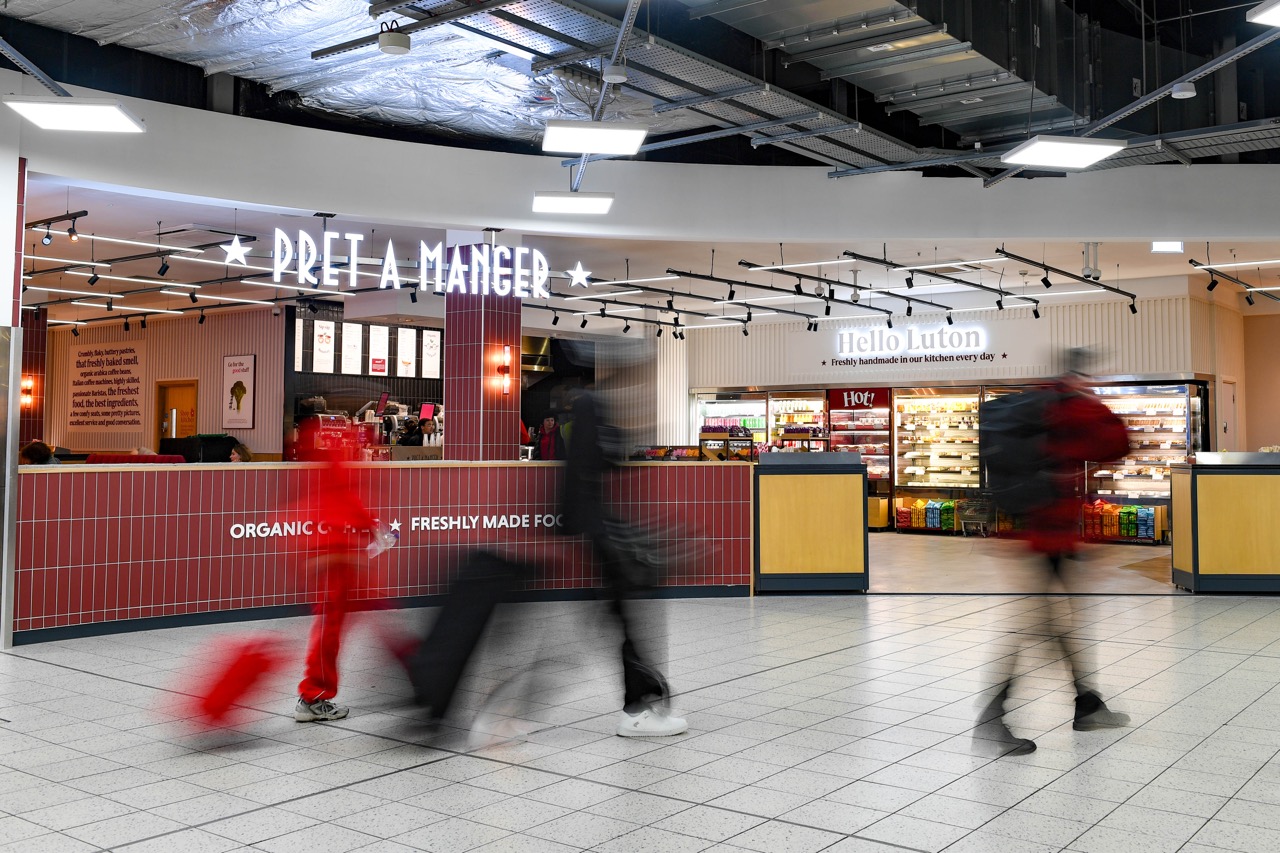
Adapting to new consumer audiences too is a constant, moving goal.
“The pandemic has created an opportunity,” Jennings says. “There are Millennials who missed out on travelling on holiday with their parents as teens during the pandemic and are now flying with their friends and discovering airports for the first time. They want a point of difference in food and shopping.
“We have been proactive in thinking about how the traveller is changing. Identifying and building the athleisure option is one way we have reacted. Our team is also looking at areas such as skincare or specialist haircare or at brands that do well in duty free that might present as standalone or in our multi-brand stores in future.
“We are open to including more multi-category units blending footwear, outerwear and accessories. Ted Baker does this very well in our existing mix for example.
“Whatever we do, we must be clear that the concept is easily understood by the traveller. Travel can be stressful enough without airports adding to that. Keep it simple, use common sense and think of how the passenger who has not travelled in a while will understand the concept. That is really important.”
All of these actions feed into the continuing drive to position Luton Airport as an enjoyable airport to fly from, and a valuable location for commercial partners and brands.
“Having delivered a nine-year passenger growth plan in four years, and closing in on 18 million passengers, we now have scale. Our partners have recognised that and so too have brands. We are a great London airport with a really dynamic growth trajectory and rising spends, and are driven by creating innovation and points of difference. It’s an exciting time.” ✈
*This article first appeared in The Moodie Davitt March Magazine. Click here for access and turn to page 68.