
Mondelez World Travel Retail (WTR) invited industry stakeholders to discover its ‘Destination: Value’ industry growth vision during a live virtual briefing held today (30 October).
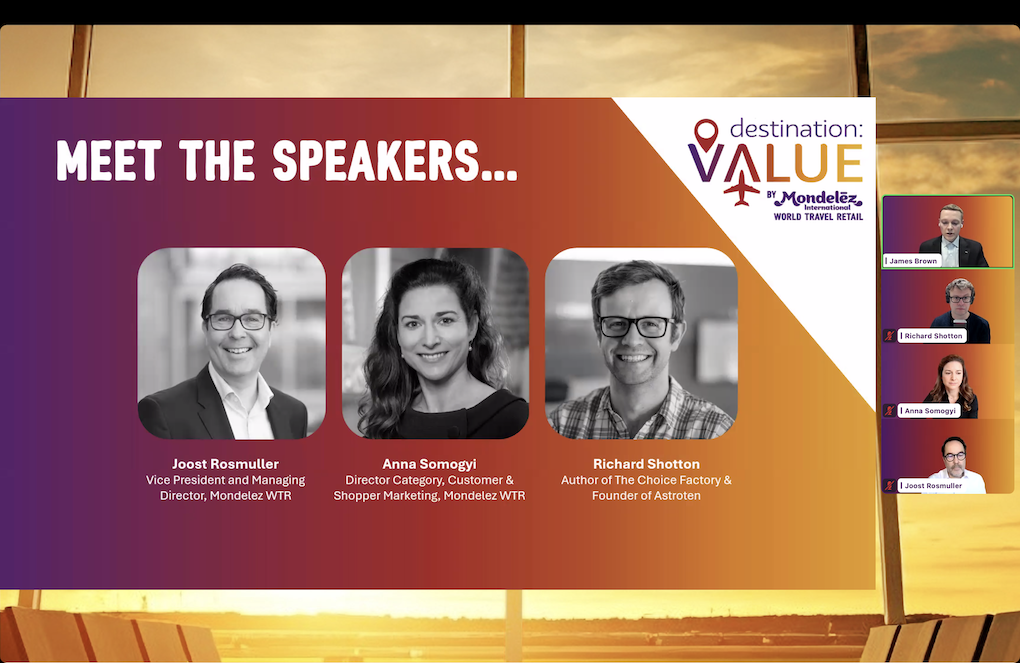
The framework was presented by Mondelez WTR Vice President and Managing Director Joost Rosmuller and Mondelez WTR Marketing Director Anna Somogyi, and featured insights from behavioural science and marketing expert Richard Shotton. Shotton is the author of The Choice Factory, The Illusion of Choice and Hacking the Human Mind and Founder of Astroten, a consultancy that applies behavioural science to marketing.
Destination: Value was designed to generate incremental growth in travel retail by 2030. Informed by significant research investment, the strategy addresses evolving traveller behaviour and the shifting dynamics of global retail.
At its core, the framework calls for a reimagining of duty free as a channel where “the journey is the reward”. Mondelez WTR said the data-driven approach identifies key growth drivers and provides insights that can benefit partners across all categories.
As reported, Mondelez World Travel Retail has signed up as a Coffee Break Partner for The Trinity Forum, which takes place in Doha on 5-6 February 2026.
The conversion opportunity
Opening the session, Rosmuller said that the industry had entered “a new era where growth won’t come from doing more of the same.
“It will come from understanding traveller behaviour more deeply, designing experiences more meaningfully, and collaborating more courageously,” he added. “This isn’t about competing harder; it’s about growing smarter – together.”
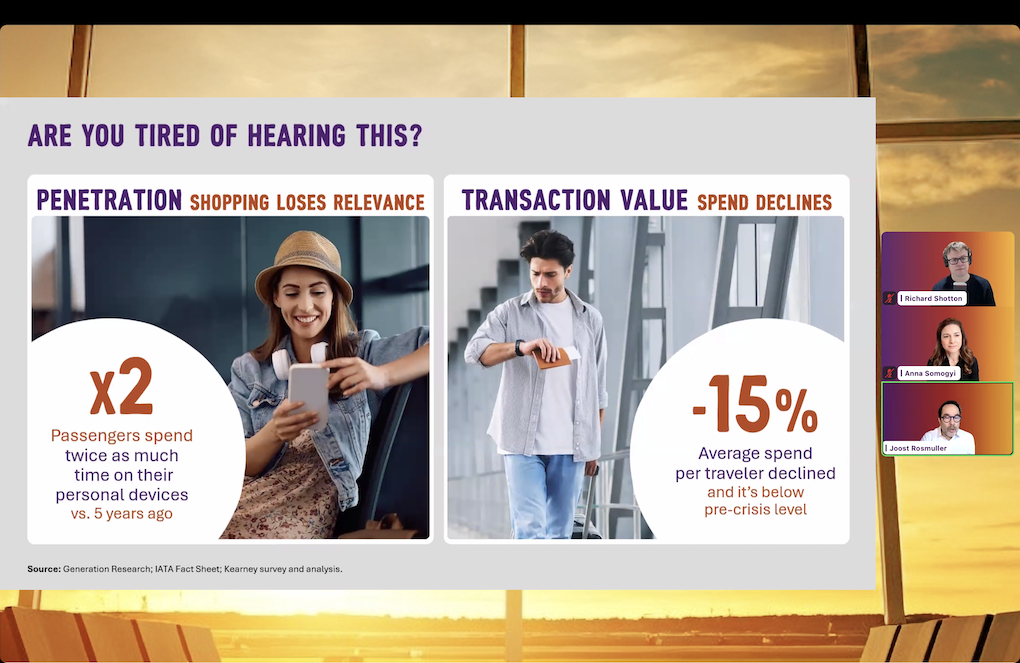
Rosmuller acknowledged the well-known challenges facing the channel, including eroding penetration rates, lower transaction values and increased digital distraction among travellers.
“Travellers now spend twice as much time on their devices as they did just a few years ago – time not spent browsing our stores or discovering new products,” he noted. “Average spend per traveller remains below pre-crisis levels and old levers like footfall and price promotions no longer deliver the uplift they once did.”
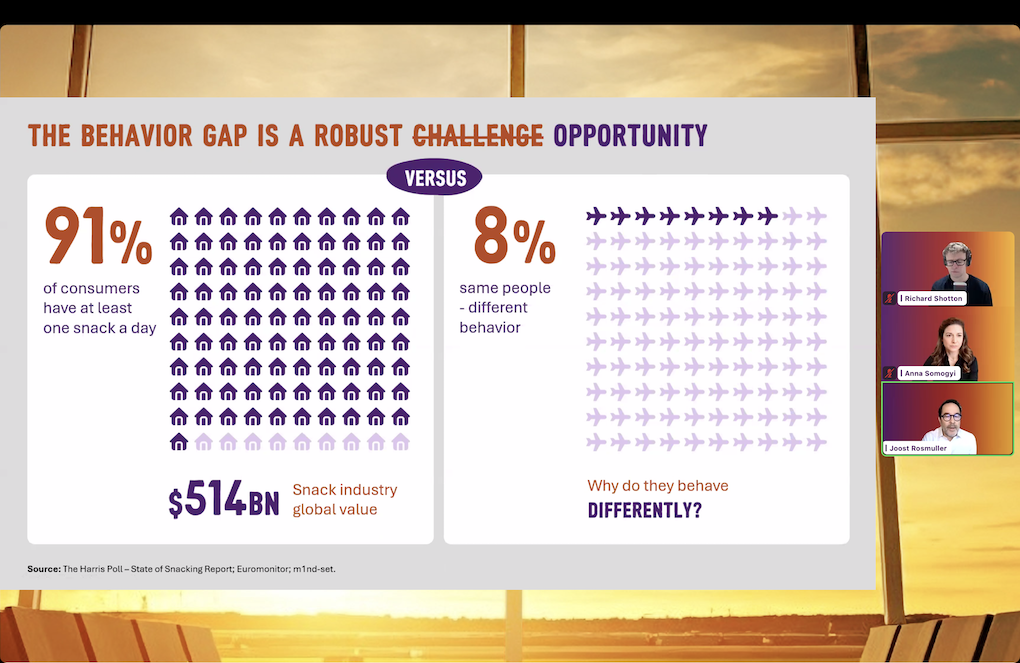
However, Rosmuller framed these not as symptoms of decline but as signs of transformation. “The traveller mindset has shifted from transactional to experiential, from passive to purposeful,” he said. “Consumption remains strong; what has changed is where, when and how travellers choose to engage.”
He added: “91% of consumers snack between meals at least once a day, yet when those same consumers walk into a duty-free store, only 8% buy something from the confectionery category. That tells us consumers behave differently in our environment – and that’s not just a challenge, it’s an opportunity.”
Mondelez had invested heavily in deep consumer research to decode both the emotional and rational drivers behind consumption in travel retail. “When we understand the why, we can unlock the how,” Rosmuller said. “By applying these insights, we believe we can help grow not just confectionery, but the entire travel retail ecosystem – from beauty to spirits and souvenirs.”
Decoding the traveller mindset
Somogyi outlined the key pillars of the Destination: Value vision, which she said was built on extensive collaboration with Mondelez’s global Foresight team and Astroten behavioural research.
“Our journey to understanding travellers began more than a year ago,” she said. “The Foresight team helped us identify how global trends and demographic shifts influence consumption, but for travel retail we needed to go deeper – to understand what really happens during those few hours in an airport or on a cruise.”
Working with Astroten’s Shotton, Mondelez WTR conducted on-site airport research, robust surveys and focus groups to understand how travellers think, feel and behave in duty-free environments. Together, the partners conducted a survey of 7,200 participants from 12 focus groups across different nationals from 32 airports around the world.
These insights were supplemented by data from industry figures such as m1ndset, Generation Research, Pi Insights, TFWA, Kearney and others.
“Some may ask, why is a confectionery company investing so much in understanding traveller psychology?” Somogyi said. “The answer is simple: the potential is enormous.
“Today, only 28% of travellers buy something in a duty-free store – but more than half of non-shoppers say they are open to spending. Seven in ten who buy something other than confectionery say they would purchase confectionery if the right offer were available.”
She added: “This tells us that confectionery – and the industry as a whole – has the potential to boost both penetration and transaction value. But to do that, we need to understand the why behind behaviour.”
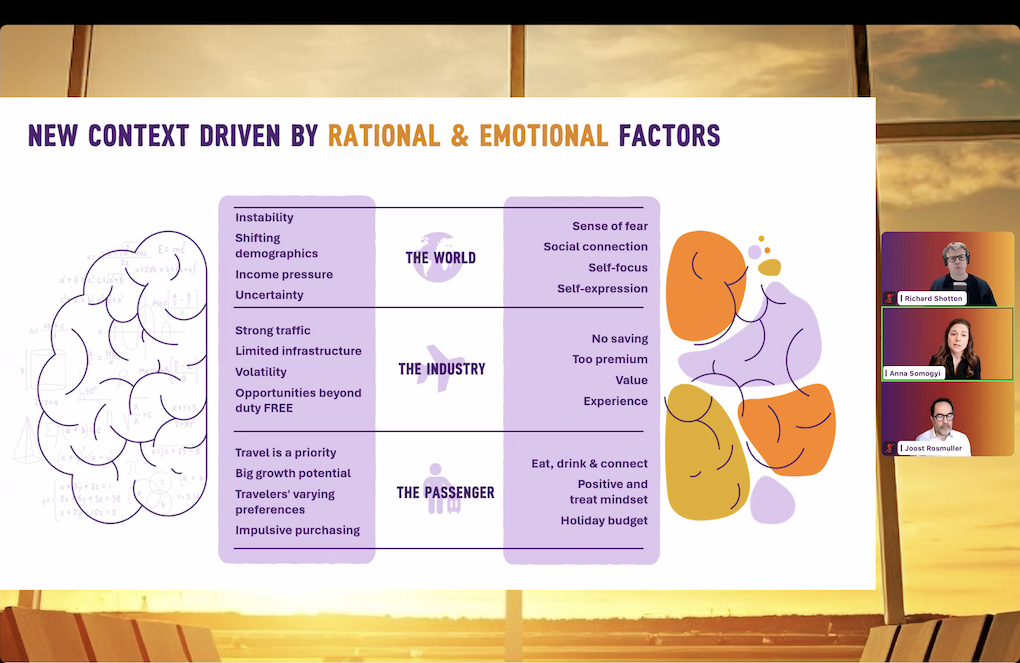
Somogyi said that travellers’ decisions were not purely rational, but emotional and contextual. “Travellers today are navigating uncertainty – from economic pressures to sustainability concerns. But they are also seeking connection, indulgence and self-expression,” she explained. “When they pass through airport security, they already feel on holiday. What they buy with us is part of that holiday experience.”
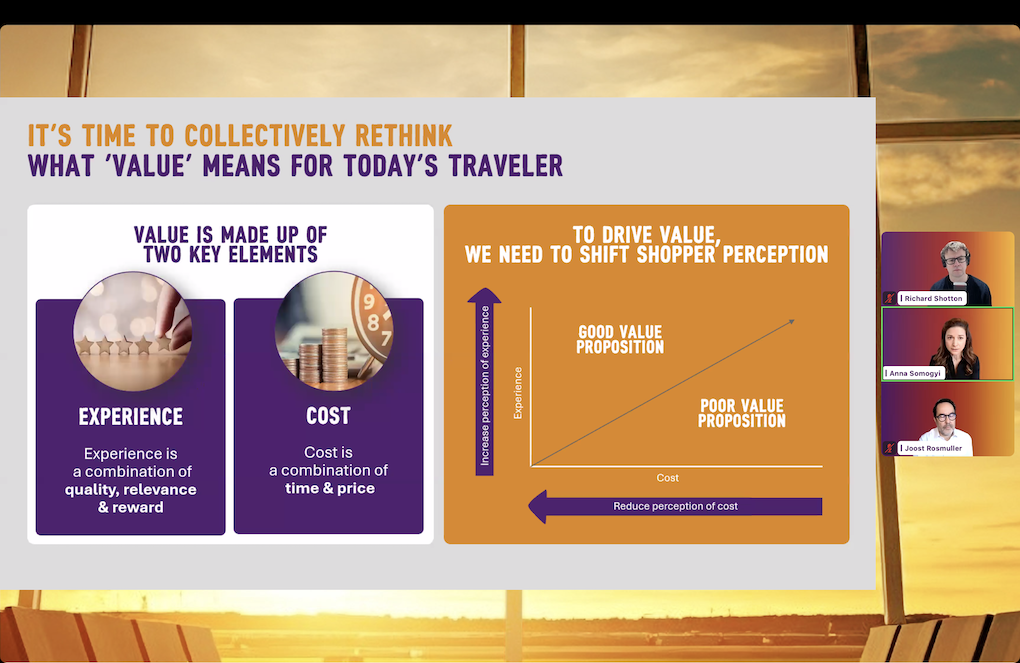
The Mondelez team shared that while optimising price and promotion communication will remain key, there is much more to boosting value. To drive overall value perception up, the industry needs to rebalance its focus on cost versus experience. This can be achieved by lowering the cost for travellers in terms of the actual price and the invested time required to find the product. Complementing this approach, maximising the experience by adding trusted brands, more reward and relevant offers will help to meet more travellers’ needs and shift their overall perception of value.
Somogyi added that while price remains important, the definition of value has evolved. “We need to redefine what value means to today’s traveller,” she said. “Value is no longer just about cost – it’s about what they gain in quality, convenience, enjoyment and reward. If we, as an industry, collectively enhance perceived value, we can elevate the entire duty-free proposition.”
Watch the YouTube video above to see our recent Moodie Davitt Showtime interview with Mondelez WTR Marketing Director Anna Somogyi
The behavioural science opportunity
Shotton highlighted how an understanding of behavioural science can help the industry influence shopper decisions “without resorting to steep discounts”.
“People rarely make purchasing decisions through rational cost-benefit analysis,” he said. “Instead, they rely on quick, intuitive, even emotional judgements – and these decisions follow predictable patterns. By understanding them, we can influence behaviour in powerful ways.”
Shotton urged the industry to rethink how it presents value and promotion, calling for “a re-examination of the body language of promotion”. He encouraged stakeholders to move beyond traditional discount messaging and to embrace experiential activations that create moments of surprise, interaction and emotional engagement.
Shotton shared behavioral case studies illustrating how shoppers often respond intuitively to cues rather than pure price mechanics. His research highlighted three core insights:
- Shoppers react to promotions instinctively– often influenced by subtle cues, rather than the actual price.
- Shoppers are more excited by the chance to win a bigger reward than by a fixed discount.
- Shoppers perceive limited-quantity promotions as better value.
“Anyone working in sales or marketing is, at their core, in the business of behavior change,” said Shotton. “Behavioral science helps us to move beyond what shoppers say drives their actions to what truly does. Mondelez WTR’s growth vision is a landmark example of applying this science to better understand and engage the shopper, shifting the conversation from assumptions to evidence-based action for the benefit of the global travel retail industry.”

He said: “Retailers should consider the power of scarcity, gamification and uncertainty to drive desirability and participation. These psychological triggers tap into hardwired consumer instincts – curiosity, competition and the thrill of reward.”
Shotton cited multiple behavioural studies and brand case examples from across categories to demonstrate how subtle changes in framing, presentation and interactivity can meaningfully influence purchase decisions.
“By applying these insights, brands can make their offers feel more valuable without cutting prices,” he noted. “When we align promotions with how people actually think and behave, we can make shopping not only more effective but more enjoyable.”
From insight to action
Following the discussion, Somogyi traced Mondelez WTR’s strategic evolution from its 2012 Delighting Travellers vision to today’s Destination: Value platform.
“Back then, confectionery was often hidden at the back of the store,” she said. “Today, it’s a strategic category that drives excitement, penetration and basket size. Now, we’re ready to take that transformation industry-wide.”
Over the course of a decade, the ‘hidden category’ became a strategic pillar in most travel retail stores globally – and the team hopes to achieve equally significant shifts with its Destination: Value growth vision.
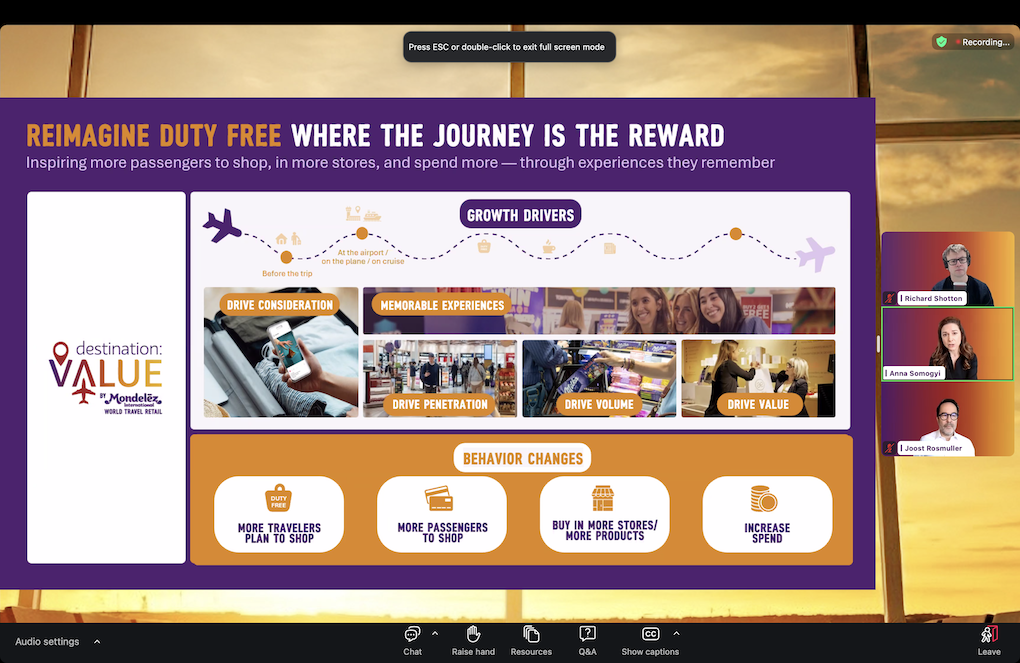
She described Destination:Value as “a collective journey to reimagine duty free and make every journey a reward”, built around four key pillars.
- Drive Consideration – Encourage more travelers to plan to buy during their time in the total travel retail journey.
- Drive Penetration – Turn more travelers into shoppers.
- Drive Volume – Increase the number of products sold along the journey – either in one store, or across an increasing number of stores.
- Drive Value – Persuade travellers to spend more on an item or items.
Each driver, she said, was supported by tangible, data-driven actions across the traveller journey – from boosting talkability through user-generated content to developing emotional triggers, cross-category pairings and experiential activations.

Mondelez WTR offered ten strategic, data-driven actions that could help to unlock the identified behaviour changes. With these actions, the team sets out its transformational ambition. Together with the industry, they seek to break down the single store, silo thinking and shift mindsets to extending the passenger journey and optimising the broader touchpoints to boost consideration.
“Many of these elements already exist in isolated best practices,” Somogyi noted. “What’s missing is scale and collaboration. To move forward, we need to think beyond single stores and consider the entire traveller journey.”
She concluded: “Destination:Value is our invitation to the industry to reimagine duty free together. If we act collectively, we can make every journey a reward – and redefine what value truly means in travel retail.”
Closing the session, Rosmuller reinforced Mondelez WTR’s message of partnership and shared purpose. “I want to emphasise one simple truth: this knowledge is important to all of us. What we’ve explored today – from behavioural insights to value perception – is not proprietary. It’s foundational. It’s the kind of understanding that lifts the entire channel.
“Travel retail doesn’t grow through isolated wins. It grows when we align – on what matters to travellers, on how we define value and on how we activate it across categories and touchpoints. Whether you’re a brand, a retailer, an airport, or a partner – this is shared ground and the more we collaborate, the more we grow the total.” ✈