EUROPE. The Duty Free World Council (DFWC) has released a detailed report highlighting the direct contribution duty free and travel retail makes to Europe’s economy, GDP and employment levels.
Primarily targeted at European Commission policymakers and other players from outside the industry, the report is described by DFWC President Frank O’Connell as the “first real analysis” of travel retail’s wider impact on the economy and the first to try to quantify its social impact, “an area hugely neglected over the years”.
The report, Economic impact of duty free and travel retail in Europe, was co-written by Dr. Harry Bush CB, former Group Director Economic Regulation at the UK Civil Aviation Authority (CAA) and previously Director, HM Treasury; and Daniel Storey, former senior regulator at the CAA and senior policy maker at HM Treasury.
The authors conclude that duty free and travel retail “plays a vital role in contributing to the commercial revenues which help sustain key aviation and maritime services and infrastructure, and the resulting connectivity, within Europe and beyond. That connectivity in turn sustains and stimulates economic activity generally and can be critical to the regeneration of Europe’s regions.”
 |
Economic and social impact
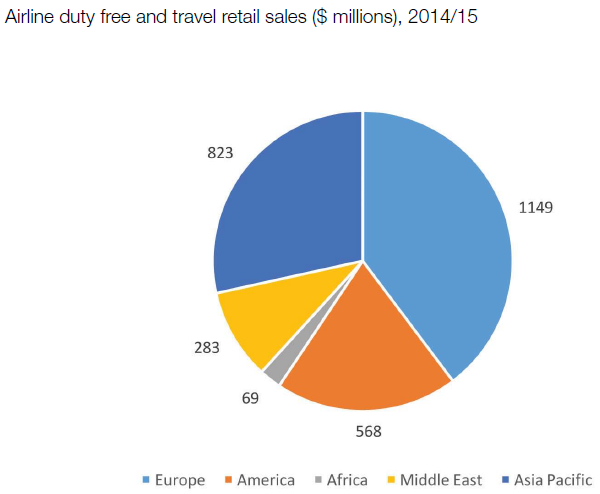
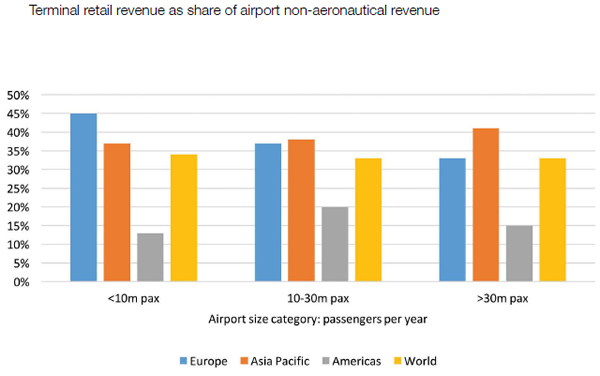
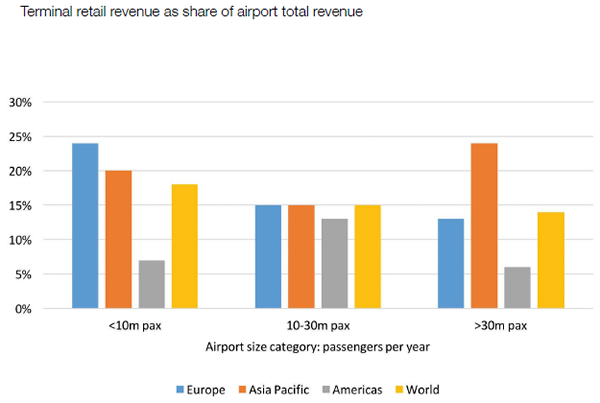
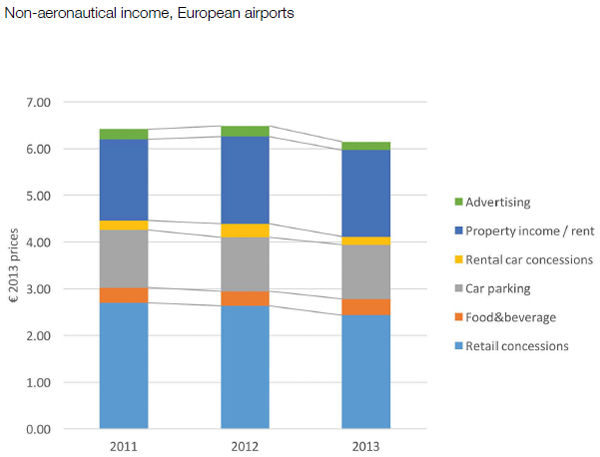
At a media briefing in London to launch the report, Bush noted that retail was a fundamental part of the economic chain in aviation and maritime. It generated revenues in Europe of €15.4 billion in 2014, of which more than €10 billion was at airports (67%) and €1.6 billion in the maritime sector (11%).
“Through retail, passengers effectively make a voluntary contribution to airport financing and aviation infrastructure,” he said. “In its absence, or if it was significantly curtailed, airline charges and fares would have to be higher, and there would therefore be less travel.”
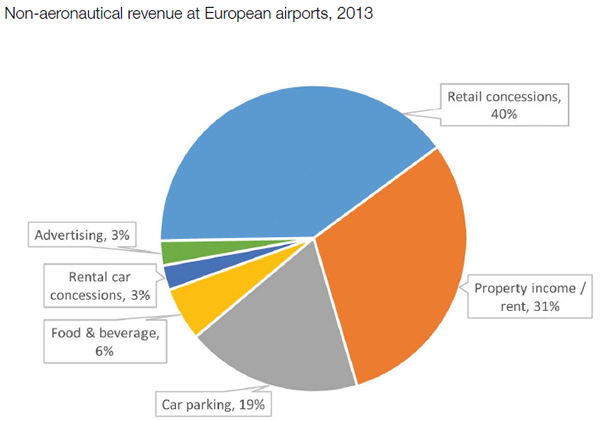
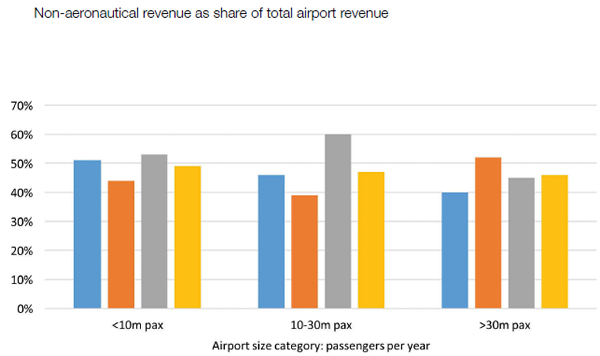
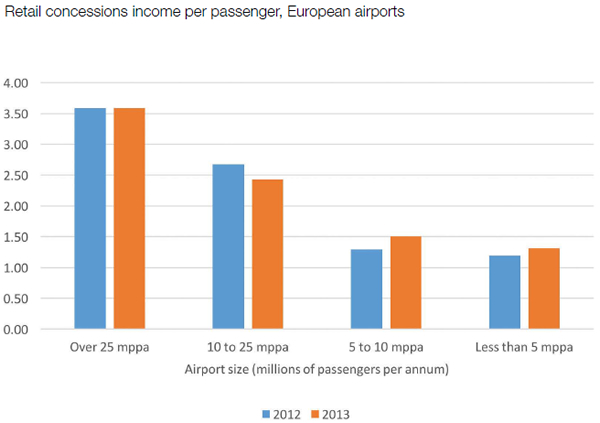
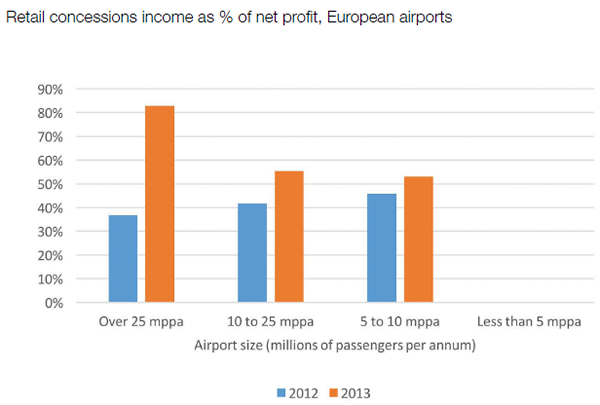
The authors said larger airports are able to generate the highest levels of retail revenues per passenger, “which effectively cover some 40-80% of their profit margins”. Smaller regional airports also rely on retail revenues, with airports handling between 5 and 25 million passengers per year generating some 40% of their profits per passenger from duty free and travel retail activities.
 |
The DFWC report states: “Without duty free and travel retail revenue, airports would not be able to provide the facilities and services they do. There would be significantly higher numbers of loss-making airports and/or higher levels of state subsidy. Overall, connectivity in Europe would diminish.”
Storey said retail’s contribution enables airports to provide a platform for aviation’s wider economic contribution – more than €100 billion directly to European economies.
In the maritime sector, the report estimates that 30-60% of total revenue comes from onboard retail sales (including catering). “These revenues sustain vital ferry routes, which are key to regional connectivity and economic growth,” it states.
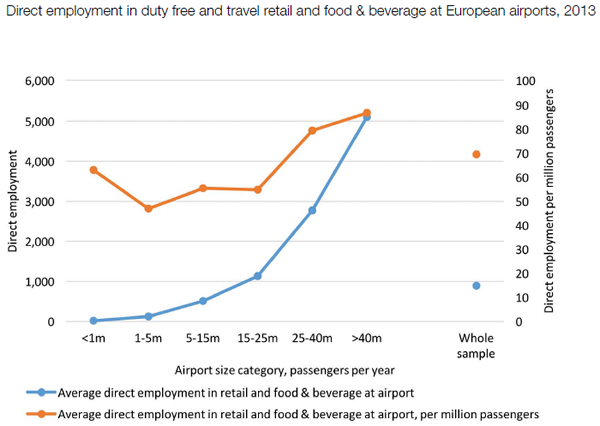 |
Another key element in the report is the analysis of the social impact of duty free and travel retail. Retail and other in-terminal services (such as car hire and food & beverage) generated around 107,000 jobs in 2013, some 6% of the total 1.7 million direct jobs at European airports.
“Applying this proportion to the €102 billion (around 0.8%) of European GDP directly generated by the aviation sector in 2013 suggests that the direct contribution of European airport duty free and travel retail to GDP was around €6.5 billion in 2013.”
 |
 |
 |
Policy implications
Although DFWC’s O’Connell said the European Commission was “finally getting the message that retail was not just an add-on, but key to airport economics”, the report was created with the aim of influencing policymakers.
The DFWC originally planned to launch the report during a meeting at the European Parliament in Brussels, which had to be cancelled following the terror attacks in the city.
However, an event in which the report’s key findings will be presented to policymakers will still be organised, according to O’Connell, likely in May.
Bush said the report offers education for policymakers and lists “important points for them to pay attention to”, while noting future challenges including regulations, online retailing and airline policies such as onboard baggage limits which may have the “unintended side effect of deterring passengers” from making retail purchases.
 |
“It is important for governments to recognise that the continued vitality of this sector is not just beneficial for passengers’ travel experience but also underpins the provision of vital transport infrastructure across Europe,” the report states.
“Governments should therefore seek to encourage duty free and travel retail, and be cautious about potentially damaging new regulations. Such a policy approach must entail the cost/benefit analysis of regulatory changes, not only against their impact on duty free and travel retail directly, but also the potential effect on transport financing and connectivity.
“Governments should also recognise the unique character of the duty free and travel retail channel, which involves selling to people who more often than not will be consuming their purchases in many and disparate countries. Applying national-level regulations may therefore be neither relevant nor proportionate to achieving consumer protection goals.”
 |
In a series of annexes, the report highlights a number of case studies which “bring alive the story and are designed to shed light on a particular aspect of the narrative,” according to Storey. The case studies cover both airports and brands, including London Stansted, Cork, Helsinki and Rome Fiumicino airports as well as Butlers Chocolates and Bottega.
At London Stansted, Storey noted that investment in new facilities was self-financed by retail, while in Helsinki the airport’s retail strategy successfully supported an attempt to pick up extra intercontinental traffic – particularly in Asia – by repositioning the retail proposition to be more attractive to Asian passengers.
The DFWC’s report on the economic impact of duty free and travel retail in Europe is the first in a series of regional analyses to published over the next couple of years. O’Connell said the DFWC will meet at the IAADFS Duty Free Show of the Americas next week to decide which region to focus on next, with Asia Pacific and the Middle East the contenders. Ultimately, O’Connell said the reports would be brought together to offer an overview on “a global level”.
 |