
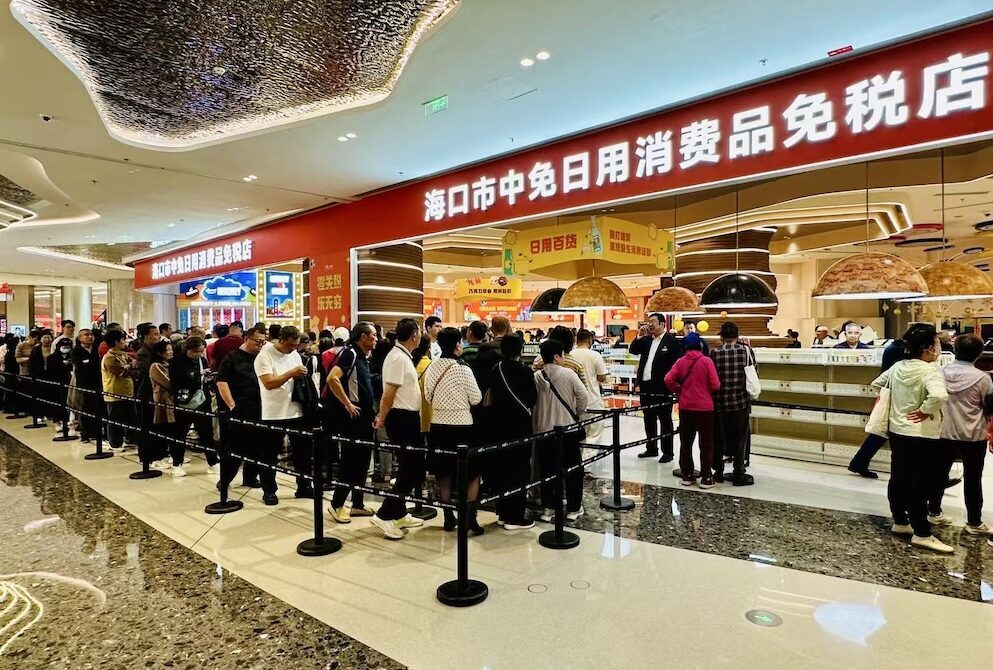
CHINA. The first five daily consumer goods duty-free stores opened in Hainan yesterday (11 February), marking the official roll-out of the province’s ‘zero-tariff’ policy for imported goods purchased by residents.
As reported, the policy – announced jointly by China’s Ministry of Finance, the General Administration of Customs and the State Taxation Administration on 5 February – allows eligible residents to buy specified imported goods duty-free for personal consumption.
Chinese citizens holding a Hainan Province ID card, residence permit or social security card – as well as foreign nationals working and living in Hainan with residence permits – are entitled to an annual duty-free quota of RMB10,000 (US$1,446) per person, with no limit on the number of transactions.

The five daily goods duty-free stores include three in Haikou and one each in Sanya and Danzhou. The Moodie Davitt Report China Travel Retail Express Editor Dachang Wang visited the Haikou locations to assess footfall, product offerings and operational models.
Wang visited the China Duty Free Group store (approximately 1,000sq m), the ecommerce specialist JD.com store (1,488sq m) and the Wanghao daily store (approximately 1,000sq m). His key observations are listed below.
Notably, all first-phase stores operate on a brick-and-mortar basis, requiring customers to make purchases in person. Online orders have not been introduced yet.
On opening day, all three stores saw noticeably high footfall, with queues forming at checkout. Unlike traditional offshore duty-free shopping, mostly driven by large purchases from tourists, this new wave of consumers is distinctly local.

Many shoppers showed up with social security cards or IDs to test the policy, gravitating toward imported foods, personal care products and household essentials. The overall spending pattern was markedly more considered. Some residents were seen comparing prices and calculating quota usage on the spot; others said they planned to use their annual allowance incrementally when needed.
With the RMB10,000 (US$1,446) annual quota and unlimited transactions, the policy frames duty-free consumption as part of daily life rather than a one-off travel perk.
Under the same policy framework, the three stores leverage distinct supply chain capabilities to shape their operational approaches.
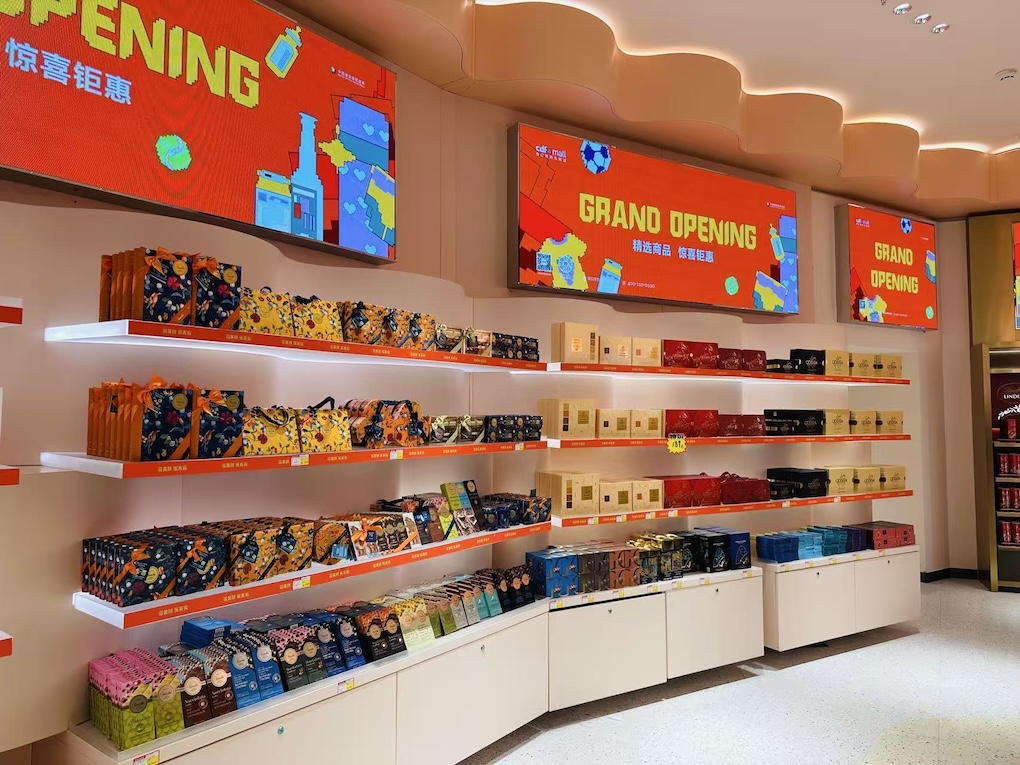

CDFG draws on its established duty-free procurement system, offering a stable mix of imported foods and branded personal care products. Its merchandising reflects professional duty-free retail logic, with emphasis on product provenance and pricing advantage.
Meanwhile, JD.com adopts a more integrated model, spotlighting imported household goods and high-frequency family essentials. Its strength lies in supply chain coordination and category diversification.
On the other hand, local supermarket operator Wanghao tailors its layout and product selection to community consumption habits, prioritising practicality and convenience.
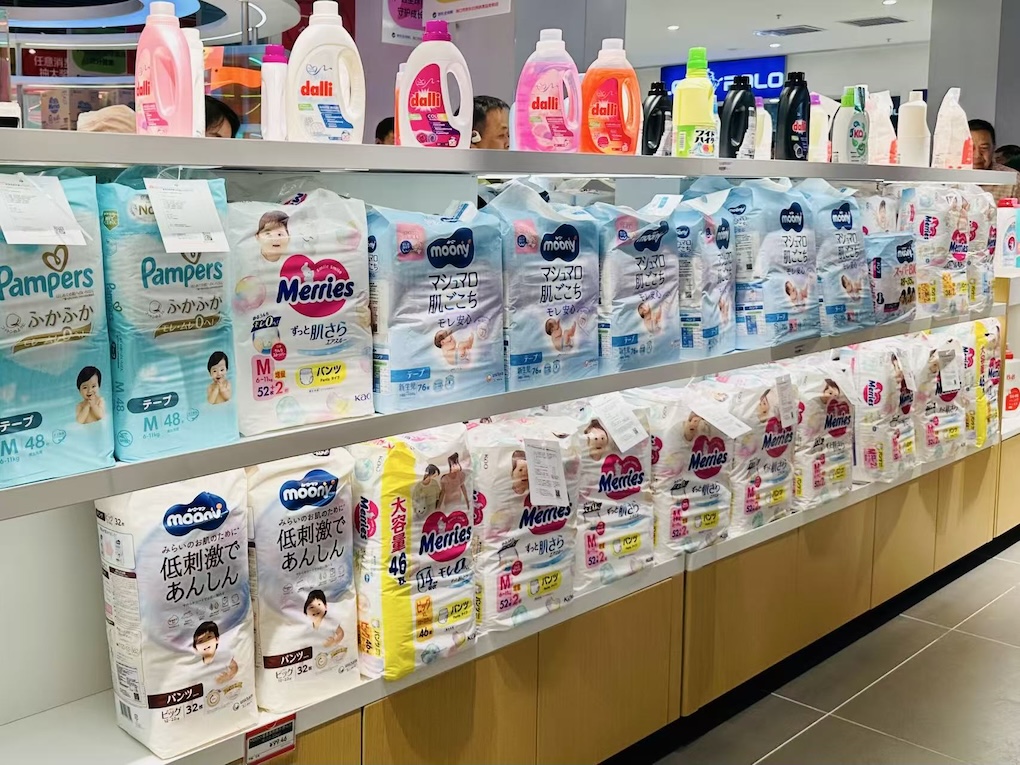
The product offering across all three stores remains a work in progress.
Shelves were still being replenished on opening day, with certain brands and items yet to be fully rolled out. Staff noted the assortment will be gradually enriched as supply chain integration advances, bringing in more imported daily goods and high-demand staples.
As a newly introduced business format, these first stores serve as an initial testing ground. Real-time consumer data will inform ongoing refinements to both product rosters and operational measures.


The launch of ‘zero-tariff’ daily goods duty-free stores signals a strategic shift in Hainan’s duty-free landscape, from a tourism-centric model toward one that increasingly serves residents’ everyday needs.
Unlike offshore duty-free shopping, the new format relies on the continuity and stability of local consumption demands, placing greater emphasis on product curation, supply chain efficiency and sustained relevance.
The openings mark the first step in this policy experiment. As product offerings mature and consumption habits take root, the policy’s full impact will take time to emerge, but its significance to the development of the Hainan Free Trade Port is already coming into view. 🏝️