

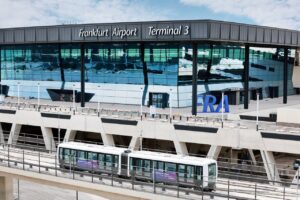
GERMANY. Frankfurt Airport owner Fraport posted a +3% year-on-year rise in Retail & Real Estate revenues (including car parking and other income) to €551 million in 2025.
Car parking was a key contributor, up +5% in revenue terms over 2024 figures to €114 million, while retail (which also includes food & beverage) climbed +1% to €200 million.
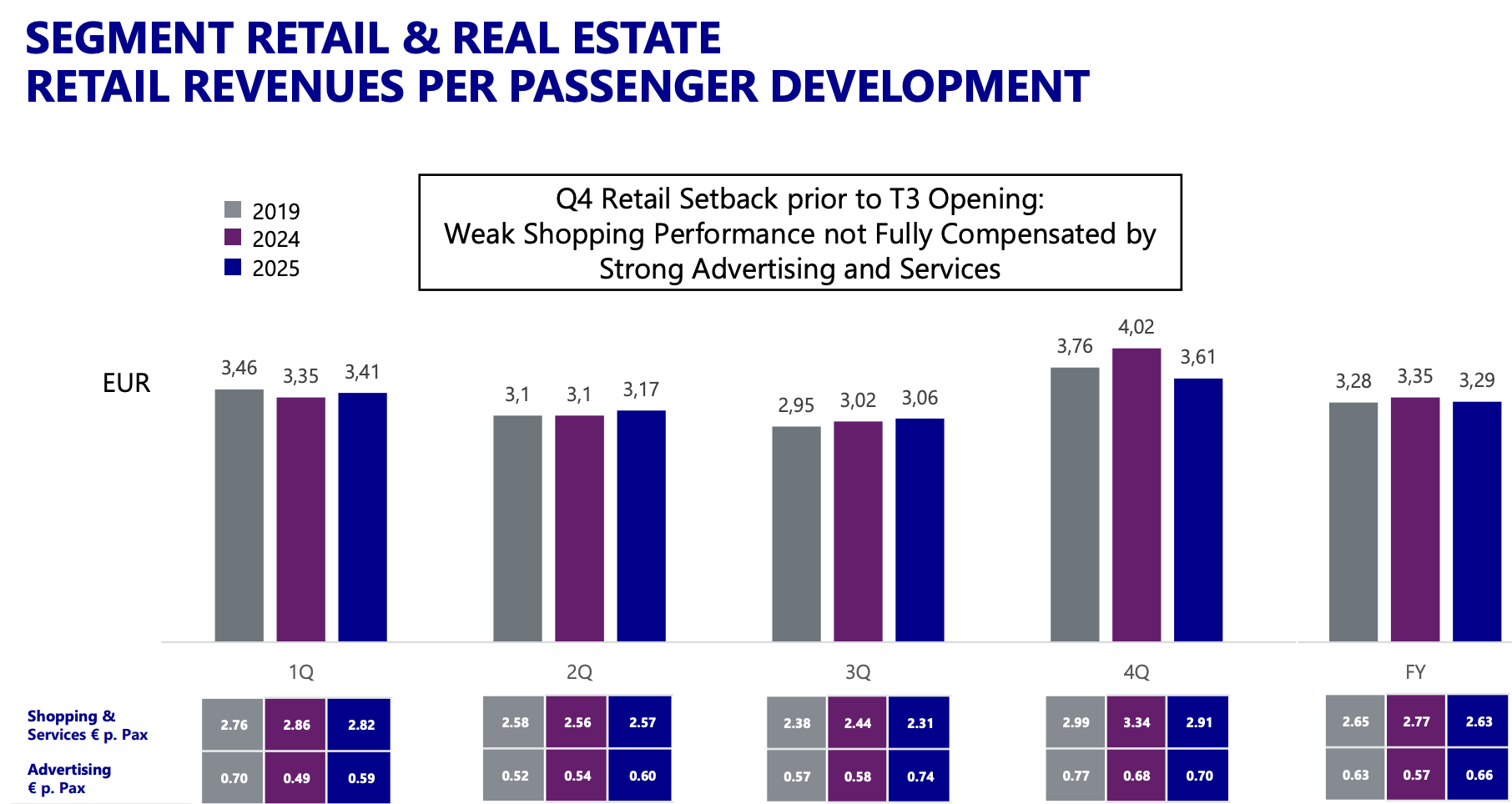
Retail revenue per passenger fell from €3.35 in 2024 to €3.29, which Fraport blamed on a weaker performance in shopping, only partly compensated by strong services and advertising income.
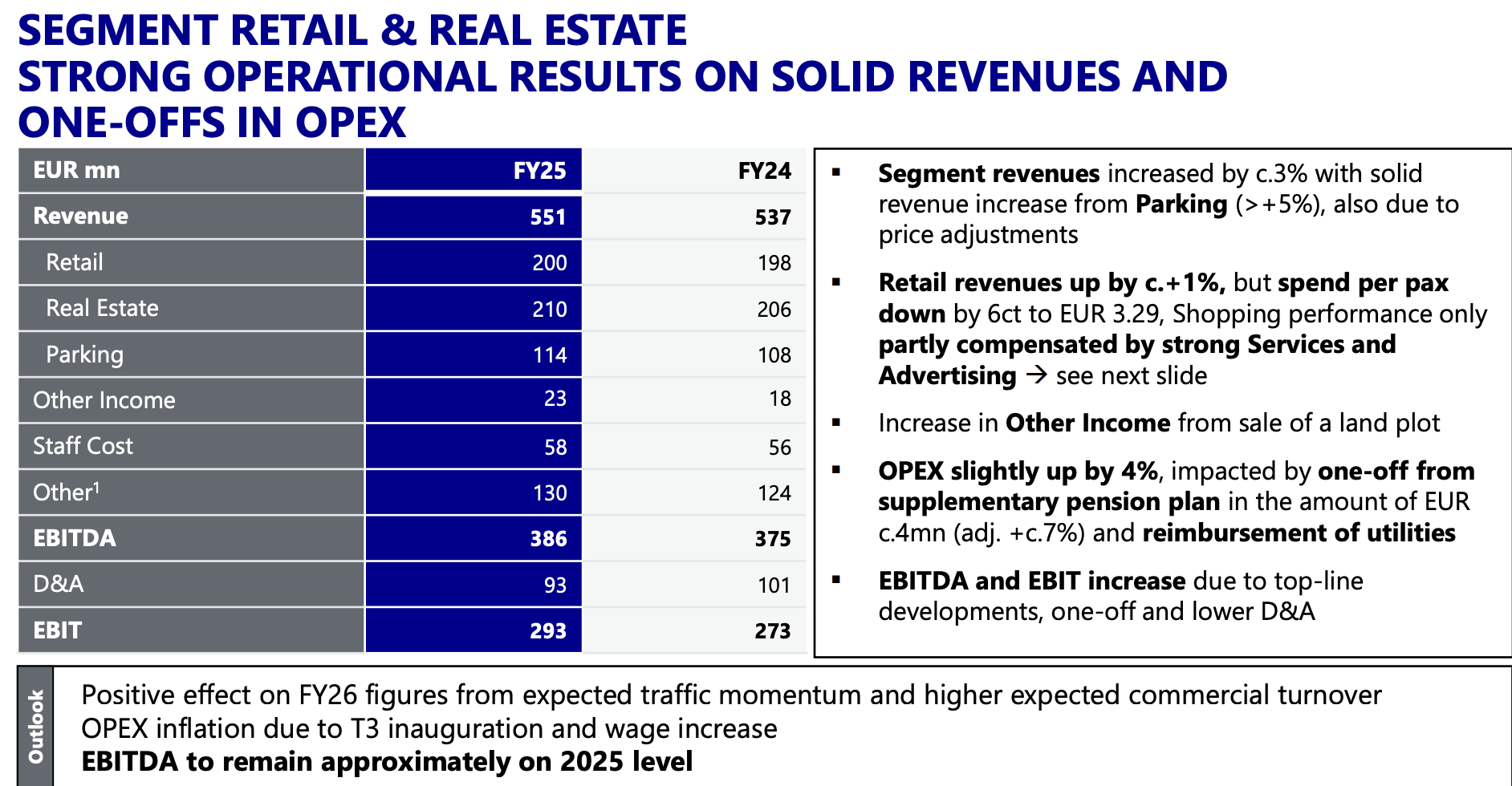
Retail & Real Estate revenue growth was marginally ahead of the +2.6% rise in passenger traffic at Frankfurt Airport to 63.2 million.
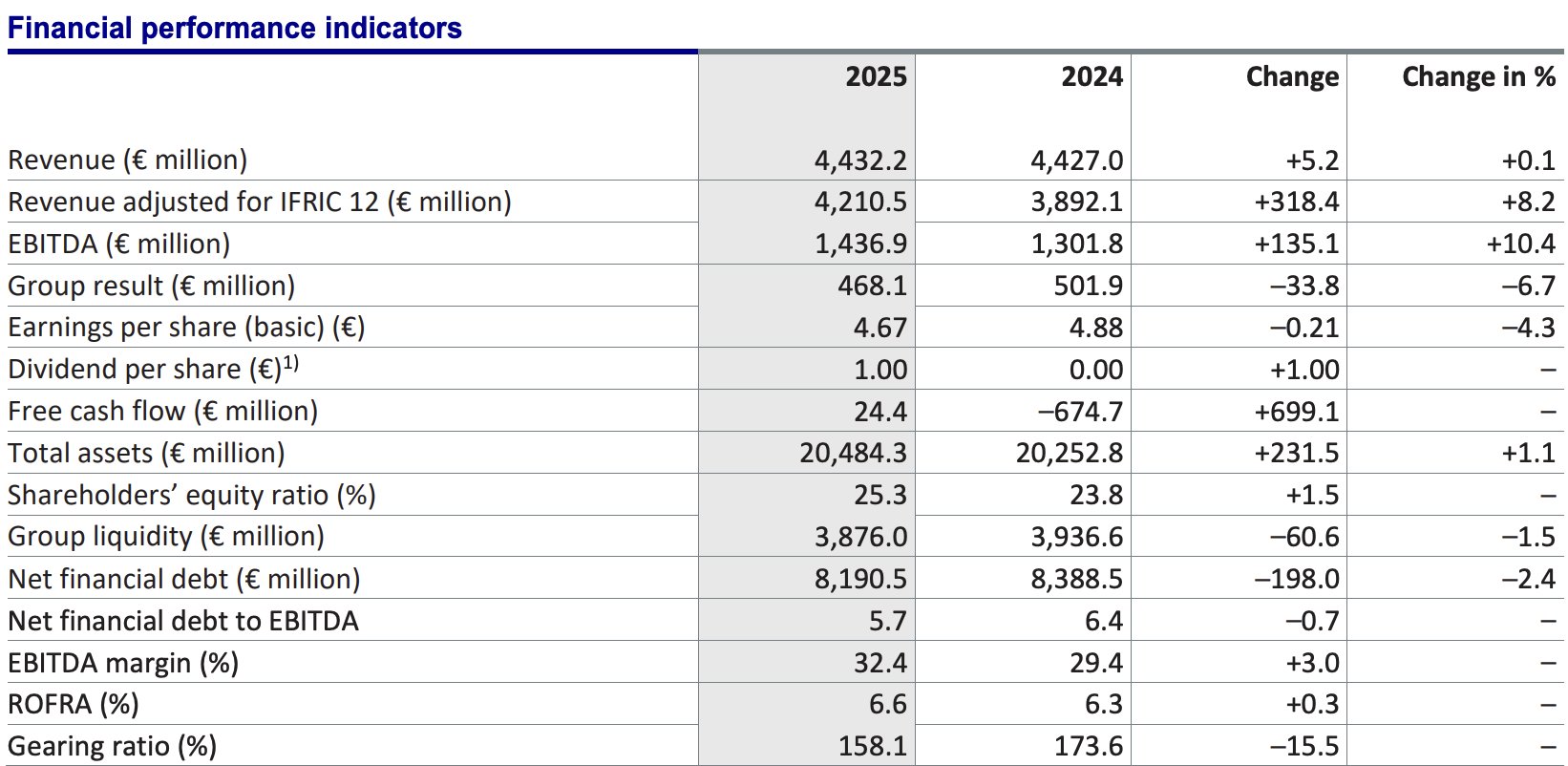
Increased passenger numbers across the group, as well as price effects and higher demand for ground handling services, boosted total annual revenue (adjusted for IFRIC 12) by +8.2% year-on-year to €4.21 billion.
Group EBITDA rose +10.4% to €1.44 billion though net profit dropped -6.7% to €468.1 million. This decrease was primarily due to higher depreciation and amortisation, as well as interest effects relating to the terminal opening at Lima Airport.
“Our broad diversification has paved the way for a very positive business performance in the past fiscal year, as reflected in the growth both in revenue and operating result,” said Fraport CEO Dr Stefan Schulte.
He added: “Free cash flow is positive again (at €24.4 million), for the first time since 2018. The completion of major investment projects will significantly boost our free cash flow even further. This will provide us with more leeway in the future to reduce debt and facilitate dividend payments to our shareholders.”
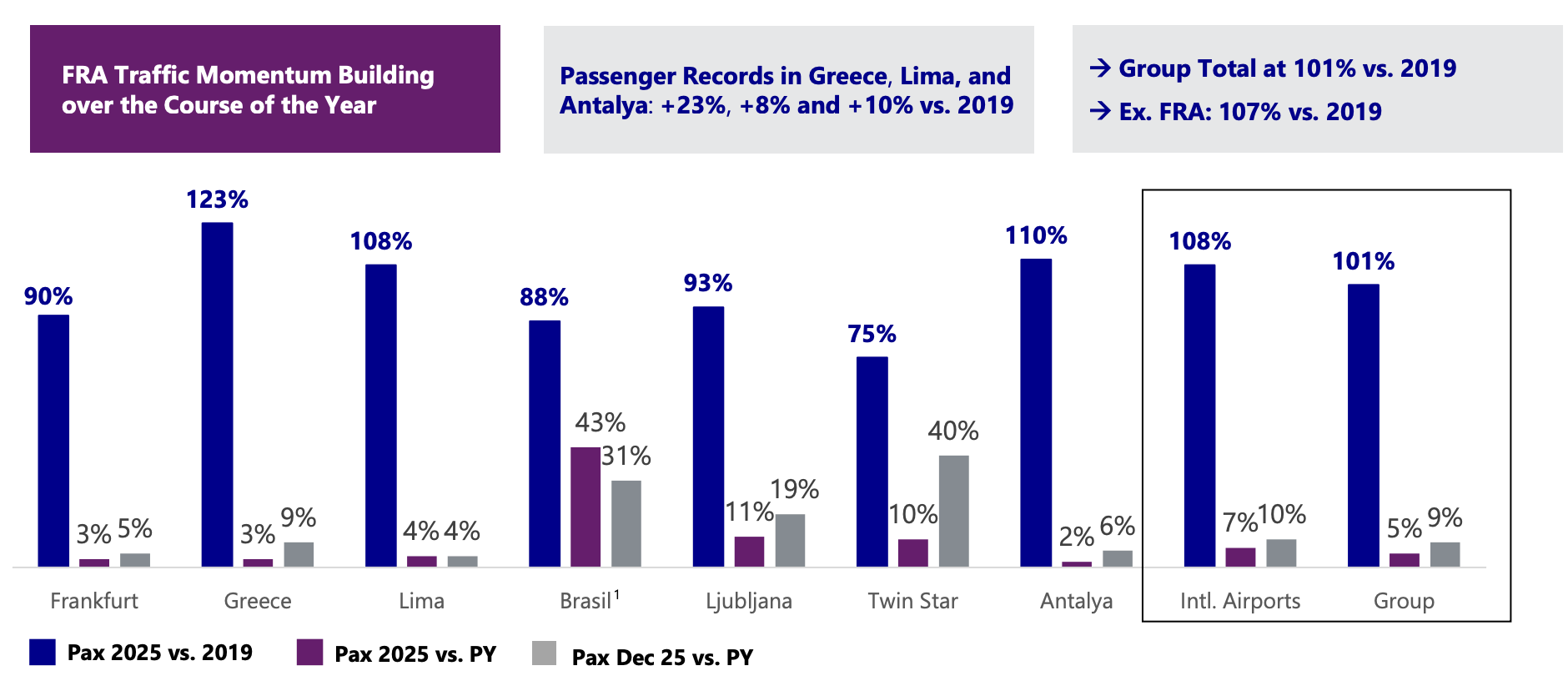
At 184 million passengers, overall group passenger traffic was +1% above pre-pandemic levels in 2019.
The positive trend was most pronounced at the 14 Greek airports (up +23% vs. 2019), Antalya (+10%) and Lima (+8%) but Fraport’s home base in Frankfurt still lags -10% behind its passenger numbers from 2019.
Dr Schulte commented: “We would be significantly better placed in Frankfurt if we did not have the excessive regulatory costs that continue to limit passenger growth in the German market.
“A major step forward has come with the government’s announcement to withdraw the latest increase in aviation tax. This step now needs to be implemented. If further cost reductions follow, a reversal of the trend is possible. Sweden’s example shows the kind of growth surges that are possible if aviation taxes are completely abolished.”
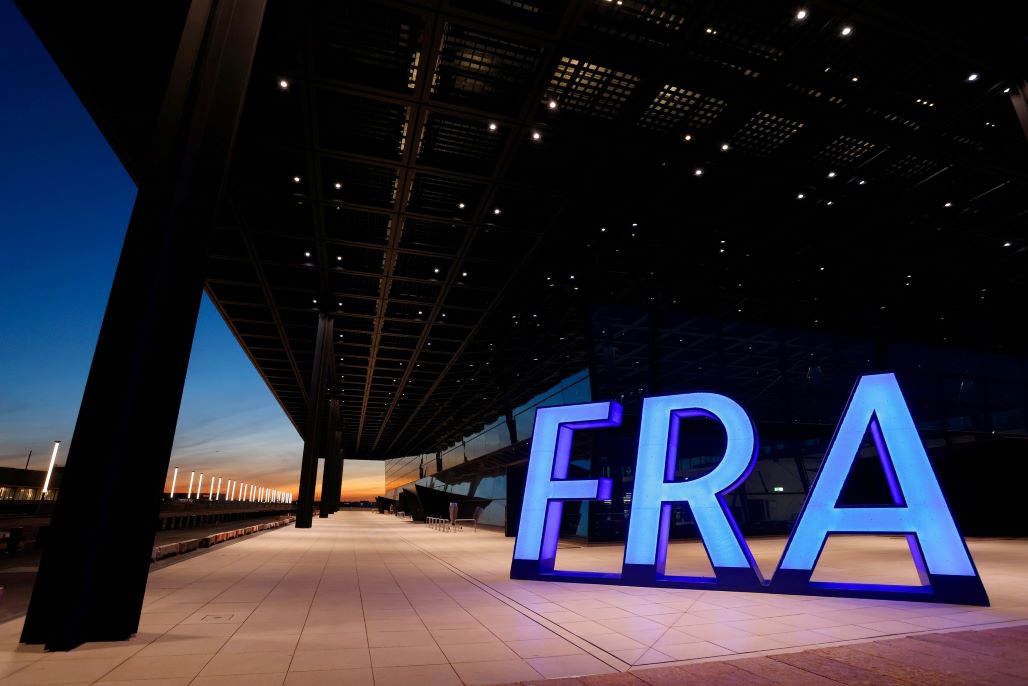
Looking ahead, Frankfurt Airport’s new Terminal 3 is scheduled to begin operating on 23 April. After a ten-year construction period and an investment of around €4 billion, the new terminal will provide capacity for around 19 million passengers annually.
Airlines currently operating from Terminal 2 will relocate to T3 in four phases before the start of the summer travel period. Germany’s second-largest airline, Condor, will move to the new terminal in summer 2027. The freeing-up of terminal and apron space in the airport’s north will create additional growth opportunities for airlines in Terminal 1, before a planned refurbishment of T2.
For fiscal year 2026, Fraport said traffic group-wide should grow to around 188-195 million passengers, and to 65-66 million passengers in Frankfurt.
Group EBITDA is projected to increase to around €1.5 billion although net profit will decline. Fraport noted that while the new T3 will have a positive impact on earnings, assets and the financial position over the long term, rising depreciation and amortisation, as well as higher interest expenses, will lead to a lower net profit of around €300 to €400 million in the short term. ✈