

CHINA. Despite resilient demand, travel retailers continue to miss conversion opportunities as many Chinese travellers struggle to find the brands or products they intend to purchase.
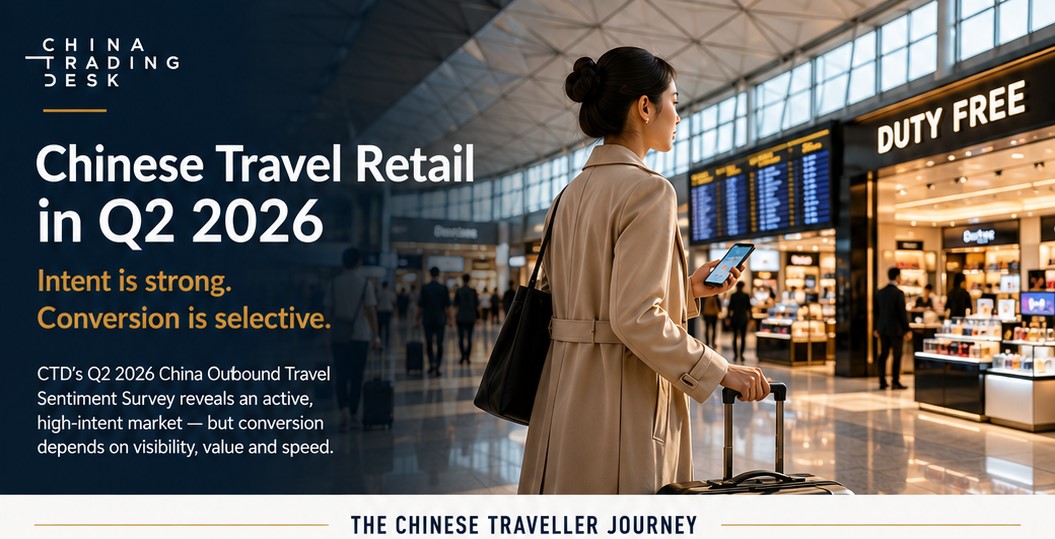
That’s according to China Trading Desk’s Q2 2026 China Outbound Travel Sentiment Survey, released today (30 June), highlighting product visibility, value, availability and speed as the key drivers of conversion.
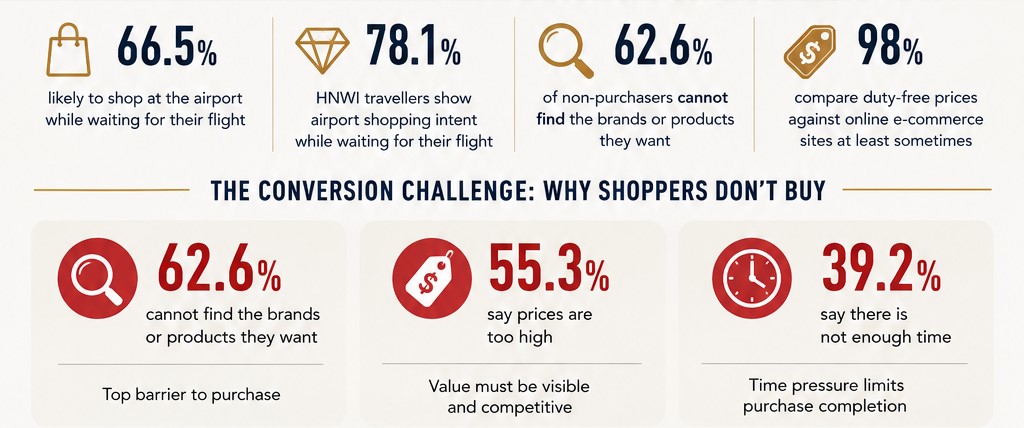
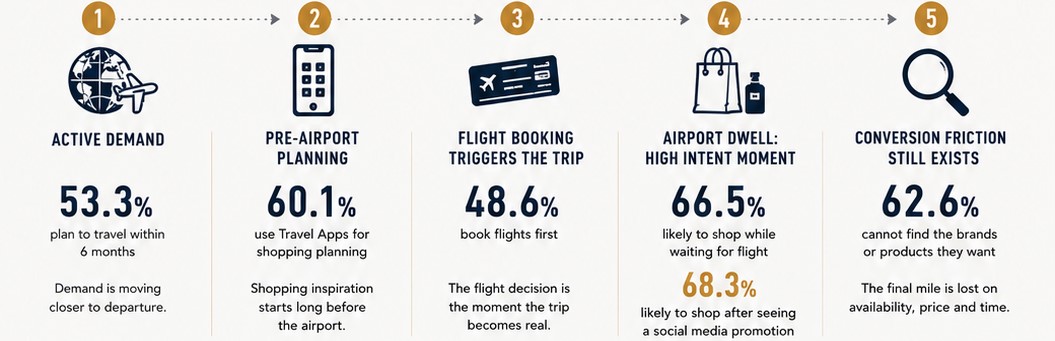
The research found that 62.6% of travellers are unable to find their preferred brands or products, 55.3% discouraged by high prices and 39.2% constrained by limited shopping time.
The survey highlights key priorities for retailers: make assortment easier to discover, make value clearer, and make the transaction faster before the traveller moves on.
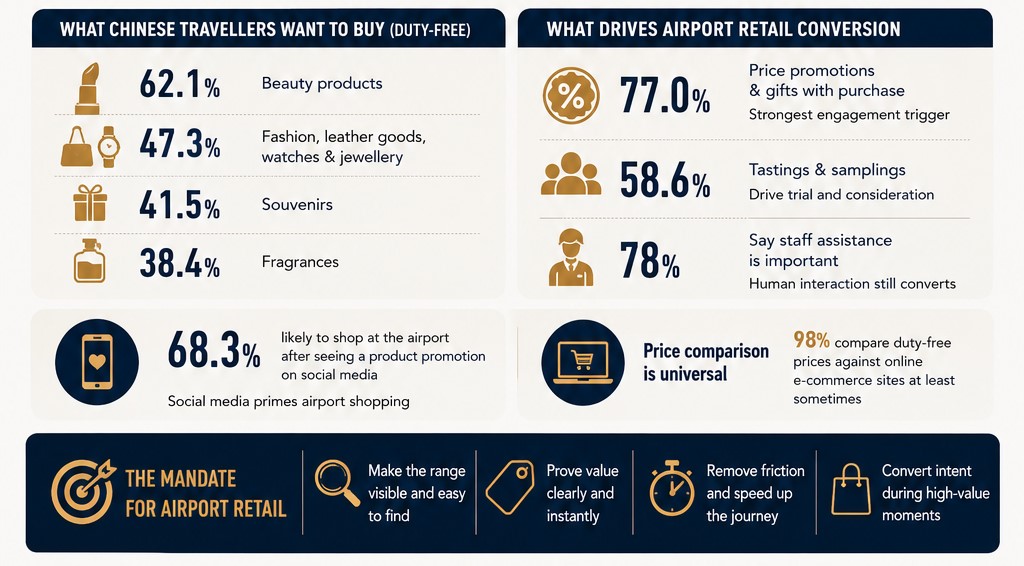
Despite these challenges, travel retail demand remains strong, with 66.5% of Chinese outbound travellers likely or very likely to shop at the airport while waiting for their flight, and 68.3% likely to do so after discovering a product promotion on social media.
Airport shopping intent is strongest among high-value traveller segments, led by high-net-worth individuals (78.1%) and frequent travellers (74.2%), while first-time travellers are the least inclined to shop.
The survey also found rising travel intent among respondents, with 53.3% planning an overseas trip within the next six months, and 24.7% intending to travel within three months. The growing traveller base presents fresh opportunities for airport retailers, but travellers now expect greater convenience, transparency and efficiency, China Trading Desk noted.
The data highlights the continued importance of core duty-free categories in airport retail. Beauty remains the strongest-performing segment at 62.1% purchase intent, followed by fashion, leathergoods, watches and jewellery at 47.3%. Souvenirs (41.5%) and fragrances (38.4%) maintain a strong appeal.
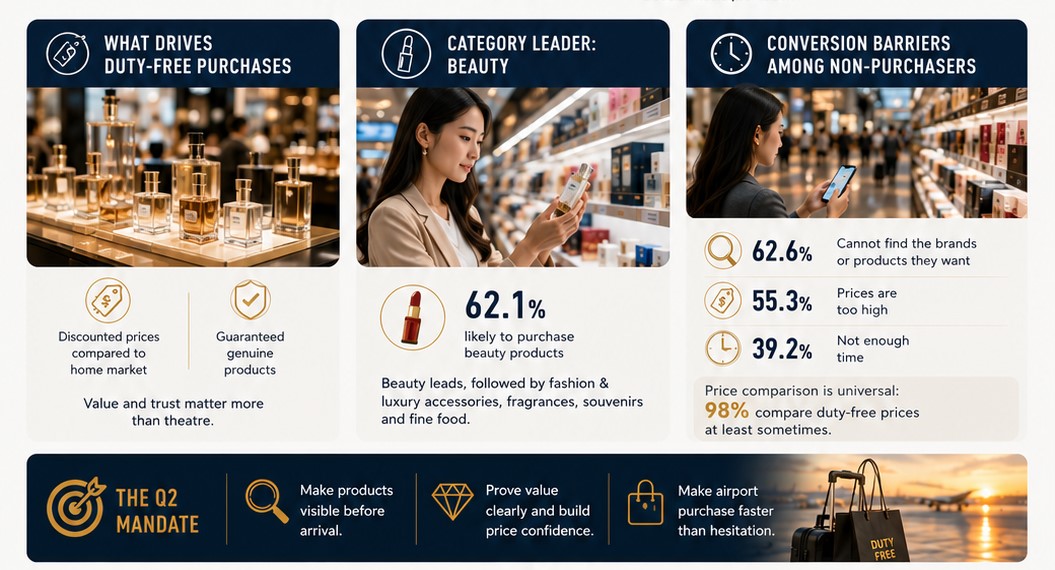
Across categories, lower prices than those available in travellers’ home markets and the assurance of authentic products continue to shape purchasing decisions.
Price transparency has also emerged as a key consideration, with 98% of respondents comparing duty-free prices against online ecommerce sites at least sometimes.
Another key takeaway is that effective in-store engagement remains a powerful conversion tool. Price promotions and gifts with purchase emerge as the leading engagement strategy (77.0%), ahead of tastings and sampling (58.6%), while 78% of travellers consider staff assistance an important part of the shopping experience.
The study also points to the growing role of social media in driving product discovery before travellers arrive at the airport, with travel apps, Xiaohongshu and destination websites playing an important role in shaping shopping intent.
Travellers also research products throughout the booking journey, from before purchasing air tickets to after confirming accommodation.
This shift calls for brands and retailers to engage consumers before their trip, as the airport store is no longer the starting point of the shopping journey but rather the final stage of conversion.
China Trading Desk Founder & CEO Subramania Bhatt said, “Chinese travellers are willing to shop at the airport, but they are also becoming more deliberate.
“For duty-free retailers, the task is very practical: make the right products easier to find, make value easier to prove, and make the purchase easier to complete before the traveller walks past.”
The research suggests airport retail should define its role within a broader shopping journey rather than compete directly with downtown stores.
Travellers continue to favour downtown retail for wider assortments, niche products, price comparison and more time to browse, with 56.8% shopping mainly downtown while still purchasing at the airport and 47.7% mostly shopping in city-centre stores.
By comparison, only 8.3% mostly shop at the airport, reinforcing the importance of convenience, exclusivity, duty-free value, reserve-and-collect and efficient pickup.
The Q2 study concludes that future growth in Chinese travel retail will depend on creating a connected shopper journey that links discovery, planning and purchase.
Success will favour brands, retailers and airport operators that build visibility before departure, clearly communicate value, simplify fulfilment and capture purchase intent during the planning phase and airport dwell time. ✈