
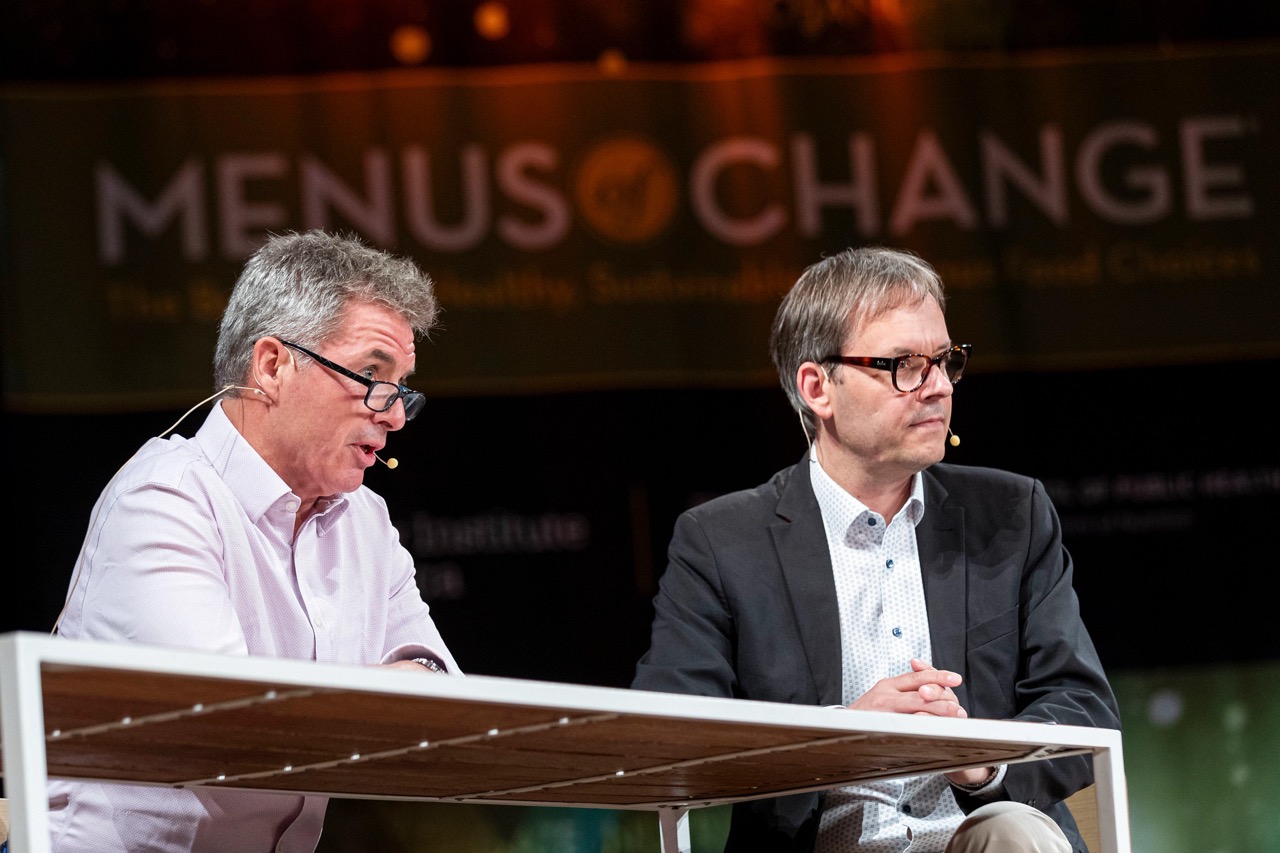
USA. The Culinary Institute of America (CIA) and research and intelligence firm tRetail Labs used the stage of the annual CIA Menus of Change Leadership Summit last month to launch the Airport Food & Beverage 2035 Business Opportunity Report.
The partners also announced that Munich Airport has become the first airport in the world to implement their joint Travel F&B Fit (TFF) Framework.
The new report draws on new primary research, behavioural intelligence from tRetail Labs’ nrtureAI platform, and the Menus of Change framework to document the commercial gap in current airport food systems and provide an evidence-based roadmap for closing it.

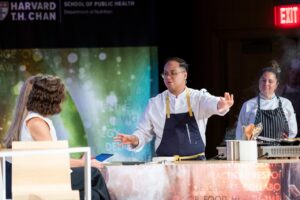
With 10.3 billion passengers moving through airports globally each year and an estimated 2.8 billion in-airport meals served, the sector remains “one of the largest and most under-optimised food environments in the world”, they said.
tRetail Labs Founder and CEO Sushanta Das said, “Airport food & beverage has been treated as a residual function of the terminal for too long. The data is unambiguous: travellers want better, and the commercial case for delivering it is just as strong. Munich Airport’s adoption of the TFF Framework is proof that this is not theoretical. It is happening now.”
Reframing the conversation around travel F&B
A much discussed session at the Menus of Change Leadership Summit was a presentation by former SSP senior executive and tRetail labs advisor Mark Angela and Professor Dr. Thorsten Merkle, titled ‘The Future of Travel F&B’.
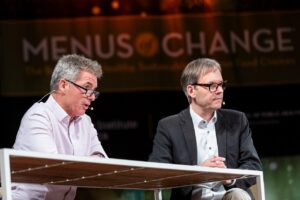
Drawing on the research underpinning the report, the session offered a rigorous reframing of why airport food systems have stalled and what it will take to move them forward.
The central argument was that people in airports do not behave like ideal consumers. They behave like travellers. Airport food environments have been built around operational convenience, not around the realities of a passenger making decisions under time pressure and stress, they said.
The consequence is a persistent gap between what travellers want and what they actually encounter.
Professor Dr. Thorsten Merkle said of the core research finding: “Approximately 950 recent US and Canadian travellers told us they want better choices.
“But they often do not experience them. The reason is not supply. It is perception. If a healthier option is not visible at the moment of choice, it effectively does not exist. Availability is perceived, not just provided.”
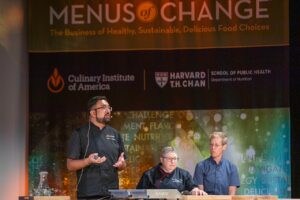
Angela and Merkle turned to what they called the commercial truth: the airport food system rewards what works under pressure. Speed. Trust. Throughput. Margin. The 2035 challenge, they argued, is not to dismantle that logic but to make healthier and more sustainable food competitive within it.
Mark Angela said, “Sustainability is already present in many airport food programmes. But it is not yet salient. It does not connect to the travel need at the moment that matters. The goal is fit-for-travel food systems. Seen. Trusted. Chosen. Delivered.”
A world first for Munich Airport
The Summit also marked the public confirmation of a milestone: Munich Airport, through Allresto, its hospitality subsidiary, has become the first airport in the world to implement the Travel F&B Fit (TFF) Framework developed by tRetail Labs.
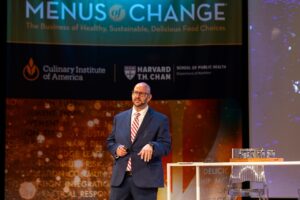
The TFF Framework applies the nrtureAI Diagnostic Lens to assess an airport’s food & beverage environment against traveller wellbeing, hospitality standards, sustainability, and travel relevance, producing a structured picture of where gaps exist and where the greatest commercial and experiential opportunity lies.
This implementation positions the airport “as the global benchmark for what a diagnostically informed, traveller-centred approach to airport food & beverage looks like in practice” said the partners, and sets a reference point for the industry.
The Airport F&B Pathfinders Committee
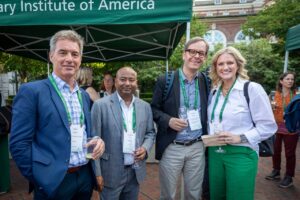
Alongside the report launch, the CIA and tRetail Labs convened the inaugural Airport F&B Pathfinders Committee dinner, bringing together senior industry figures to translate the report’s frameworks into on-the-ground pilots.
Attendees included Areas Vice President of Operational Excellence Steve Byrne and Areas Regional Chef Pablo Mendez alongside Airport Dimensions Vice President of Guest Experience and Operations Support Rachel Kelly.

Abby Fammartino of the CIA’s Center for Food and Beverage Leadership said, “This is not a conversation about aspiration. It is a conversation about execution. The people in that room understand terminals, menus, and operational realities.
“When you combine that expertise with the research and intelligence frameworks CIA and tRetail Labs have developed, you get something genuinely actionable.”
Airport Restaurant & Retail Association Executive Director Andrew Weddig also attended the Menus of Change event.
He said, “This is the right moment for our industry to rethink and reimagine what a forward-looking airport F&B programme looks like, one that reduces dependency on national street brands or costly one-off local-brand builds.
“A shared, evidence-based framework like the one CIA and tRetail Labs are putting forward via the Airport F&B Pathfinding Committee gives operators and airports a common starting point, while still leaving room for creativity and the local identity that makes airport dining work.”
Next steps
The three-phase pathway at the heart of the report moves from the TFF Diagnostic Lens, which identifies gaps across traveller wellbeing, hospitality, sustainability and travel relevance, through the Menus of Change framework for implementation, to nrtureAI measurement of post-implementation impact at airports.
Munich Airport’s adoption of the framework gives the model its first real-world proof point, added the partners.
Airports, operators and concessionaires wishing to engage with the Travel F&B Fit (TFF) Framework, a Menus of Change evaluation, or the Airport F&B Pathfinders Committee can do so via this link: ciaindustryleadership.com/airport-fb
*tRetail Labs and Munich Airport will discuss their partnership at this week’s Airport Food & Beverage (FAB) + Hospitality Conference & Awards in Bengaluru, with CIA and tRetail Labs as Silver Partners.