



ASIA PACIFIC. International passenger traffic across Asia Pacific softened in June as soaring fuel prices linked to the ongoing Middle East conflict pushed up airfares, weighing on demand even as the peak mid-year travel season got underway.
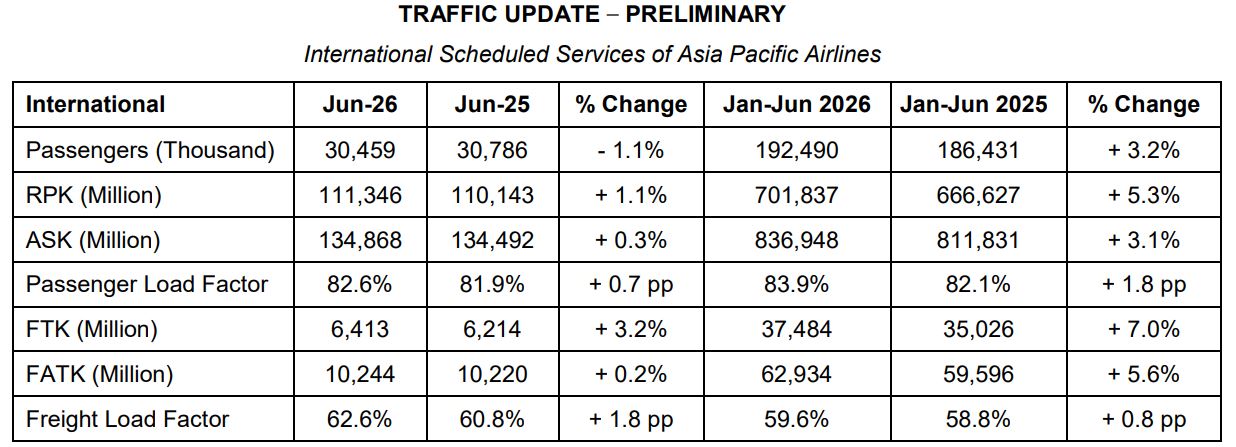
Preliminary traffic figures released today (5 August) by the Association of Asia Pacific Airlines (AAPA) reveal that airlines in the region carried 30.5 million international passengers during the month, down -1.1% from a year earlier.
While passenger numbers eased, revenue passenger kilometres (RPK) rose +1.1% year-on-year, highlighting continued strength in longer-haul travel. With available seat capacity increasing by just +0.3%, the average international passenger load factor improved 0.7 percentage points to 82.6%.
AAPA Director General Wong Hong commented, “Passenger traffic moderated in June as higher airfares and capacity adjustments in some regional markets weighed on demand.
“Even so, international travel has continued to hold up well, with Asia Pacific airlines carrying 192.5 million international passengers during the first half of 2026, +3.2% more than in the corresponding period last year.”
Looking ahead, Wong added, “Airlines continue to face challenging operating conditions, with persistent uncertainty surrounding the Middle East conflict contributing to fuel price volatility and continued pressure on operating costs.
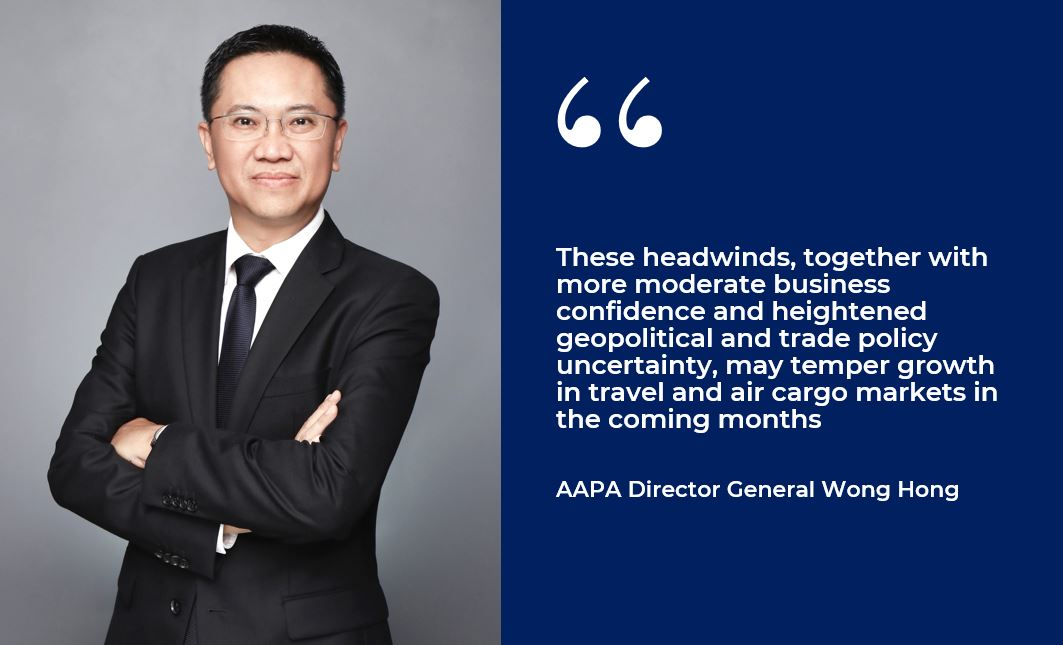
“These headwinds, together with more moderate business confidence and heightened geopolitical and trade policy uncertainty, may temper growth in travel and air cargo markets in the coming months.
“Against this backdrop, carriers remain focused on maintaining network flexibility, exercising capacity discipline, and enhancing operational efficiency in response to evolving demand patterns.” ✈