
In this guest article, Costa Coffee International Managing Director Sam O’Brien explores the evolving role of coffee within the passenger journey and the company’s response to shifting traveller expectations across the ever-changing global airport environment.
Airports are among the most complex environments consumers navigate. Passengers move through a series of time-sensitive moments, from security and departure to connections and arrivals, often in unfamiliar surroundings.
In that environment, the role of hospitality is changing. Passengers increasingly expect more than efficiency. They want convenience, quality, familiarity and experiences that fit naturally around the way they travel.
With almost 200 airport locations globally, serving 57 million customers across our travel estate and reaching more than 1.5 billion passenger journeys annually through the airports in which we operate, Costa Coffee has seen first-hand how passenger expectations are evolving.
Our experience has reinforced a simple belief: the future of airport coffee is not about one format serving every passenger. It is about creating the right coffee experience for the right moment in the journey.
The importance of familiarity
Research from GlobalData PLC shows 66% of passengers follow a pre-flight coffee ritual, while 58% actively seek out familiar coffee brands when travelling. These behaviours point to something important about airport hospitality – familiarity has value.
Coffee can be a moment of pause before an early morning flight, a meeting point before departure, or a place to work between connections.
For airport operators, concession partners and brands, the opportunity is not simply to sell more coffee, but to create propositions that support passenger satisfaction, optimise dwell time and meet different traveller needs.
The passenger who wants a coffee immediately before security has a different need from the traveller with an hour to spare. A family preparing for a long-haul flight has different priorities from a business traveller looking for somewhere to work.
There is, therefore, no single airport coffee customer and, increasingly, there should be no single airport coffee proposition.
Designing around the passenger mission
In some of our key markets, travel retail accounts for up to 30% of Costa Coffee’s revenue. That scale underlines why airports should no longer be viewed simply as another distribution channel. They are among the few environments where brands engage millions of consumers during moments that are both highly personal and memorable.
One of the biggest lessons from operating at airport scale is that speed and hospitality are not competing priorities. The best airport coffee experience is not necessarily the fastest transaction. It is one that understands how much time a passenger has, what they need and how they want to spend that time. Delivering that requires thoughtful operational design as much as it does great coffee.
At Costa Coffee, our airport stores are designed around passenger flow, speed of service and operational efficiency, while maintaining the warm, welcoming experience customers expect from our brand.
We recognise different travellers have different needs, whether that’s comfortable seating and space for families to relax before a flight, or convenient charging points for business travellers. Increasingly, those needs extend to how customers choose to order.
Travellers are often highly focused on their mobiles while navigating the airport journey, making seamless, connected experiences more important than ever. In many Costa Coffee locations, self-order kiosks have become a valuable complement to traditional counter service, helping customers browse menus, personalise orders and transact with confidence, particularly in busy environments where time pressures or language barriers can influence decision-making.
Over the past 12 months, we have continued to refine store layouts, digital touchpoints and counter flows across high-volume locations, reducing queues and making the experience as intuitive as possible.
Equally important is investing in the colleagues who bring that experience to life.
On average, Costa Coffee invests more than 2,200 cumulative hours of training when opening new airport stores, helping ensure teams are equipped to deliver exceptional coffee, outstanding service and operational excellence from day one.
The objective is not simply to serve more cups of coffee. It is to deliver quality, convenience and hospitality within the realities of the airport environment. Airports are complex, space-constrained settings where every minute of passenger dwell time matters. The brands that succeed will be those that combine strong commercial performance with an understanding of passenger needs.
Beyond the coffee shop
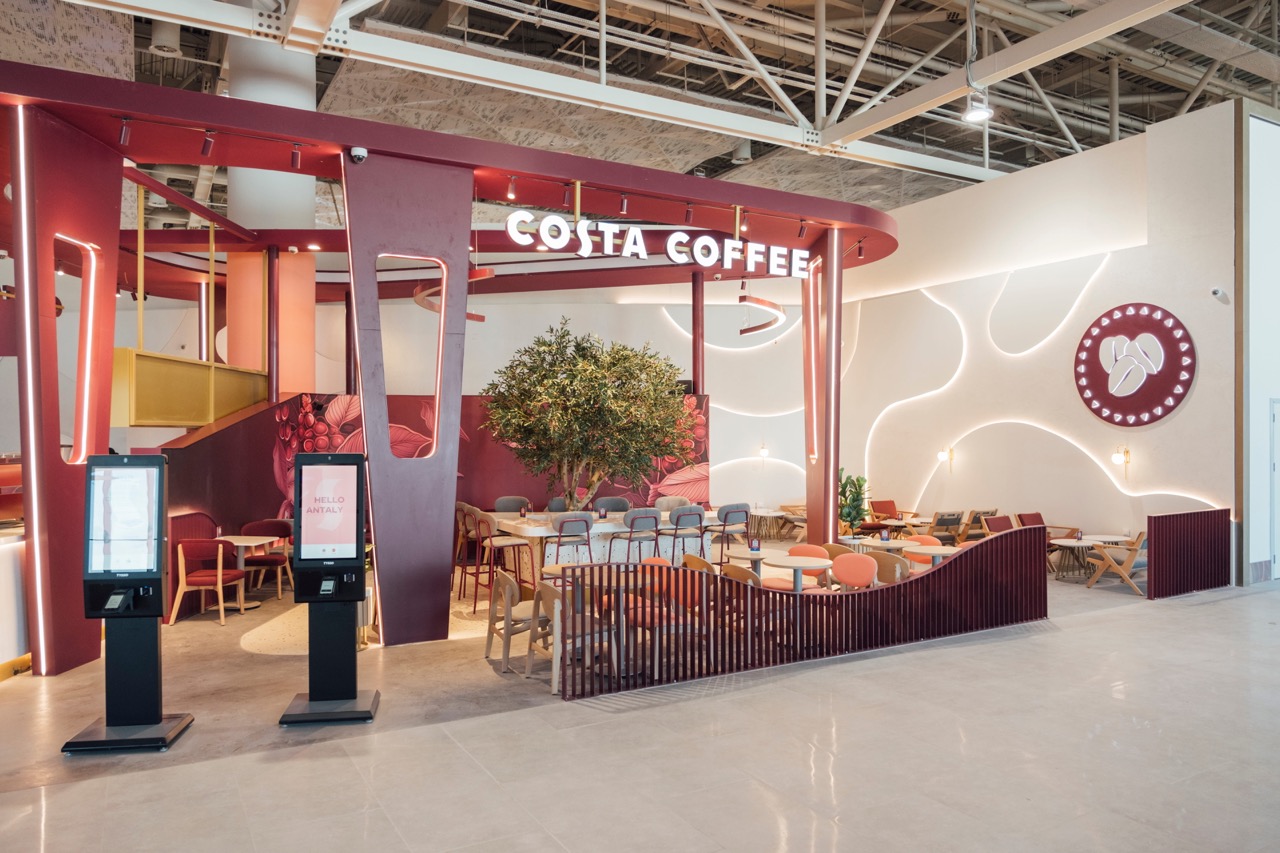
One example of this approach in action can be seen at Antalya Airport in Türkiye, where Costa Coffee operates across multiple touchpoints in the passenger journey.
Costa Coffee’s airside retail store at Antalya Airport is currently our highest-grossing location globally. While the scale of demand is notable, what makes the location particularly interesting is how multiple coffee propositions work together across the passenger journey, demonstrating the value that comes from designing experiences around different customer missions, rather than relying on a single-format approach.
Across both landside and airside environments, passengers can enjoy Costa Coffee through self-serve bean-to-cup offerings and full Costa Coffee retail stores. Costa Coffee is also available in premium lounges as part of the wider passenger experience.
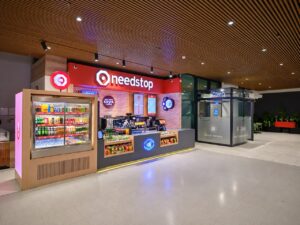
Together, these formats demonstrate an important strength of the Costa Coffee model: our ability to serve passengers through multiple propositions, from self-serve and convenience concepts to full retail stores and premium lounge experiences.
Each format supports a different passenger mission. Self-serve and convenience concepts appeal to travellers seeking speed and efficiency, while full retail stores provide space to pause, recharge and make the most of longer dwell times before departure. The ability to align formats with differing customer behaviours is becoming an increasingly important part of creating successful airport experiences.
The result is not one airport coffee shop serving one type of customer. It is an ecosystem of propositions designed around different traveller needs, locations and moments within the journey. As airports bring together F&B, retail, convenience and hospitality in more connected ways, the opportunity is to think beyond individual outlets and towards the overall passenger experience.
Global scale, local relevance
Our airport estate spans international markets, including the UAE, India, Poland and Türkiye, and serving 57 million customers across our global travel estate in 2025 has shown us that passenger expectations are remarkably consistent in some respects, while highly local in others.
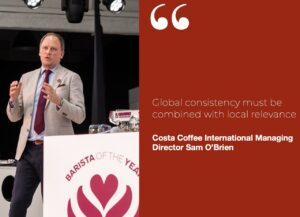
Travellers want quality, convenience and familiarity wherever they are in the world. But what they eat, how they use space and what they expect from the experience can vary significantly by market, destination and journey type. Therefore, global consistency must be combined with local relevance.
Our approach is to maintain the core quality and trusted experience associated with Costa Coffee, while adapting propositions to the markets and passenger communities in which we operate. That can mean introducing regionally relevant menu items, adapting formats to suit local passenger behaviour or incorporating design features that reflect the destination.
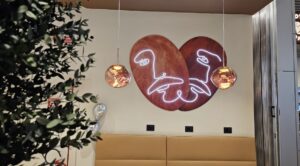
Examples include Iberico Ham Baguettes in Palma de Mallorca, traditional Turkish Coffee in Turkish airports, and the installation of Murano glass within our airside store at Venice Marco Polo Airport (above), creating a space that is recognisably Costa Coffee while celebrating Venice’s unique heritage.
The objective is not to make every airport identical. It is to create an experience that is authentically Costa Coffee while feeling appropriate to the place in which it operates. As a global brand, we maintain a consistent customer experience, but with the flexibility to reflect local cultures, passenger needs and communities, ensuring each store has a distinctive sense of place.
The next chapter of airport hospitality
The future of airport retail will not be defined simply by bigger stores or faster transactions. It will be defined by how effectively brands understand the passenger and respond to the varying needs that exist throughout the journey.
As airports continue to evolve into experience-led destinations, operators and concession partners are increasingly looking beyond sales alone and towards partners that can contribute meaningfully to passenger satisfaction, dwell time and overall airport experience.
Increasingly, they are seeking brands who can deliver across multiple touchpoints and formats, creating connected passenger experiences while supporting both commercial performance and passenger satisfaction.
In that environment, hospitality brands have an increasingly strategic role to play. That is why we believe the future of airport coffee goes beyond the coffee shop. It’s about connecting different formats, people and propositions around the passenger journey – delivering the right experience for the right moment, while maintaining the quality and familiarity travellers expect from a global brand.
For Costa Coffee, that is the opportunity ahead: not simply to serve more airport passengers, but to work alongside airport operators and concession partners to help shape what great coffee hospitality looks like across the entire airport journey. ✈