
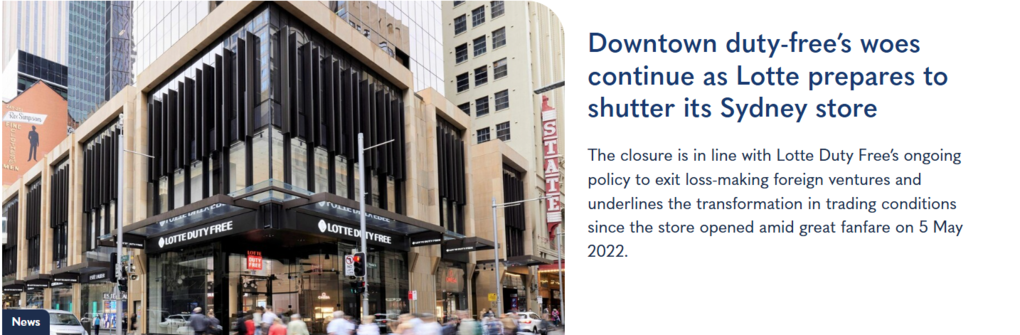
Introduction: Following our report on Lotte Duty Free’s decision to close its downtown Sydney store on 30 November amid profoundly difficult trading conditions, Sydney-based Ivo Favotto, Founder & Managing Director of The Mercurius Group reflects on the erosion of the downtown duty-free channel in the country and elsewhere in the region.
Downtown duty-free used to be a big thing in Australia, particularly following the explosion of group tourism in the 1980s and 90s, initially from Japan, then China and then from elsewhere across Asia.
At its peak in the 1990s, there were more than 20 downtown duty-free stores in Sydney alone, including some big names such as DFS Galleria, Downtown Duty Free, JR Duty Free, Allders Duty Free and City Duty Free.
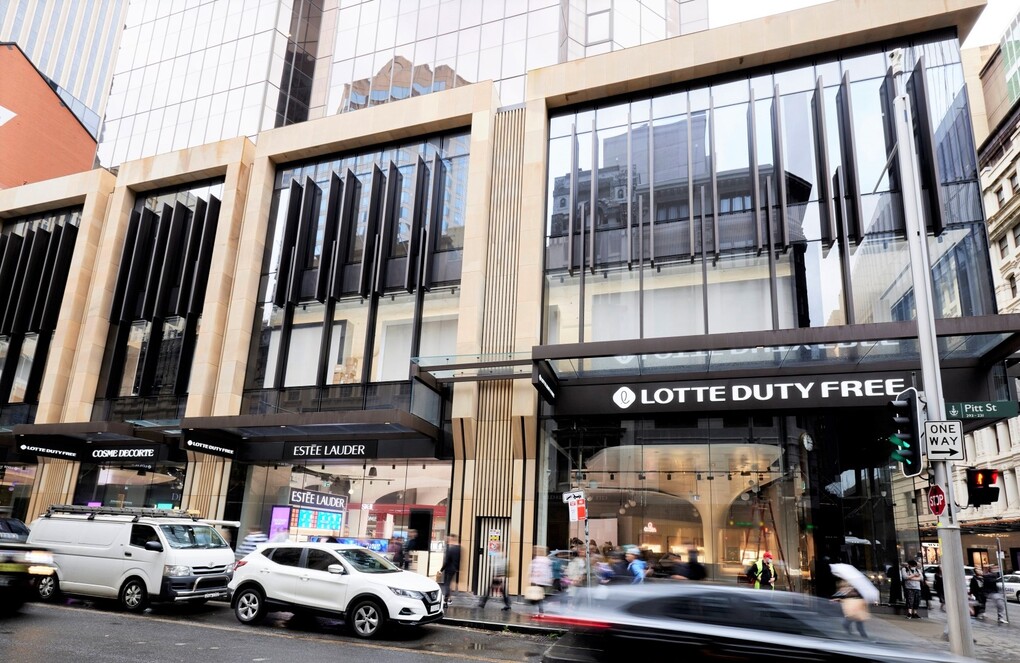
They were supplemented by a plethora of smaller ‘mom & pop’ duty-free stores in suburban areas that typically followed Sydney’s ever-changing immigration patterns. More recently, Lotte Duty Free joined the fray in May 2022 with a shiny new (and very prominent) 3,000sq m store in the Sydney Central Business District (CBD).
But alas no more. Despite a period of consolidation, all the big names have now disappeared. DFS Galleria left in 2025 and, as reported, Lotte Duty Free has announced the closure of its Sydney CBD store after closing its Melbourne CBD store in 2023.
So, aside from lamenting the ‘halcyon days’, why did it happen and what does this mean for tourist shopping in Australia and for the airport duty-free channel?
Why did it happen?
There are many reasons. First is the behemoth that is known as the Tourist Refund Scheme (TRS).
Following the abolition of sales taxes and the introduction of a goods and service tax in 2000, the TRS was born to support tourist shopping and has gone on to facilitate more than A$3 billion (US$2.1 billion) in annual tax-free sales to international tourists (strangely, including Australians). At this point the traditional ‘value proposition’ of duty free in Australia began to erode.
Second is that airport duty-free shopping got way bigger. Sydney Airport’s duty-free store in 2000 was around 2,000sq m. It’s now 8,000sq m.
International travellers can now visit the airport with confidence that they will find whatever duty-free goods they need. Even the global luxury brands such as Louis Vuitton, Hermès and Gucci are opening stand-alone stores at the airport.
Third, the way international visitors travelled to Australia changed. Downtown duty-free was born out of following and serving Asian tour group travellers. However, down the years as more Asians travelled, the less they felt the need to travel in highly controlled groups – moving from Group Inclusive Tour (GIT) travellers to Free Independent Travellers (FIT).
As Asian economies developed, their internal distribution systems opened and improved – meaning they could now buy premium and luxury goods at home at competitive prices. Japan and China have been the prime examples over the course of the past three decades, their respective market openings having a profound impact on the duty-free channel as seen by the recent demise of the once-mighty DFS, which rode both the Japanese and Chinese ‘waves’ but was left exposed when each wave flattened.

Fourth is the changing way consumers shop. Of course, online retail has changed the way the whole world shops. But at the same time and all over the world, the traditional department store is in trouble – exemplified by the recent wobbles of our own David Jones, which seems to be heading into administration.
Consumers no longer need a third party to discover and purchase brands from around the world. Brands can now reach consumers much more easily through ecommerce, social media, category speciality stores (e.g. Mecca, Sephora, Dan Murphys, JB Hifi) or through their own stand-alone stores.
Fifth, what consumers shop for has changed – nowhere more evident than in the liquor category, where the rapidly emerging Gen Z consumer is eschewing ‘traditional’ brands and ‘frequency of drinking’ habits in favour of lesser, more local and more luxury consumption.
There are probably more reasons, but these five alone contributed largely to what has happened to downtown duty free.
What does it mean?
So, what does all th is mean for tourist shopping in Australia and for airport duty-free stores in particular?
Let’s start with tourist shopping. Tourists will still be able to shop on a tax-free and even duty-free basis.
But the big winner in the demise of downtown duty-free is likely to be the TRS. Already processing over A$3 billion in annual sales, it is heavily utilised by travellers. Around one-third of TRS sales are to Australians travelling overseas while the rest is to overseas visitors (particularly Chinese).
Notwithstanding that traditional tour groups are declining, if they can no longer buy from DFS or Lotte downtown where will they buy from?
Well, an argument could be made that they could shop from department stores, as seen in South Korea where tourist-related duty-free shopping has boomed this year (admittedly boosted by the weak Korean Won earlier this year and the fact the stores price in Korean Won, unlike their duty-free counterparts’ US Dollar platform).

After all, David Jones, which is just down the road from Lotte in Elizabeth St, for example carries (or carried) many of the same beauty and fashion brands as Lotte’s Pitt St shop. There are many parallels between department stores and duty-free stores (but more on that later).
But for whatever reason, Australia’s department stores (unlike some of their counterparts overseas) never made a serious play for the tourist shopping dollar. Neither David Jones nor its major competitor, Myer, feature in the top ten of retailers using the TRS, but many of the brands they carry – Hermès, Cartier, Louis Vuitton, Chanel and Dior – do from their stand-alone boutiques.
So with department stores unwilling or unable to capture the tourist shopping dollar – and their shopping centre landlords not really pursuing it either – brands are doing it themselves, making hay out of the utilisation of the TRS. Notably though, some multi-brand or multi-category retailers – such as JB HiFi and Watches of Switzerland – have also latched onto the TRS train and are well entrenched in the top ten.
How can airport duty-free react?
Shouldn’t airport duty-free be a beneficiary too? You’d like to think so. But would a Chinese or Korean tourist who used to purchase in DFS or Lotte downtown switch their shopping behaviour to a brand’s downtown (or shopping centre) stand-alone store (where the assortment and service may be better) or to an airport duty-free store?
Airport duty-free retailers are facing many of the same headwinds as their downtown counterparts – and indeed the same headwinds as department stores – in terms of changes in the way consumers shop and what they shop for.
It is not axiomatic that the demise of downtown duty-free means more sales in airport duty-free stores. The softness in duty-free spend rates that many major airports are experiencing is testament to that. Rather, the evidence supports the continued growth of the TRS.
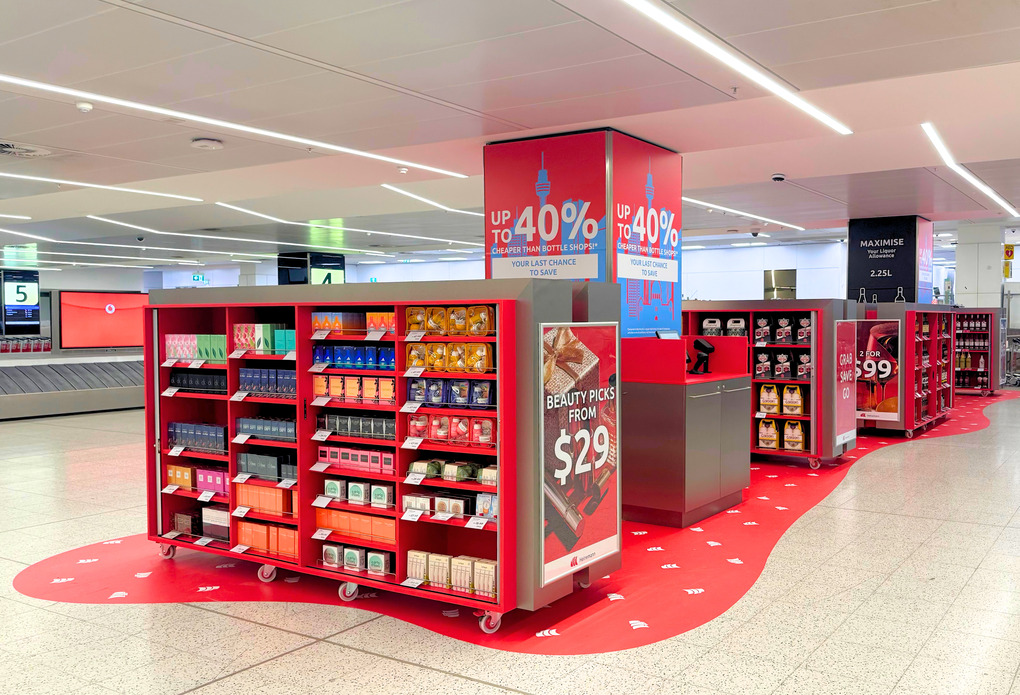
What is the TRS’s future? Many rumblings have come out of government that the TRS is under review – that Australians will be excluded (as locals are just about everywhere else in the world) or that it may be privatised, which would probably result in an explosion of the scheme, potentially to the detriment of airport duty-free. But those rumblings have not yet turned into policy.
What alternatives are there? Airports in Australia could adopt a scheme similar to the well-considered NZ Collection Point system (in competition to or instead of the TRS system), which purports to be a more efficient system for consumers, takes the government out of the tourist shopping process and has revenue upsides for airports.
But whatever the case, the demise of downtown duty-free and the headwinds experienced by department stores should be putting airports on notice – the rivers of cash that once flowed from duty-free concessions are under considerable strain.
Discussion
The Mercurius Group started a conversation on the future of duty free at the 2026 Airport Retail & Commercial Forum in July, where we had a full and frank, on-stage panel discussion on the topic featuring high-quality speakers from across the industry spectrum.
The line-up featured Paul Zahra, former CEO of David Jones; Heinemann Oceania Managing Director Rosie Fernandez; Pernod Ricard Head of Commercial Excellence ANZ Jessica Bath; and Avolta Managing Director, Australia Matt Neal.
So stay tuned – this is a topic which we are not letting go of. In addition to another discussion panel at the 2027 Forum (Hobart, 27-29 July 2027) we are planning a deep-dive analysis into the future of duty free to present. It’s a topic that should resonate very strongly with airports, duty-free retailers and brands/suppliers. Please get in touch at ifavotto@themercuriusgroup.com if you would like to be involved. ✈