

ASIA PACIFIC/MIDDLE EAST. Airports Council International Asia Pacific & Middle East (ACI APAC & MID) today (11 December) released its annual forecast, projecting passenger growth of +4.8% in Asia Pacific and +5.4% in the Middle East for 2025-2028.
Developed with OAG, the updated ACI APAC & MID Short-Term Forecast (2025-2028) spans 1,207 airports across 33 Asia Pacific and ten Middle Eastern countries. It attributes projected growth to resilient economic fundamentals, renewed travel demand and airport investments.

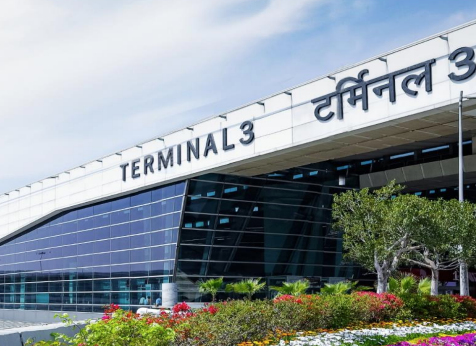
The report highlighted India and Vietnam as the top-performing markets, driving the region’s surge in both domestic and international travel.
With several mega-airport projects underway, Saudi Arabia is emerging as a key aviation powerhouse in the Middle East.
The combined strength of these markets is fuelling the rise in passenger volumes across the region.
ACI Asia-Pacific & Middle East Director General Stefano Baronci said, “Our outlook reaffirms that the region’s airports are entering a next phase of growth.
“With strong macro-economic fundamentals, renewed international travel demand and record levels of airport investment, Asia Pacific and the Middle East are expected to remain the world’s most dynamic aviation markets through the decade.
“Despite the strong upward trajectory, geopolitical tensions and supply-side challenges around the region continue to cast uncertainty over the industry.”
Baronci added, “To support this growth, our airports are not only optimising the use of existing infrastructure but also preparing for the next phase of expansion, with massive investments that will require adequate financing and revenue diversification.
“Stronger government support too is crucial to liberalise air transport, modernise outdated slot allocation rules and streamline visa policies across the region, all proven drivers of economic development.”
Asia Pacific outlook
The continued rebound in travel demand, along with expanding airport capacity, new airlines and aircraft deliveries, is driving overall passenger traffic, which is expected to increase +4.8% annually between 2025 and 2028.
While geopolitical and supply-chain challenges continue to affect certain markets, strong regional demand is set to bring most segments back to pre-pandemic traffic levels by 2026 or earlier.
Asia Pacific subregional outlook (2025-2028)
South Asia has outperformed other parts of the region, growing +6.3% annually and already standing 12.6% above pre-COVID levels, driven primarily by India.
Southeast Asia is set for +5.1% growth, although 2025 will remain 6.6% under 2019 levels as a result of aircraft delivery backlogs and slow Chinese outbound recovery. Vietnam leads with +8.1% growth, ahead of Thailand and Indonesia at about +4%.
East Asia is seen to expand at a +4.3% CAGR, slightly below the Asia Pacific average of +4.8% amid softer economic conditions. International demand will grow faster, rising +6.6% CAGR, supported by China’s outbound recovery at +10.3%.
Oceania’s passenger traffic is forecast to grow at a +3.3% CAGR through 2028. Even as 2025 volumes are projected to remain 2.3% below pre-pandemic 2019 levels, demand remains stable, supported by international traffic growth averaging +4.3% annually from 2024 to 2028.
Australia and New Zealand account for the majority of the region’s traffic, contributing 90% of total volumes.
Asia Pacific: International and domestic forecasts
Domestic: South Asia is set to record Asia’s highest growth rate at +6.3%, led by India, while Vietnam leads domestic expansion in Southeast Asia.
International: China’s outbound travel recovery, growing +10.3% and expected to fully rebound by 2027, has placed East Asia at the top of the growth rankings. India (+6.5%), Australia (+5.4%), Japan (+4.6%) and Thailand (+3.8%) are also set for robust growth.
Growth drivers of Asia Pacific
South Asia’s strong performance is led by India, adding 100 million domestic passengers by 2028 and sustained international demand.
In East Asia, 6.6% CAGR is boosted by China’s outbound rebound, with international traffic growing +10.3%.
Hong Kong is set to grow at a notable +9.2% CAGR, reaching full recovery to 2019 levels by next year.
Southeast Asia’s recovery is underpinned by Vietnam’s +8.1% annual passenger traffic growth, with full subregional recovery projected for 2027.
Middle East overview
Overall passenger traffic in the Middle East is expected to increase +5.4% annually from 2025 through 2028, supported by major airport infrastructure investments.
Platforms for growth
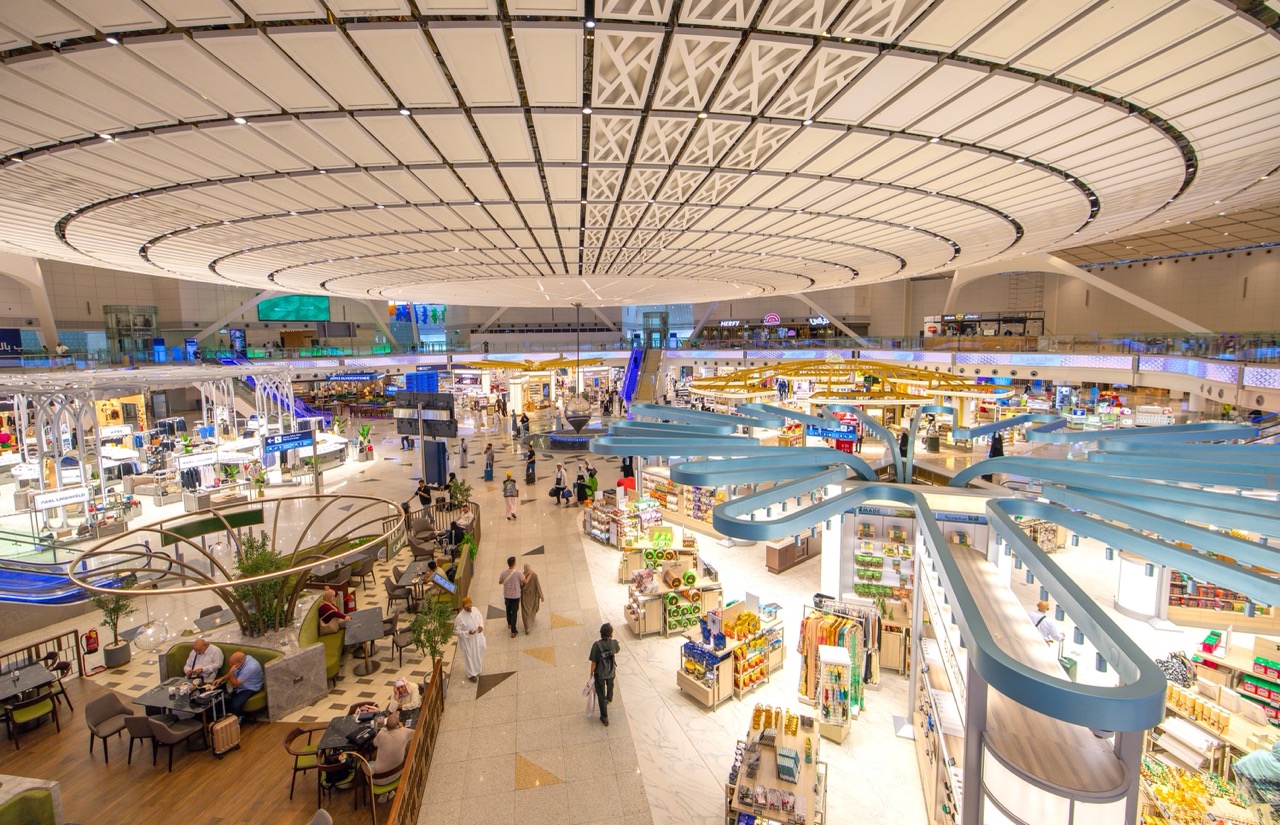
As the Middle East’s largest domestic market, Saudi Arabia is set for strong growth of +5.5% annually, with passenger volumes rising from 58 million in 2024 to 72.5 million in 2028.
King Salman International Airport in Riyadh is predicted to expand to a capacity of 120 million passengers by 2030 and 185 million by 2050, featuring five runways, under Saudi Arabia’s Vision 2030.
With the planned relocation of its hub to Dubai World Central, the city is targeting 260 million passengers and five runways.
Abu Dhabi’s growth is underpinned by the redevelopment of Zayed International Airport.
Middle East: International and domestic forecast
International: The region’s expanding role as a global hub and top leisure-business destination is driving strong demand, with international passenger traffic projected to increase +5.3% annually.
Domestic: Middle East domestic traffic is projected to rise +5.5% per year, led by Saudi Arabia, the region’s largest domestic market, driven by Air Arabia’s new Dammam base and the launch of Riyadh Air. ✈