


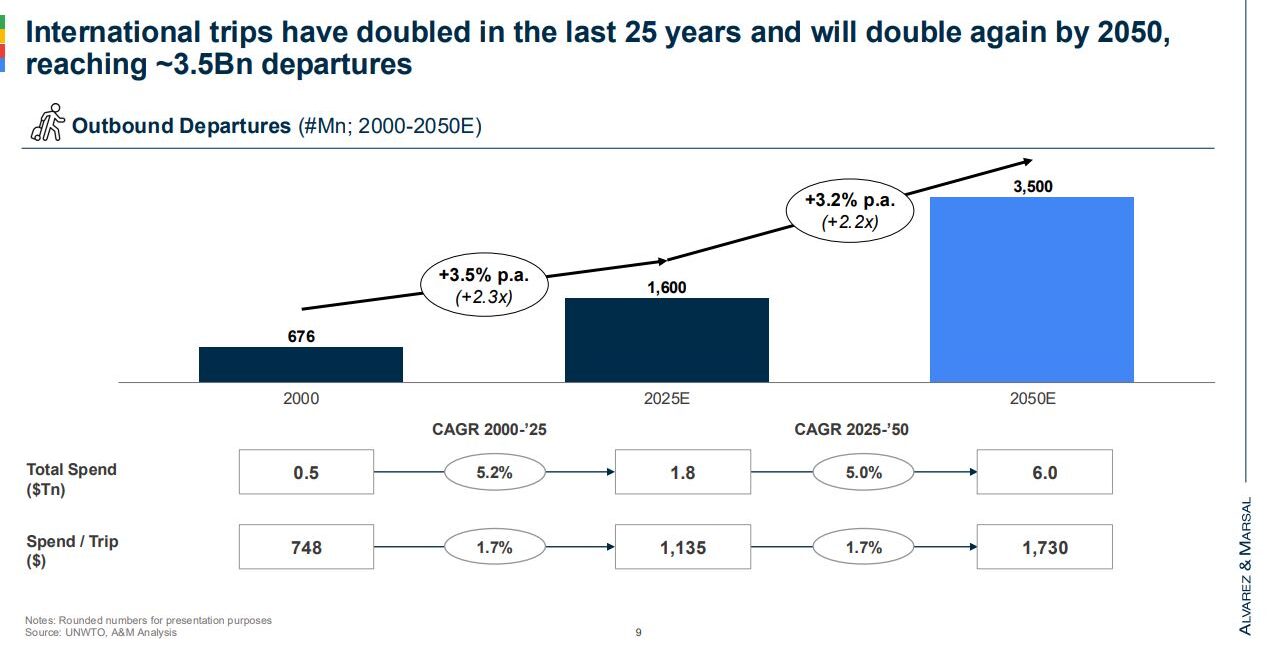
INTERNATIONAL. A collaborative study by Alvarez & Marsal and Google projects global travel volumes to reach 3.5 billion by 2050, driving an additional US$4.2 trillion in spend compared to 2025, and bringing total international travel expenditure to around US$6 trillion.
Based on billions of Google searches and more than 90,000 tourism data points, ‘The Power of Travel 2050’ revealed that the next phase of growth will not only expand and accelerate but also become more geographically complex than ever.
An estimated 70% of the global population will be ‘potential travellers’ by 2050, a +30% increase from 2000, supported by higher per-capita income in growth markets and more frequent travel in emerging economies.
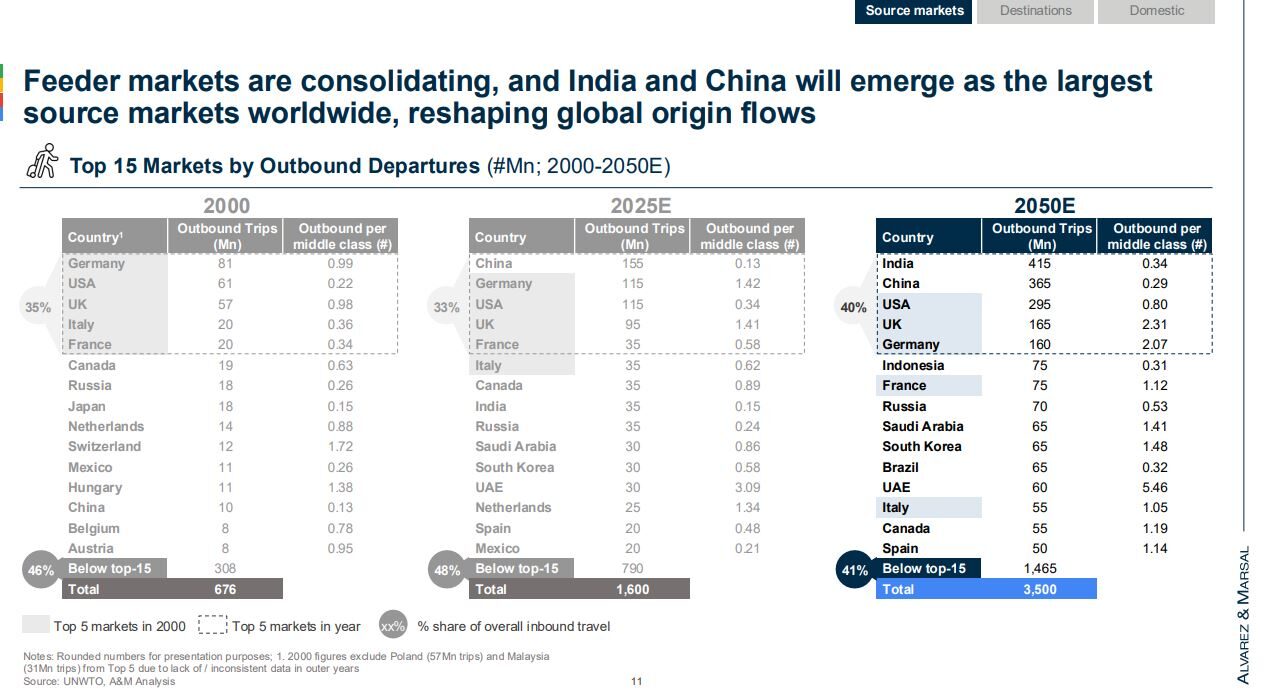
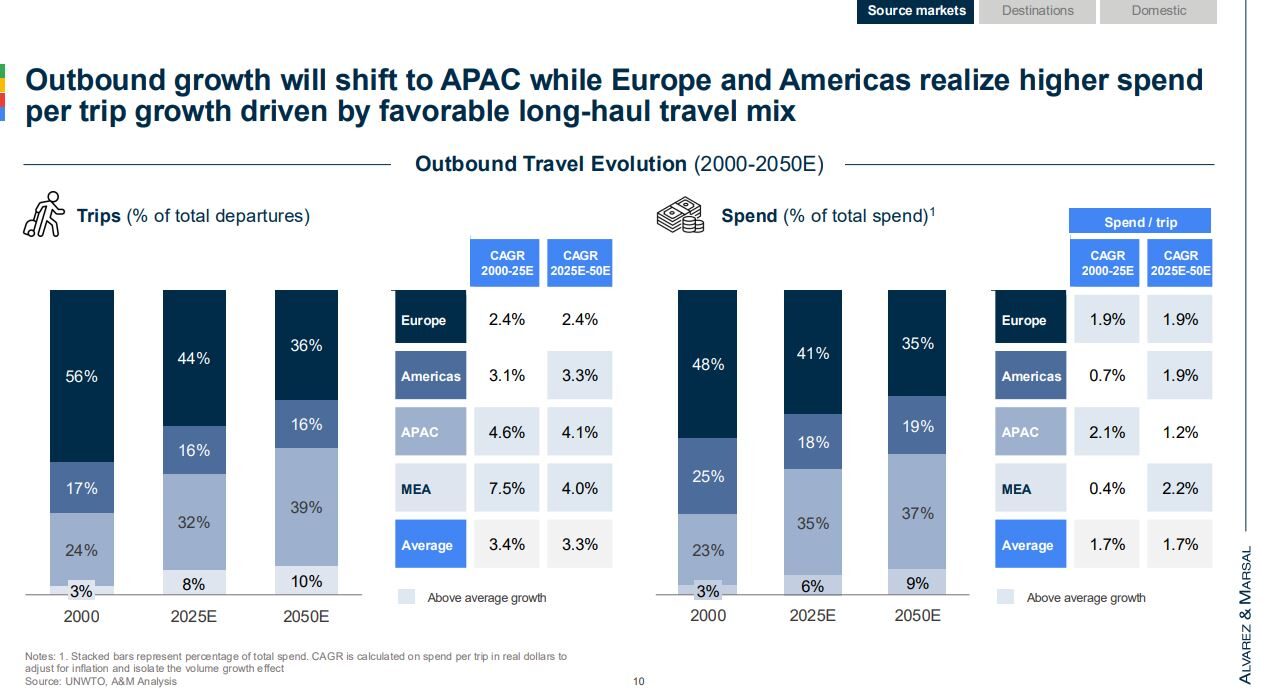
By 2050, Asia Pacific is forecast to surpass Europe as the world’s largest outbound travel market, representing nearly 40% of global departures, up from 24% in 2000.

The growth is mainly attributed to higher disposable incomes, enhanced regional connectivity and expanding short-haul and intra-regional travel within Asia, prompting a strategic redesign of customer acquisition models to target these high-yield emerging segments.
While Europe is set to remain the top global destination in absolute terms, its share of international arrivals is projected to decrease as travel demand diversifies and as faster-growing destinations in Asia, the Middle East and Latin America capture a larger share.
France and Spain will maintain their status as the world’s most visited countries by 2050, despite increasing competition from emerging destinations.
Even amid notable shifts in international tourism, domestic travel is projected to remain the core of the tourism industry, accounting for over 90% of the total travel volume.
By 2050, trips per capita are estimated to grow from 3.5 to five per year, driven primarily by emerging markets, while the USA continues to lead with an average of eight trips per person annually.
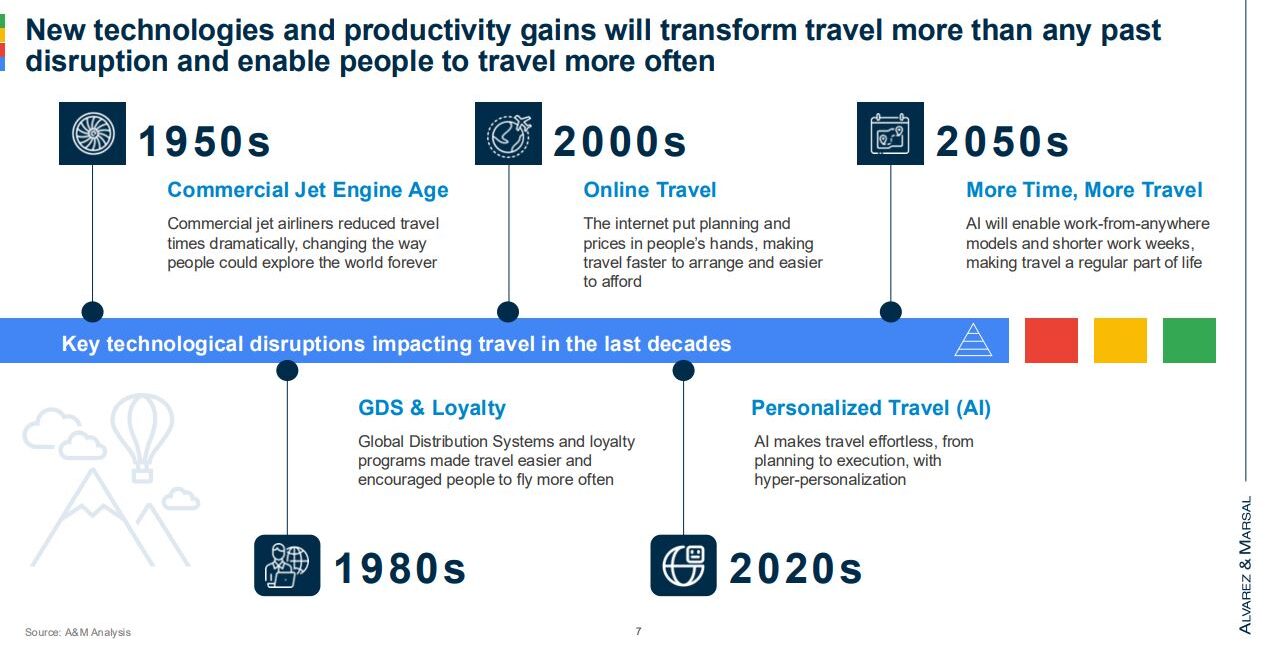
The study highlights the benefits of shifting from reactive service to predictive assistance – Agentic AI.
This solution enables operators to respond to evolving traveller behaviours by delivering flexible and hyper-personalised experiences, automating real-time assistance and resolving disruptions, without adding operational costs.
Acting as a ‘contextual companion’, AI helps businesses capture incremental spend while maintaining operational efficiency in an increasingly complex global market.
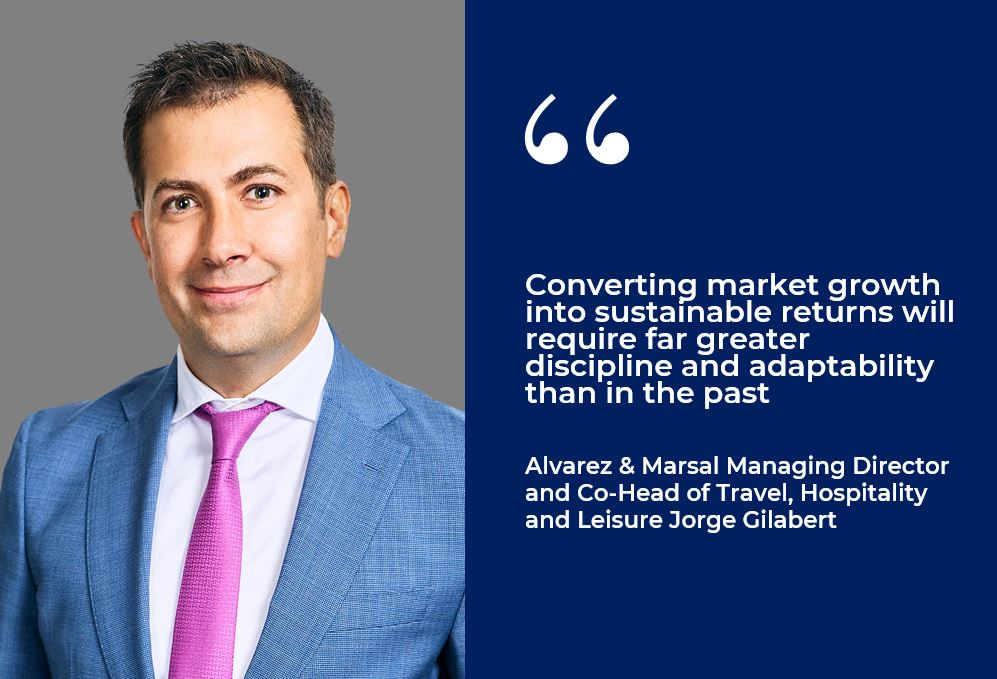
Alvarez & Marsal Managing Director and Co-Head of Travel, Hospitality and Leisure Jorge Gilabert said, “Despite rising volumes of tourism, this will not automatically translate into profitability for the hospitality and tourism industry.
“Growth will come with a rising ‘complexity tax’ as demand fragments, operating models become more intricate and investor expectations on returns and resilience increase. Converting market growth into sustainable returns will require far greater discipline and adaptability than in the past.”
Google Head of Travel – International Growth Hany Abdelkawi added: “The outlook for the travel industry has never been stronger, but the rules are changing. By 2050, the global traveller base will not just grow, it will fundamentally restructure.
“Here is the warning for the C-suite: Volume is vanity. Yield is sanity. Demand in 2050 will be fragmented across destinations, domestic-heavy, and significantly more costly to acquire without a shift to an AI-led strategy.” ✈