
CENTRAL & EASTERN EUROPE. We bring you the key takeaways from the Central & Eastern European Travel Retail Association (CEETRA) Travel Retail Forum, staged in Budapest on 30 October.
Opening speech and keynote address
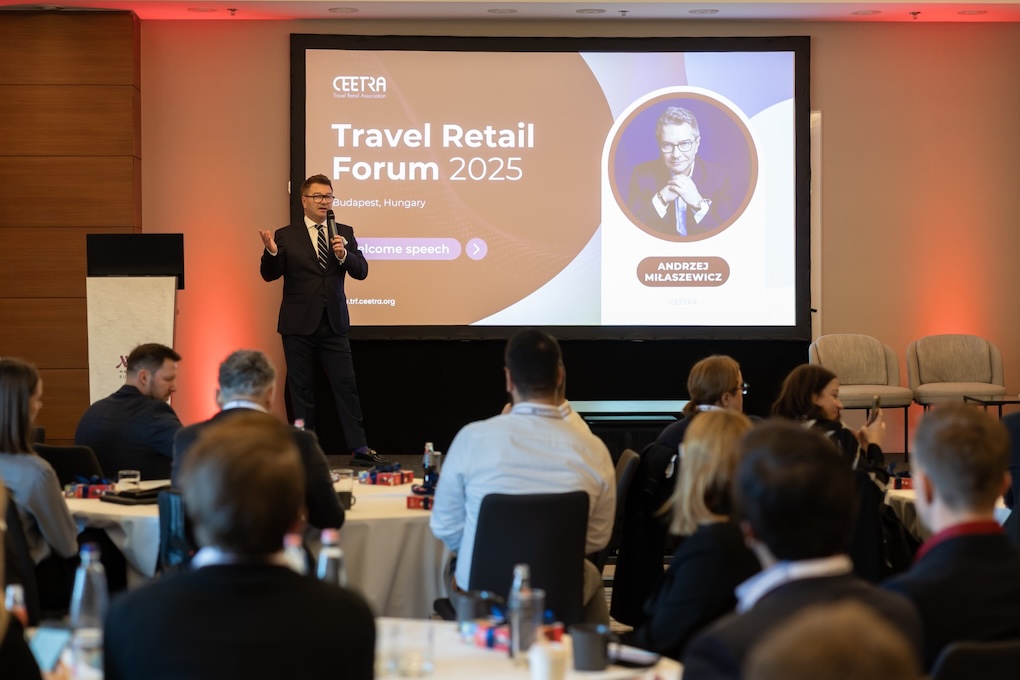
This year’s CEETRA Travel Retail Forum in Budapest – opened by Chairman Andrzej Miłaszewicz in the welcome speeches session and framed by the keynote The state of the industry in Europe, with a special focus on Central & Eastern Europe by m1nd-set CEO Peter Mohn – made one thing very clear: airports in Central and Eastern Europe are no longer just transport hubs.
They are becoming independent economic and cultural spaces. An airport is no longer just a waiting area, but a commercial platform with its own revenue model, spatial logic and tone of voice to the passenger.
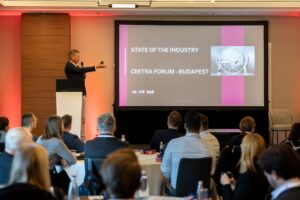
The growing weight of non-aeronautical revenues – retail, F&B, parking, services – is now defining airport profitability. At several regional airports these revenue streams already account for most of total turnover, effectively turning the terminal itself into a business product.
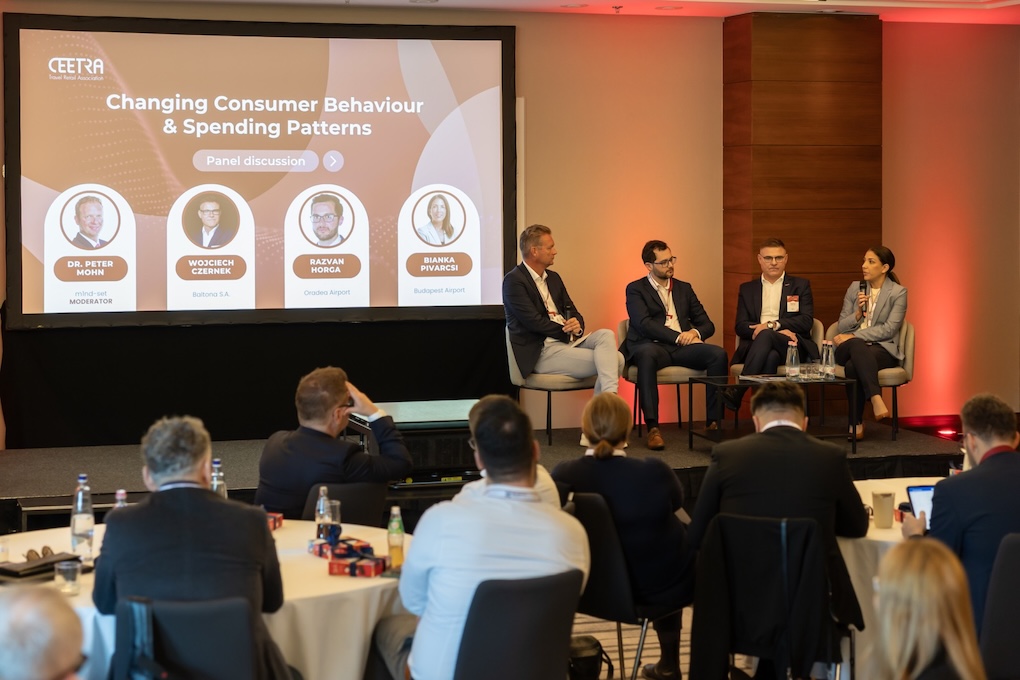
Panel: Changing Consumer Behaviour & Spending Patterns
According to this panel discussion moderated by Peter Mohn with Wojciech Czernek (Baltona CEO), Razvan Horga (Oradea Airport, Romania CEO) and Bianka Pivarcsi (Budapest Airport Head of Marketing), the biggest commercial upside in the next few years is in small and mid-sized airports.
These airports sit in competitive catchment areas where passengers can easily choose an alternative within driving distance. That means every traveller has to be won, not assumed. Under these conditions it’s no longer enough to rent out a few retail units and hope for the best.
The commercial concept has to be built into the terminal from day one. Done properly, this raises revenue per square metre, stabilises operations and in some cases doubles spend per passenger versus the old, fragmented model.
In other words: an airport in 2025 is not just infrastructure serving airlines. It is a brand.
A recurring point was that the passenger has changed – and that change is reshaping how airports are run. Airports in Central and Eastern Europe now have to meet two opposing expectations at the same time.
One side is the younger traveller, who expects instant self-service, zero friction and fully contactless payment. The other is the traveller who wants human presence, visible assistance and reassurance, not just speed. These needs do not replace each other; they coexist at the same gate.
As a result, airport operations are being forced into a dual model: one layer must be fast, digital, queue-free; the other must be staffed, personal and physically present. This is not positioned as a premium extra. It is now seen as a baseline.
If either layer is missing, the passenger leaves frustrated — and does not return.
Presentation: Travel and Payment Intentions in CEE, Visa Study 2025
This presentation by VISA Head of Merchants Sales and Acquirers in Central Eastern Europe Katarzyna Zubrzycka (pictured below) underlined that travel is still a top spending priority in the region, but noted the way people spend has changed.
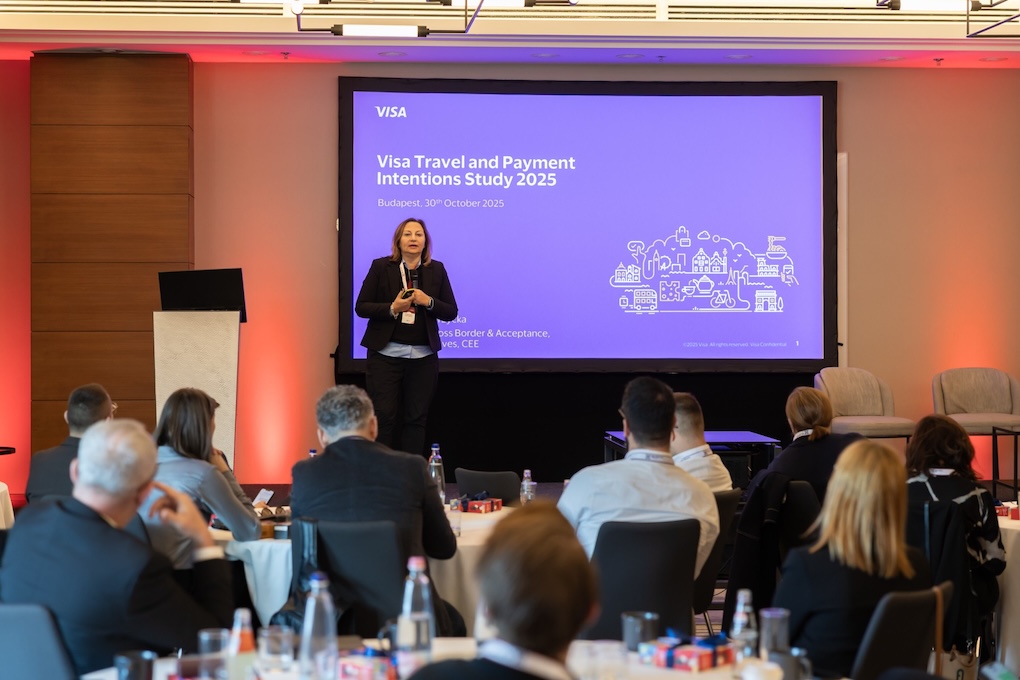
Most passengers now set a personal budget before departure and actively track every cost in real time through mobile banking. Cross-border spend is primarily card or digital wallet.
There is a clear expectation that every payment touchpoint in the journey – duty free, dining, ground transport, tickets – must be instant, contactless, transparent.
The ask from the traveller is no longer “give me a good card”, it’s “give me a full travel finance ecosystem” – multicurrency accounts, bundled transport and accommodation offers, insurance and clean FX conversion.
Travel has become not just logistics, but a live financial project the passenger manages themselves.
Presentation: Sense of Place 2.0 – Local Identity and Innovative Design as a Passenger Magnet
The key theme was creating a sense of place in airports. Presenter, The Design Solution Director Nick Taylor (pictured below), argued that an airport can no longer be a neutral box that could be anywhere.

The commercial and service environment now has to visibly reflect the identity of the city and country. This is not only branding. When a terminal feels specific, local and recognisable, passengers are more willing to spend because what they buy feels like part of the trip, not just a transaction.
In that sense, the terminal becomes the first or last sentence a city says to a traveller.
Panel: Opportunities for Brands in Travel Retail
The wider airport commercial context was captured in this session, which was moderated by Simillair Co-Founder Csaba Simonidesz, who spoke alongside panellists Maciej Adamaszek (True), Bence Biró (Heinemann Budapest) and Zoltán Keresztessy (Klikkmánia).
The overriding sentiment was that airports in Central and Eastern Europe now act like brands competing for loyalty in real time.
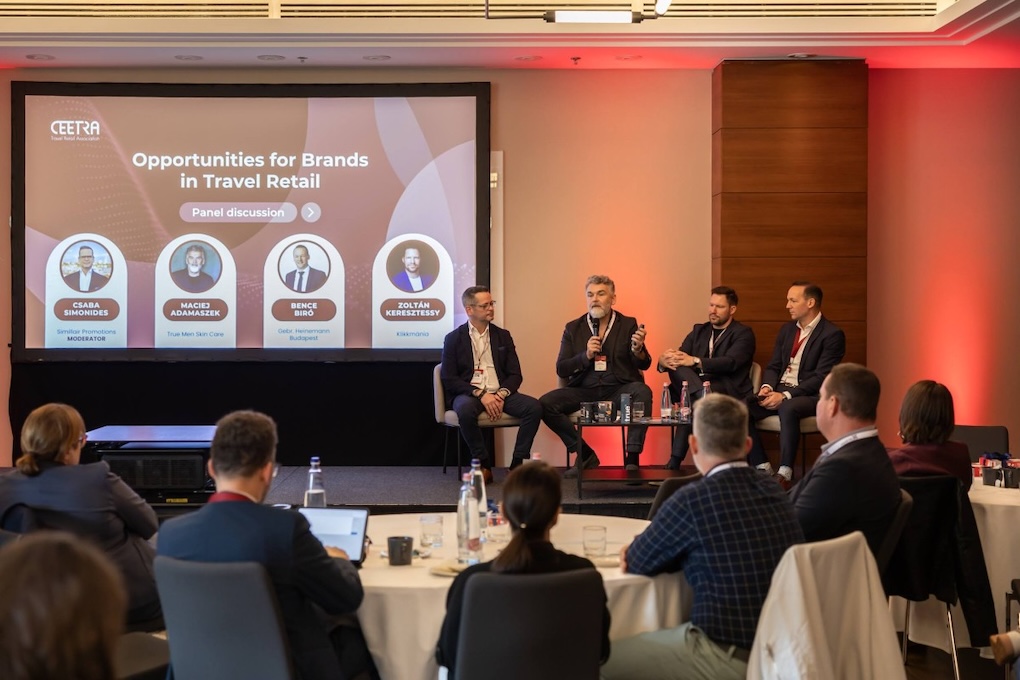
The passenger expects high-speed digital autonomy and, at the same moment, visible human care. Loyalty is not assumed; it has to be earned on the spot.
And factors once seen as ‘nice to have’ – accessibility, local identity, payment transparency – are now basic conditions for doing business in this region.
Presentation: Smart Commercial Strategies for Small & Medium Airports
This presentation focused on one main point: for a smaller airport, financial performance isn’t defined by passenger volume, but by how intelligently it builds its own commercial model.
Presenter Szczecin Airport’s Krzysztof Domagalski (pictured below) highlighted three key factors.

First, whether the airport runs retail in-house or outsources it; second, how intentionally the terminal space is laid out from a commercial point of view — meaning, how the passenger is guided through the shops; and third, whether the data on passenger behaviour is really used to make decisions, instead of just ending up in reports.
The conclusion was clear: if these pieces are designed well, even a mid-sized regional airport can operate like a deliberately built retail brand and generate measurably higher spend per passenger.
Presentation: The Inclusive Journey: Designing Accessible Travel and Retail Spaces
Accessibility in airports – physical, sensory and informational – was positioned as a core business requirement, not a CSR add-on, in this presentation by the Integracja Foundation’s Jarosław Bogucki (pictured below).

He made the case that an airport is not built for a single imaginary average passenger, but for people who arrive with very different bodies and sensory thresholds.
The expectation is that a passenger with reduced mobility, an elderly traveller, a person on the autism spectrum or with sensory challenges, and a family with a small child can all move through the terminal safely and with a clear mental map.
In practice this means step-free routes, tactile and visual wayfinding, designated low-noise/low-light areas, longer escort options at key arrival points, and immediate access to alternative communication channels.
The message was explicit: this is both inclusion and revenue. People stay longer and spend more if they feel safe, oriented and in control.
Presentation: CPK Commercial Strategy
The Centralny Port Komunikacyjny (CPK) is a planned new international airport and integrated transport hub in Poland, located between Warsaw and Łódź. Presenter Paweł Zagrajek (pictured below) highlighted how CPK “thinks” as a completely new, greenfield hub airport: it’s not that you first build a terminal and only then figure out retail – it’s the other way around.

The commercial, service and brand experience is part of the floor plan for this project from the first sketch.
According to Zagrajek, CPK is not an airport in the classic sense, but an integrated commercial ecosystem in which passenger flow, retail, F&B, digital services and payment logic are conceived as one plan.
This means the airport will behave like a standalone international brand from day one: it doesn’t just want to be a transit point into Poland, but the first sentence of the place’s identity – “with a controlled tempo, high revenue potential and zero compromise”.
Conclusion
CEETRA’s 2025 Travel Retail Forum in Budapest made it clear that Central and Eastern Europe is no longer a secondary market. It is a testbed.
Airports here are treating commercial space, payment infrastructure, brand experience, accessibility and sense of place as core strategy – not support functions.
The message was consistent: in this region, the airport is no longer just where travel happens. It is the product. ✈