
SWITZERLAND. Take a walk through Zurich Airport’s main commercial precincts and it becomes clear how this mid-sized European airport continues to attract creative, on-trend brands to its retail and dining spaces, both airside and crucially, landside too.
Within commercial turnover of CHF629.9 million (US$689 million) in 2024, airside stores and restaurants delivered around 57% of the volume from 93 units. At well over 40% therefore, landside food and shopping across 83 outlets represents a huge sales driver and attraction, one that the airport company is tapping into with its latest big investment in space.
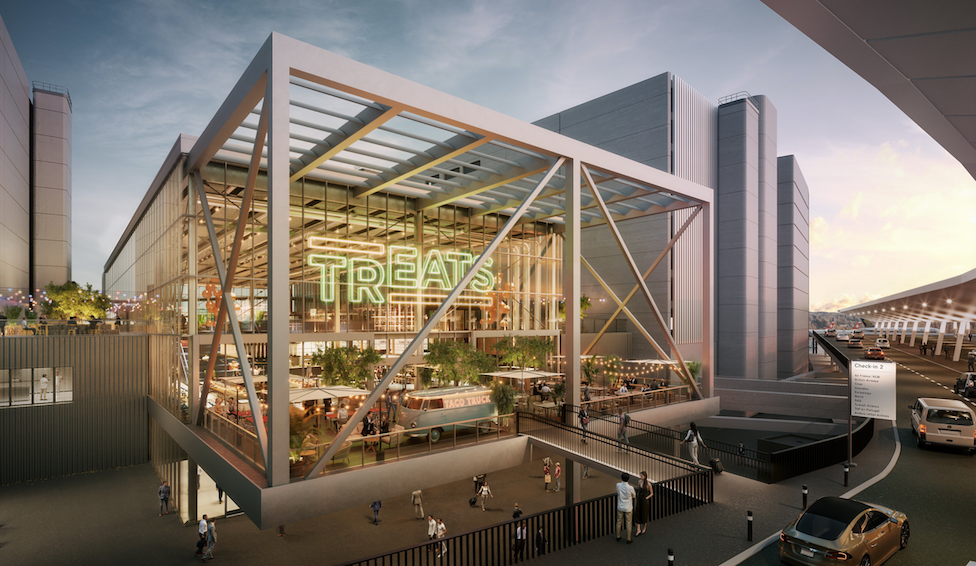
A major landside development will widen passenger walkways, and introduce a range of commercial concepts, all well connected to the existing shopping precinct plus The Circle business and services hub.
A central feature will be the TREATS food hall across 3,600sq m, which, once opened, will be one of the largest food halls in Switzerland.
TREATS will be operated by Pointbreak Group-owned division The Food Collective. The company manages numerous creative gastronomic projects in Swiss towns and cities, including the renowned Freiruum in Zug.
The 12-metre-high TREATS food hall will cover two levels and offer a diverse selection of local and international food & beverage specialities.
Elements will include 16 food stalls, rotating food trucks, four bars and a café. Additional features include a stage for events and various outdoor terraces.
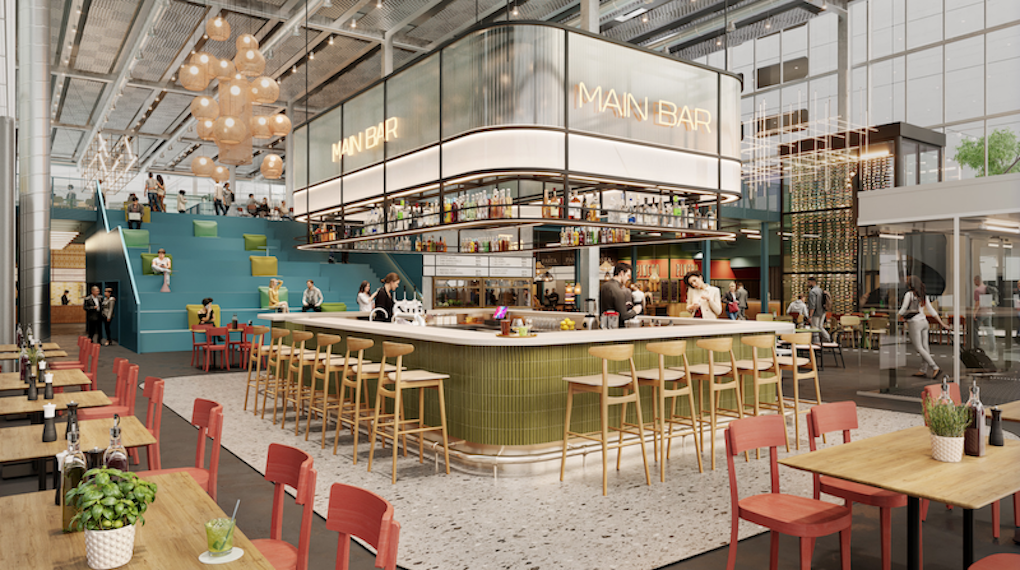
TREATS is designed as a “must-see” destination in the region, and a glance at the key facts underlines the drivers behind the landside commercial project.
Switzerland’s main gateway is just a ten-minute train ride to the city centre and is located in the fastest-growing part of the country economically.
With stores in the city mainly closed on Sunday, that day’s trading becomes key; landside areas generate around 20% of weekly turnover on Sundays. It already has one of the biggest food courts in Switzerland and 30,000 employees among the 100,000 to 150,000 travellers, visitors and commuters every day.
Explaining the significance of the landside project, Zurich Airport Head Commercial Centers Heidi Köpple says: “The planning has been running for over ten years already, which tells you how big this is for Zurich Airport. It is very promising and there is huge interest among partners, with the drawcard of Sunday trading, high footfall and now more space than ever.
“We wanted to bring the airport even more into an attraction point for Greater Zurich, just as other cities do.”
Zurich Airport Head Food & Beverage Patrick Zeltner adds: “For TREATS we joined with Pointbreak, which right now is the hottest F&B operator in Switzerland. They have a great track record in terms of activation, as they are basically a marketing company, not a typical F&B operator. That gives them a lot of credibility to be able to really position this as something new and exciting.
“They will lease the spaces from us and then sub-lease the spaces to young, urban and trendy brands. We are seeking brands which already at least have one store in the Greater Zurich area, but maximum two or three. For the limited space we already have around 70 applicants and that is before we begin talking directly to brands.
“When we choose our tenants, we will make sure they already have very strong social media presence and can amplify the marketing. That will be a new game for us, and no doubt a learning curve. And because we as Zurich Airport also own TREATS as a brand, we can make any changes we want to over the coming years.”
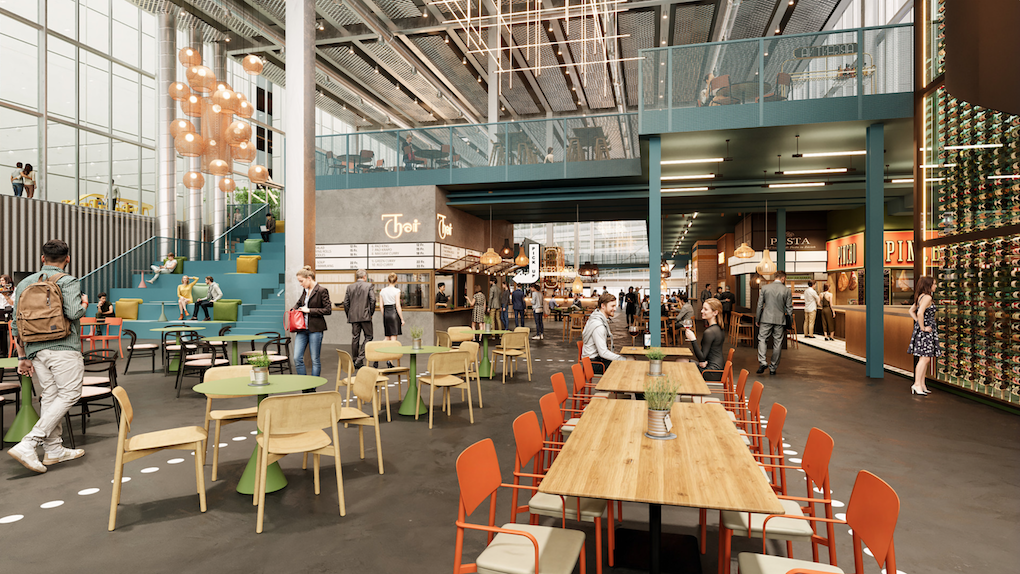
The TREATS space operates as a highly flexible ‘plug-and-play’ area, combining food stalls, family zones, business event zones, bars and outside terraces and event spaces for DJs and entertainment. Each of the 16 units has its own kitchen, fitted out for the cuisine or style allocated to that space, from Middle Eastern to Mexican, from pincho tapas to poke bowls and from dumplings to pizza. The first round in the leasing process runs until the end of this year, with further phases ahead.
“TREATS is something very different,” says Zeltner. “It’s an urban street food court that blends the best of Zurich, with local names only. We wanted an entirely new concept so that also meant going quite far with our capex approach for this project.”
Creating ‘an honest food hall’
That’s a reference to Zurich Airport’s commitment to investing 100% of capital expenditure, giving it ownership and control that one would not have under a traditional partnership model, with concessionaires investing in the design and fit-out. Put simply, all capex and depreciation falls to the airport and does not come under the P&L of the operator.
Zeltner says: “We are the first airport we believe that has gone so far as to invest all of the capex in such a project. We did the whole interior design, meaning we – with our partner Pointbreak – can go to the local market and choose 16 tenants of our liking, who have low starting costs as a result. We can choose the tenants and offer a chance to introduce this vibrant young brands into the airport, which is rare. It is a very collaborative process.
“To have a really honest product, because we always said we want an honest food hall, is only possible if you go to the source and get the young entrepreneurs in with their imaginative ideas. And this is only possible if you take away the hurdles, and you have people in your team who speak their language.”
It is a bold statement of intent, which shows that airports can go much further than leasing space to become curators of retail and dining too.
Köpple says: “These are all small partners but they will offer a true experience in every individual food location. To achieve this you need the actual creators of these concepts to come, not just pay them a royalty to use their brand.
“It is an example of how we do things a bit differently and is a more visionary take on developing F&B we think. Ultimately, we are convinced of our approach and we believe very strongly in our success backed by a proven track record. In the last couple of years we have had a strong drive to feature more local brands. But we recognised that to do so, we had to invest in both back-of-house and front-of-house infrastructure.
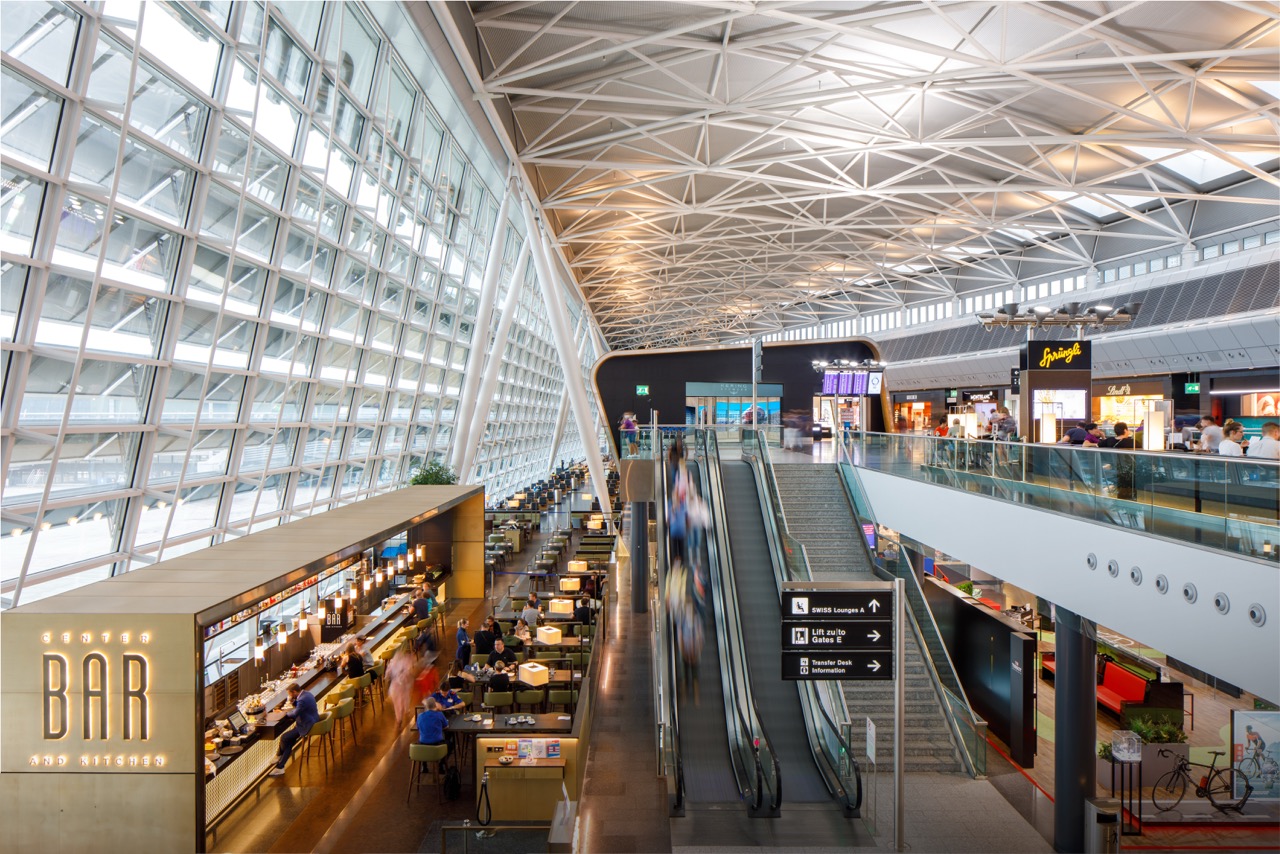
“That meant going from one kitchen to four airside so we could lease to different partners. This we did in 2018 when Center Bar was redone with local player Candrian Catering, resulting in big success commercially and in terms of service level. That was a proof of concept and gave us full confidence to spread this approach to other areas, including landside.”
Köpple adds: “This project is ours in the sense we can make sure the look and feel reflects our expectations. It is almost mission impossible to have the operator of your dreams, and the look and feel of your dreams, and then say, ‘do this with a contract of five years’. We are taking flexibility to a next level, we have a partnership now with one local operator in Pointbreak but also a very clear joint understanding how every single individual food hall shall look and shall be run.
“It also has food court pricing, which is accessible and will help us connect to the community and boost the pricing image of the airport.
“We are making a bet on TREATS but we believe in it very strongly with the customer base and the employee base we have to create a destination in itself.”

The TREATS project complements the existing landside food zone managed by Avolta under the Foodland name. This houses global brands such as McDonald’s and KFC, the list of which will be further extended.
Of the wider landside development, Köpple says: “Our role in contract management is a key one. In a constrained environment we are making the most of every square metre. That means we are filling gaps during construction to bring life to the landside centre – but all of that is delicate as it’s an area that is also home to the Swiss train system underground. So it’s a vast and complex project to manage.
“A big advantage is that we have vast spaces here, not only for food but for retail too. We need more space for fashion, and can offer that to brands with a higher demand in terms of space. For fashion we are talking entry to mid-price level whereas airside is dedicated more to high-end luxury.
“My team is very well connected with the local market. Retail development landside is not so much a travel retail as a domestic project with the aim to attract the local and regional community. What we are explaining to those brands is that you get the benefit from an airport, but you still have the potential to be in a true shopping centre close to the city, which is rather unusual.”
Looking long term
In around two years’ time the landside environment will be transformed, but as ever, nothing stands still in the airport world. Zurich Airport will then embark on a long-term project already in planning, the complete replacement of the existing airside Dock A.
A key piece of infrastructure, the Dock A with its integrated apron tower used by the majority of Schengen passengers both arriving and departing, have been in operation for close to 40 years and are nearing the end of their lifecycle.
A new construction to the north of the current building will come on stream within the next decade, providing travellers with an enhanced experience, a better view of the apron and spacious waiting areas at the gates, alongside expanded retail and culinary offerings in the new dock base.
The commercial team says the new dock “will strengthen Zurich Airport’s retail offering by helping us attract additional international luxury brands and providing them with appropriate space.
“In line with our long-term strategy to enhance the airside retail mix, the new build will provide a high-quality, sustainable terminal with well-designed retail areas. This includes a well-considered brand mix, refined façades and tailor-made shop layouts. These elements will help meet the expectations of our commercial partners operating at Zurich Airport.”
This will help with the space challenge faced by airports everywhere, but constraints will remain.
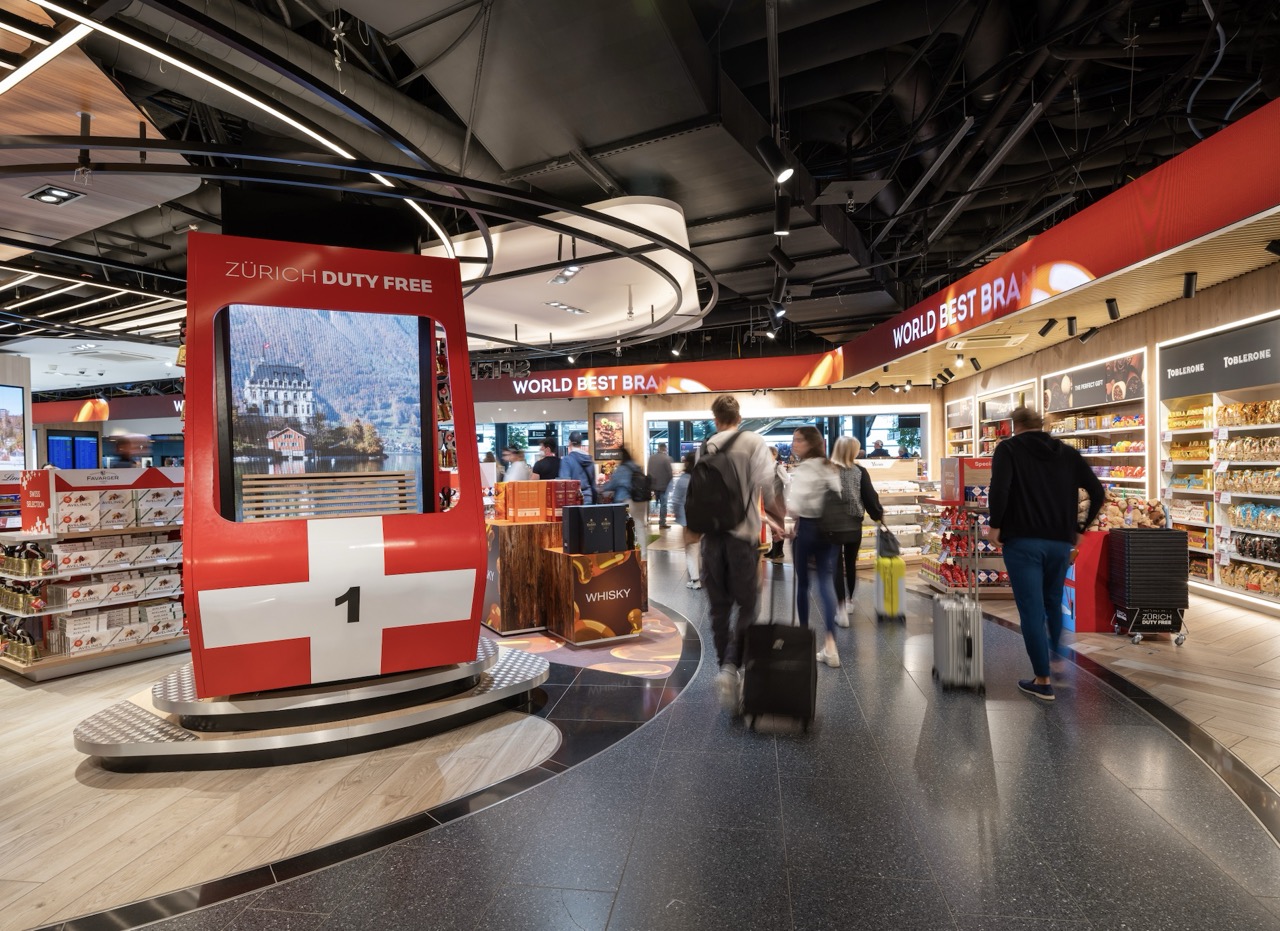
Head Retail Airside Jens Degner says, “Today we have a quite equal split of spaces for duty free, F&B and specialty retail airside, but we have to develop additional commercial space airside to close the gap to the recommended ACI benchmark of 800-1,000sq m space per 1 million passengers.
“That is partly because traffic growth continues to reach new highs, with all-time daily records on five days so far in 2025, and total traffic heading for 32 million for the first time this year.
“We don’t have 24-hour operations as other airports in Europe, such as Milan or Brussels do, another constraining factor, so at peak hours our concession partners have to deal with highly frequented retail and F&B units.”
Luxury allure
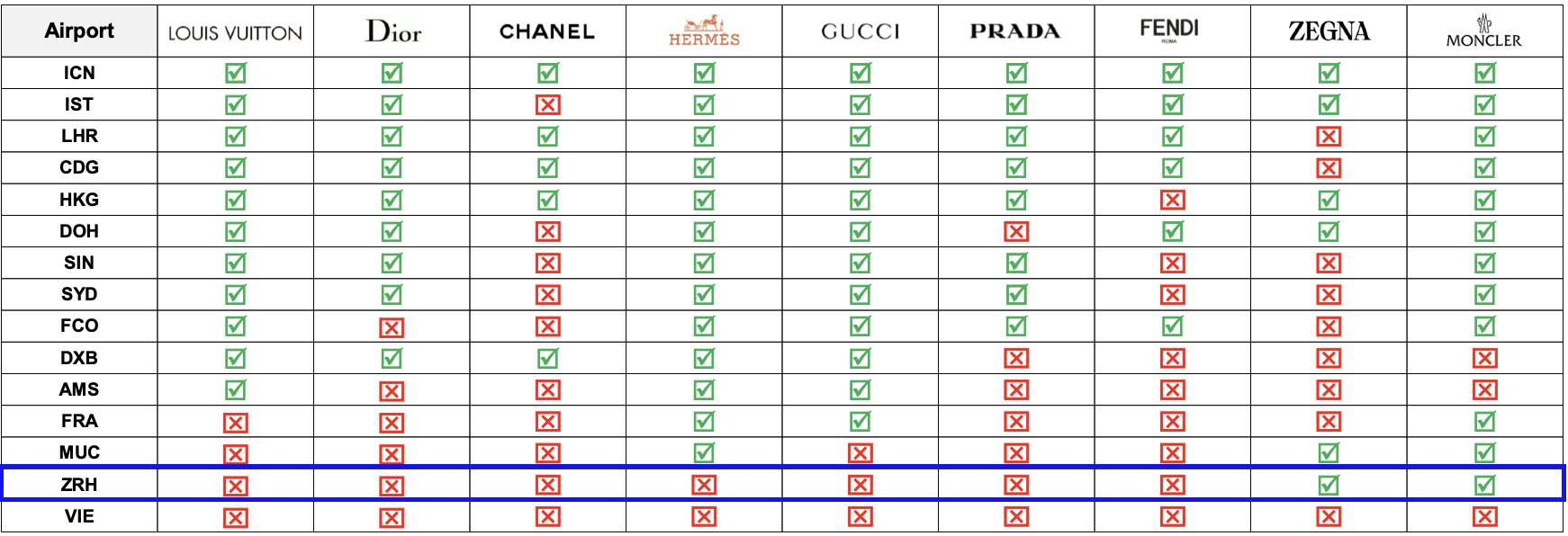
The relative lack of space is one drawback in accelerating Zurich Airport’s status as a haven for luxury, despite its attractive audience demographic. A glance at the table compiled by Zurich Airport shows which airports feature Hermès, Louis Vuitton, Dior, Chanel plus other leading luxury brands in stand-alone boutiques.
Köpple says: “Zurich belongs to a cluster of leading European airports that are not so interesting for luxury brands, because of space, traffic levels and high sales expectations among brands. They are not comparable to benchmark airports like Incheon, Istanbul or Heathrow. These brands are very selective and very careful about where they go.
“But even given our smaller size we have an incredibly high luxury opportunity and we feel that the next level can also work here.
“We have a very broad customer spending group throughout the entire luxury portfolio. Americans are playing a big part in this and are spending well even if the currency is not in their favour against the Swiss Franc at the moment. They recently became the number one tourist nationality in Switzerland, overtaking Germans.
“We also have Chinese, some of whom are still happy to spend, plus Brazilians, people from the Middle East, and also many Swiss.”
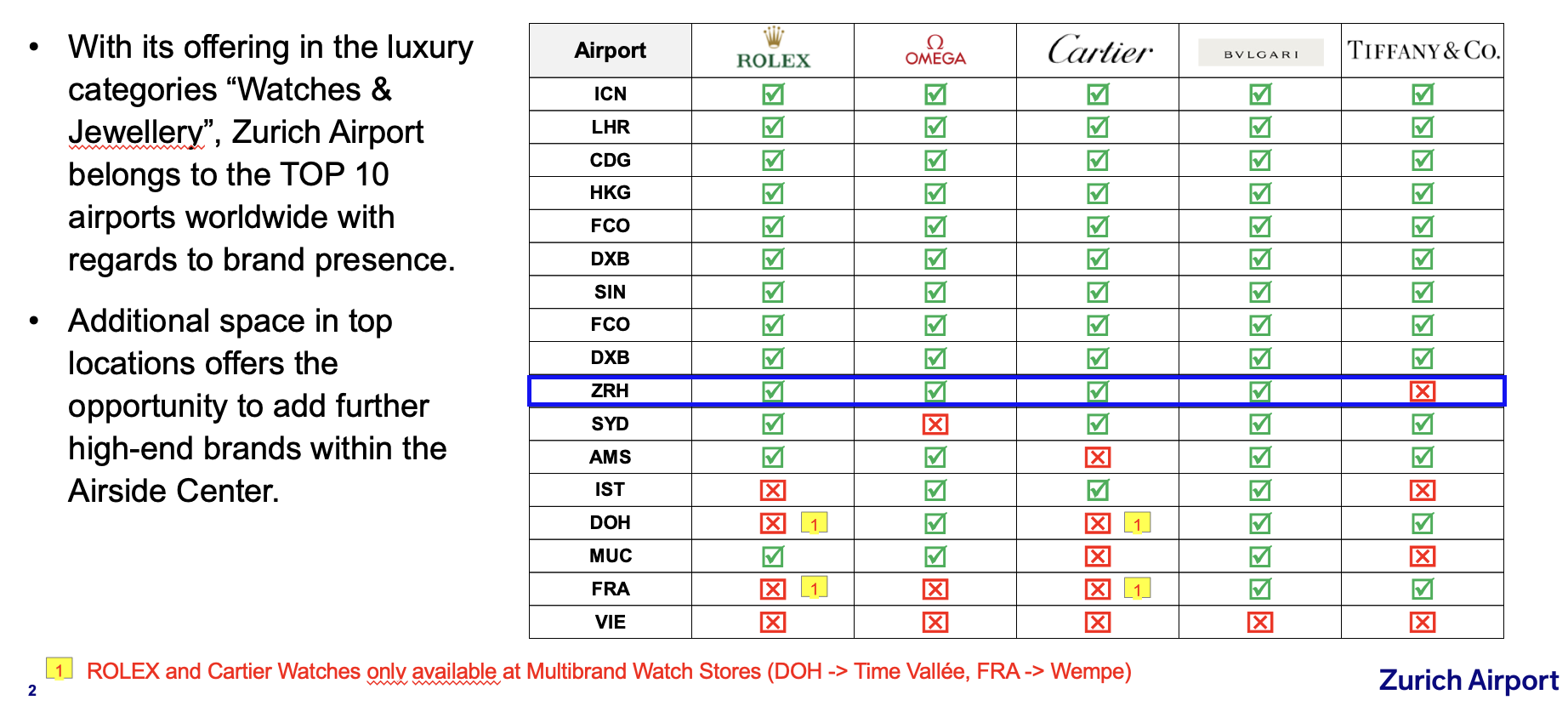
With the offering in watches & jewellery (if one takes a brand blend that includes Rolex, Omega, Cartier, Bulgari and Tiffany), Zurich Airport belongs to the top ten airports worldwide with regards to brand presence (four of these five are present, with Tiffany previously).
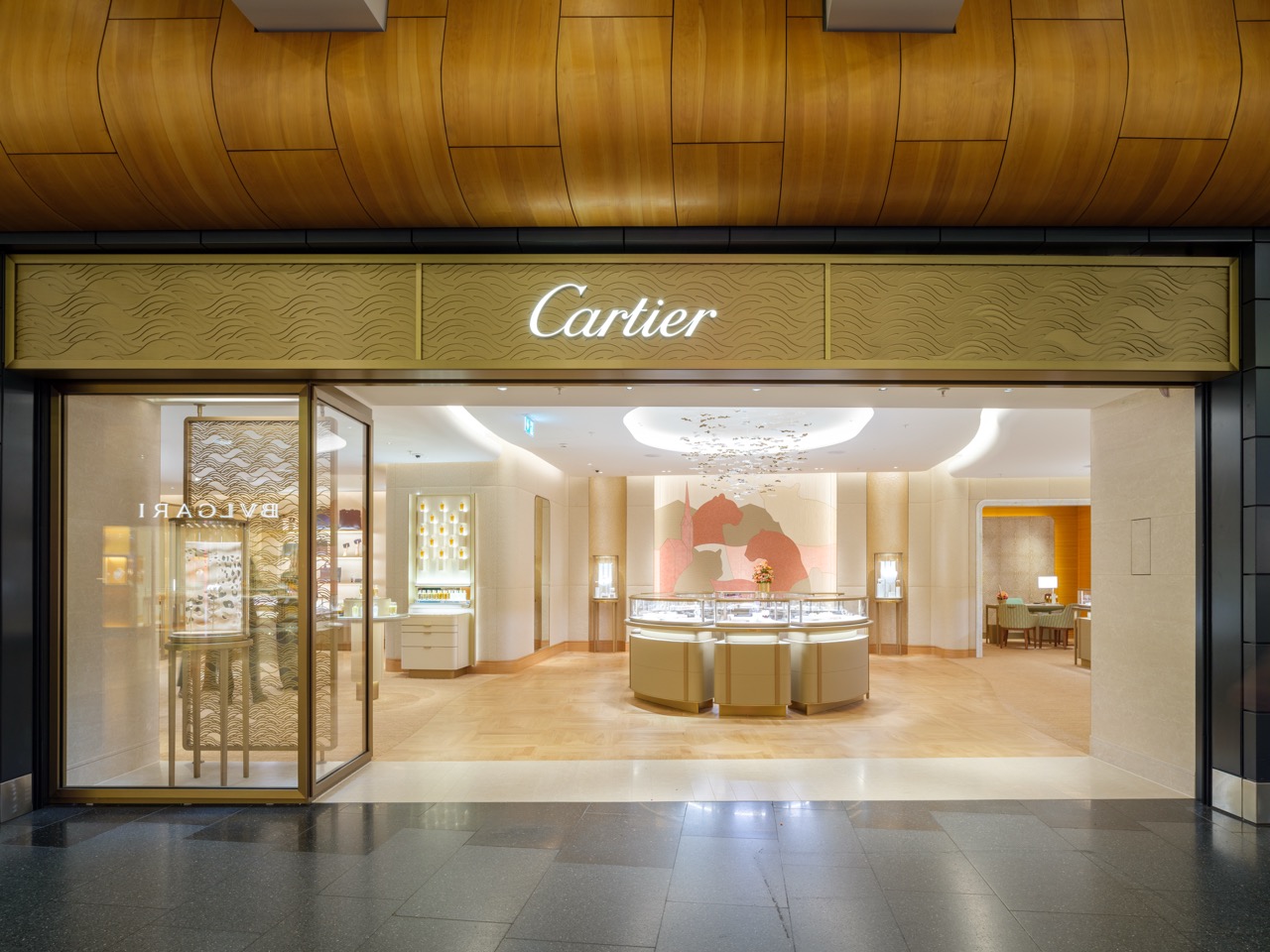
Additional space in top locations offers the opportunity to add further high-end brands within the Airside Center – and recent openings, such as Cartier, and expansions, such as Bulgari (doubled in space to 120sq m), have swayed the allure for top-end luxury back in the airport’s direction.

Köpple says, “For the brands, we can offer a highly attractive audience, plus we have a one-terminal concept. All travellers go through the same precinct no matter the flight destination, and that gives us a footfall comparable to a Heathrow T5.
“As an airport we are smaller at global level but one that is highly qualitative in terms of audience, design, open space, cleanliness, modern environment and the one-roof concept. Luxury does perform well here, as Cartier has shown after just three months. And with Bvlgari we don’t see any cannibalisation with Cartier as they attract different customer groups.”
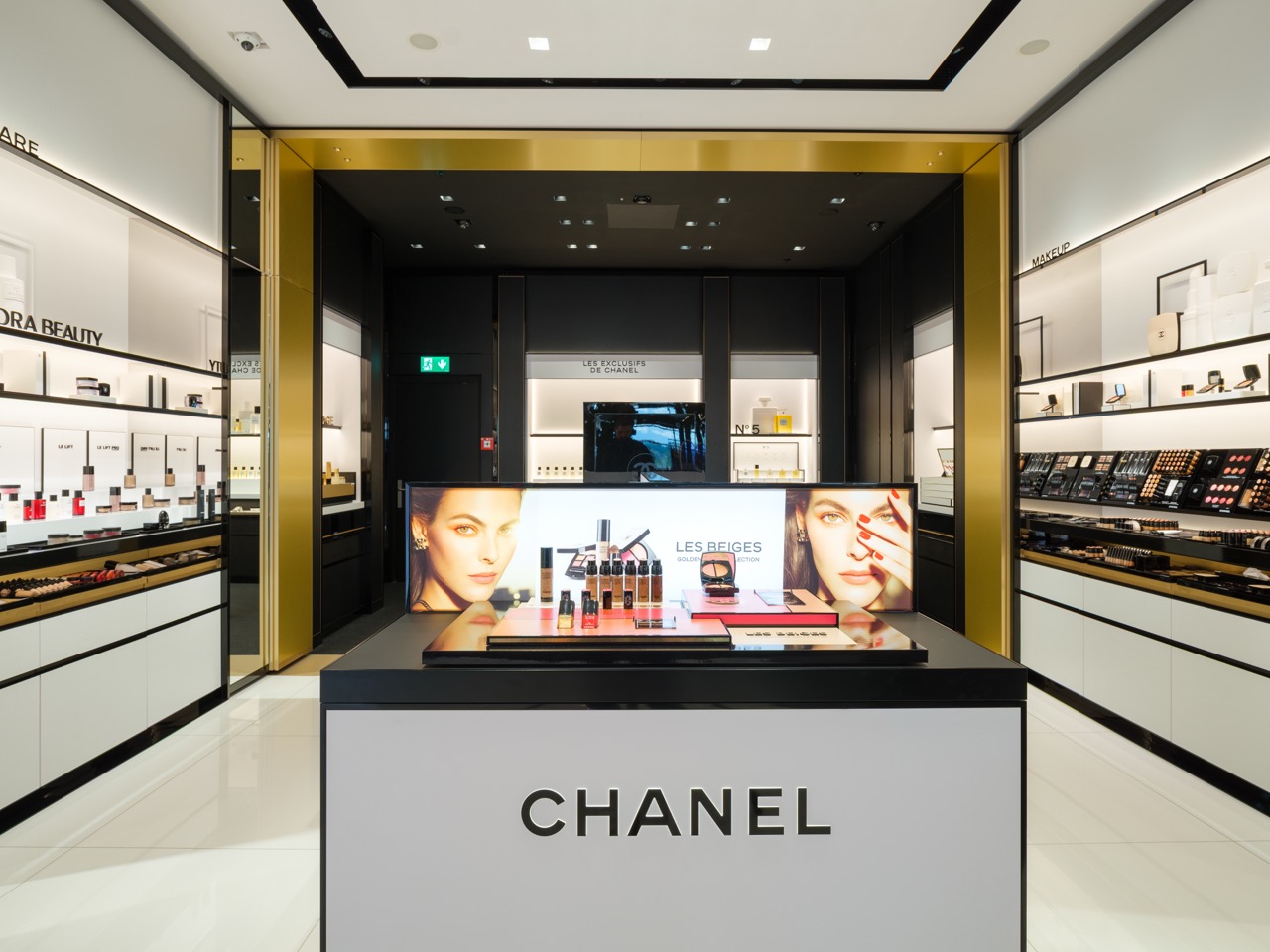
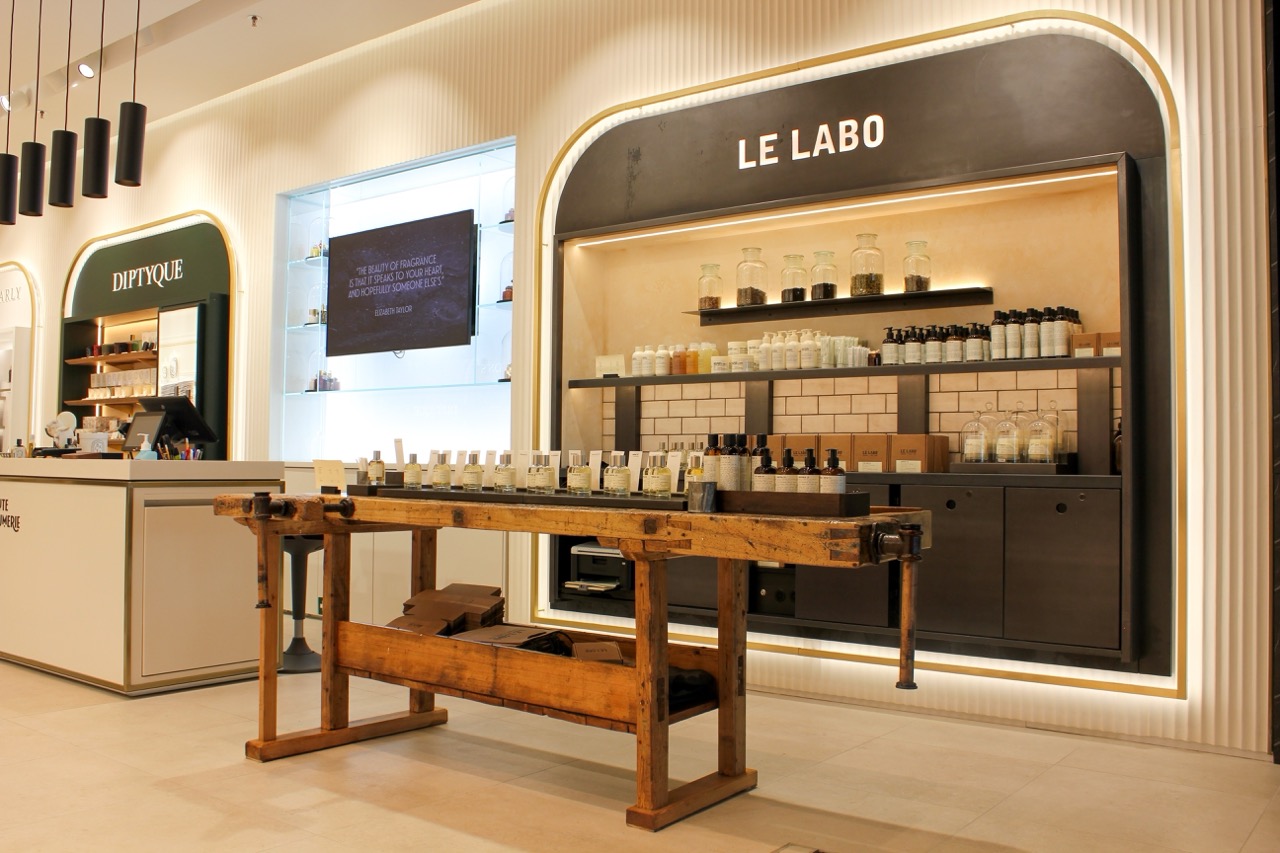
Beauty also does well in stand-alone spaces, led by Chanel and Dior Beauty – which fall under Avolta’s duty-free contract – alongside the travel retailer’s Haute Parfumerie concept, of which there are now two in Zurich.
Köpple says: “This really works well in attracting a new audience of younger consumers, including men, who are prepared to spend CHF300-400 (US$373 to US$497) on a perfume. Haute Parfumerie is a big success.”
A visit to the Airside Center offers an insight into the hands-on nature of the Zurich Airport team, and the kinds of partnerships it strikes in a bid to drive service standards higher.

The airside partners include a blend of global players and local heroes from Avolta in duty free to SSP, Autogrill/Avolta, Mövenpick Switzerland, Candrian Catering, Bindella Terra Vite Vita and Two Spice in F&B airside, alongside an array of partners, including brands in direct operation for fashion and other categories.
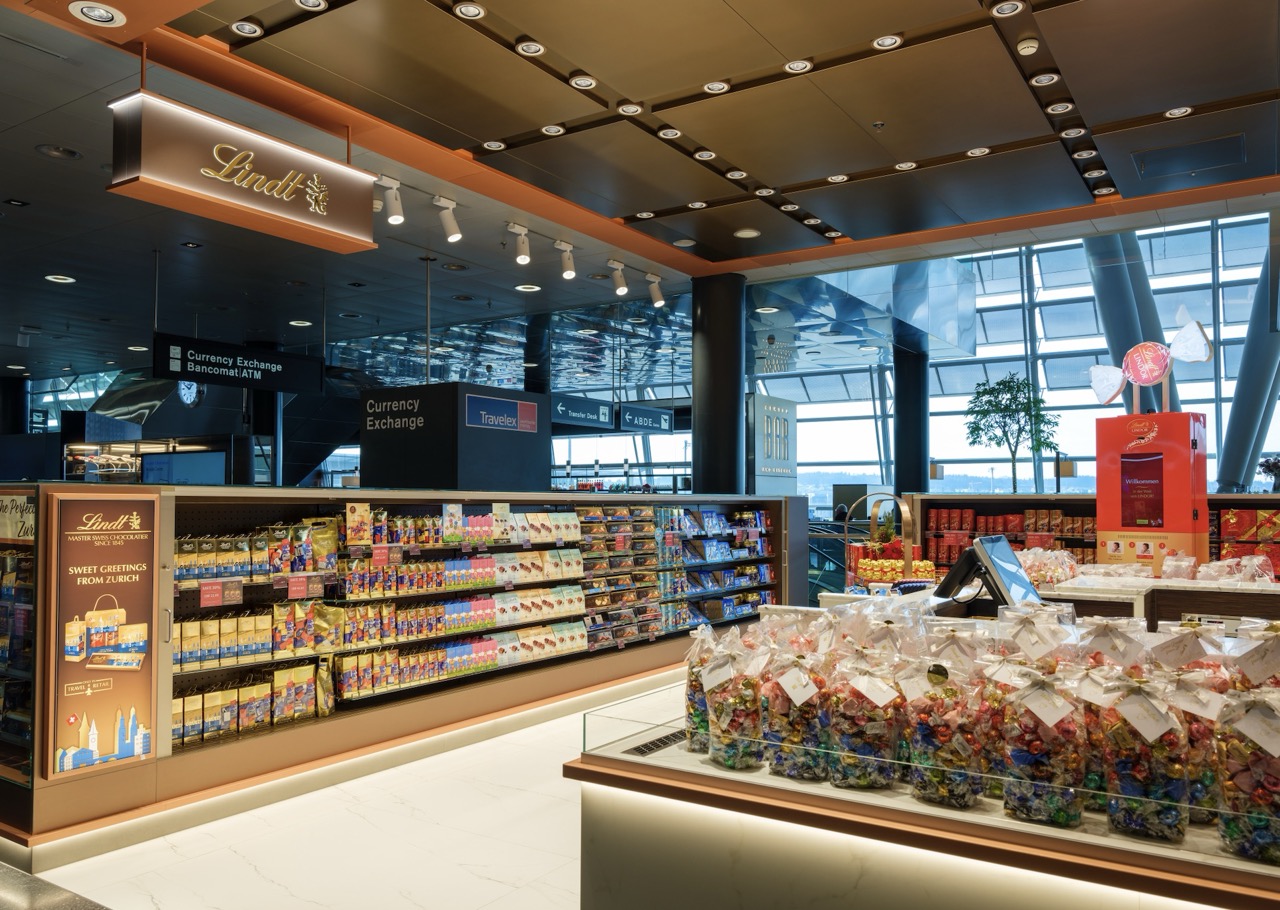
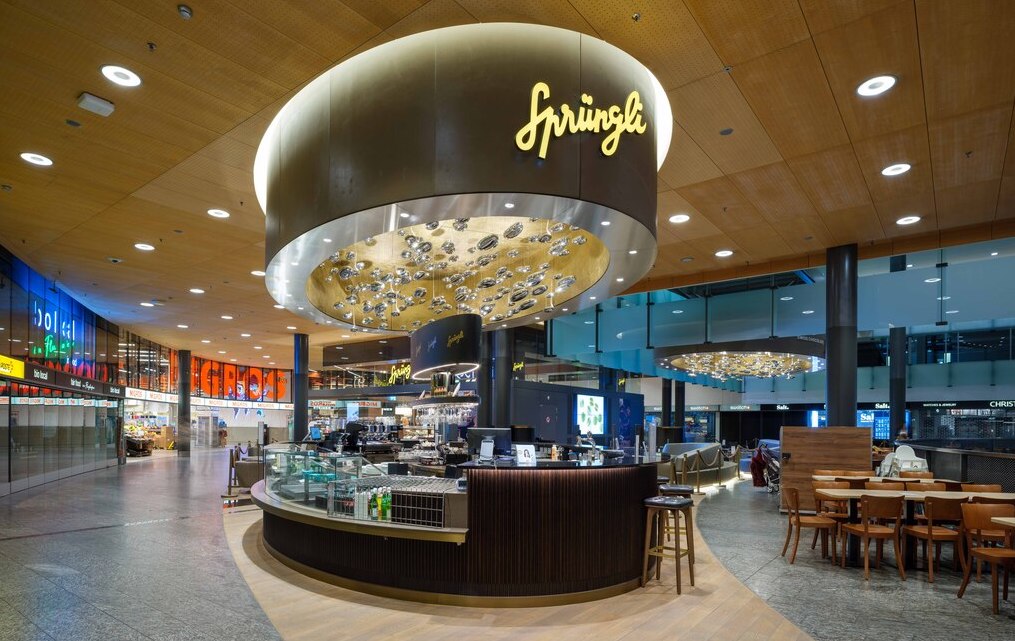
There are clean, common design lines everywhere you turn that are respected by the brands across the environment, even as they bring their own identities into play; plus superb executions, whether that is Kering Eyewear, Cartier and Bvlgari, the leading names in Swiss watches, or Lindt & Sprüngli in chocolate {main story continues following the communication below}.

In dining, there are spaces that live up well to their reputations as experiences in themselves.
Villa Antinori da Bindella restaurant – a joint venture between the Antinori wine-growing dynasty from Florence and the Bindella family – offers guests authentic Tuscan cuisine and a selection of first-class wines. Whether it’s to prepare truffle pasta or steak to order, every chef has to be trained in Italy to enable them to reach the standards required.
For the Antinori family of wine growers, the airport becomes a touch point where a wider audience can encounter their wines.
Patrick Zeltner says: “What we see is a lot of premium passengers coming from the lounges to Antinori/Bindella for the food, the right atmosphere, the right food as they see it. That’s a great calling card.”
Then there is the acclaimed Center Bar, whose core focus is Champagne and sushi, via well-known local operator Candrian. The attention to design detail is clear, from the authentic brass and oak wood fittings alongside the superb service.
“This high-volume restaurant has already had two makeovers, with a third planned in the next two years,” says Zeltner. “It was the first in which we decided to invest with our own capex, which we will also do in the next phase, allowing us to add our own know-how as well as that of our partner. We want to set our own benchmarks here.”
A similar story will take shape as the adjoining sports bar contract runs to a conclusion, with Zurich Airport taking over and investing in its next iteration.
“This all gives us high credibility with other partners,” notes Zeltner. “If we invest in their capex, we can show them what our standards are. It also means you can focus on premium and differentiated quality, not just look for margin. It is harder work than letting a third party do it, but this also means you can introduce more emotion into your ideas and executions.”
That neatly sums up the blend of art and retail science that characterises the Zurich Airport vision of and approach to commercial development.
Having a team that is highly experienced in retail and F&B adds credibility to conversations with partners, and recruiting brands creatively in the local and regional market, as with TREATS, underscores the willingness to look beyond traditional channels for inspiration and newness.
The upcoming landside development, including the use of the airport’s own capex, delivers a strong message about the commercial ethos and investment mindset; while airside the creative, ambitious luxury playbook neatly fits both the airport’s scale and that of a high-quality global traveller audience.
With a clear-eyed strategy and a strong investment mindset, Zurich Airport looks well placed to benefit from its well-balanced landside-airside twin-track approach. ✈