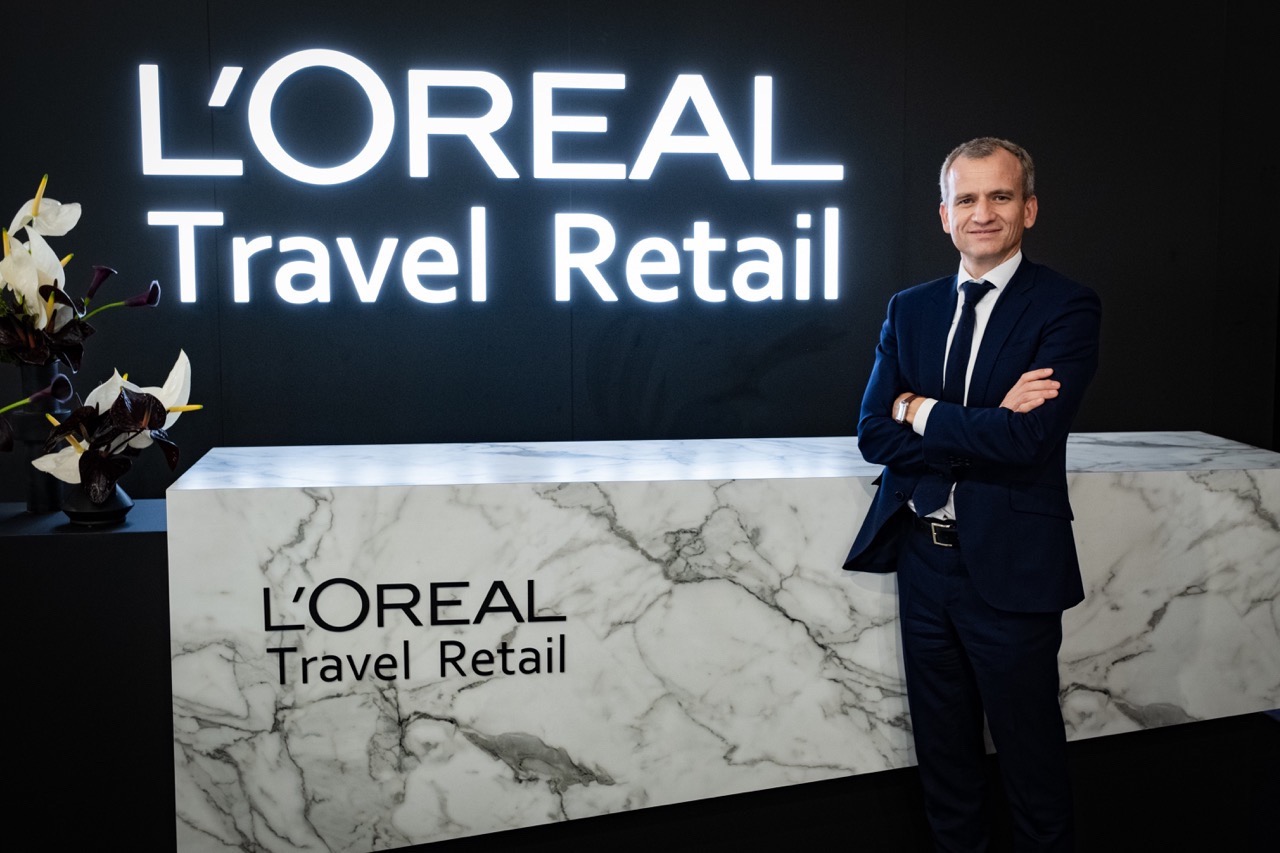
Introduction: At this year’s TFWA World Exhibition in Cannes, L’Oréal Travel Retail presented a bold new vision for the beauty category – one defined by emotion, experience and collaboration. Speaking with The Moodie Davitt Report Brands Director Hannah Tan, L’Oréal Travel Retail Luxe Division Worldwide General Manager Baptiste Beau outlines how the beauty group is transforming airport retail into what he calls an “entertaining destination” – a place where brands move beyond transaction to create memorable, multi-sensory experiences for travellers.
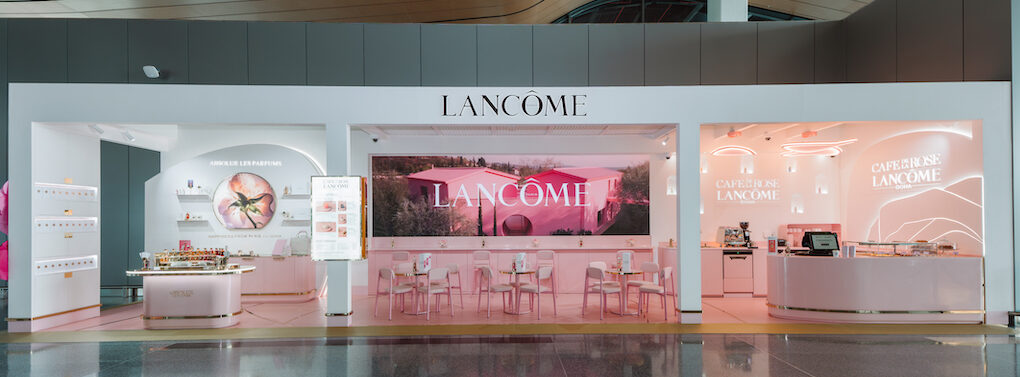
In the wide-ranging conversation, Beau introduces the six pillars of the group’s ‘Journey for the Senses’ framework – from Sense of Place to Sense of Service – which underpin a new generation of experiential, traveller-centric activations. He discusses how L’Oréal Luxe is leveraging its powerful portfolio across categories, highlighting momentum in prestige fragrance and professional haircare, alongside breakthrough concepts such as Haute Parfumerie and the recently opened Lancôme Café de la Rose at Doha Hamad International Airport.
With optimism about the long-term outlook for both travel and beauty, Beau concludes by underscoring L’Oréal’s commitment to elevating the travel retail experience through innovation, premiumisation and cross-category partnerships. “The future of travel retail is bright,” he says. “If we can turn the traveller’s attention from screen mode to feel mode, we’ll have done our job.”

The Moodie Davitt Report: Can you tell us a little bit about L’Oréal Travel Retail’s ‘Journey for the Senses’ strategy to elevating experiences in the channel?
Baptiste Beau: It starts with a simple assessment. We’re playing on a very exciting global stage – there are 3.7 billion travellers this year, and both the appetite for travel and for beauty remain strong. So, overall, the future looks bright.
However, what’s equally important is conversion. Today’s traveller is seeking reinvention, and that’s why we believe this is the right moment to transform the airport experience – from something transactional to something emotional and entertaining. That has been the backbone of our thinking this year.
At Cannes, you saw how we’re using our brands to build emotional connections with passengers through experience. 45% of travellers say experience is a key purchasing driver and spontaneous purchases significantly increase basket size. So, our goal is to create exclusive, traveller-centric experiences where mindsets and expectations differ from those in domestic markets.
At TFWA Asia Pacific Exhibition in Singapore, the focus for L’Oréal Travel Retail was all about ‘shoppertainment’. How is Journey for the Senses an evolution of that concept?
It’s more than an evolution – it’s a transformation. We want to demonstrate to our partners and stakeholders what truly defines an entertaining destination.
There are six key dimensions, which we call the Journey for the Senses:
- Sense of the Unexpected: Travellers want to be surprised and delighted; seeing something new and different is key.
- Sense of Time: Travel moments differ throughout the year – the mindset of someone on a summer holiday is not the same as a business traveller in January. We want to adapt experiences to those moods and cultural contexts.
- Sense of Service: Travellers want tailor-made experiences and services that respect their limited time.
- Sense of Gifting: At least a quarter of travellers are shopping for gifts. As a father of two, I understand this personally – we want to bring home something special. We’re ensuring that our gifting offer feels thoughtful and premium.
- Sense of Ultimate Luxury: As part of the luxury division, we aim to elevate every touchpoint. Our new fragrance collections, for instance, embody that aspiration.
- Sense of Place: Around 80% of travellers want to feel connected to their destination. A good example is Kiehl’s, which offers tailored skincare routines based on climate and local conditions. At Paris Charles de Gaulle, for instance, we have a Kiehl’s Loves Paris podium featuring destination-themed gifts and exclusives.
Fragrance has performed well for L’Oréal Luxe across several brands. How are you capitalising on that momentum in travel retail?
There’s a clear global trend towards high-end fragrance collections, and we’ve responded with our new multi-brand Haute Parfumerie concept. It brings together some of our most iconic fragrances in one destination, combining olfactory discovery with elevated gifting.
We’ve just launched this concept at Shanghai Pudong International and Singapore Changi airports. It is designed to express each brand’s unique identity while encouraging exploration through ingredients and craftsmanship, and I am very excited to see it roll out in travel retail.
Speaking of fragrances, tell us more about Prada and Miu Miu’s newest launches, Paradigme Homme and Miutine. Will we see them in the channel soon?
Absolutely. Prada Paradigme Homme has just launched globally in airports, following the huge success of Prada Paradoxe for women. The results so far are very promising. Prada has successfully leveraged its fashion equity to create a strong emotional connection in fragrance.
As for Miu Miu Miutine, it perfectly captures the brand’s free-spirited, irreverent personality. It’s already one of the hottest brands in the world, according to the Lyst Index. The fragrance embodies that playful Miu Miu spirit, merging high-fashion codes with L’Oréal’s fragrance expertise. You’ll start seeing it in travel retail very soon.

You’re also seeing strong momentum in haircare. What factors are driving this performance?

Haircare is booming, and we’re fortunate to have one of the jewels of professional beauty in our portfolio: Kérastase. We continue to accelerate the brand through a combination of outstanding products and services.
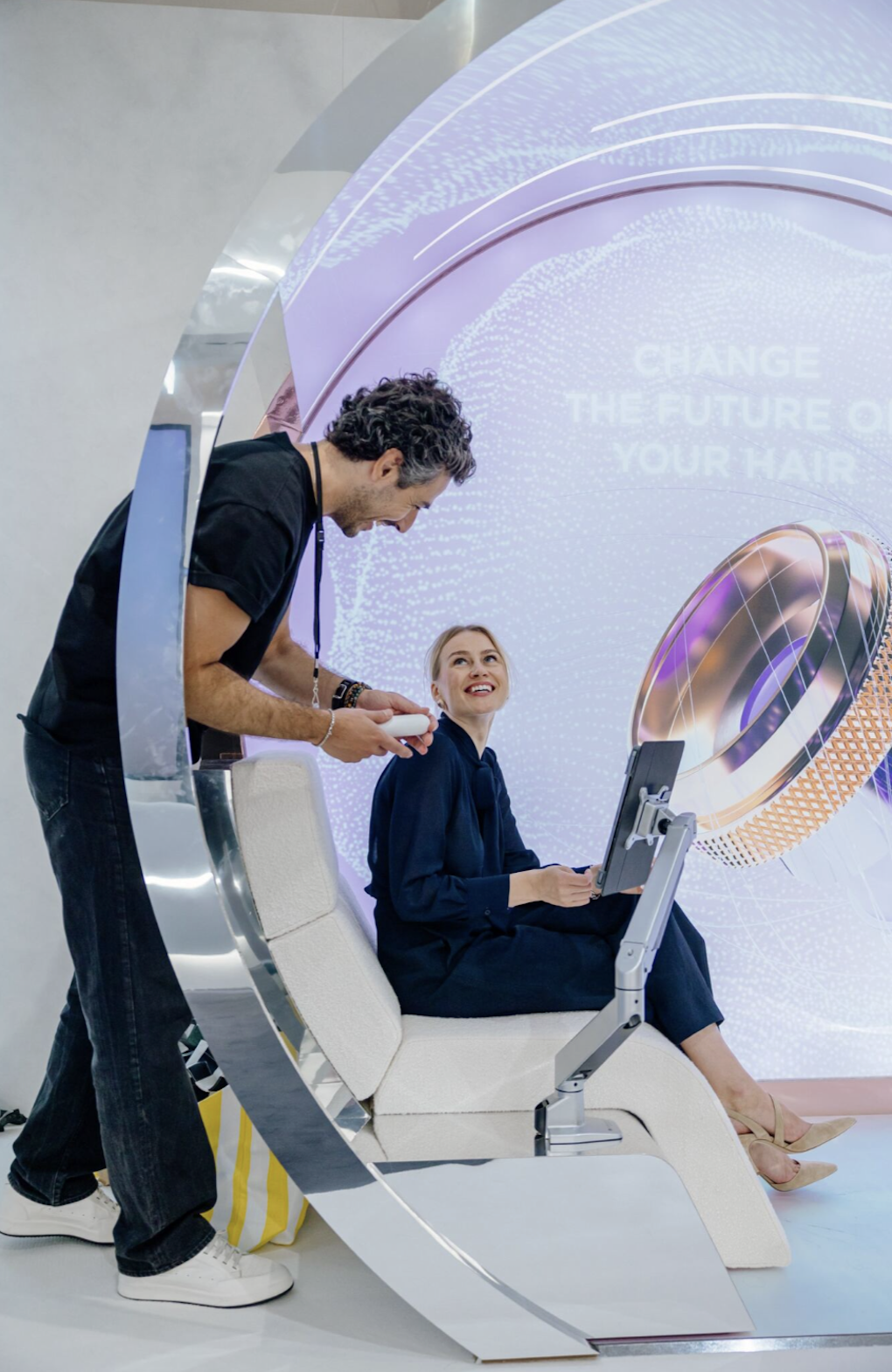
Kérastase is showcasing a personalised consultation powered by AI scalp and hair diagnosis technology, offering a tailor-made recommendation. When travellers understand their unique hair needs, conversion rates rise dramatically.
L’Oréal Travel Retail has always embraced cross-category partnerships. Recently, you’ve incorporated food & beverage into your activations with Lancôme Café de la Rose in partnership with Qatar Duty Free. Tell us more about this partnership and what it means for future activations?
Collaboration is at the heart of our approach. Our Pentarchy concept brings together all key stakeholders – brands, retailers, airport authorities, airlines and media partners – to create value collectively. It’s about connecting with the traveller before, during and after their journey.
Lancôme Café de la Rose is a perfect example. In partnership with Qatar Duty Free, Qatar Airways and Lenôtre, we created a hybrid beauty-meets-haute-pâtisserie concept at Hamad International Airport in Doha – the first of its kind globally. Inspired by the Lancôme flagship on the Champs-Élysées, the café concept allows travellers to immerse themselves in the brand’s world through both beauty and taste.
To make the airport experience truly memorable, we have to dare to innovate – and that means going beyond traditional retail formats.
In the recent earnings call, L’Oréal Travel Retail President Nicolas Hieronimus spoke about the “tale of two cities” in China – strong airport growth but softer downtown performance. How are you adapting to this shift?
Nicolas is right. While traffic and airport business remain dynamic, downtown duty-free is evolving. Our focus now is on elevating the airport experience.
We’re investing significant time and resources in close collaboration with retailers and airport partners to create truly traveller-centric environments. A good example is Helena Rubinstein, where we’ve developed a concept inspired by a first-class lounge. It’s designed around personalised skincare experiences that consider travellers’ concerns – from dehydration to fatigue – with travel-exclusive products like a premium eye mask and a specially designed massage ring.
This level of differentiation is what defines our airport strategy moving forward.
Despite market challenges, you sound optimistic about the future. Do you have a final message for the industry?
I am very optimistic. The future of travel retail is bright. Travellers will continue to explore, and by 2030 there will be two billion consumers.
To capture this growth, we must continue to reinvent and differentiate. Travel retail should not replicate domestic retail; it must offer unique, crafted experiences that exist only in this channel.
Second, collaboration is essential. The more we share insights and break down silos across the industry – from brands to retailers, airports and airlines – the more personalised and valuable we can make the traveller journey.
If we can turn the traveller’s attention from screen mode to feel mode, we’ll have succeeded. ✈