

INTERNATIONAL. Global mobility has continued to expand over the past two decades despite a deteriorating geopolitical backdrop, according to the latest Henley Passport Index, released today (21 July) as millions of travellers prepare for the peak Northern Hemisphere summer holiday season.
The findings underline the resilience of international travel and reinforce the importance of cross-border mobility to the travel ecosystem.
Based on exclusive Timatic data from the International Air Transport Association (IATA), the July 2026 Henley Passport Index ranks passports according to the number of destinations their holders can access without obtaining a visa in advance.
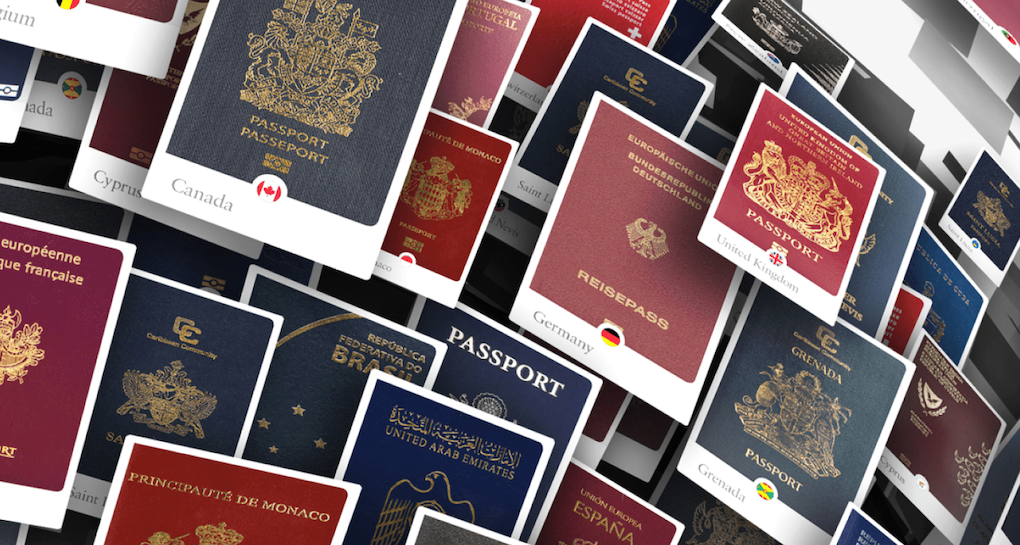
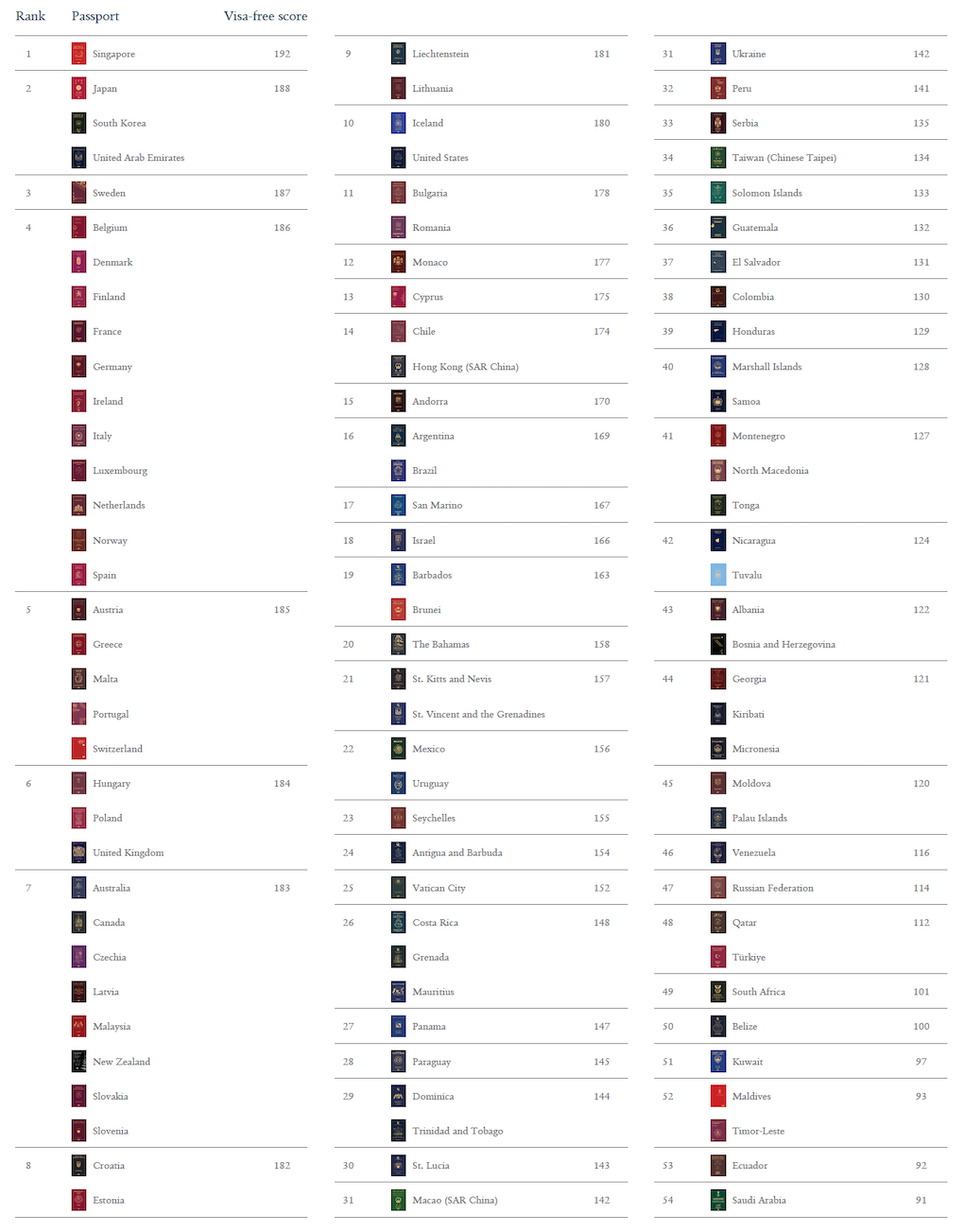
Singapore has retained its position as the world’s most powerful passport, providing visa-free or visa-on-arrival access to 192 destinations.
The United Arab Emirates was the biggest mover since the January rankings, climbing three places to share second position with Japan and South Korea on 188 destinations.
The UK rose one place to sixth after securing visa-free access to China and Malawi, while Canada climbed to seventh.
The United States remained tenth and is now one of the few top-ranked passports whose citizens still require a visa to visit China.
The report reveals that the average passport now provides visa-free access to 108 destinations, compared with just 58 when the index launched in 2006, highlighting the long-term expansion of international mobility.
At the same time, Henley & Partners notes that the gap between the world’s most and least powerful passports has widened significantly.
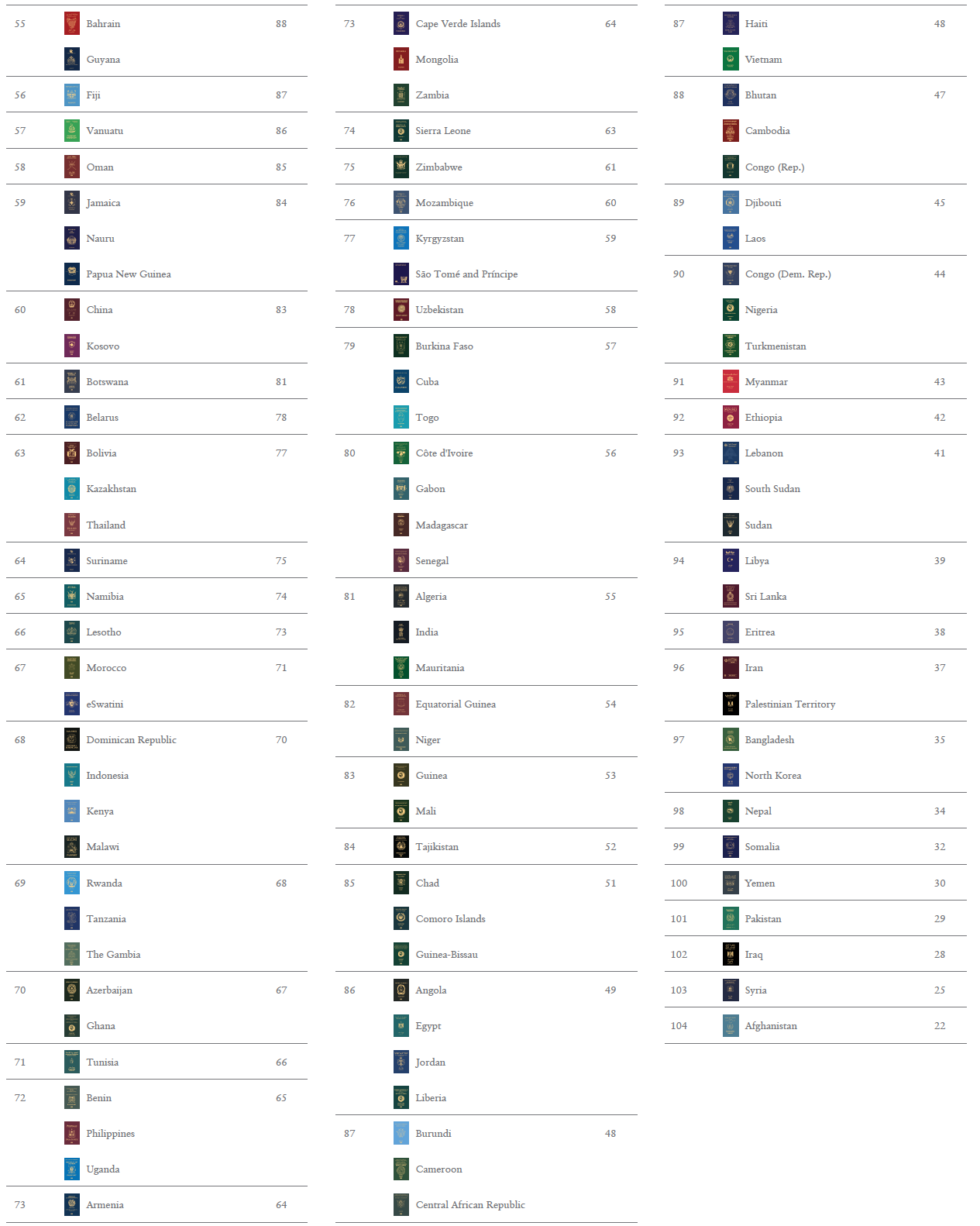
Afghanistan remains at the bottom of the rankings with access to 22 destinations, creating a record mobility gap of 170 destinations compared with Singapore.
The latest rankings come against a backdrop of growing global instability. Henley & Partners notes the findings contrast sharply with the latest Global Peace Index, which reports the highest number of state-based conflicts since the Second World War and a twelfth consecutive annual decline in global peacefulness.
Despite these challenges, international mobility has continued to evolve, Henley & Partners observed, supported by diplomatic engagement, visa liberalisation and deeper international cooperation.
Among the most notable long-term developments is the UAE’s transformation into one of the world’s strongest passports. Over the past 20 years it has added 153 visa-free destinations, representing the greatest improvement recorded by any passport since the index began.
The report also highlights a shift in the balance of global mobility. While Europe continues to dominate the upper reaches of the rankings, Asia has become increasingly prominent, with Singapore, Japan and South Korea now among the global leaders.
Meanwhile, the traditional transatlantic powers have lost ground over the past two decades, with the USA falling from first place in 2006 to tenth today and the UK moving from third to sixth.
Henley & Partners Chairman and Henley Passport Index creator Dr Christian H. Kaelin said: “Twenty years of data show that passport power is one of the clearest expressions of a country’s geopolitical capital. It reflects far more than peace or prosperity alone.
“The world’s strongest passports belong to nations that other countries want as partners – for trade, investment, security, or cooperation. Mobility is ultimately a measure of the value other countries place on their relationship with you.” ✈