


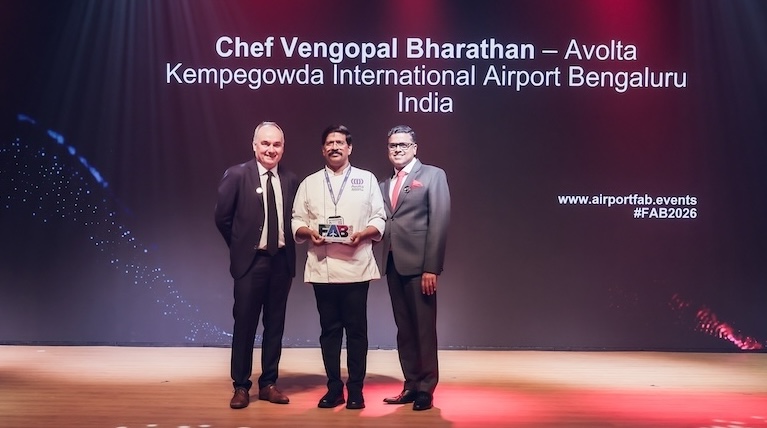
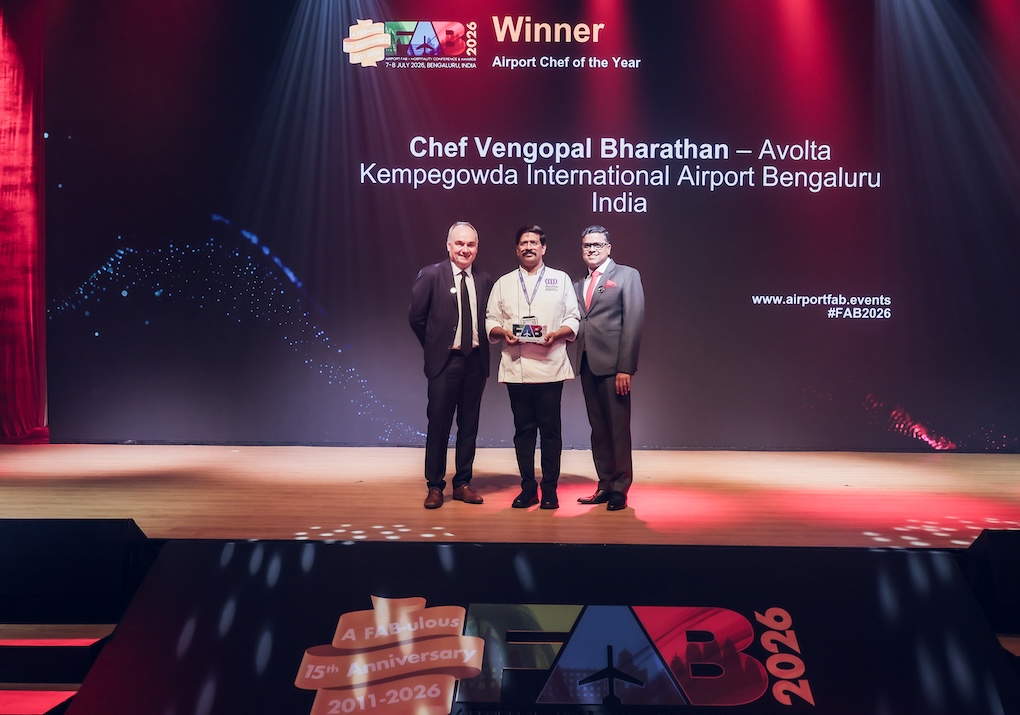
INDIA. 2026 FAB Awards Airport Chef of the Year joint winner Executive Chef Vengopal Bharathan of Avolta at Kempegowda International Airport Bengaluru talks with The Moodie Davitt Report Senior Business Editor Mark Lane about a remarkable culinary journey, the importance of authenticity and sense of place, airport culinary challenges and why a chef’s legacy is measured in people as much as dishes.
For Executive Chef Vengopal Bharathan, a career spanning more than three decades began almost by accident – in the kitchens of the German Consulate in Chennai.
During his school holidays, Bharathan would accompany his mother, who worked at the Consulate, and help the chefs preparing food for official functions. What might have seemed like a holiday diversion became his introduction to the precision, discipline and craft of international hospitality.
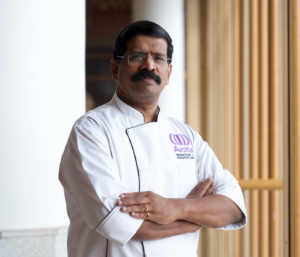
His original ambition lay elsewhere. Bharathan planned to study physiotherapy, but financial circumstances made that route difficult. A German Consul who had spotted the young man’s fascination with hospitality suggested he join the Institute of Hotel Management in Chennai instead.
“That advice changed my life,” Bharathan recalls.
After graduating, he joined The Trident Oberoi in Chennai. His first role was in guest service, but the kitchen continued to exert its pull. Bharathan spent every available hour there, watching, learning and absorbing the skills of those around him.
It established a philosophy that has remained with him throughout his career: “If you remain passionate and willing to learn, opportunities can come from unexpected places.”
From Chennai to the Royal Kitchen
And opportunities certainly followed. A move to Oman initially saw Bharathan working in service again, but once more he gravitated towards the kitchen. Eventually he transferred to the Royal Kitchen and went on to spend 14 years with the Diwan of Royal Court in Muscat.
He progressed from Junior Chef to Sous Chef, preparing food for the Royal Family, diplomats and state guests – an experience he describes as “an extraordinary education in precision, discipline and consistency”.
After returning to India, Bharathan moved into culinary education and subsequently Executive Chef positions spanning hotels, retail hospitality and large-scale foodservice. Today, as Executive Chef with Avolta at Kempegowda International Airport Bengaluru, those diverse strands have come together.
His achievement in being named joint Airport Chef of the Year at the 2026 FAB Awards (full results here) underlined the impact he has made. Bharathan shared the honour with Chef Omur Akkor of BFA (BTA & Fraport) at Antalya Airport.
The judges highlighted Bharathan as an outstanding example of “modern operational culinary leadership”, particularly praising the way he combines sustainability, people leadership, airport practicality and community engagement.
His approach to embedding sustainability into everyday operations, rather than treating it as a standalone initiative, was singled out, alongside his emphasis on mentoring, inclusive employment and team development.
For Bharathan, though, the award does not represent the end of a journey.
“I still see myself as a chef who is learning every day,” he says.
Food as the gateway to a destination
Few environments illustrate the connection between food and travel more vividly than an international airport. Bharathan believes food offers passengers one of the most immediate and memorable encounters with a place.
At Bengaluru Airport, that means celebrating the extraordinary diversity of Indian cuisine while ensuring Karnataka itself has a strong culinary presence.
“The best airport dining gives travellers a memory of where they have been, or perhaps their first taste of where they are going,” he says.

That philosophy translates into menus showcasing regional dishes, local ingredients, traditional cooking methods and seasonal offerings. Food festivals and cultural celebrations provide further opportunities to introduce passengers to flavours they might never otherwise encounter.
But authenticity, Bharathan stresses, involves much more than simply placing a traditional dish on a menu.
“We need to understand what makes it meaningful and preserve that authenticity. If a traveller leaves Bengaluru remembering a particular flavour or dish from Karnataka, then we have created a genuine connection with the destination.”
The airport culinary challenge
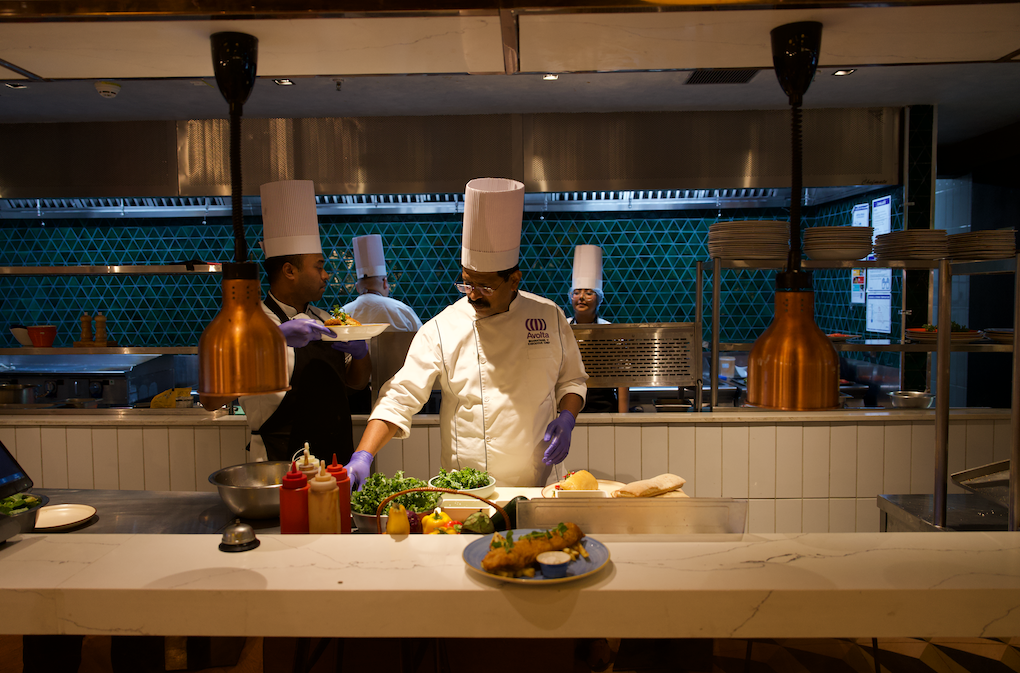
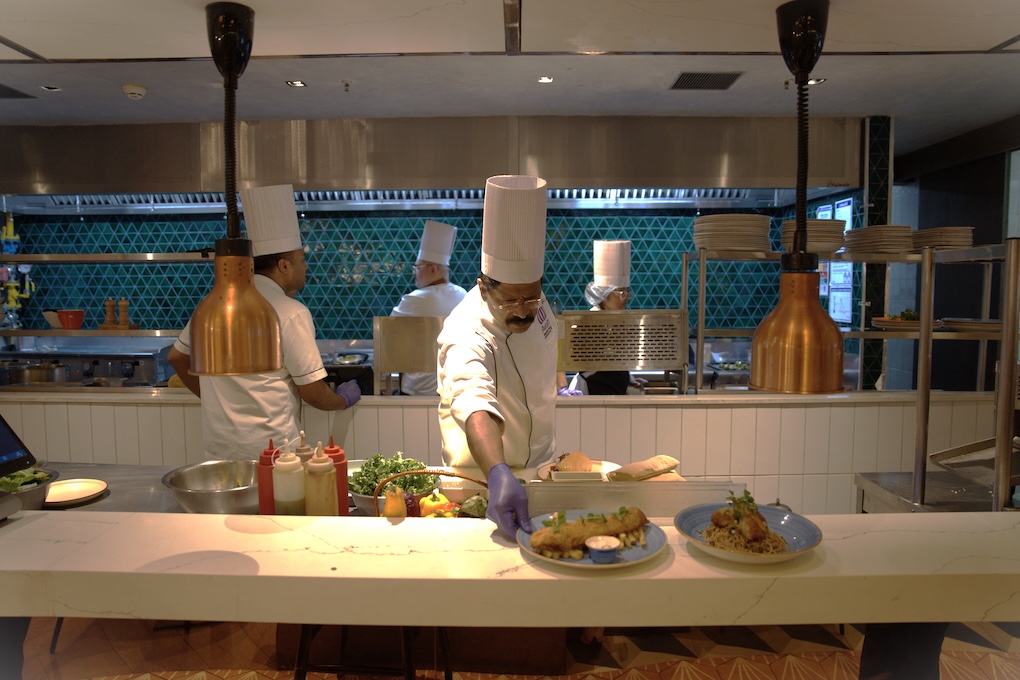
Doing so in an airport presents a distinctive challenge. Unlike a conventional restaurant, the amount of time available to the customer can change dramatically in minutes.
Bharathan has a neat phrase for the culinary conundrum: “Unhurried food, served in a hurry.”
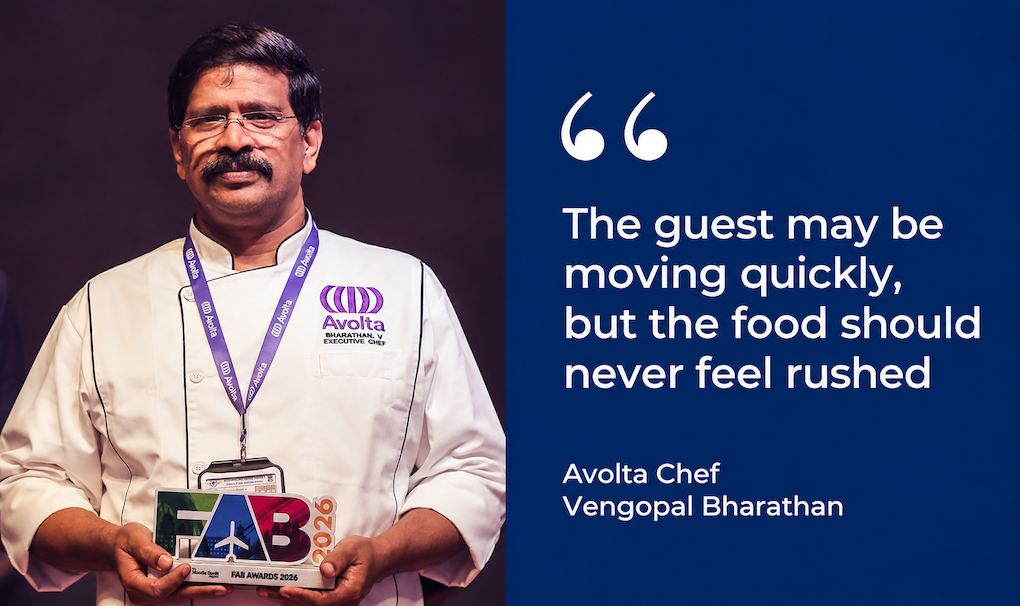
“A traveller may have an hour to eat, or suddenly only 15 minutes, so we have to protect the character of a dish while delivering it quickly and consistently,” he explains. “The guest may be moving quickly, but the food should never feel rushed.”
Achieving that requires meticulous preparation, reliable processes and, crucially, a strong team.
It also demands menus capable of serving an unusually broad customer base. Bengaluru’s passengers arrive with different budgets, tastes, dietary expectations and time constraints. Avolta’s offer therefore stretches from grab-and-go and value-led choices through casual dining and premium concepts to lounges, international brands and authentic Indian cuisine.
Commercial considerations – ingredient costs, preparation times and sales performance among them – inevitably matter. But Bharathan’s starting point remains the traveller.
“I want every traveller to be able to find something that suits their taste, their time and their budget,” he says.
Innovation without losing the soul
Consumer expectations have shifted markedly in recent years and Bharathan sees innovation as essential – but never for its own sake.
“For me, innovation is about keeping food authentic while making it relevant to how people want to eat today.”
That could mean developing a millet-based interpretation of a familiar South Indian breakfast, or creating a smaller version of a traditional meal for a time-pressed passenger. Increasingly, he notes, customers also want to understand the provenance and story behind their food.
“The important thing is that innovation should make a dish more relevant to today’s traveller, without taking away its soul.”
That same pragmatism informs his approach to sustainability, another area strongly recognised by the FAB judges. Bharathan sees it not as a grand gesture but as the cumulative impact of countless everyday choices.
Good planning, intelligent ingredient use and careful portion control can all reduce unnecessary waste. His advocacy of fresh, locally sourced ingredients has also extended beyond the airport, including involvement in initiatives supporting agroecological transformation and farmer livelihoods in Karnataka.
But his definition of sustainability extends to people.
“We need to develop our chefs, give them opportunities to learn and create an environment in which they can build long-term careers,” Bharathan contends.
A legacy built on people
That focus on people was another defining feature of the FAB Awards judges’ assessment. They praised a leadership philosophy centred on “care, dignity and long-term impact”, with mentoring and team development treated as integral elements of successful hospitality.
Bharathan’s commitment to mentoring is rooted firmly in his own story. His career exists, after all, partly because people recognised his curiosity and gave him opportunities.
“It begins with respect and a shared sense of purpose,” he says of building an airport culinary team. “An airport kitchen is demanding and no individual can succeed alone. Everyone matters, from stewards and commis chefs, to outlet chefs and senior leaders.”
Training, coaching, communication and recognition all play their part, while team members are encouraged to contribute ideas of their own.
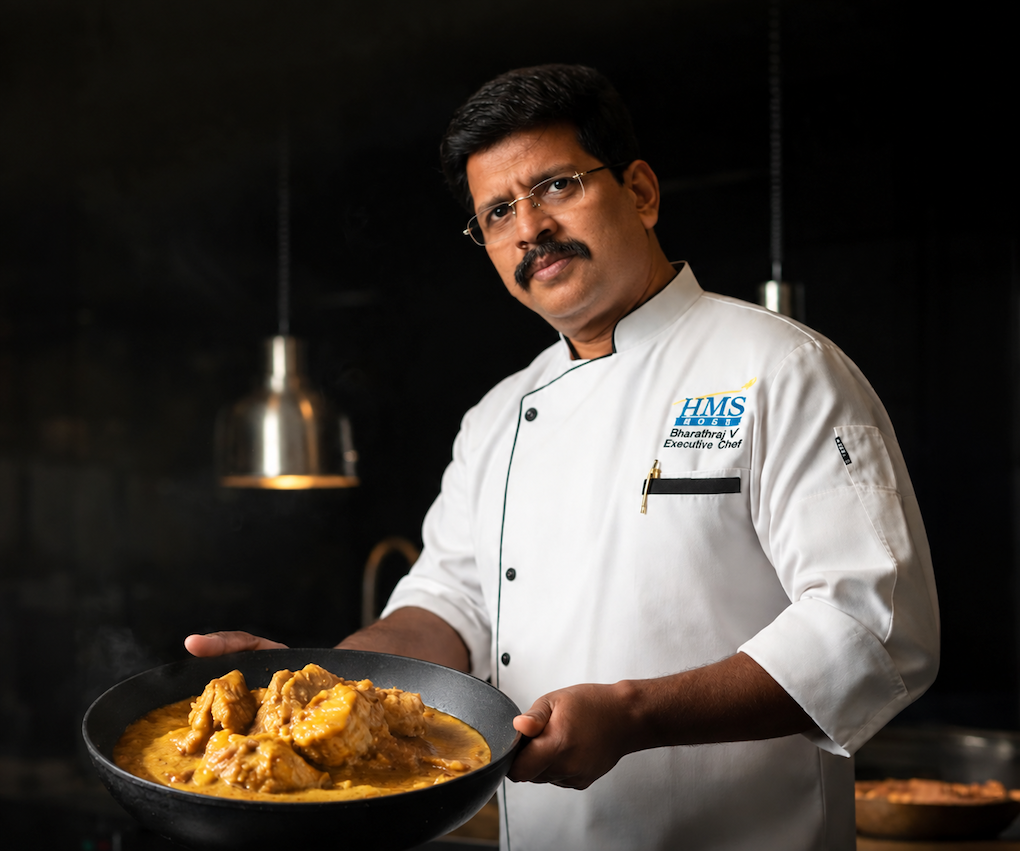
“My own career began because someone gave me an opportunity to learn in a kitchen, so mentoring young chefs is particularly important to me. I want others to have that same opportunity.”
It is perhaps this combination of culinary ambition and human leadership that best explains Bharathan’s success – and his vision of what being a chef should ultimately mean.
His culinary philosophy can be expressed simply: “Honour tradition, embrace innovation and always cook with purpose.”
Every cuisine carries heritage and a story, he says, and the chef’s responsibility is to respect both while making the food relevant to the person sitting at the table.
Yet, after more than 35 years in the industry, Bharathan measures achievement by considerably more than what appears on that table.
“I believe a chef’s legacy is not only the dishes they create, but the people they develop,” he says. “I have benefitted throughout my career from people who gave me opportunities to learn, so passing that knowledge to the next generation matters enormously to me.”
And ultimately, whether in a royal kitchen or one of the world’s busiest travel environments, Bharathan comes back to the same essential purpose of food.
“Great food connects people to places, cultures and memories. If a traveller leaves our restaurant with a story or an experience they remember, then we have done our job.”