


Introduction: Areas Communication, Sustainability & Customer Experience Director Blanca López Alerm outlines the travel food company’s new ESG strategy in this Q&A.
The Moodie Davitt Report: To start, let’s set the context. What exactly is ‘Areas for Change’ and why is it being launched now?
Blanca López Alerm: ‘Areas for Change’ is our ESG strategy – our sustainability roadmap. It stems from a clear conviction: the travel food & beverage sector has a tremendous capacity to generate impact, which represents a major opportunity.
At Areas, for example, we operate more than 2,000 restaurants and retail units across airports, train stations and motorway travel plazas in 11 countries across Europe and the Americas, serving around 350 million customers each year. This was the right moment to bring together everything we had already been doing, raise our level of ambition, and structure it around clear, measurable goals.
When we talk about sustainability, it is often reduced to environmental issues. How do you approach it at Areas?
For us, sustainability is a holistic concept built around three key pillars: People, Planet and Travel Experience. These pillars are translated into nine core commitments that guide our actions.
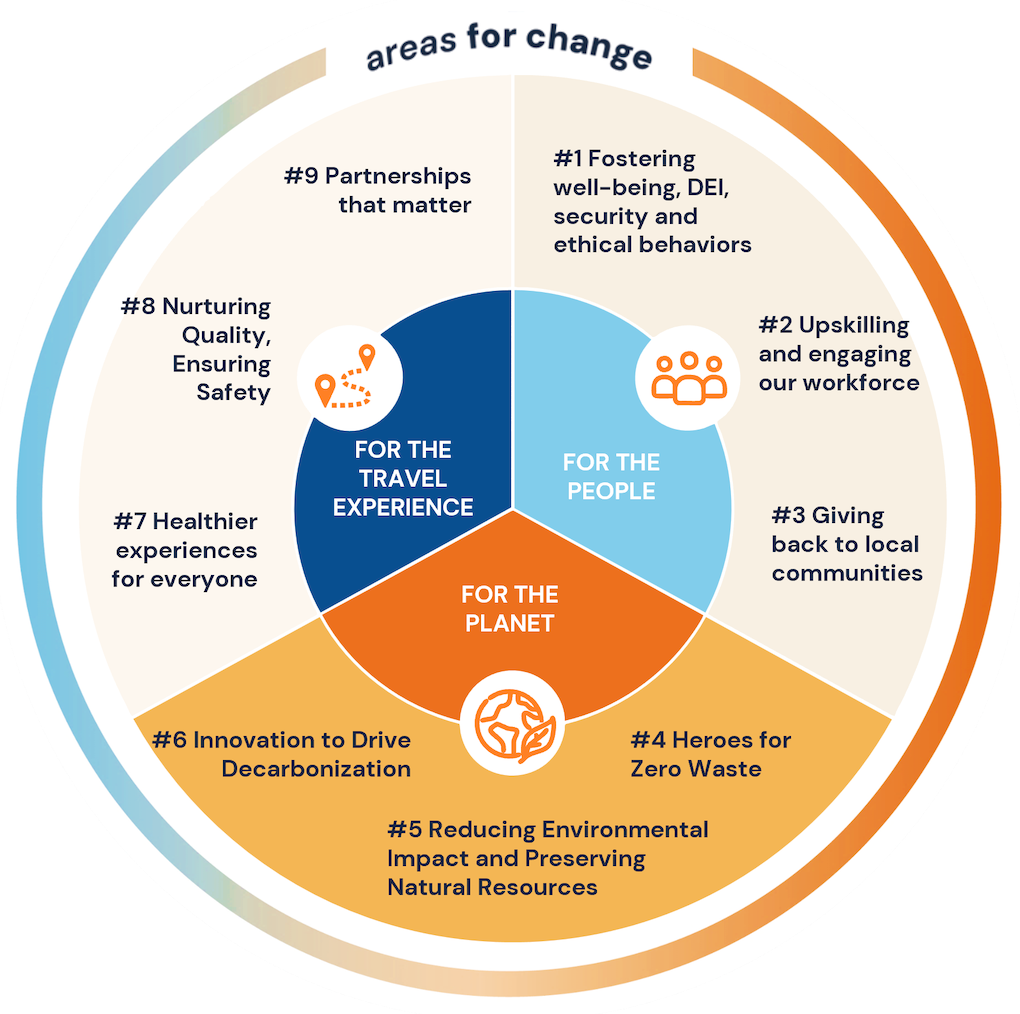
The People pillar covers everything related to our teams – well-being, inclusion, training and development – as well as support for local communities.
Planet focuses on reducing our environmental impact, from resource consumption to waste management.
The Travel Experience pillar is about how we integrate sustainability into the customer journey – making responsible choices easy and seamless, while ensuring, for example, a healthier food offering.
What initiatives would you highlight within the strategy?
There are several key focus areas. Within the Planet pillar, we are strongly focused on reducing energy and water consumption across our locations. We are also working to minimise food waste, which is especially relevant given the nature of our business.
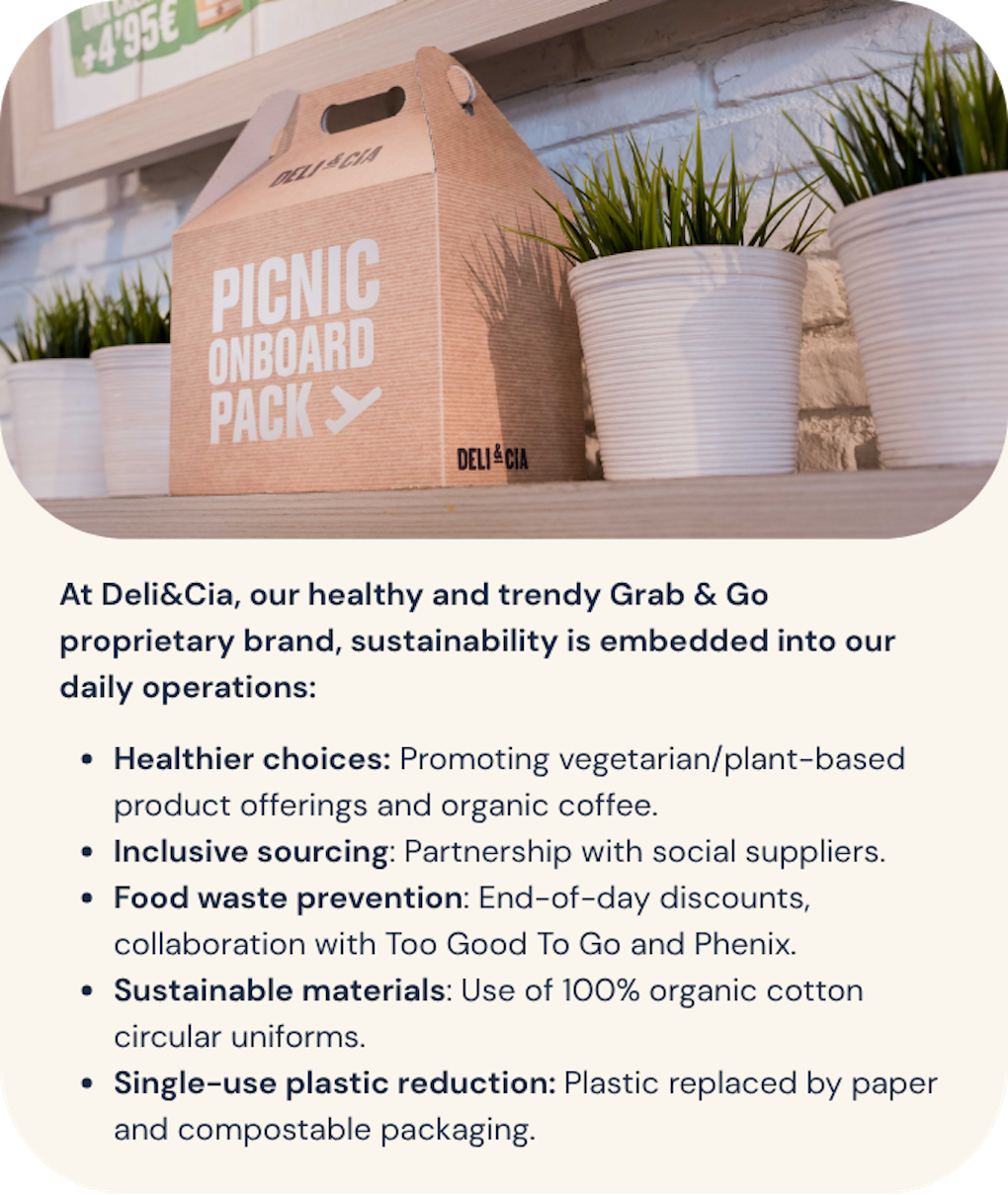
In addition, we are advancing initiatives to reduce single-use packaging, which also contributes positively to the environment.
How does that translate into something tangible for someone having a meal at an airport, train station or motorway travel plaza?
In more ways than you might think. Customers can choose healthier options or plant-based alternatives. They may notice changes in packaging or in how waste is managed.
This is where the Travel Experience pillar becomes especially important: we want customers to enjoy a better, more conscious experience – without requiring any extra effort on their part.
One of the biggest challenges is often aligning sustainability with business performance. How do you manage that?
It’s a real challenge, but also a major opportunity. Many of the initiatives we implement – such as energy efficiency, water optimisation or waste reduction – also generate cost savings and make the business more efficient.
At the same time, travellers increasingly value these practices. The return is not always immediate, but in the medium to long term, it clearly makes sense.
What role does communication play in all of this?
Communication is key, but it should always come as a follow-up to action. First you act, then you communicate – and you do so in an honest, clear and educational way.
Consistency is essential. We have set concrete, measurable, time-bound goals, and we monitor them continuously. We also believe in communicating not only our progress but also our challenges. Sustainability is a journey, not a snapshot, and credibility is built through transparency.
Communication also plays an important social role: it helps both employees and customers understand the rationale behind decisions, making it a powerful driver of change.
In that sense, how do you engage employees?
 They are critical. The strategy only works if it reaches our points of sale. That’s why we invest heavily in training, provide the right tools and actively involve our teams in these initiatives.
When people understand the purpose, they become our best ambassadors.
What about partners and suppliers?
They are equally important, especially given the complexity of our value chain. It’s essential to work closely with them – engaging, learning together and leveraging synergies to move forward. It’s about building shared solutions.
Looking ahead, how would you like ‘Areas for Change’ to evolve?
I would like it to become a true decision-making driver, so that every initiative – from opening a new location to designing a menu – goes through a sustainability lens.
And above all, I want Areas to be able to measure and demonstrate, with data, the positive impact we are generating – on the planet, on people and on customer experience.
Finally, on a more personal note: what motivates you about leading this project?
Knowing that, as a large company, we can contribute to real change. It’s a demanding journey involving multiple departments, countries, and complex decisions, but also a highly rewarding one. Ultimately, it’s about building a way of doing business that makes sense today and in the future… ✈
This Partner Content was first published in The Moodie Davitt Magazine, May 2026. Click here for access.