INTRODUCTION As first revealed by The Moodie Report, four downtown duty free licences are currently up for renewal in South Korea. These are currently held by Lotte Duty Free at its flagship store in Sogong-dong, Jung-gu, Seoul and the Lotte World Mall, also in the Korean capital; WalkerHill Duty Free in Seoul; and Shinsegae Duty Free (formerly Paradise Duty Free) in Busan. They all expire in late 2015 as follows:
WalkerHill Duty Free: 16 November
Shinsegae Busan: 15 December
Lotte main store: 22 December
Lotte World: 31 December
Their fate will be decided in coming days. In the run-up to the awarding of the licences, The Moodie Report Chairman Martin Moodie has been interviewed by two leading Korean media titles. We reproduce highlights of those interviews here, in which Moodie expresses his surprise that long-established and highly professional travel retailers are being forced to defend their businesses as a result of regulatory change and lack of government awareness of the merits of the duty free industry.
 |
THE KOREA ECONOMIC DAILY INTERVIEW
◆It seems that there is a tendency to competitively propel the expansion of the global duty free business through mergers & acquisitions. What is the reason?
The global duty free business is increasingly seen by the investment community as having sound fundamentals, based on strong forecast global passenger growth; a tremendous growth in airport and aviation infrastructure (and the need for airports to fund such developments through commercial revenues); an inherent geographic spread; and a strong exposure to travellers from emergent markets, most notably China. Historically it was a fragmented industry but that is now changing fast.
◆Is expansion of the duty free business essential?
To maximise service to travellers, duty free retailers have to ensure a wide range of international and local brands, top-class service and a pleasant shopping environment.
Given that duty free shopping is such a major tourist attraction, particularly for Chinese travellers, if these elements are not provided then customers will choose to shop elsewhere, for example in Japan (which is currently pouring in huge resources to increase its downtown duty free offer for travellers).
The huge demand from Chinese shoppers has put incredible pressure on existing capacity. Increased space and more shops are important, therefore, for Korea, but only if they provide a high-quality ambience, selection and service. Over-proliferation can lead to a weakening of standards.

Four licences, plenty of competition; Source: Moodie Research |
 |
“More duty free licences at locations such as Incheon International Airport don’t actually create more business, they simply fragment it and lead to lower levels of service. Many smaller players simply lack the understanding, resources and economies of scale to compete in such a complex environment.“ |
Martin Moodie Chairman The Moodie Report |
◆How do you view global travel retailers like Dufry in terms of further M&A activity?
Global travel retail and duty free is in a concerted consolidation phase with a wave of acquisitions characterising the industry over the past decade.
This has been led by Switzerland-based Dufry which has embarked on a remarkable buying spree, including the acquisitions of two fellow top-10 retailers in the past two years – The Nuance Group and World Duty Free. Dufry has also acquired a range of powerful businesses in regions such as Latin America (where it dominates) and Europe. Unquestionably it will now seek to expand its relatively under-developed footprint in Asia.
The other industry giants are similarly expansion-minded. Lagardère Travel Retail recently acquired American airport retailer Paradies for US$530 million and I expect significant further M&A activity within the industry’s top-20 ranks in the near term. Korean retailers could and should be part of this acquisition wave in my view.
◆ The duty free business is often described as a golden goose in Korea. Is this true globally?
In fact it’s a very complex, difficult goose, not always golden and sometimes it struggles to fly!
World-class duty free retailing requires experience, significant economies of scale and investment resources. The price of entry in terms of airport rents is rising all the time as airports seek ways to fund their infrastructure development without adding to airlines’ or passengers’ costs. Many airport duty free contracts around the world are actually loss-making. It’s no place for the unprofessional or the faint-hearted!
Yes the revenues are significant but so are the benefits to airports, passengers, governments and, especially, local economies.
◆ How do you rate the Korean duty free shops such as Lotte and Shilla? Why do foreigners crowd into the duty free shops in Korea? Please explain the strong points and weak points of the Korean duty free business.
The Korean duty free retailers are among the world’s most professional, particularly in terms of selling to Chinese travellers; the use of social media (particularly relating to Hallyu marketing); the championing of local products (a major weakness for many international duty free retailers) and the quality, range and service of the downtown duty free shops in particular.
Korea didn’t become the world’s number one duty free market by accident. Such a status is testament to the huge investment that retailers such as Lotte, Shilla, SK Networks (WalkerHill), Shinsegae and others have poured into the market, and the quality of the offer down the years to Korean, Japanese and, critically, Chinese travellers. The growth of Korean beauty products, especially, and Korean fashion and accessories, through the country’s duty free stores, is something unrivalled in the world and that Korea should be proud of. Duty free has also acted as a wonderful springboard for Korean brands abroad.
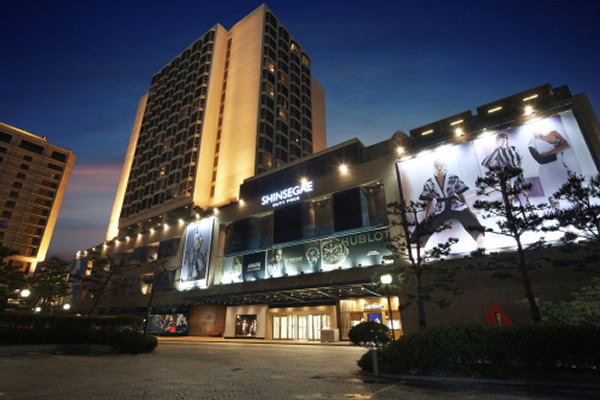
Shinsegae Duty Free, formerly Paradise Duty Free, in Busan is the flagship travel retail location for the department store giant. But the company would dearly love a Seoul downtown presence. |
Being the world’s number one market is commendable but there are also threats. At a time of global consolidation in the industry, almost no foreign observer can understand why the Korean government seems intent on fragmenting the country’s duty free business – and therefore weakening the hold of companies such as Shilla and Lotte.
More duty free licences at locations such as Incheon International Airport don’t actually create more business, they simply fragment it and lead to lower levels of service and (sometimes) choice for the consumer. Many smaller players simply lack the understanding, resources and economies of scale to compete in such a complex environment.
The boom in Chinese tourist arrivals and duty free spending of recent years is a double-edged sword. It’s great for the economy (and for jobs) but the high exposure to one nationality is a concern – especially as other Asian countries such as Japan and Thailand are working overtime to attract Chinese travellers.
Korea must redouble its efforts to serve Chinese travellers well, partly based on their love of shopping (and all things Korean) but also through enhanced tourism services. In my view you don’t achieve those goals by fragmenting the industry and weakening the key players.
|
“My concern for Korea’s duty free industry is the golden goose analogy you referred to earlier. Yes, you could argue there are some golden eggs, but all eggs, even golden ones, can crack.“ |
Martin Moodie Chairman The Moodie Report |
Last year, for example, an astonishing 20% of all Chinese arrivals were generated by Lotte travel operations. That offers huge benefits for the Korean economy in terms of jobs, corporation tax, and spin-off benefits to other sectors, such as hotels and restaurants.
My concern for Korea’s duty free industry is indeed the golden goose analogy you referred to earlier. Yes, you could argue there are some golden eggs, but all eggs, even golden ones, can crack! And geese can fly to other locations, notably Japan and Mainland China itself. That’s the big threat.
Such growing competition from Japan, allied to an increasing Chinese government focus on encouraging domestic consumption (evidenced by the creation of hugely successful “˜offshore duty free’ shopping on Hainan, similar to the Jeju model for Korean domestic travellers), means that this is no time to be eroding the power base of Korean retailers. Encourage more retailers perhaps; don’t weaken those who have showed themselves to be best-in-class worldwide.
◆ The duty free shopping business is the topic of the year in Korean industry. One more duty free shop war [over the four licences] has started again after a similar war in the first half of the year. However the environment for the business is expected to become tougher because the regulations are getting stricter. What is your opinion about this? How does this compare with other countries? Do they tend to tighten regulations or extend their support to the duty free industry?
As stated, I believe this is a dangerous and self-defeating trend for Korea. The Japanese government is actively encouraging the growth of duty free shopping through liberalised new regulations allowing scores of downtown tax and duty free shops to be set up. This is all aimed at attracting Chinese travellers.
The Chinese government is doing likewise, allowing more duty free shops on arrival at Chinese airports and encouraging nationals to spend their money at home, not abroad. Expect these trends to accelerate. Just about every country abroad is chasing the Chinese traveller.
In my view the Korean government and tourism services must intensify their efforts to attract new and repeat Chinese visitors. Particularly because of the huge popularity of the Korean Wave and Korean beauty and fashion products, shopping is Korean’s trump card. Play it!
◆ In Korea, there is an ongoing controversy that the government should act to prevent Lotte and Shilla becoming monopolies as they take up most of the market share. Do you know if there are any policies to regulate monopolies in other countries?
Given that the competition between Lotte and Shilla is more intense than any other in global duty free (it sometimes makes the Cola wars between Coke and Pepsi look like a mutual love-in!), I don’t buy the monopoly argument. If that’s not competition, nothing is!
Many airports around the world have a single duty free operator (e.g. Bangkok, Hong Kong), whereas Incheon has a proliferation (too many in my view to maximise effectiveness).
When it acquired The Nuance Group and, more recently, World Duty Free Group, Dufry cleared every regulatory and monopoly concern with ease. Look how powerful retailers such as King Power International Group (Thailand), Ever Rich Duty Free (Taiwan) and China Duty Free Group (China) perform excellently in their respective countries. They are being encouraged by governments to flourish as they attract tourists, add economic stimulus and create jobs.
In my opinion as an industry commentator and a neutral, I see any such move by the Korean government as weakening Korean competitiveness in the global marketplace.
◆ In Korea, duty free license fees have been highly controversial. Some argue that duty free companies should pay more fees to the government as they earn a lot of money. From what we know, license fees are very low in other countries. Do you know if there are any similar controversies or case studies abroad?
No there is no real parallel elsewhere. Foreign governments generally recognise that if their duty free retailers are allowed to flourish, they will bring tourists, spin-off economic benefits, and jobs. And let’s not forget, the more successful a duty free retailer is, the more taxes to the government it will pay.
◆South Korea’s duty free shop market probably seems attractive to other global duty free retailers. If the Korean government tightens the regulations causing Korean duty free companies to lose their global competitiveness, do you think the companies will still manage to secure their current positions in the global market? Also, do you think that this will cause the market share of other global companies to increase?
This is a very real issue. The global duty free marketplace is ultra-competitive and there are many barriers to entry. Korean companies have historically found it difficult to win overseas airport duty free contracts, partly due to nationalist barriers.
Because of their expertise (particularly with Chinese travellers and in social media) Korea’s leading duty free retailers all have the potential to grow significantly on the world stage. Weakening them in their home market is not the way to achieve that and seems a misguided and short-sighted step.
◆Four out of the world’s top 10 travel retailers are from Asia – South Korea’s Lotte and Shilla, Thailand’s King Power, and Taiwan’s Ever Rich. How would you comment on the growth rate of Thailand’s King Power and Taiwan’s Ever Rich? Do you think these companies are large enough to threaten Korean duty free companies? Is there any possibility that Chinese tourists will choose to travel to a different country other than Korea for shopping?
King Power and Ever Rich are both excellent retailers. They offer top-class shopping facilities (both have opened new mega-stores in recent years), excellent service and a diverse product range. Both are in growth mode, although mainly in their home markets (exclusively so for Ever Rich). As you know, King Power bid on the recent Incheon International Airport duty free tender but was unsuccessful.
Retailers such as these really know what they are doing with Chinese travellers and, yes, they and their respective governments are doing everything they can to lure more Chinese visitors.
As mentioned, Chinese travellers are being courted (and attracted) by countries and retailers all over the world. Korea cannot be complacent about the prolonged Chinese visitor boom of recent years. What happens if it slows? Or goes into reverse – as happened with MERS?
The government needs to maximise the strength of its tourism services and destination marketing to ensure Korea remains a high demand market for Chinese visitors – new and repeat. This is absolutely critical. Bolster your tourism and shopping offer – don’t weaken it.
◆ If the Korean government decides to restructure the current duty free sector by forcing the large players (i.e. Lotte, Shilla etc.) out and allowing SMEs to enter, do you think it will affect Korea’s competitiveness in global duty free industry?
Unquestionably. Frankly not many SMEs can compete in such a complex and demanding sector. Erode the giants at home and their global competitiveness will be weakened through reduced buying power and a decreased ability to bid on foreign airport concessions or play a lead role in industry consolidation.
One can understand the government’s desire to encourage competition but it needs to be aware of the benefits the duty free industry brings to the country.
◆Many Korean press reports indicate that Lotte Duty Free might lose its license due to negative public sentiment caused by the recent dispute over management rights. In your opinion, what are the strengths of Lotte Duty Free? If Lotte loses its license this time, do you think it will bring any negative effects to the Korean economy?
Most international observers, including me, are astonished that Lotte could lose one of its licences as a result of adverse public and political sentiment. It really does not make sense when the company has such an outstanding record of attracting overseas tourists and providing them with a world-class offer.
Given that the two licences cover the world’s most successful duty free shop (in Sogong-do) and an amazing new store at Lotte World Tower (which surely will become one of the great international landmarks), it appears illogical to effectively put such business out to bid every five years.
Such stores require a long-term investment strategy. Weaken that platform and you will get retailers focusing on the short term, cutting key areas such as staff levels and in-store merchandising. We see that with short-tenure airport retail contracts around the world all the time.
Lotte’s strengths? Acute, perhaps unrivalled, knowledge of the many tiers of Chinese consumer; an outstanding VIP database; a brilliant interpretation of Hallyu marketing (the new K-animation based on the concept of “˜Tanki’s Family’ is particularly impressive); and a great focus on Korean products. The quality of the downtown stores is world-class and Lotte’s ability to attract the best international brands is long-established. I’m also impressed with the focus they are putting on Corporate Social Responsibility (CSR), particularly with the new Under Stand Avenue project – one of the biggest CSR initiatives ever seen in the duty free industry.
Yes the loss of any licence would be detrimental to the Korean economy. Weaken any market leader and you will get job losses and a reduction in government tax revenues.
Korea is fortunate to have several of the world’s great duty free retailers. In my view it should encourage them. The industry has a bright future, provided it (or the government) does not shoot itself in the foot.
Please provide us a brief explanation about The Moodie Report as well as your profile.
The Moodie Report is the world’s leading business-to-business publication dedicated to the global “˜travel retail’ industry. That embraces airport, downtown, port, marine and airline retailing and other commercial activities for global travellers.
I have been visiting Korea every year since 1988 and have monitored the impressive evolution of its duty free and travel retail industry into the world’s biggest market.
 |
INTERVIEW WITH BUSINESS WATCH KOREA
◆ You have visited South Korea every year since 1988. Why are you so interested in the South Korean duty free market?
The South Korean duty free market is the world’s biggest – and one of the most professional. It has been fascinating to see it evolve from small beginnings when I first visited the country to such a sophisticated sector today. In those days it was all about Japanese and Korean shoppers, now of course duty free shopping is focused very much on serving the Chinese traveller.
Shopping is absolutely key to attracting Chinese tourists to Korea and I have been very impressed by the way Korean duty free retailers have done this – notably with Hallyu marketing and the promotion of Korean beauty and fashion products.
◆ Lotte issued a press release recently saying that you had questioned whether the South Korean government properly understood the nature of the duty free market. Do you think that South Korean officials do not understand it?
I believe they may underrate the complexity of the market and, while well-intended, their efforts to loosen the grip of the chaebolswill almost certainly weaken the industry as a whole – and therefore the offer to Chinese tourists.
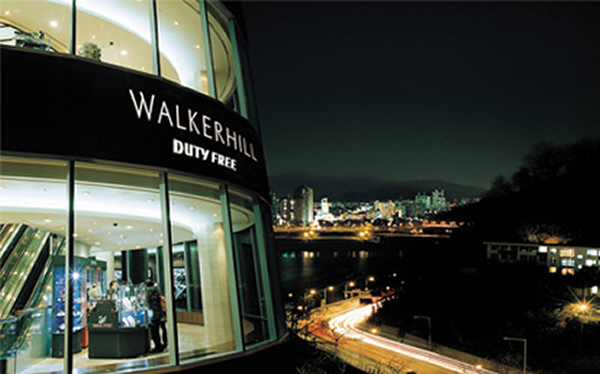
The long-established WalkerHill Duty Free in Seoul invested millions last year in an ambitious refurbishment but still has to mount a defence of its licence |
◆ The press release also claimed that you had questioned the benefits of changing any of the four operators. Do you think that the existing duty free operator’s business rights should be maintained?
It is not for me to say which licences should be maintained but I do not believe you are encouraging long-term investment in the sector through putting such licences up for bid every five years.
There is probably room for more duty free licences (though not too many) but the four existing operators have all done a highly professional job. It is hard to think of a single example overseas where such operations would be vulnerable.
◆ Four things are emerging as key to the duty free bidding: 1) community contribution; 2) the ability to attract luxury brands; 3) profitability; and 4) the ability to attract foreign tourists. What do you think are the most important factors?
I think attracting foreign tourists and contributing to the Korean community are key here. But to attract the tourists, especially the Chinese, you need a top-class mix of international and Korean brands. You need great service, great stores and great social media.
Retailers should also give back to the community in a number of ways – charitable causes, of course, but also by championing local products and by creating jobs and tourism demand.
◆ Who are the most competitive companies out of Shinsegae, Doosan, Lotte and WalkerHill?
Those are all high-quality companies, though Doosan obviously is a newcomer to the sector so is an unknown force. I am sure it too would bring a lot of professionalism to the field. Shinsegae, Lotte and WalkerHill are all highly rated by the international duty free industry and with good reason.
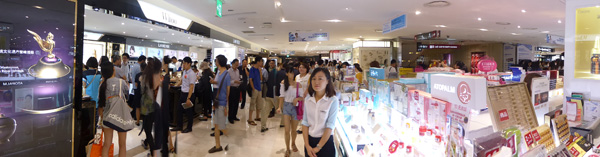
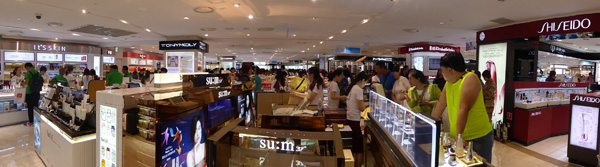
(Above and below) Hordes of Chinese shoppers pack the Korean skincare department of Lotte Duty Free’s flagship store in downtown Seoul. Last year 20% of all Chinese arrivals to Korea were generated by Lotte travel and tour operations. |
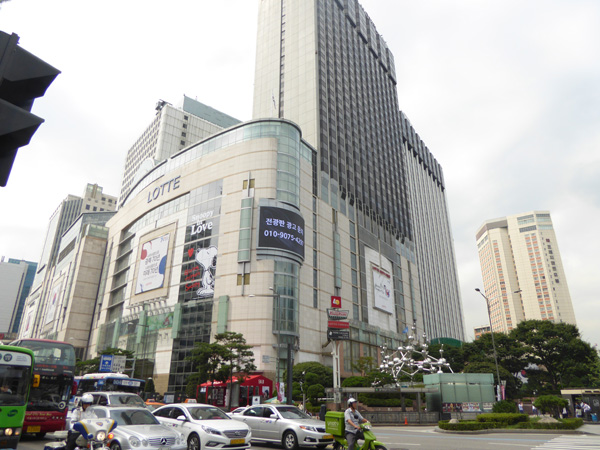
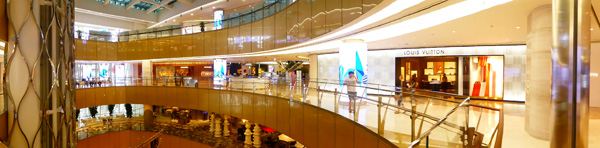
(Above and below) Lotte World Mall’s duty free licence is key to attracting more Chinese tourists to the spectacular new Lotte World Tower due to open next year but now the retailer is fighting for its life there |

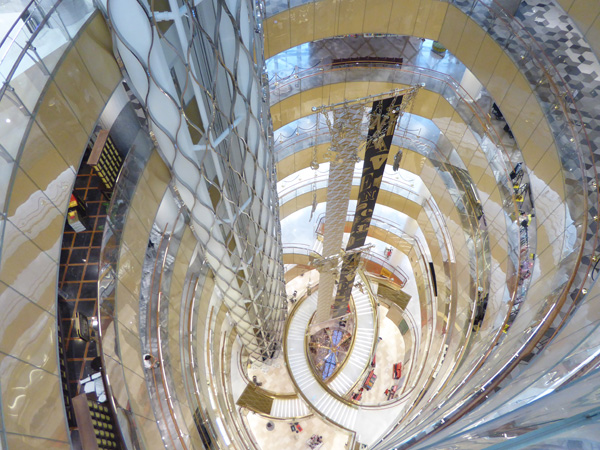
◆ The Jamsil Lotte World Tower duty free shop is now challenged by WalkerHill, Doosan and Shinsegae. What is your opinion on the competitiveness of each company?
Each is powerful in its own right. The Jamsil Lotte World Tower shop is one of the best new duty free shops in the world; Shinsegae runs a top-class downtown duty free store in Busan and WalkerHill has invested heavily in renovating its store to impressive effect. It is truly a heavyweight competition.
|
“The government cannot afford, in my view, to weaken or destabilise the Korean duty free market. That will simply play into the hands of other countries such as Japan.“ |
Martin Moodie Chairman The Moodie Report |
◆ What is the key to the success of the Korean duty free market in being the global leader?
The absolute key to the success of the Korean duty free market in recent years has been the way the retailers have served the booming Chinese tourism market. They were probably the first overseas country to spot the trend of burgeoning Chinese interest in luxury shopping and they exploited it expertly.
The top Korean travel retailers understand the various Chinese tourist profiles very well and have promoted themselves expertly in China, via social media and within Korea itself. Allied to brilliant Hallyu marketing and an unusual combination of international and local brands (most global duty free retailers focus mainly on international brands), the Korean retailers have proved highly adept at making duty free shopping a tourist attraction in its own right.
They also benefit from their popularly with Korean and Japanese travellers – also two of the higher-spending groups.
◆ Do you think Korea’s duty free market will continue to be number one globally?
It can but it faces tremendous pressures from other Asian countries, particularly Japan and China. The Japanese government is actively encouraging the growth of duty free shopping through liberalised new regulations allowing scores of downtown tax and duty free shops to be set up. This is all aimed at attracting Chinese travellers.
The Chinese government is doing likewise, allowing more duty free shops on arrival at Chinese airports and encouraging nationals to spend their money at home, not abroad. Expect these trends to accelerate. Just about every country abroad is chasing the Chinese traveller.
In my view the Korean government and tourism services must intensify their efforts to attract new and repeat Chinese visitors. Particularly because of the huge popularity of the Korean Wave and Korean beauty and fashion products, shopping is Korean’s trump card.
◆ What are the pros and cons of the Korean duty free market compared to other countries?
The Korean market’s biggest strength – the Chinese traveller – is also potentially its weakness, due to the overwhelming reliance on one national group. The MERS crisis showed what can happen if the Chinese stop coming. That is why the government cannot afford, in my view, to weaken or destabilise the Korean duty free market. That will simply play into the hands of other countries such as Japan.
The Korean duty free retailers are among the world’s most professional, particularly in terms of selling to Chinese travellers; the use of social media (particularly relating to Hallyu marketing); the championing of local products and the quality, range and service of the downtown duty free shops in particular.
Korea didn’t become the world’s number one duty free market by accident. Such a status is testament to the huge investment that retailers such as Lotte, Shilla, SK Networks (WalkerHill), Shinsegae and others have poured into the market, and the quality of the offer down the years to Korean, Japanese and, critically, Chinese travellers.
The growth of Korean beauty products, especially, and Korean fashion and accessories, through the country’s duty free stores, is something unrivalled in the world and that Korea should be proud of. Duty free has also acted as a wonderful springboard for Korean brands abroad.