


Leading Asian brand distributor and operator Bluebell Group has presented the fourth volume of its Asia Lifestyle Consumer Profile, which monitors the shift in consumption patterns across the world’s most dynamic consumer markets.
The study is based on a survey of 1,750 premium lifestyle consumers across six markets, including Hong Kong, Japan, Mainland China, Southeast Asia (Singapore & Malaysia), South Korea and Taiwan.
The latest research represents Asian consumers’ perception of the value of luxury brands amid external headwinds.
The study delves into the evolving sentiments and trends influencing post-pandemic consumption across premium and luxury segments. These include fashion, accessories & footwear, beauty, fragrance & makeup, active lifestyle and jewellery & watches.
In this study, Bluebell Group has also evaluated consumer optimism across the region over the past four years, with most respondents in Mainland China (97%) expressing positive prospects for the future. The measure of optimism among Southeast Asian consumers saw a notable improvement, reaching 93% (up +17% since 2021), while Japan has also seen a significant rise (+25%) in consumer positivity within the four-year period.
Three key trends emerged in the findings.
Value appreciation: A consumer mindset focused on reputation, quality and investment value
The study reveals an evolving luxury landscape in Asia, characterised by a consistent focus on quality, reputation and a growing consciousness of the resale or investment value of a product.
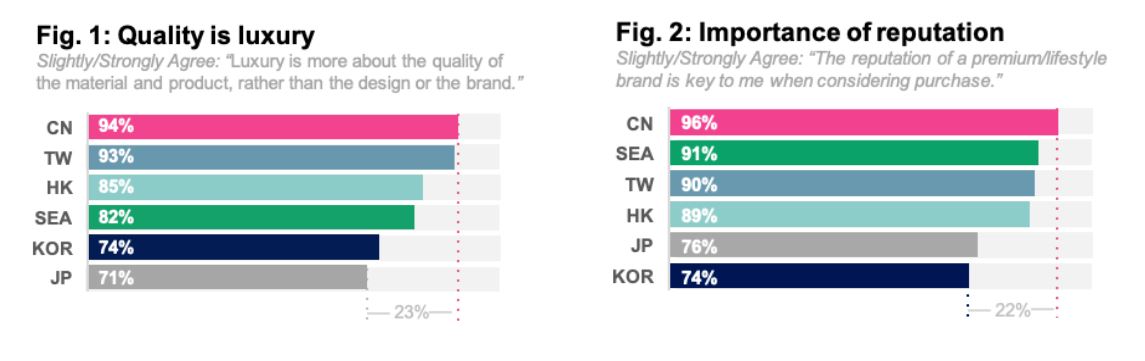
Bluebell emphasised quality as the basis of how consumers value luxury, with the majority prioritising craftsmanship over brand or design.
Over 70% of consumers in all markets agree that luxury is about quality; with 94% of respondents in Mainland China sharing the same consumer sentiments, and 93% in Taiwan.
Concurrently, consumers deem brand reputation an important factor in luxury purchases, as reflected by 96% of respondents in Mainland China, 91% in Southeast Asia and 90% in Taiwan.
On average, 74% of consumers across the six markets are likely to evaluate the resale value of their purchases before buying new items, with 85% of these coming from Southeast Asia.
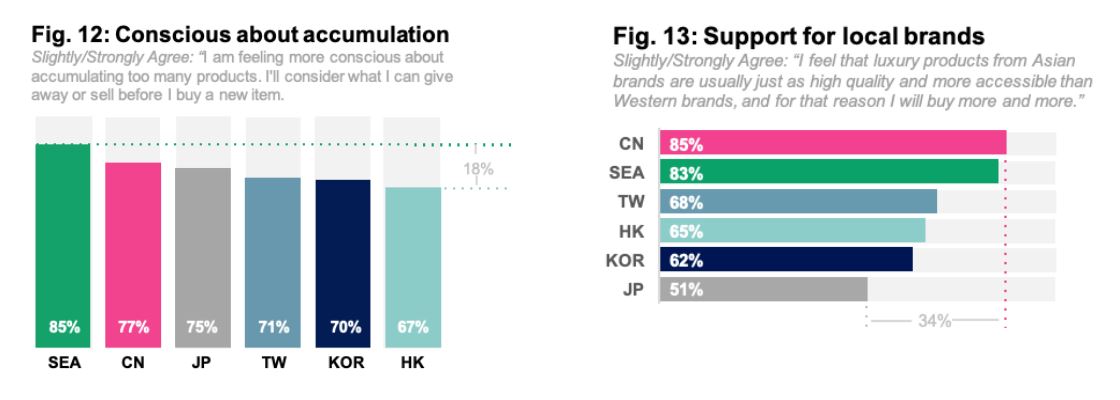
This change in consumer behaviour represents more appreciation for value-oriented consumption, where consumers prioritise products that maintain or appreciate their value over time.
Consumers are therefore more focused on investing in fewer high-value items rather than purchasing a large quantity of products. This particular change in consumption habits reflects a notable trend for “mindful consumption” and deeper evaluation of acquiring fewer products, Bluebell noted.
Trend to watch: The study finds a growing number of Asian consumers expressing support for Asian premium brands, with Mainland China leading the trend (85%), followed by Southeast Asia (83%).
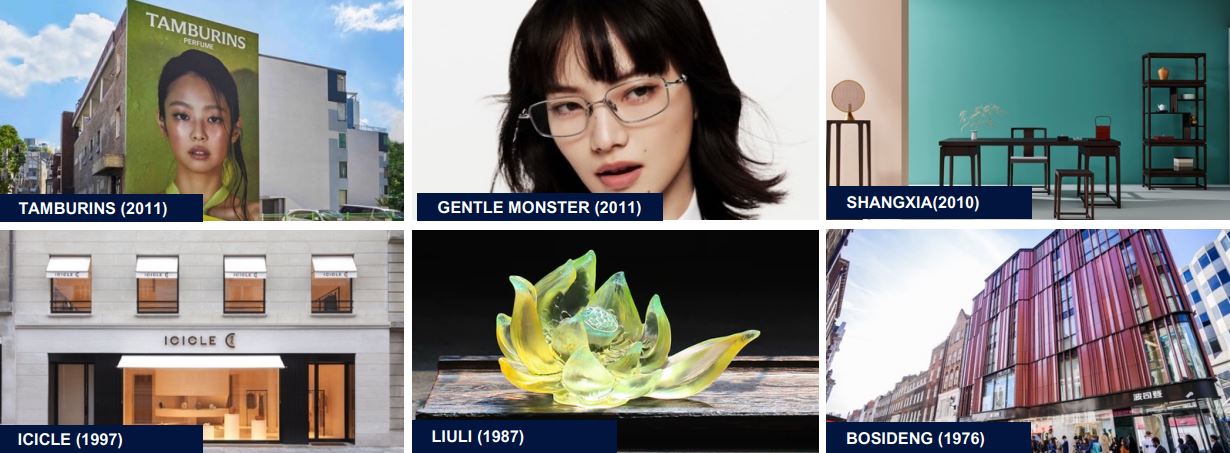
Taiwan, Hong Kong and South Korea also show varying degrees of support at 68%, 65% and 62%, respectively, while Japan shows relatively lower support at 51%.
Despite the differences, the study finds that the quality and accessibility of Asian premium brands has emerged prominently among consumers in these markets.
Quality of service: A consumer expectation not to be underestimated
The research also underlines the importance of shopping rewards to consumers, with the majority coming from Mainland China (97%), followed by Taiwan (92%) and Hong Kong (91%). Consumers in Japan (73%) and South Korea (64%) suggest that “there is still an expectation for perks, but not as prevalent”.
Bluebell noted that the “good news” is that a growing number of highly sophisticated consumers are willing to spend more on a brand that delivers high-quality products.
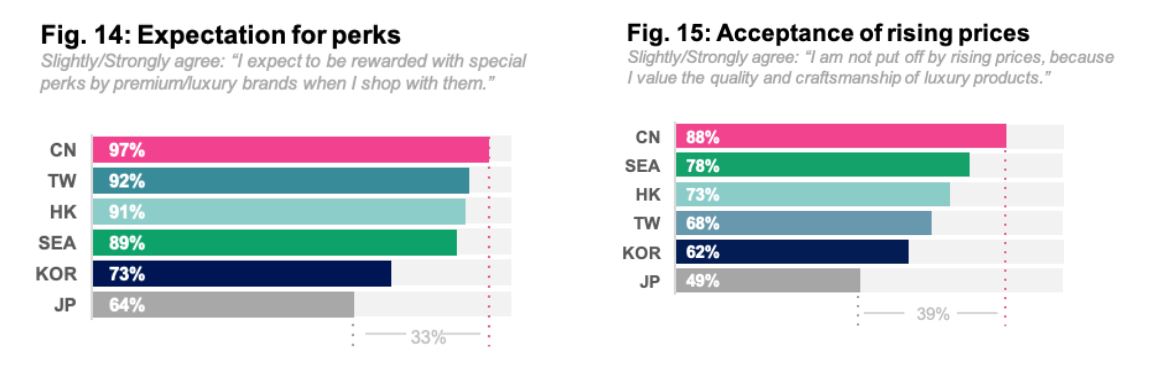
Respondents from China (88%) and Southeast Asia (78%) are more likely to accept price increases. In contrast, South Korea (62%) and Japan (49%) are less accepting of higher prices.
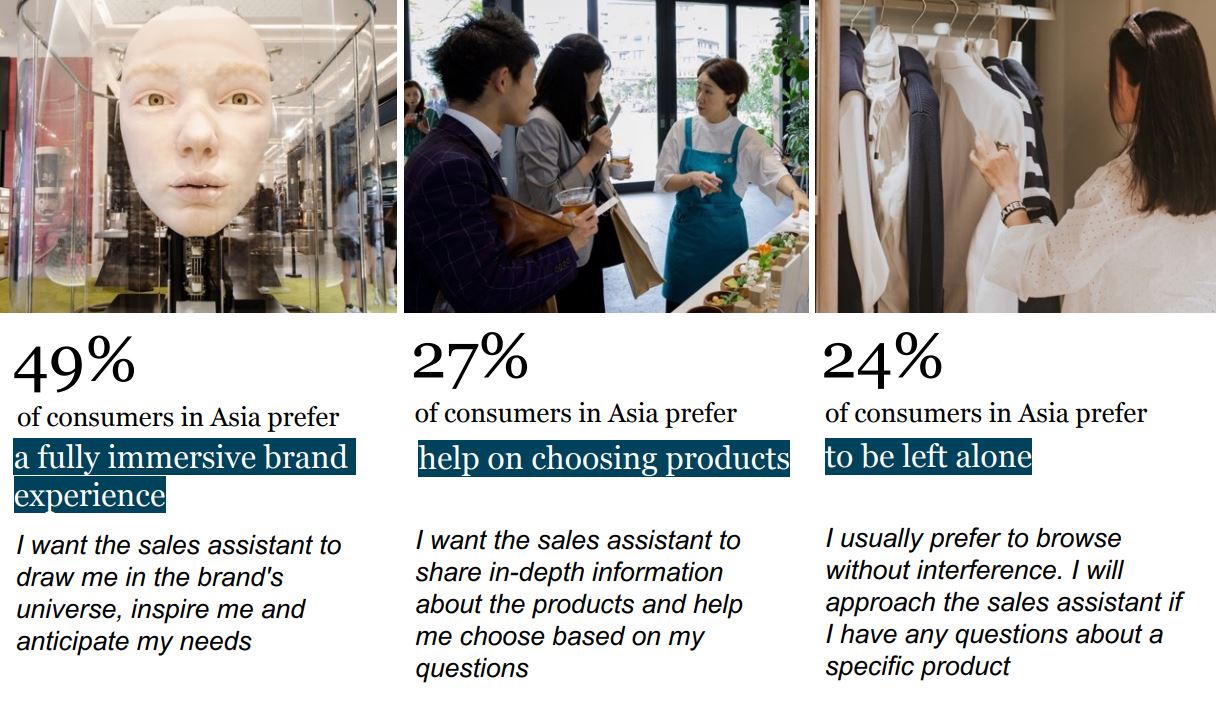
The survey results highlight the importance of tailoring service levels physically and beyond the store to address the different consumer demands across Asia.
Asian consumers have different opinions about sharing personal data with a sales associate – some are willing to share personal information if they feel they are getting quality service and some rewards.
The study underlines the need for brands to offer an immersive experience and knowledgeable assistance, while also adapting to customers’ need for personal space when shopping.
Pricing alignment: Channel-agnostic consumers in search of the best price
Bluebell highlighted consumers’ preferences for online shopping channels, with some choosing to shop on brand official websites and others on multi-brand online platforms.
Brand official websites are the favoured platform for respondents in Mainland China (59%), South Korea (61%) and Taiwan (54%), suggesting a preference for direct brand engagement and possibly a search for authenticity.
In contrast, Japan (63%), Hong Kong (61%) and Southeast Asia (57%) opt for multi-brand platforms, indicating a higher value placed on choice, pricing and convenience.
Through a more detailed evaluation of product categories, the results suggest that more consumers choose to shop through brand official websites across most product segments. However, those shopping for beauty products prefer to use multi-brand platforms, while jewellery & watches purchases are more likely to be made through brand official websites.
According to Bluebell, these results highlight a crucial insight for brands operating in Asia and “the necessity to align on price consistency across different shopping channels to control brand image”.
The study highlights the importance of price consistency as consumers are digitally savvy and will spend time comparing prices across platforms. ✈