

CHINA. China Trading Desk (CTD) has highlighted the growing importance of accurate, accessible product information for travel retailers, as one in three Chinese outbound travellers now use AI as an additional tool to inform purchasing decisions before their trips.
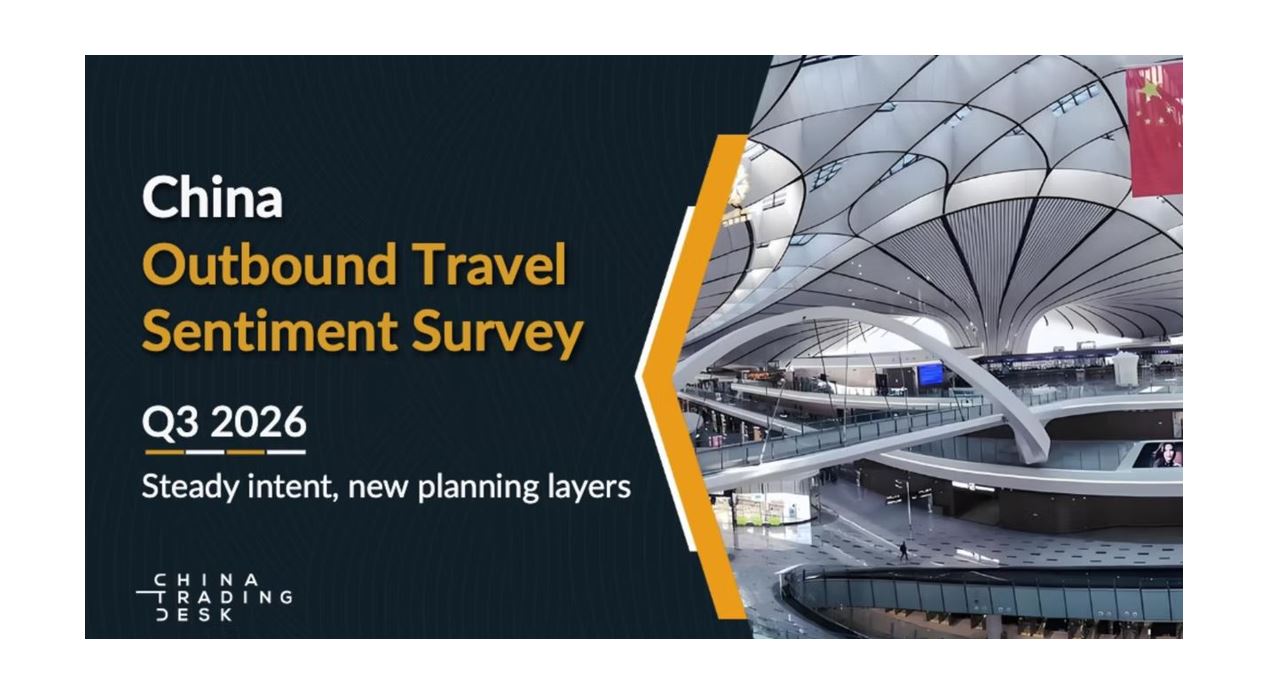
The finding is among the key insights from the Q3 2026 China Outbound Travel Sentiment Survey, released on 15 September by the Singapore-based marketing and travel intelligence company.
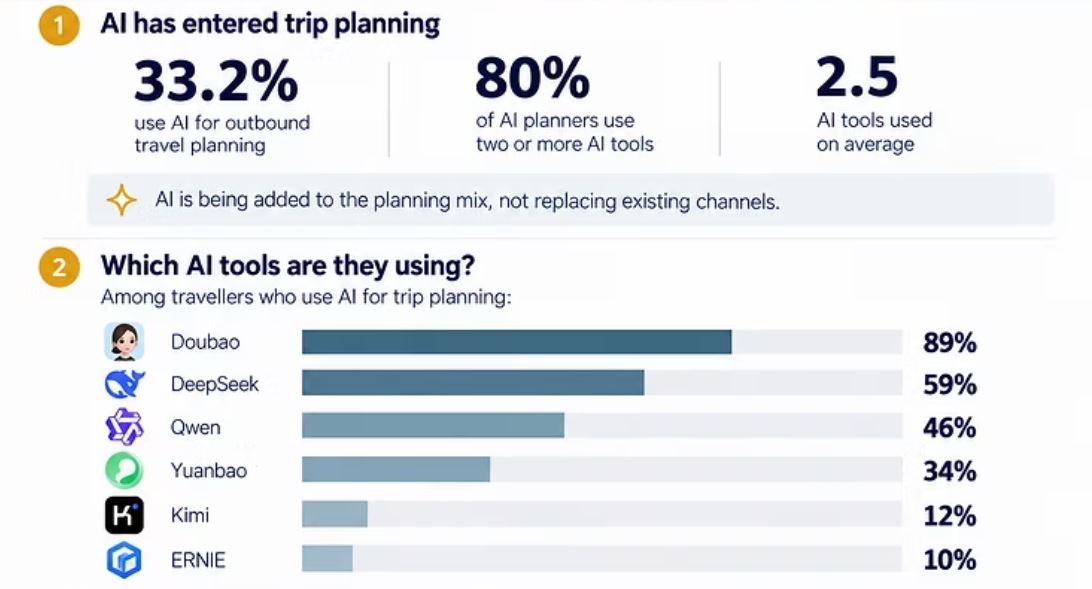
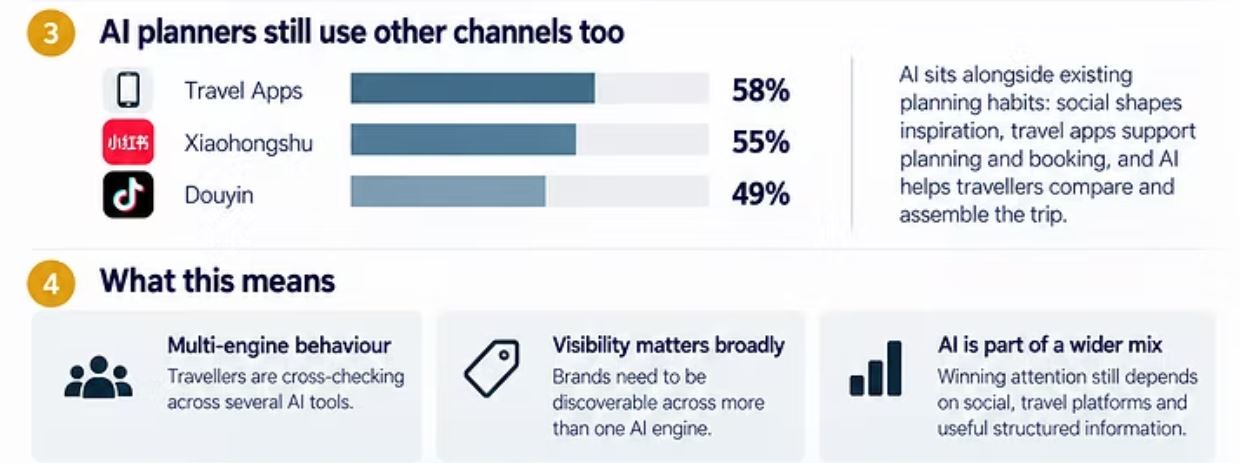
The study revealed 33.2% of respondents use AI for outbound travel planning, with AI use spanning multiple platforms. Some 80% of AI users turn to two or more tools, averaging 2.5 platforms per person. Doubao is the most widely used, cited by 89% of AI planners, followed by DeepSeek at 59%, Qwen at 46% and Yuanbao at 34%.
Rather than replacing established planning channels, AI is becoming another tool in the journey. Among AI users, 58% also rely on travel apps, while 55% use Xiaohongshu and 49% Douyin, highlighting the continued role of social media in driving inspiration and consideration and the growing importance of travel apps as travellers prepare to book.
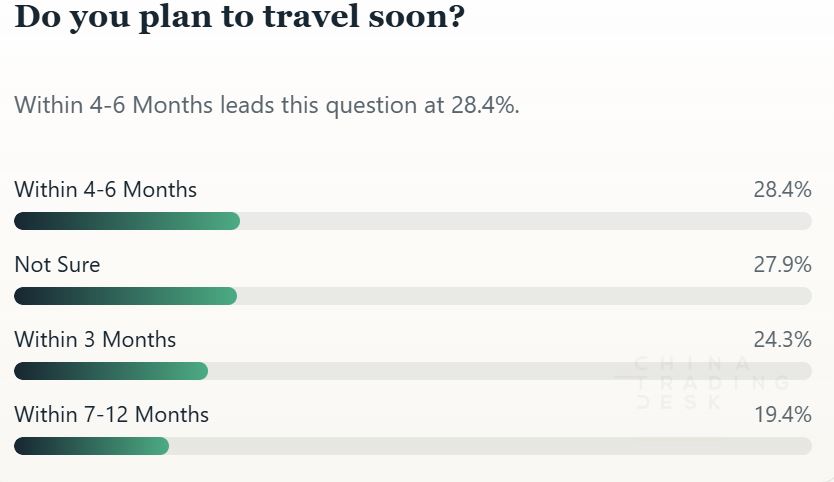
Travel intent softened slightly in Q3, with 24.3% of respondents planning to travel within three months, while a further 28.4% expect to travel within four to six months.
Against this broadly stable travel outlook, the Q3 survey highlights shifts in how travellers research and prepare for their trips.
Airport shopping continues to attract strong interest from travellers, with 65.5% saying they are likely or very likely to shop while waiting for a flight, only slightly below the 66.5% recorded in Q2.
The propensity is particularly strong among frequent travellers (73.6%) and those with monthly household incomes above CNY30,000/US$4,500 (76.7%).
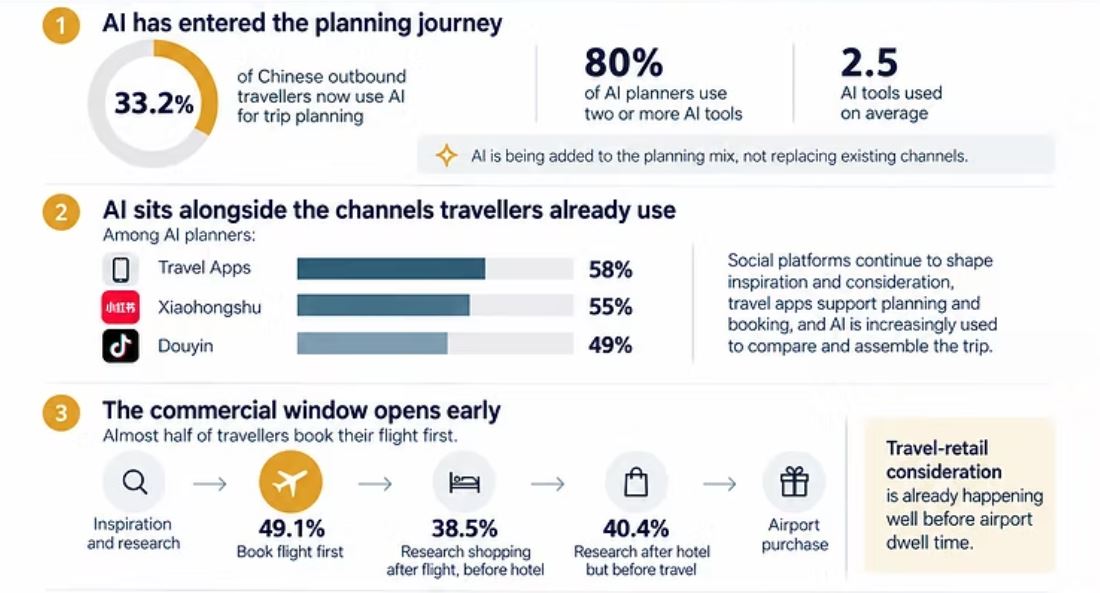
Flight booking ranks among the top priorities in trip planning, with 49.1% of respondents purchasing air tickets first, reflecting the shift from travel consideration to commitment.
This is followed by shopping research, with 38.5% researching purchases after buying air tickets but before booking a hotel, while 40.4% research after booking their accommodation and before travelling.
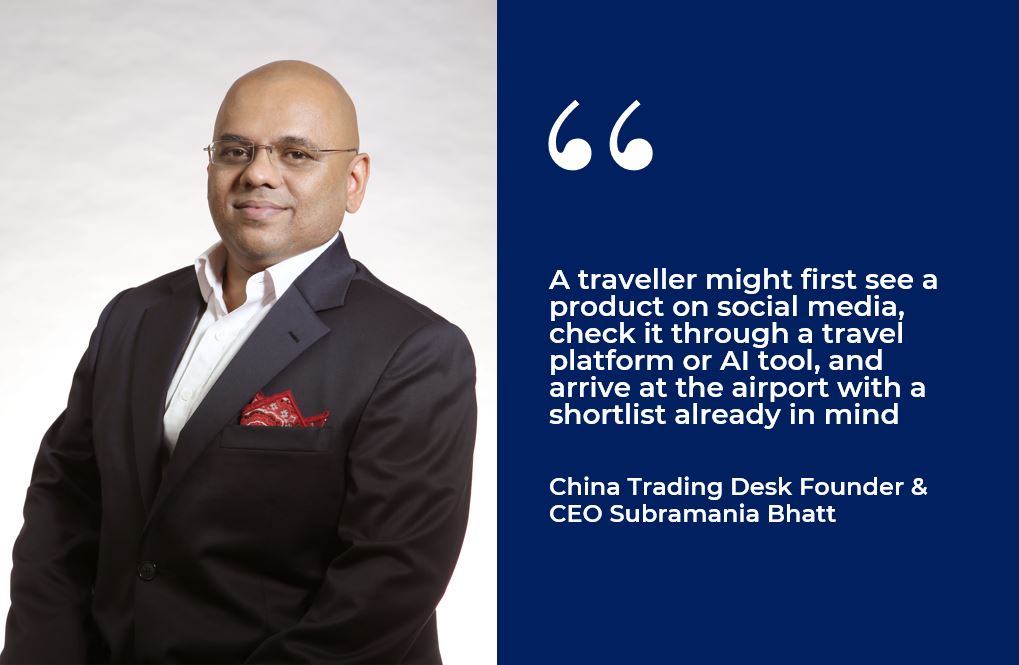
China Trading Desk Founder & CEO Subramania Bhatt said, “AI gives travellers another way to research and compare a trip, but it doesn’t replace the channels they already use.
“For travel retail, that means the shopping decision can start even earlier. A traveller might first see a product on social media, check it through a travel platform or AI tool, and arrive at the airport with a shortlist already in mind.”
What drives duty-free purchase decisions
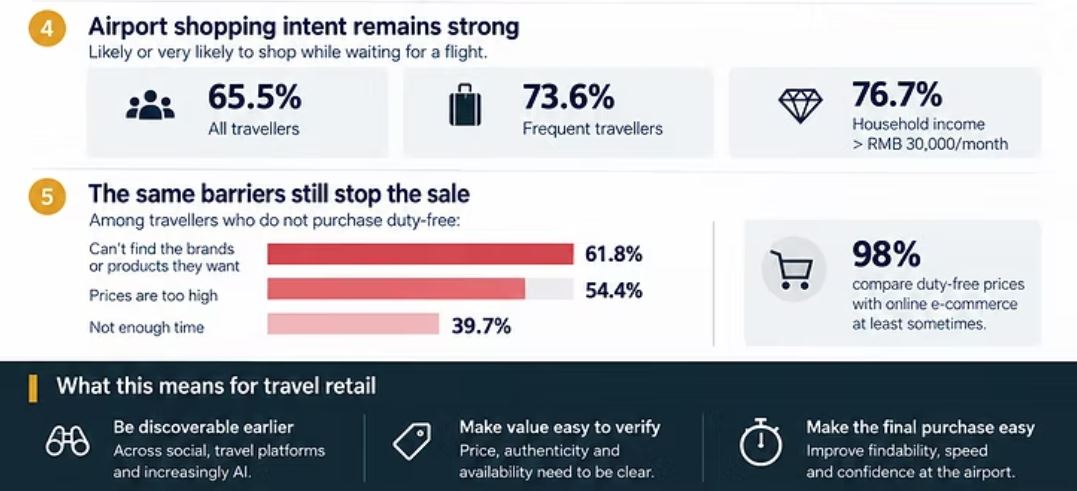
The survey found the key barriers to duty-free purchases remained broadly unchanged in Q3.
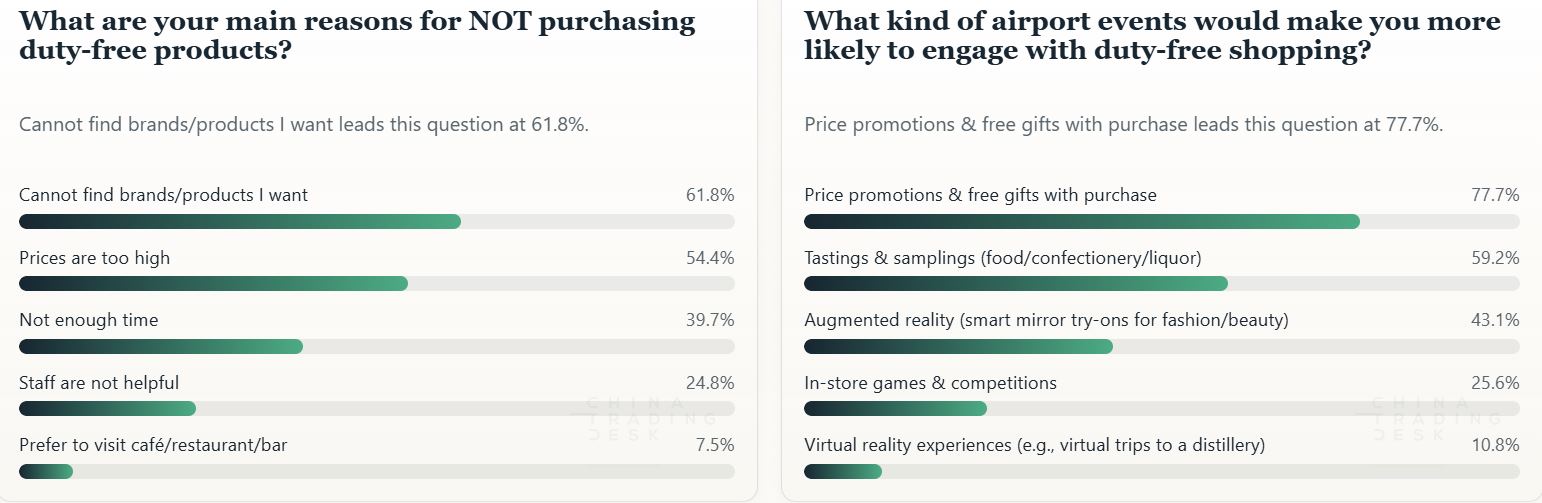
Among those who do not shop at duty-free stores, 61.8% cited difficulty finding the brands and products they were looking for, compared with 62.6% in Q2.
The cost of duty-free products was cited by 54.4% as a barrier, compared with 55.3% in Q2. Time constraints were a concern among 39.7% of respondents, broadly unchanged from 39.2%.
Price transparency remains a top priority, with 98% of respondents comparing duty‑free prices with ecommerce platforms at least sometimes, while 49% do so every time. Discounted pricing continues to be the primary driver for duty‑free purchases, followed by confidence in product authenticity.
Chinese travellers continue to favour downtown shopping, while also keeping airport shopping in the mix. The largest group describes its preference as “more downtown, but some airport,” instead of limiting their shopping to one channel.
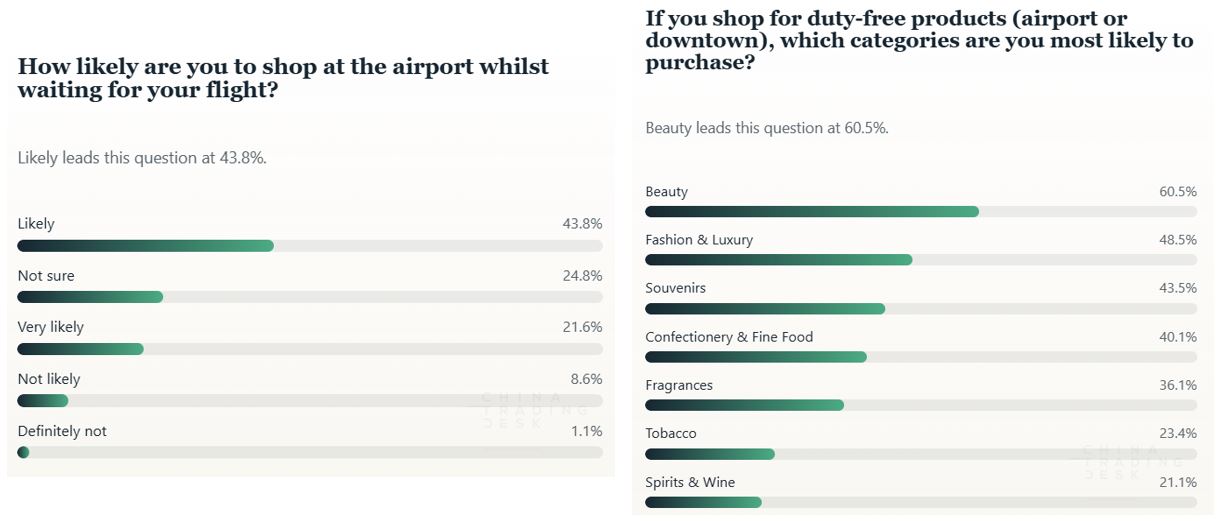
Beauty continues to lead duty-free shopping, followed by fashion, leathergoods, watches and jewellery.
Airport shopping continues to be driven by familiar retail mechanics, with price discounts and gifts with purchase accounting for 36% of preferred engagement-event selections, while tastings and sampling follow at 27%.
Augmented reality attracts 20%, while games and virtual reality experiences are less popular.
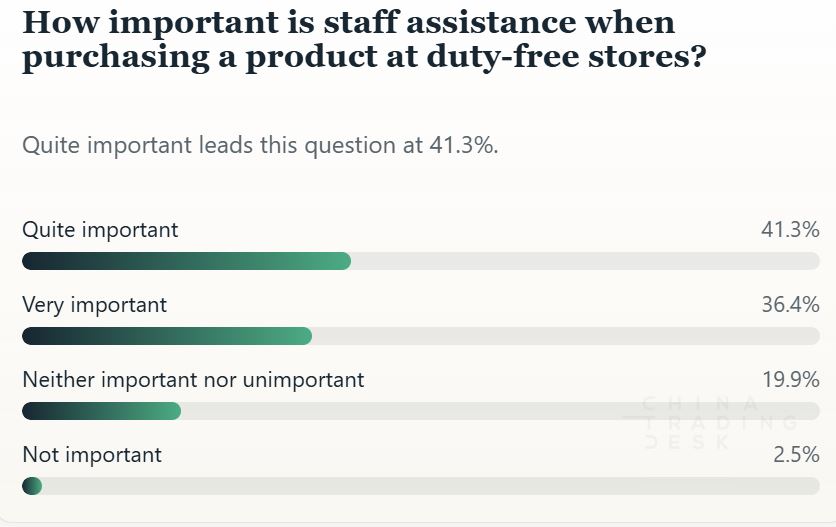
Human interaction remains important, with 78% of respondents considering staff assistance quite or very important when purchasing duty-free products.
Bhatt added: “The basic retail challenge hasn’t gone away. Travellers still want to know: can I find the product, is the price worth it, and can I buy it without wasting time? AI changes how some of that research happens, but those fundamentals still decide whether interest becomes a sale.”
China Trading Desk highlighted three practical priorities for brands and retailers emerging from the Q3 findings: “build product visibility before departure, make value and availability easy to understand, and reduce friction at the point of purchase.”
With AI, social media and travel platforms increasingly shaping trip planning, product visibility and accurate information are becoming important earlier in the journey, CTD said.
But the final sale still depends on what travellers find when they arrive. ✈