


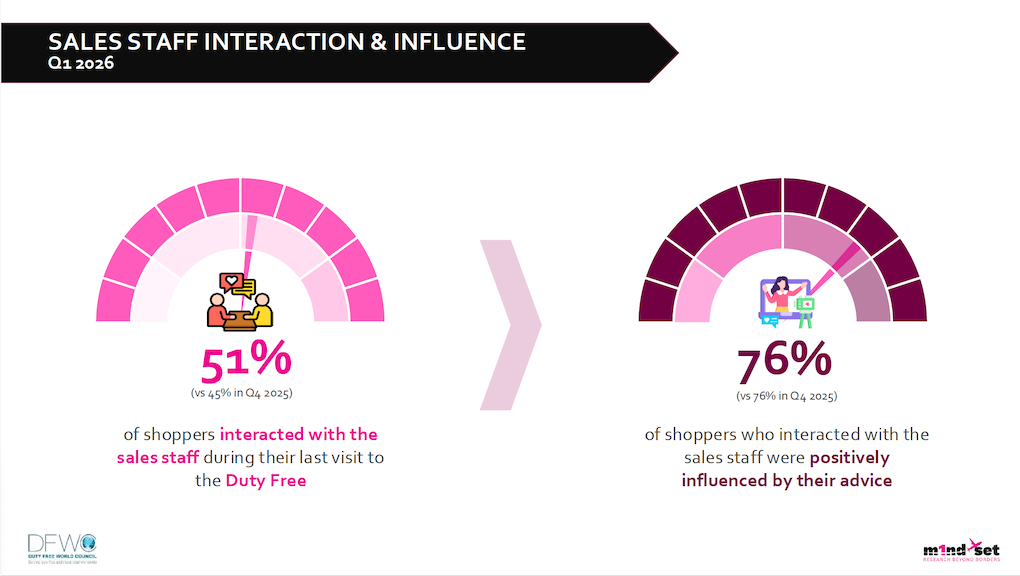
The report, produced by Swiss research agency m1nd-set, shows that 51% of duty-free shoppers engaged with sales staff during their most recent store visit, up from 45% in Q4 2025.
The increase is accompanied by consistently high satisfaction levels, with 76% of those interactions positively influencing purchase decisions, according to the survey.
DFWC President Sarah Branquinho said: “This robust increase in the staff interaction rate underscores the growing importance of the human touch in today’s travel retail environment. Global travel retail sales staff can be highly commended as the quality of these interactions remains exceptionally high.
“Their high level of influence highlights the critical role well-trained staff play in driving sales and customer satisfaction.”
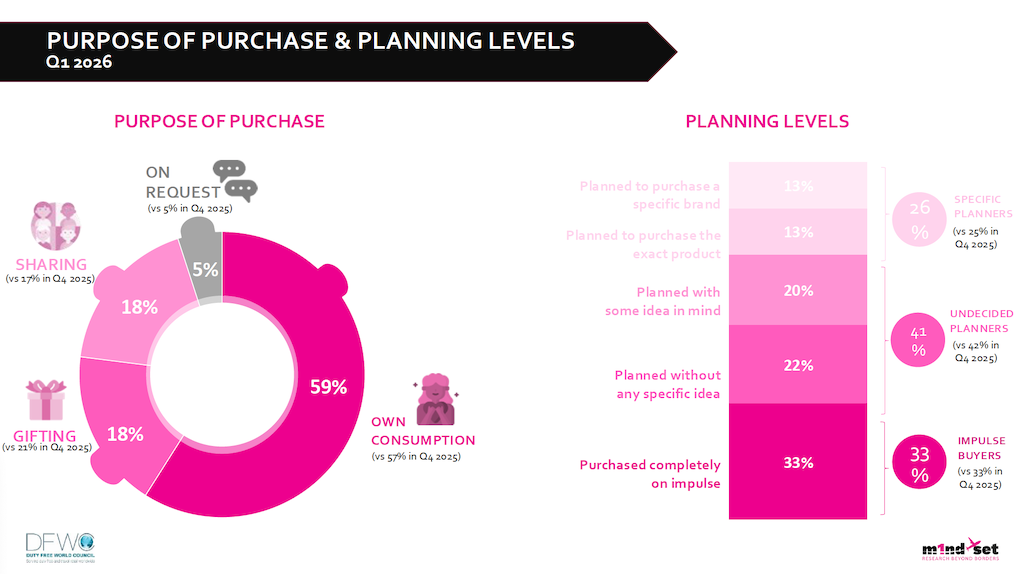
The report also reveals that self-consumption remains the dominant purchase motivation, rising slightly to 59% from 57% in the previous quarter. Gifting declined to 18% from 21%, while sharing edged up to 18% and purchases made on request held steady at 5%.
Planning behaviour shows little movement in the latest study, with 41% of shoppers classified as ‘undecided planners’ and 26% entering stores with a clear intent. Impulse buying continues to play a critical role, accounting for 33% of all purchases.
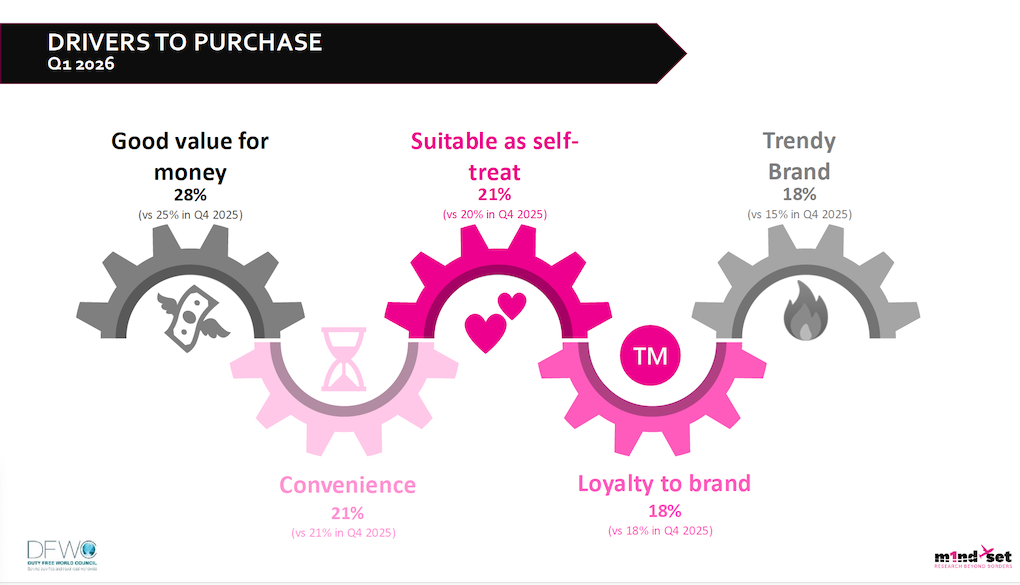
Perceived value remains the leading purchase driver, with ‘good value for money’ cited by 28% of shoppers, up from 25% in Q4 2025. Convenience and self-treating motivations follow at 21% each, unchanged quarter-on-quarter.
Brand loyalty remains stable, while interest in ‘trendy brands’ increased to 18% from 15%.
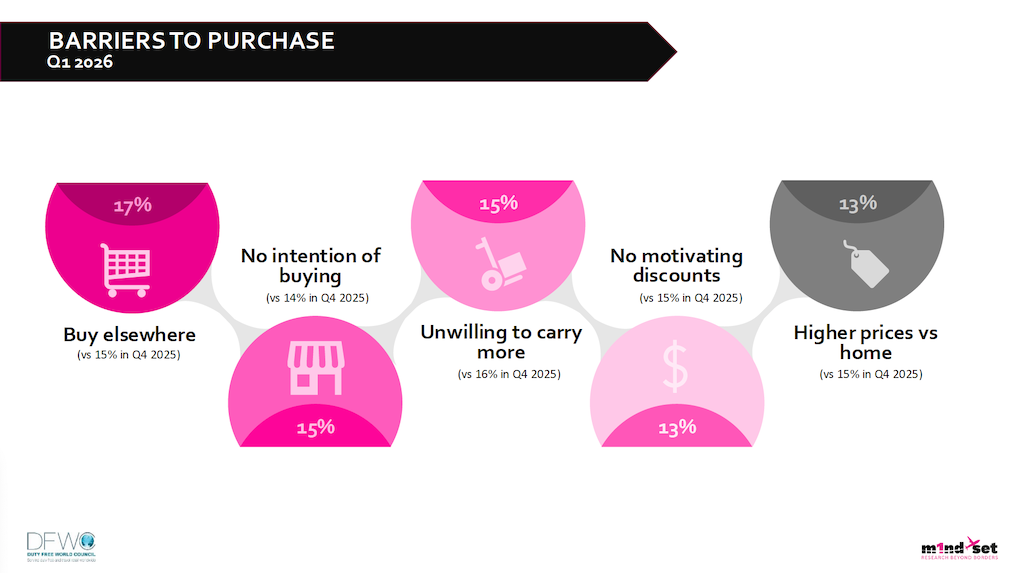
Competitive retail channels continue to represent the biggest barrier to conversion, with ‘buying elsewhere’ rising to 17% from 15%.
A lack of purchase intent follows at 15%. Other barriers, including reluctance to carry additional items, insufficient discounts and higher prices compared to domestic markets, all showed marginal declines.
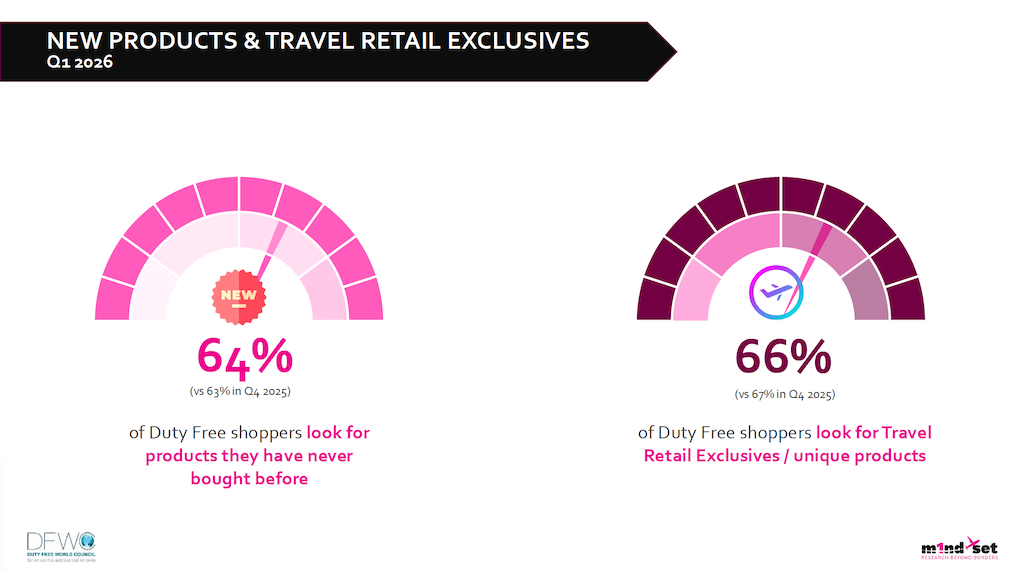
The data also points to sustained traveller curiosity, with 64% actively seeking new products and around two-thirds looking for travel retail exclusives.
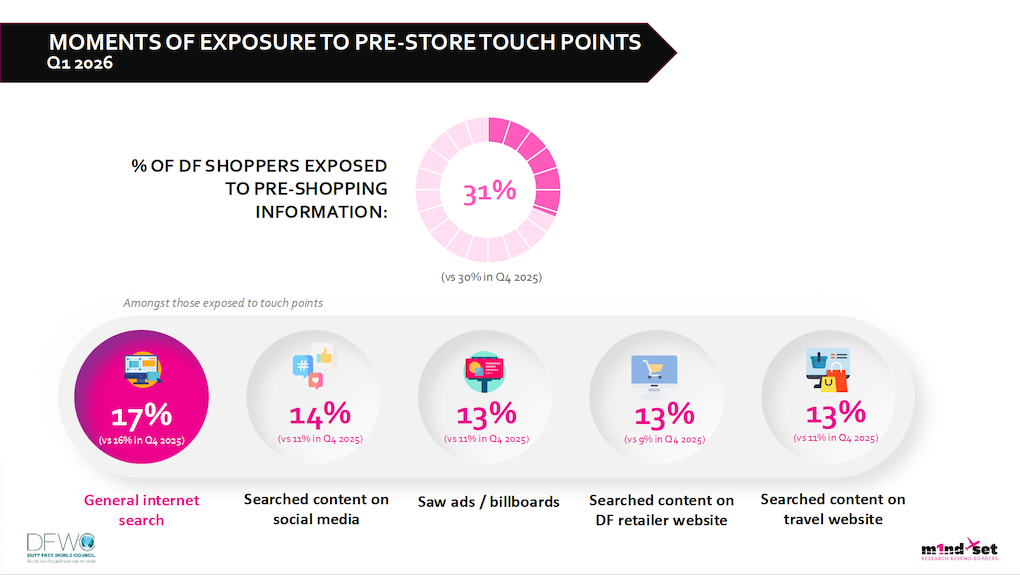
Pre-trip engagement is trending upwards, with more than 30% of shoppers exposed to duty-free-related communications before entering stores.
Social media research rose to 14%, while visits to retailer websites increased notably to 13% from 9%.
Exposure through advertising, billboards and travel websites also climbed to 13%.
M1nd-set CEO and Owner Peter Mohn said, “Given that 33% of all purchases are driven by impulse and 66% of shoppers are actively seeking products they have never bought before, we highly recommend brands and retailers heighten their focus on frontline staff training and engagement strategies.
“In an era where ‘good value for money’ remains the top purchase driver, a knowledgeable and persuasive brand ambassador is the ultimate bridge between a traveller’s curiosity and a final sale.”
DFWC noted its usual international air traffic update has been suspended due to the ongoing crisis in the Middle East and will resume once conditions stabilise. ✈