

Prologue: At The Trinity Forum in Doha, Qatar on 5 February, The Moodie Davitt Report and PT&M unveiled an exciting new industry initiative designed to bring greater transparency, foresight and coherence to the airport commercial ecosystem and the tendering system that serves as the prevalent contractual model across most of the industry.
Following a tremendously positive reaction at the Doha event and beyond, the two partners today (27 February) proudly reveal the platform’s final identity – the Trinity Intelligence Platform.
In this exclusive question and answer guide for airports, operators and brands, The Moodie Davitt Report Founder & Chairman Martin Moodie and PT&M Founder and Managing Director Eric Trichot explain the rationale, modus operandi and aspirations for the project and the support it has received to date.

1. WHY THE NEED FOR A NEW AIRPORT COMMERCIAL INTELLIGENCE PLATFORM?
What problems or issues is this initiative trying to address?
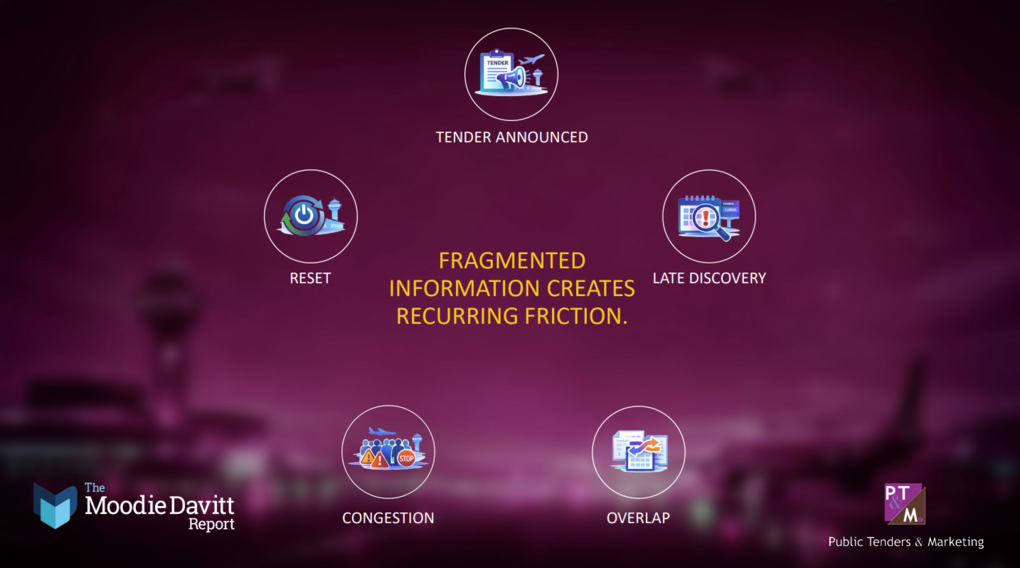
Across all regions, airport commercial concessions face the same structural challenges: fragmented information, late visibility on opportunities, overlapping tender cycles, and a limited ability to plan strategically.
Airports often launch tenders with only partial market visibility; operators discover opportunities too late; brands struggle to position themselves upstream.
WHAT’S IN A NAME?Why the Trinity Intelligence Platform? This name reflects the core philosophy of the initiative. Trinity refers to the three equally essential pillars of the airport commercial ecosystem:
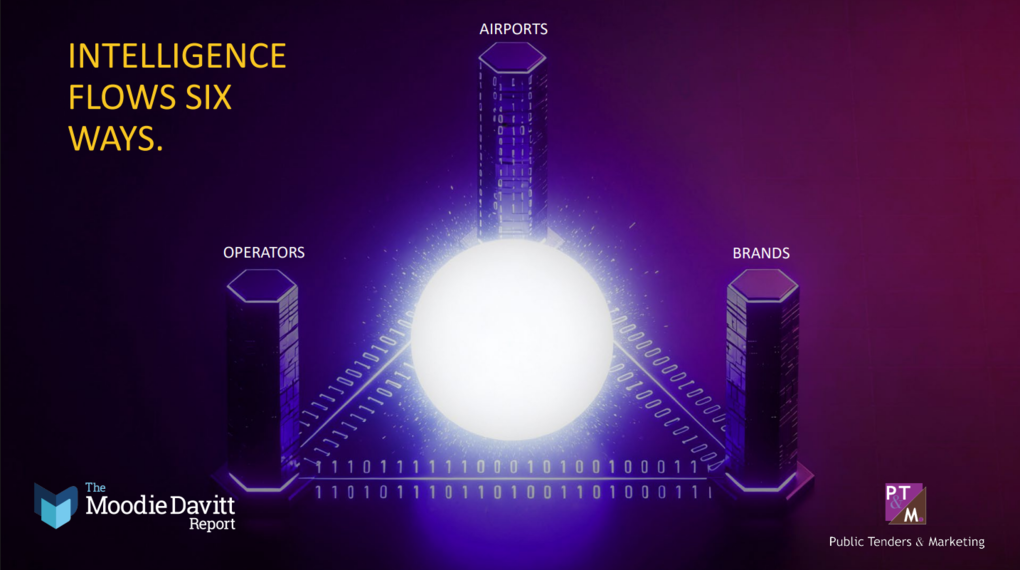
The Platform is built on the principle that intelligence should not flow in a single direction. Instead, it circulates in a structured, governed and reciprocal way between these three pillars. Each contributes information, each benefits from improved visibility, and none dominates the system. The term Intelligence is used deliberately. The Platform is not a database, a marketplace nor a transactional tool. It is designed to provide contextual, forward-looking market intelligence that supports better preparation, timing and decision-making – without influencing outcomes. Finally, the name reflects the Platform’s origin and positioning within the industry. It was first presented at The Trinity Forum and embodies the same philosophy: bringing together the three pillars of the industry around shared understanding, neutrality and long-term value creation. Where can the Trinity Intelligence Platform be accessed? The Platform will be accessible through a dedicated entry point on the homepage of The Moodie Davitt Report, within a secure subscriber area. |
Is the issue only about tender timing and visibility?
No. The challenge goes beyond tender calendars and timing – it affects each component of the airport commercial ecosystem in a different, yet interconnected, way.
- Airports lack structured visibility on which operators are truly relevant, which new brands are emerging, and how market dynamics are evolving beyond established incumbents.
- Brands struggle to make themselves known to airports and operators in a neutral, legitimate and structured way, well ahead of formal tender processes.
- Operators seek earlier visibility on new brands, concepts and partnership opportunities, before commercial strategies and bids are locked in.
What is missing today is a shared intelligence layer that connects these three perspectives in a coherent and governed manner – a truly Trinity view of the airport commercial ecosystem.
The Trinity Intelligence Platform is designed to address these multi-directional visibility gaps by structuring intelligence flows between airports, operators and brands, rather than treating them in isolation.
Isn’t such information already available today? Certainly many of the bigger airports, operators and brands already have visibility about upcoming opportunities.
Certainly a level of information does exist, particularly for the bigger players, but it is scattered, informal, often anecdotal and rarely comparable.
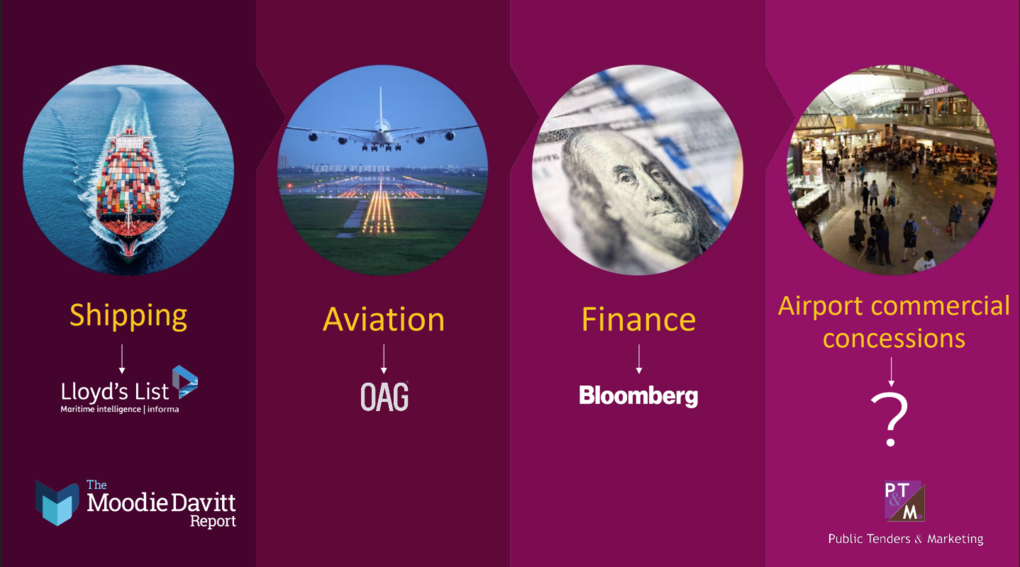
Unlike other mature industries (such as shipping, aviation or finance), airport commercial concessions lack a neutral, structured and continuously updated intelligence infrastructure connecting all three pillars of the ecosystem.
For example, an airport may be tendering a coffee outlet concession. It will be familiar with the mainstream players and perhaps some niche ones. But there are constant newcomers entering the domestic market (or travel retail in other regions), which airports may not be aware of. Similarly with specialist retail.
A service such as the Trinity Intelligence Platform has been the most frequent request in the 24-year history of The Moodie Davitt Report. Until now, no-one could provide it.
What is the ambition underpinning this platform?
The ambition is neither to create a product nor a report, but a long-term piece of industry infrastructure.
It will become a neutral, professional intelligence layer enabling earlier visibility, better mutual understanding between airports, operators and brands, and more informed decision-making across the airport commercial ecosystem.
HOW DOES PRICING WORK?Do airports pay? No. Airport access is free. How are operators and brands charged? Pricing is based on three cumulative dimensions:
Can you give concrete examples? For instance:
The model is designed to remain proportional to real usage and organisational scale. Are there Founding Partner advantages? Yes. Operators and Brands Founding Partners benefit from preferential pricing (typically around 50%) during the pre-launch phase and the first year. |
2. THE PLAYERS BEHIND THE PROJECT
Who operates the Platform?
The Platform is jointly developed, operated and owned by The Moodie Davitt Report and PT&M.
Why this partnership?
Both companies enjoy deep respect and, crucially, trust across the airport commercial ecosystem.
The Moodie Davitt Report brings global reach, an unrivalled network, editorial authority, neutrality and daily market visibility.
PT&M contributes deep operational expertise in airport commercial strategy, tender processes and concession dynamics. Together, they combine market intelligence with real-world airport execution experience.
Is this a commercial marketplace or brokerage?
No. The Platform is explicitly not a marketplace, an intermediation service, a consultancy nor a promotional tool.
Another than promoting existing and future opportunities, it does not influence tenders, awards or commercial negotiations.

3. SO WHAT EXACTLY IS THE TRINITY INTELLIGENCE PLATFORM?
Please define it in one sentence.
A global, query-based intelligence platform dedicated exclusively to airport commercial concessions.
What type of intelligence does it provide?
It provides structured visibility on:
- Concession contract cycles and renewal horizons
- Probable and confirmed tender pipelines
- Operators’ and brands’ commercial footprints and areas of interest
- Upstream expressions of market appetite
Is it static or continuously updated?
It is designed as a continuously updated infrastructure, fed by airports, operators and brands under strict governance and validation rules.
4. WHO IS THE PLATFORM FOR?
Who can access the Platform?
The Trinity Intelligence Platform is built around three pillars:
- Airports
- Operators
- Brands
Are airports customers of the platform?
No. Airports are Strategic Contributing Partners. Access is free of charge to them. Their role is to contribute structured information and benefit from enhanced market visibility.
Who pays?
Operators and brands subscribe to access the intelligence, under clearly defined pricing and scope rules.
5. THE ROLE OF AIRPORTS
What do airports contribute?
Airports contribute structured, forward-looking information such as:
- Terminal structures
- Concession categories and sub-categories
- Contract-end horizons (with flexible disclosure rules)
- Indicative tender windows
- Official tender documentation once published.
Do airports lose control over their data?
No. Airports retain full ownership, control and sovereignty over their data, including what is shared, when it is shared, and at what level of granularity.
Are airports compared against each other?
No. There is no airport-to-airport benchmarking and no nominative comparison.
6. THE ROLE OF OPERATORS
What do operators bring to the platform?
Operators maintain structured profiles covering:
- Activity categories and concepts
- Geographic footprint
- Airports of operation
- Preferred expansion areas
- Non-binding Expressions of Interest.
What do operators gain?
They gain early, structured visibility on upcoming opportunities, enabling better planning of teams, capital and bid strategies, and reducing bid waste.
Can operators see competitors’ confidential data?
No. Operators cannot benchmark competitors, analyse named competitors, or access competitors’ sensitive information.
7. THE ROLE OF BRANDS
Why are brands treated separately from operators?
Brands often enter airport systems through operators and typically lack early, structured visibility. The Trinity Intelligence Platform provides brands with a neutral and legitimate way to position themselves upstream.
What information do brands provide?
Brands maintain structured profiles including:
- Concept types
- Typical unit sizes
- Countries and airports of presence
- Preferred partnership models
What do brands gain?
Brands gain or underline legitimacy, timing and visibility well before tenders are launched, without relying solely on informal networks.
8. HOW DOES ACCESS TO THE PLATFORM WORK?
Is there open browsing?
No. All access is strictly query-based. There are no open catalogues or unrestricted browsing.
Are accounts shared?
No. Access is via named-user accounts only. Shared or anonymous accounts are prohibited.
Is access audited?
Yes. All queries, interactions and communications are logged and auditable.
9. WHAT TYPES OF QUERIES ARE POSSIBLE?
What can airports query?
Airports can identify:
- Expiring contracts by time window
- Potential operators and brands for future tenders
- Expressions of Interest received
- Aggregated market signals
- New operators entering specific regions or categories
- New or emerging brands relevant to their commercial strategy.
What can operators and brands query?
Operators and brands can query:
- Tenders launched or expected within defined horizons
- Contract expiry signals within their subscription scope
- Market mapping by region, category or concept type
- Operators identifying relevant brands, and brands identifying relevant operators, within controlled visibility and governance rules.
10. EXPRESSIONS OF INTEREST (EOI)
Is an EOI equivalent to a bid?
No. EOIs are non-binding, informational signals only.
Do EOIs create rights or expectations?
No. They create no procedural rights, no obligation to invite, and no preferential treatment.
Why are EOIs important?
They allow airports to assess real market appetite upstream, before layouts, zoning and tender structures are fixed.
11. HOW IS THE PLATFORM’S NEUTRALITY PRESERVED?
Does the Platform rank or recommend operators or brands?
No. There is no ranking, scoring nor shortlisting.
Does the Platform influence tender outcomes?
No. As mentioned earlier, all commercial and procurement decisions remain entirely with airports.
Who governs neutrality?
Neutrality is embedded through design constraints, access rules, validation processes and contractual safeguards.
12. THE FOUNDING PARTNER PHASE (FEBRUARY-JUNE)
Why a Founding Partner phase?
The Platform is not built in isolation. The Founding Partner phase ensures that real industry needs shape the final design and structure.
Who can be a Founding Partner?
A limited number of airports, operators and brands.
What happens during this phase?
- Regular working and feedback sessions
- Testing real-life use cases
- Validating queries, alerts and interfaces
- Calibrating data depth and governance rules
13. THE ROLE OF FOUNDING PARTNERS AND EARLY ADOPTERS
Do Founding Partners make decisions?
No. Their role is consultative, not decision-making.
Are Founding Partners treated differently?
All Founding Partners are treated on an equal footing.
Why become a Founding Partner?
To help define future industry standards, ensure the Platform fits real needs, and benefit from preferential launch conditions.
What are Early Adopters?
Alongside Founding Partners, an unlimited number of Airport Early Adopters may join shortly before or at launch. Early Adopters do not participate in the co-framing phase but gain early operational access under defined launch conditions.
Why is early airport participation critical?
The priority during the Founding Partner and pre-launch phase is to onboard the maximum possible number of airports into the database ahead of the July launch. This ensures that, at launch, the Platform already reflects real global market depth and delivers immediate value to all participants.
14. TIMELINE
When was the initiative presented to the industry?
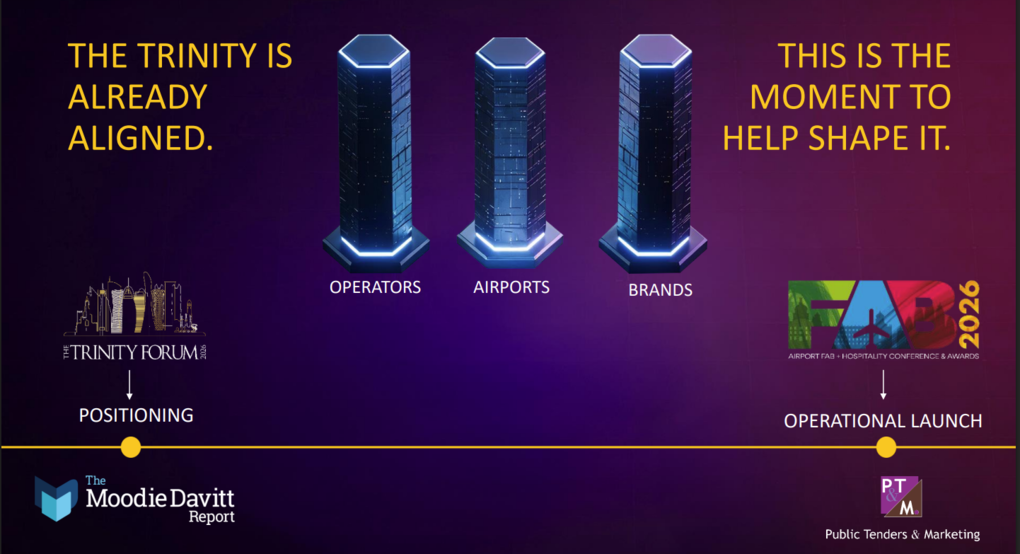
It was made public at The Trinity Forum in Doha (positioning and industry alignment) after a series of encouraging, confidential discussions with potential Founding Partners beforehand.
When is operational launch planned?
At the FAB Conference in Bengaluru in July, followed by progressive onboarding.
15. WHAT THE PLATFORM IS – AND IS NOT
What it is:
- A neutral intelligence infrastructure
- A preparation and visibility tool
- A shared industry reference
What it is not:
- A tendering platform
- A sales channel
- A consultancy
- A decision engine
16. THE $64 MILLION DOLLAR QUESTION. WHY PARTICIPATE?
Do we believe airport commercial concessions need structured, neutral intelligence to mature as an industry?
If the answer is yes… Then this initiative is an opportunity to help shape the solution before it becomes the default standard. ✈
HOW TO BECOME INVOLVEDHow can interested airports, operators or brands receive the draft contract and be contacted? Organisations interested in learning more about the Platform, receiving the draft Founding Partner or Early Adopter subscription agreements, or discussing potential participation are invited to contact us directly. Requests can be sent to:
We will be pleased to share the relevant draft documentation and to arrange a direct discussion to explore the most appropriate form of participation. |
ABOUT THE MOODIE DAVITT REPORT
The Moodie Davitt Report was founded in 2002 (as The Moodie Report) by then sole owner Martin Moodie, who runs the company alongside long-time colleague Dermot Davitt. It is now part of Mark Allen Group, the UK publishing house that acquired The Moodie Davitt Report in September 2024.
The Moodie Davitt Report is the world’s leading information source on the travel retail and airport commercial revenues sectors.
It enjoys unrivalled global reach, a peerless network, editorial authority, neutrality and daily market visibility. The company also runs The Trinity Forum and The Airport Food & Beverage (FAB) Conference & Awards.
ABOUT PT&M
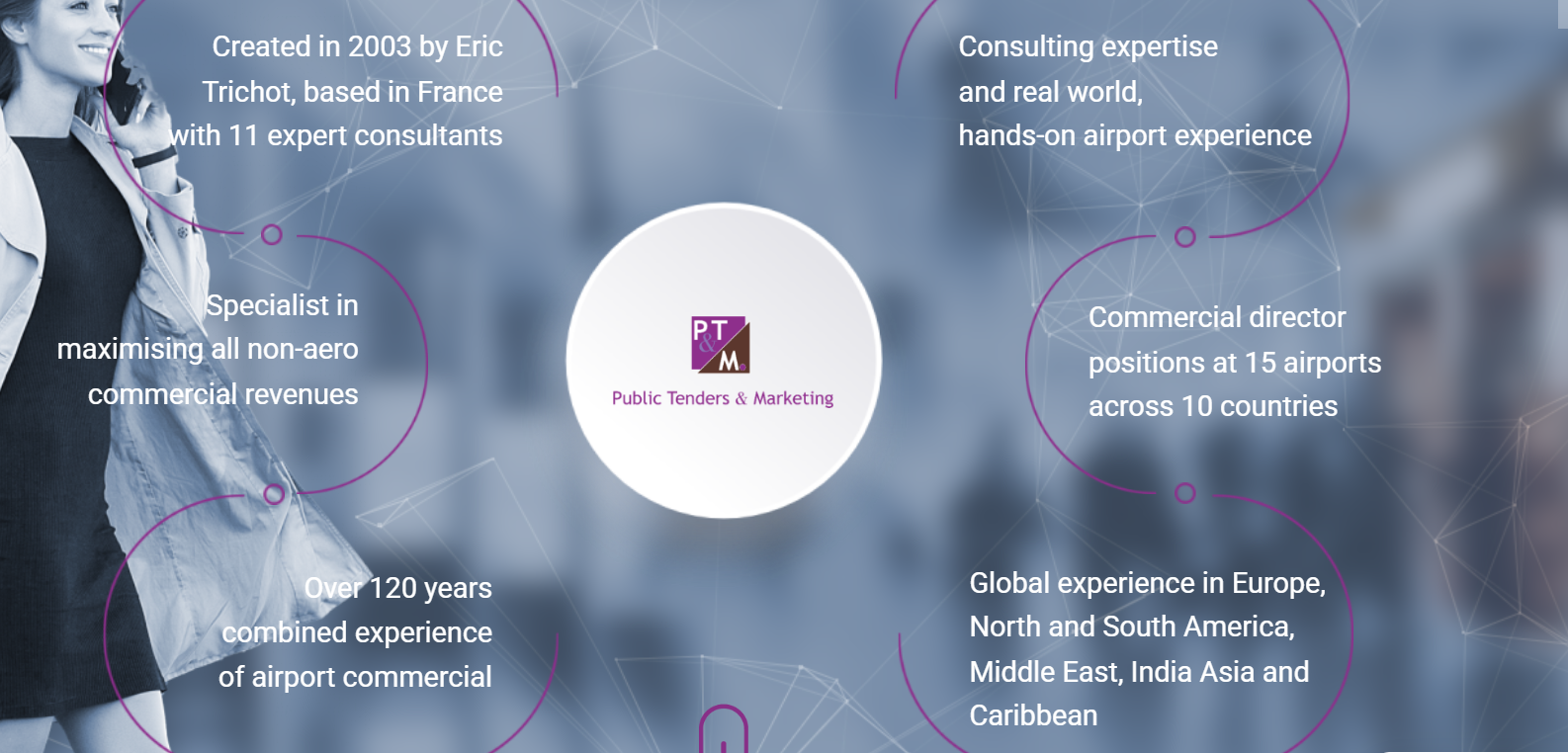
PT&M was created in 2003 by Eric Trichot.
The company offers deep operational expertise in airport commercial strategy, tender processes and concession dynamics. The team combines market intelligence with real-world airport execution experience.
Collectively, its executives and expert consultancy team have held Commercial Director roles at 15 airports across ten countries.