


In this guest article, Lisa de Klerk, Account Director at integrated design and marketing agency WePurple, shares insights on agentic AI and explores whether travel retail is ready for its adoption.
Imagine stepping off a long-haul flight at the airport, your phone buzzing with a seamless itinerary for your time in transit: your personal AI agent has already scouted duty-free stores and experiences tailored to your tastes, reserved a spot for click-and-collect, and even exchanged your shopping history and preferences for bespoke offers before you arrive.

Agentic AI – autonomous systems that do not just chat, but plan, decide, and act on your behalf – are advancing quickly. The opportunities could reshape retail, particularly domestic retail where everyday shopping gets a turbocharge from frictionless bookings and buys. As dwell times dwindle in today’s fast-paced airports, travel retail also stands to gain substantially from agentic AI.
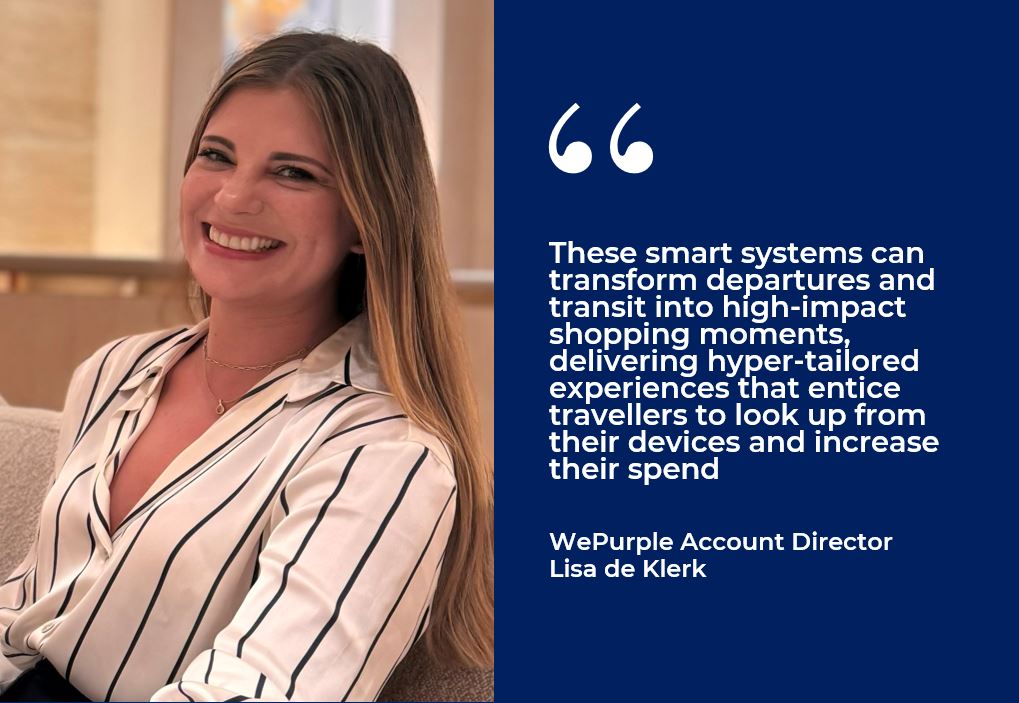
These smart systems can transform departures and transit into high-impact shopping moments, delivering hyper-tailored experiences that entice travellers to look up from their devices and increase their spend.
Trawling ecommerce’s rough waters
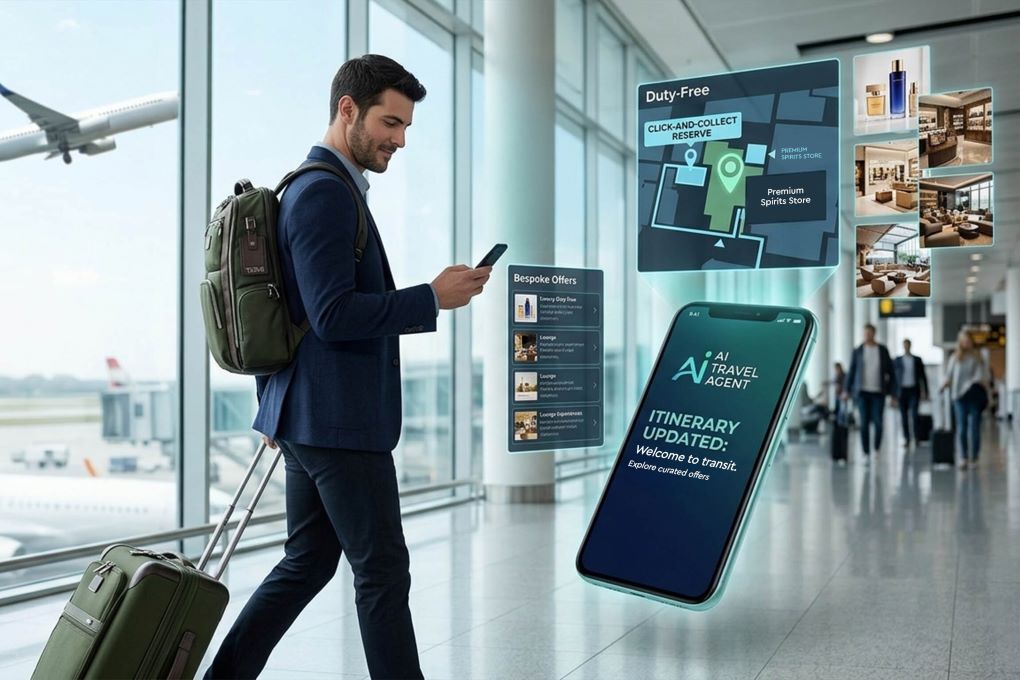
Ecommerce outside Asia has long been a clunky affair – slow sites, fragmented stock checks and checkout abandons that frustrate even the most patient shopper. Agentic AI can change that by trawling the web like a savvy PA, comparing prices across retailers, negotiating deals and executing buys in seconds.
Picture it handling a traveller’s pre-flight wish list: “Find me that limited-edition whisky under US$100, bundle with chocolates, and schedule click-and-collect at my gate.”
Click-and-collect presents a great opportunity for early agentic adoption: real-time API integrations for inventory, dynamic pricing feeds, and secure pick-ups that agents can handle independently.
Domestic retail, with its steady footfall and simpler logistics, will likely lead adoption – agents streamlining everyday collections that travel retail can mirror for airport hauls. Some early AI pilots for personalised offers show promise, blending flight data with spend patterns to optimise prompts to travellers.
Augmented associates in action
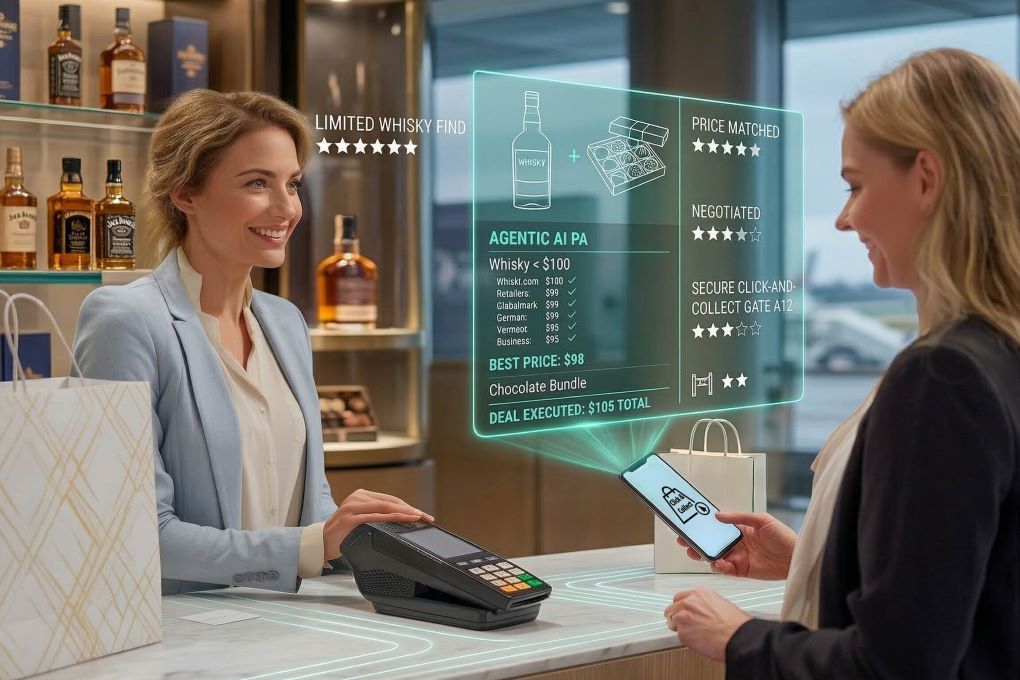
Enter augmented associates (AA), as Google’s Gemini dubs them: sales staff supercharged by agentic AI linked to in-store devices. Your personal agent chats with the shop’s AI counterpart, sharing preferences such as ‘loves peaty Scotch’. Suddenly, the associate greets you by name, steers you to the perfect Laphroaig, and unlocks loyalty perks on the spot.
This is an approach that can deliver frictionless magic. In-store screens updating with bespoke ads – for example, a -20% off bundle based on past buys – while dynamic pricing adjusts for the passenger’s profile.
Loyalty programmes evolve too: agentic AI can spot patterns, auto-enrol passengers in tiers and simulate rewards to boost retention. In a hyper-connected travel retail store, special offers can pop up via AR overlays, turning aisles into personal playgrounds.
Opportunities amid the buzz
Travel retail’s captive audience – stressed and time-crunched, but spending – is ripe for agentic disruption. The opportunity that hyper-personalisation presents is key here. With 65% of shoppers already using AI to research products before making a purchase (source: BusinessWire), AI agents can analyse this data (and past purchases and preferences) to suggest hyper-relevant offers in real-time, spiking impulse buys.
Agents can handle the grunt work, freeing humans for high-touch selling. Omnichannel wins big in this environment: pre-order via agent, collect in-store with an ‘AA’ boost. There are already case studies that highlight strong results; Home Depot’s Gemini-powered aisle navigation proves that agents excel at contextual guidance.
The challenges
Readiness gaps loom large across the sector. Fragmented data silos impede real-time analysis; 71% of merchandising teams report that AI initiatives fizzle out due to messy integrations (source: McKinsey & Company).
Privacy concerns add another layer, demanding ironclad ethics protocols, particularly in travel retail’s highly regulated environment where passenger data is gold but trust is essential. Infrastructure lags behind as well: non-scalable cloud setups simply cannot handle swarms of agents managing thousands of queries at once.
Domestic retail is likely to surge ahead faster with adoption thanks to simpler logistics, but global travel retail’s complexities – such as multi-currency pricing and various regulations – could slow the roll-out. Staff upskilling will be crucial; augmentation has the opportunity to empower teams rather than replacing them.
And as agents start haggling with other agents, retailers must optimise their visibility in those AI decision-making protocols.
Levelling up for the future

Travel retail may not be fully ready for autonomous AI yet, but early pilots – such as AI trials in select airports and Gemini agents – present a potential path forward. Ecommerce platforms designed for easy AI agent use, featuring seamless data connections and next-generation click-and-collect, could be key.
Stores connected to AI through linked devices and loyalty programmes can complete the picture. Domestic retail is already proving this model works with strong potential to scale globally.
Like personalisation’s emotional hook in travel retail over the past few years, agentic AI can build heart-led loyalty. Travel retail’s conversion quest is primed for an AI-driven boost – it will be more agentic, personal and frictionless than ever. ✈