


INTERNATIONAL. The International Air Transport Association (IATA) has reported continued improvement in global passenger demand in January.
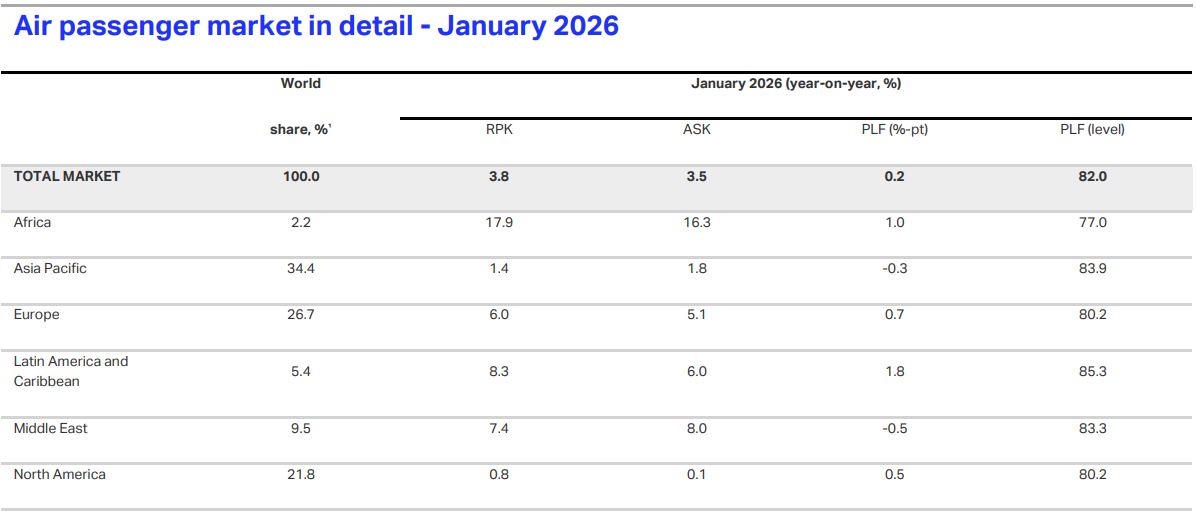
Total demand, as measured in revenue passenger kilometres (RPKs), increased +3.8% year-on-year in January, outpacing a +3.5% rise in total capacity (ASKs). The global passenger load factor reached 82%, up 0.8 points from January 2024, marking the highest January on record.

The airline trade body forecasts that strong demand growth will continue into 2026, though escalating conflict in the Middle East presents a significant risk to this outlook.
IATA Director General Willie Walsh said, “The timing of the Lunar New Year partly explains the slightly slower +3.8% expansion in January, but the fundamentals are in place for demand to continue strong growth in 2026.

“Schedule data, for example, indicates a +5.2% increase in global seat capacity by March, which would be the fastest expansion since April 2024. Events over the weekend have, however, introduced some uncertainty into the evolution of traffic and fuel costs.
“We all hope for an early peaceful resolution to the current hostilities. In the meantime, it is critical that states respect their obligation to keep civilians and civil aviation free from harm.”
International passenger markets breakdown
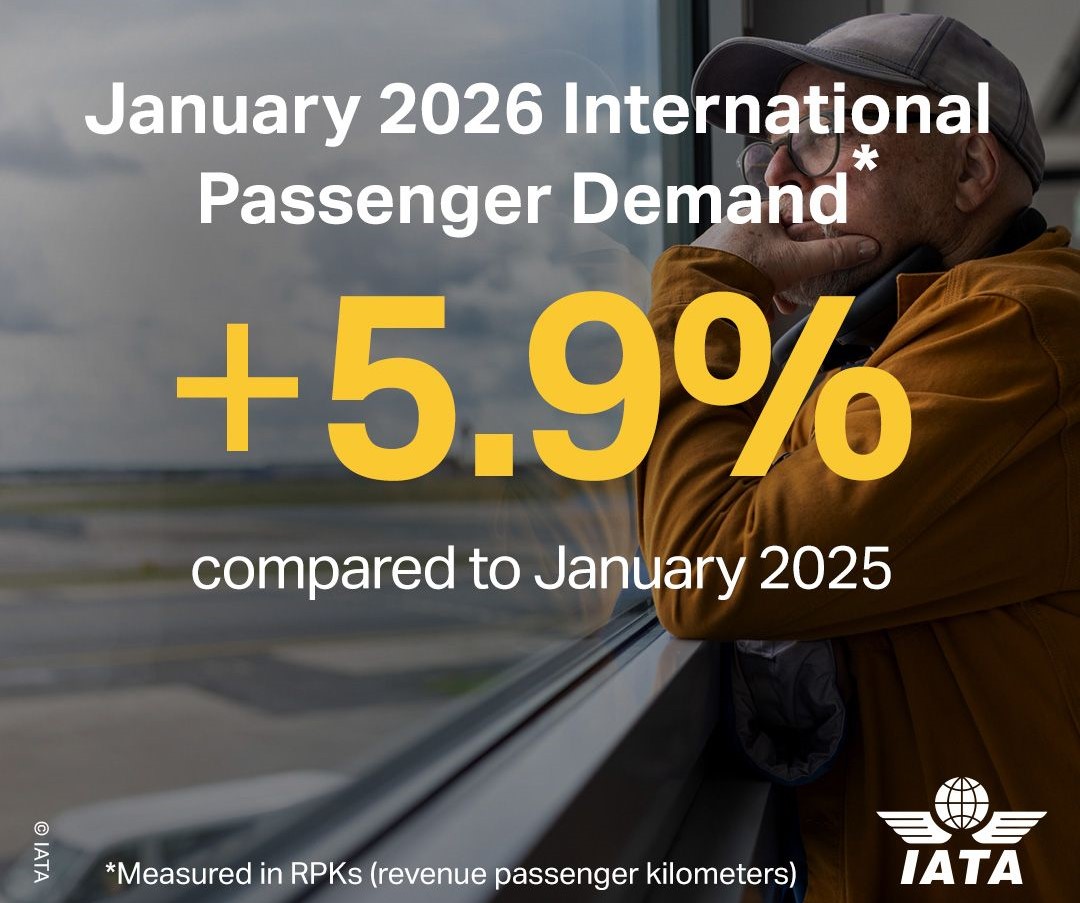
International traffic rose +5.9% year-on-year in January, with all regions contributing to the increase. Expansion in Asia Pacific slowed, reflecting Lunar New Year shifting to February. The international load factor hit 82.5% (up 0.1 percentage point) setting a record high for the month.
Asia Pacific airlines posted a +4.4% year-on-year rise in demand in January, with capacity up +5.2%. The load factor declined 0.7 percentage points to 85.9% compared with January of the previous year.
European carriers performed strongly during the month, with demand up +6.3%, capacity rising +5.7%, and the load factor reaching 79.4%, up 0.5 percentage points.
Demand for North American carriers went up +3.4%, outpacing a +2.6% rise in capacity, resulting in a load factor of +82.3%, up 0.6 percentage points.
Middle Eastern airlines recorded +7.2% higher year-on-year growth during the month, while capacity expanded faster at +7.8%. This pushed the load factor down to 83.2%, a decline of 0.4 percentage points.
Demand among Latin American airlines surged +11.4% against +8.9% capacity growth, lifting the load factor to 86.5%, an increase of 2.0 percentage points.
African carriers also recorded sharp traffic growth, with demand up +11.7% and capacity rising +10.1%, bringing the load factor to 77.4%, a 1.1-percentage point increase.
Domestic travel growth slows
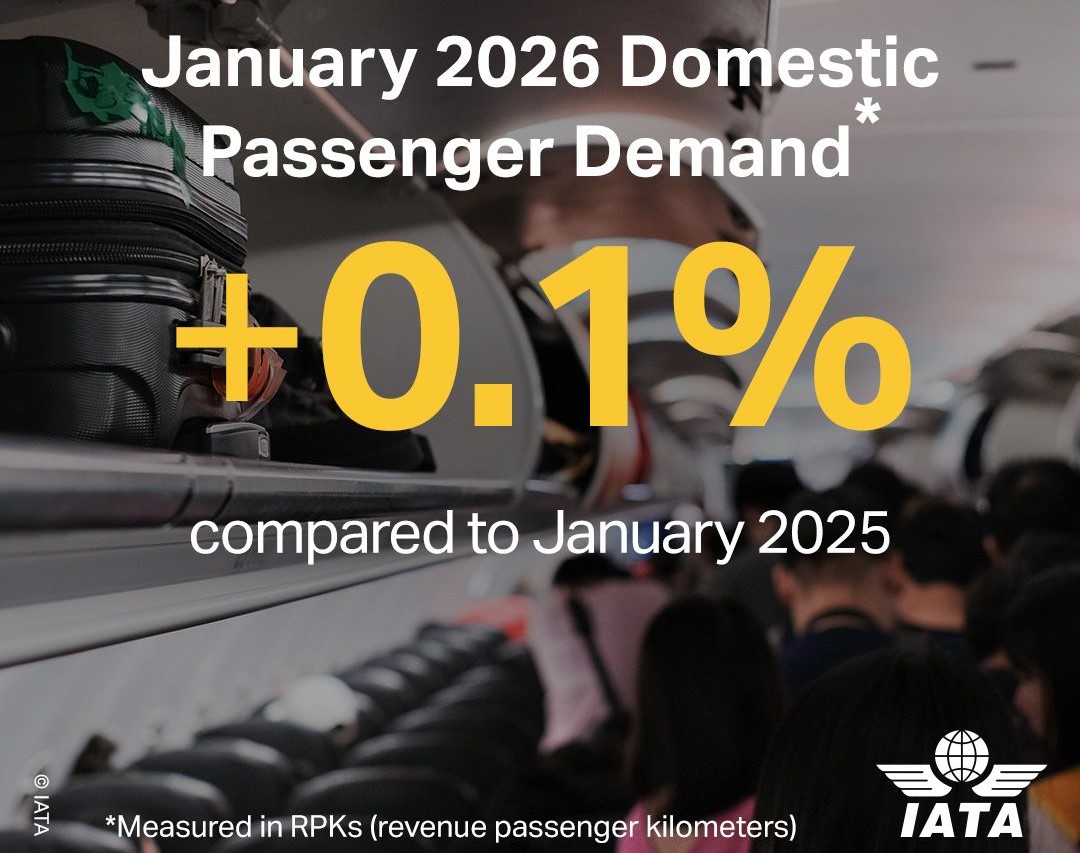
Growth in domestic passenger demand slowed in January, rising just +0.1% year-on-year, largely due to the Lunar New Year shifting into February.
Capacity fell -0.4%, while the load factor edged up 0.4 percentage points to a record January high of 81.2%.
China, Australia and the USA posted declines, whereas Brazil delivered strong year-on-year growth of +10.9%.
Looking ahead, Walsh said: “Average fares are expected to fall in real terms over the course of 2026, continuing a long-established trend of ever more affordable air travel. This is despite persistent cost pressures from rising infrastructure charges, onerous regulatory burdens, and the mounting cost of the energy transition.
“In the face of these costs and regulatory pressures, it is notable that 2025 saw the slowest rate of new airline start-ups since 1999. Governments who value competition should consider this a canary in the coal mine.
“To protect and enhance the consumer benefits of connectivity, these cost and regulatory issues must be addressed.” ✈