
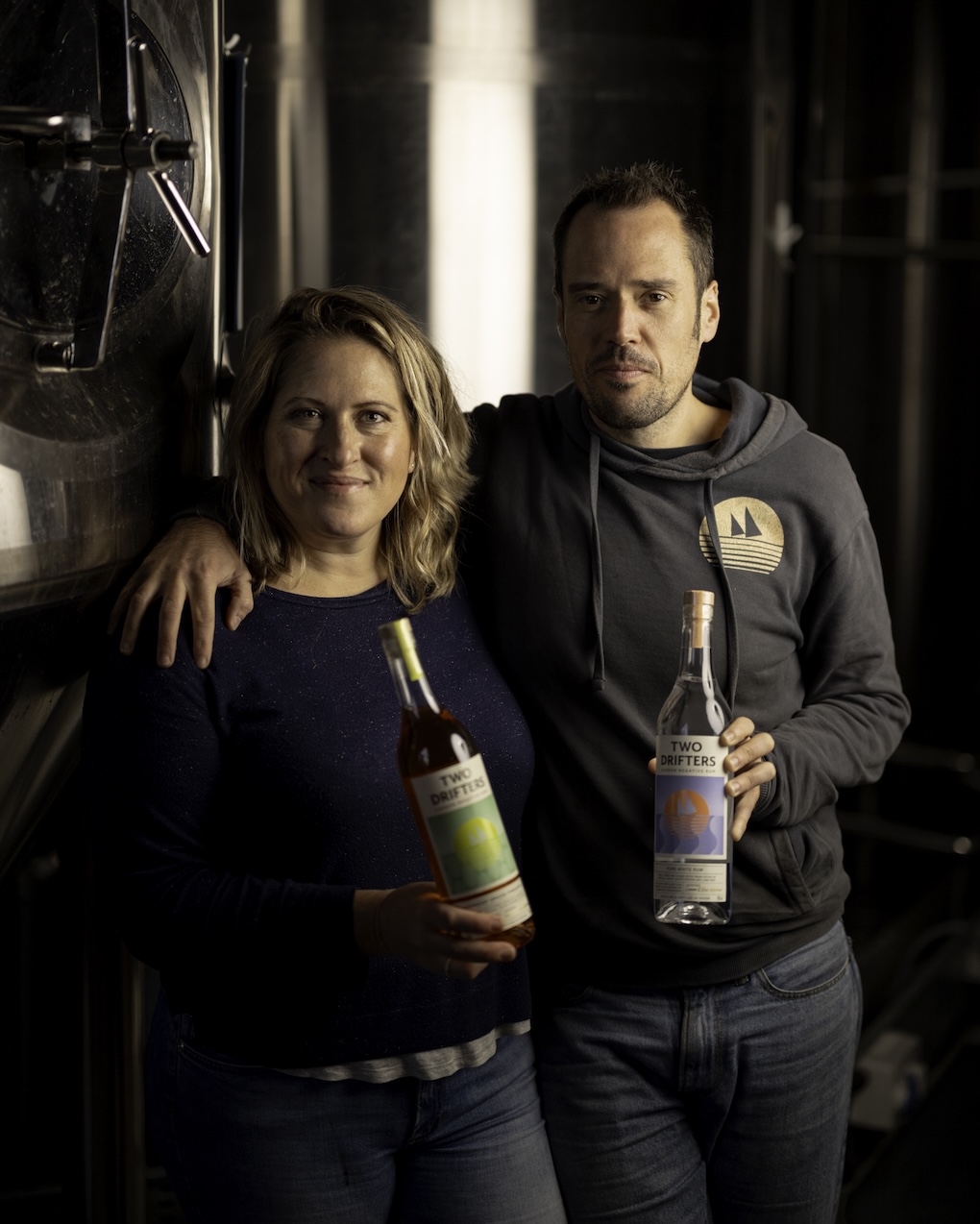
“Rum is not a necessity. So why make rum that hurts the planet?”
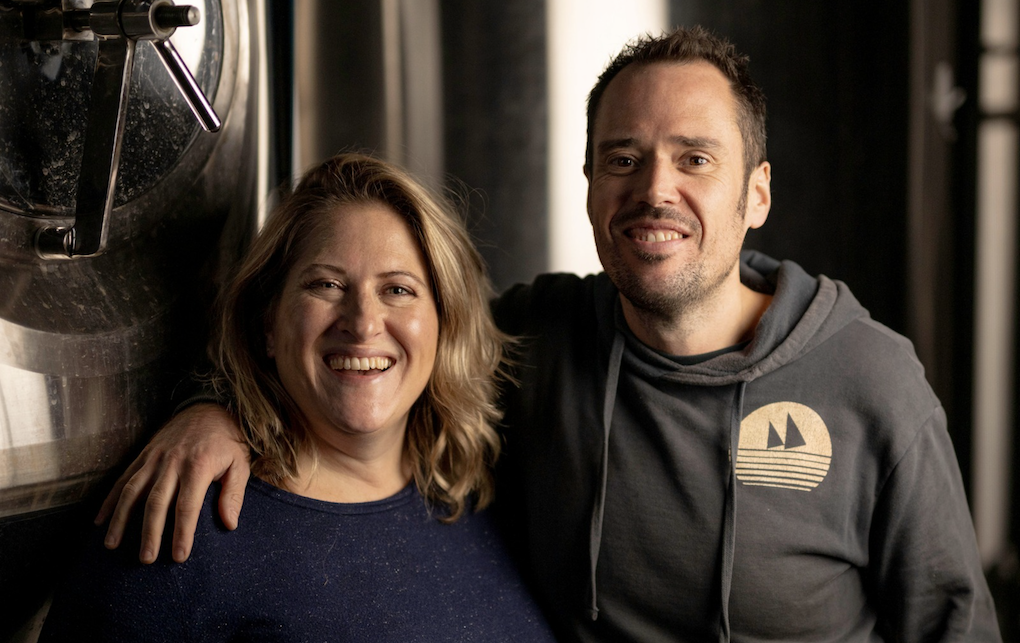
It is a simple way for Two Drifters Co-Founder Gemma Wakeham to explain a business model that she and husband Russ acknowledge takes considerably longer to unpack.
The pair founded Two Drifters in Exeter in 2019 after selling their house and investing in a distillery from the ground up. Rum had long been part of their shared story – their first date involved a rum tasting, and their honeymoon took them to St Lucia – but from the start they wanted to make their own liquid rather than source spirit made elsewhere.
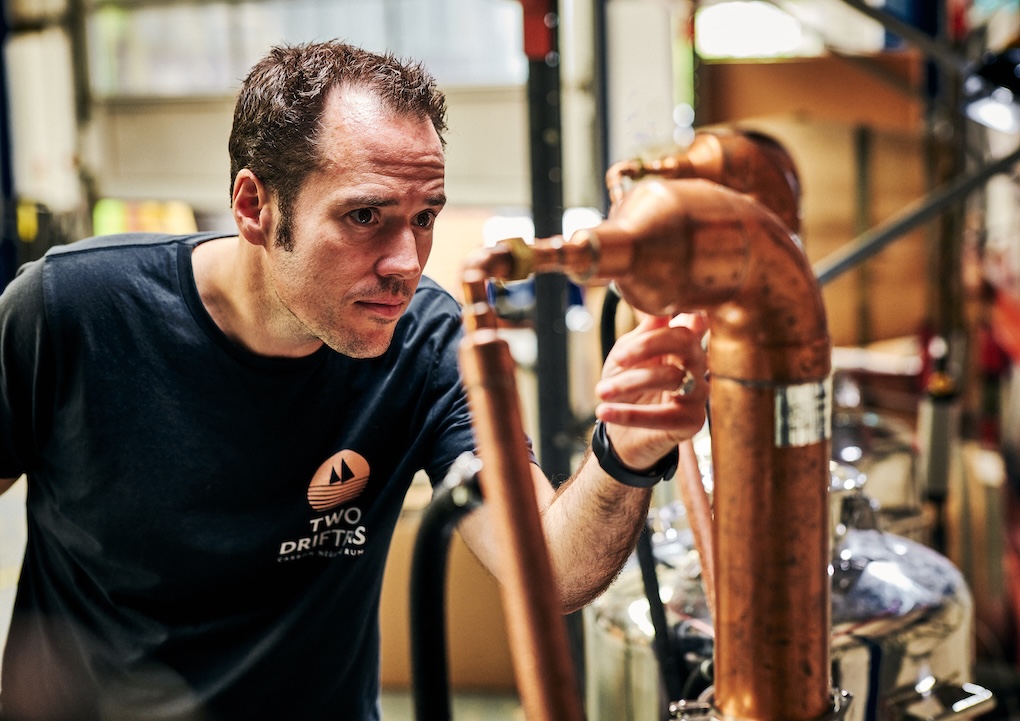
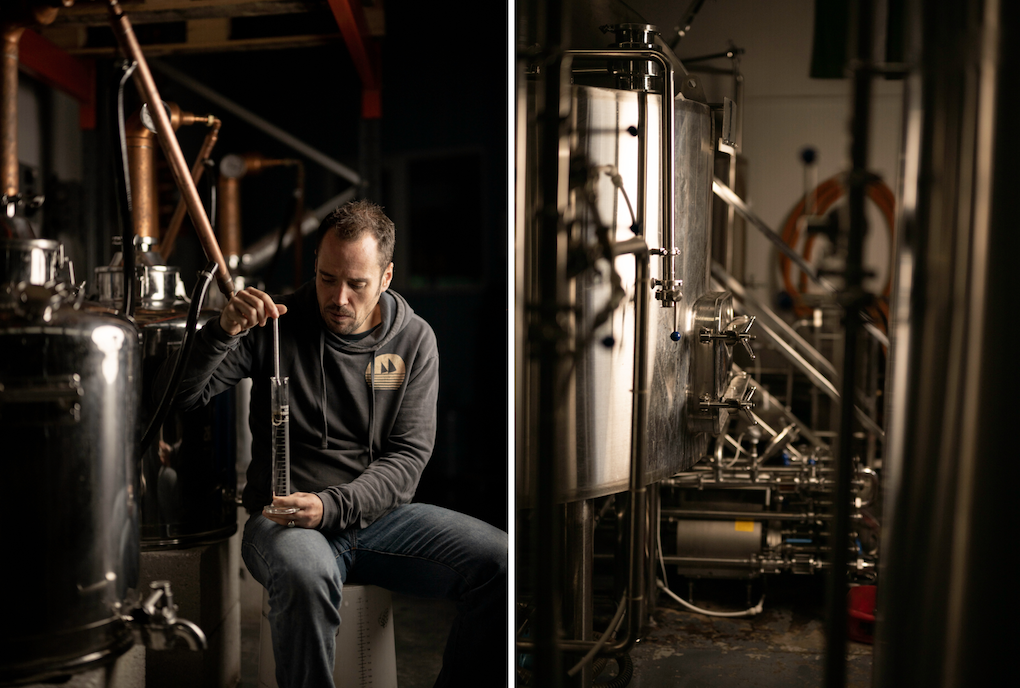
Co-Founder Russ Wakeham, who has a PhD in chemistry, says producing in Britain also allowed them to shape the liquid at every stage.
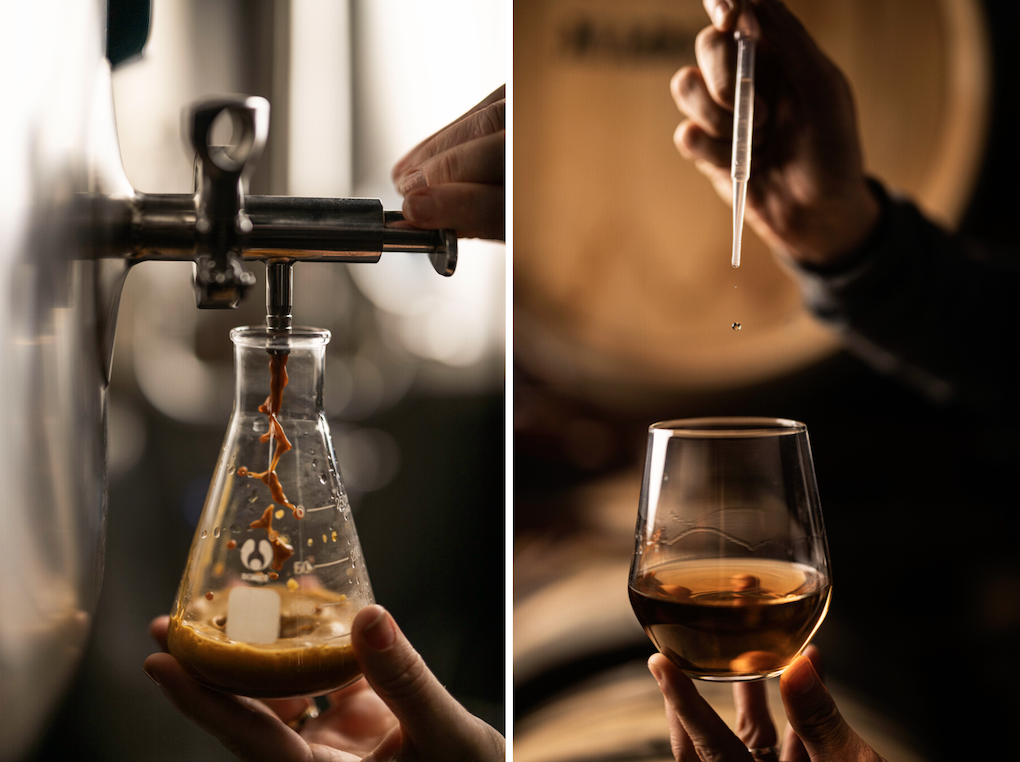
“The interesting bit for us was how we could put our spin on the flavour. How could we make a British-style rum? And how could we influence the flavour in terms of the fermentation, let alone the ageing and spicing?”
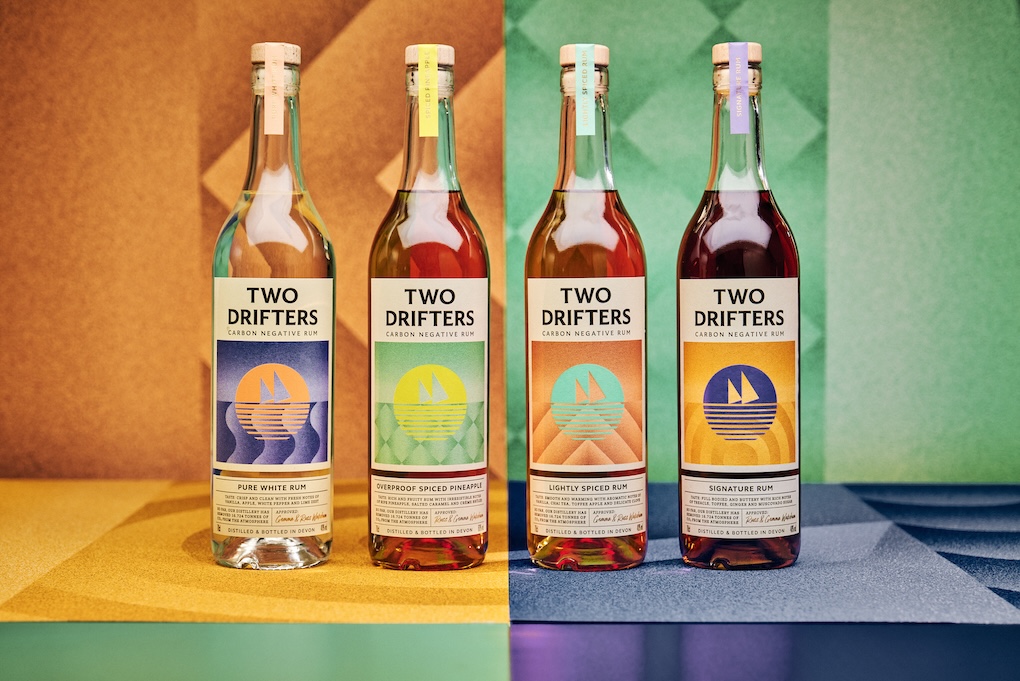
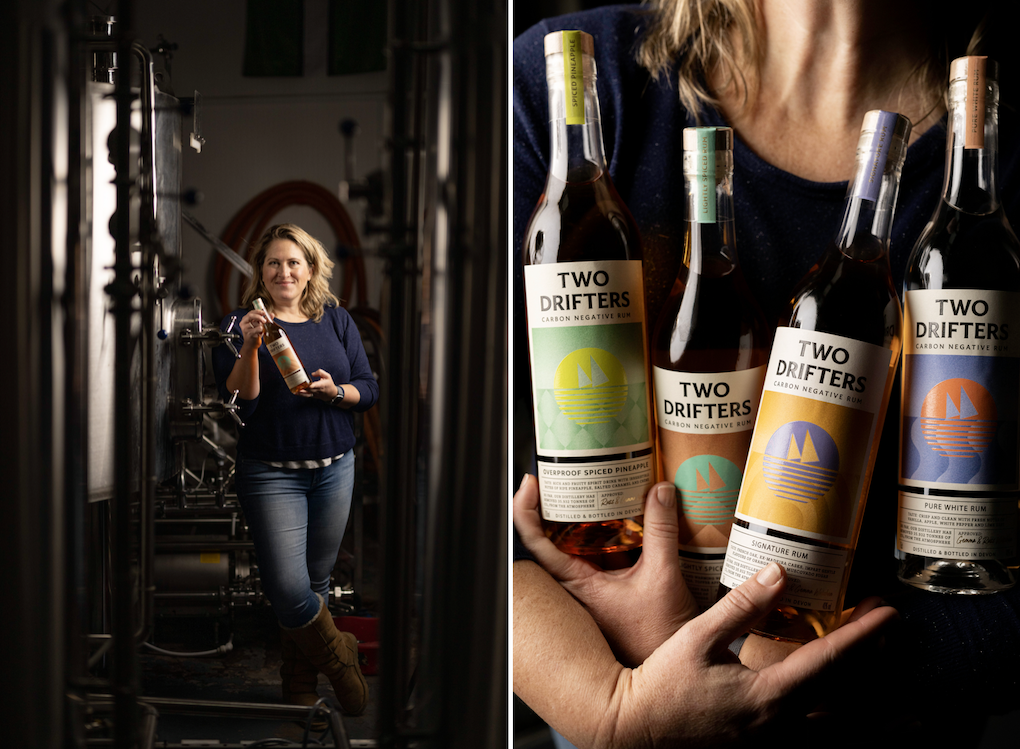
Today, the distillery can produce around 2,500 bottles a week and its core portfolio spans Pure White Rum, Signature Rum, Lightly Spiced Rum and Overproof Spiced Pineapple Rum.
As reported, Blue Caterpillar signed a strategic distribution agreement with Two Drifters in 2025 covering global travel retail and selected domestic markets in the Caribbean and the Americas.
Beyond the bottle
Despite Two Drifters being widely defined by its carbon-negative credentials, the founders are deliberate about not leading with them.
“It’s all well and good putting ‘carbon-negative rum’ on the product, but if the liquid is rubbish and no one likes it, there is no customer loyalty. It’s just a good story,” Russ says.
“So we lead first with trying to make the best-quality rum.”
His scientific background also shaped the sustainability model. Russ’ research focused on carbon capture and storage, and Two Drifters now works with Climeworks to remove and permanently store more CO₂ than the brand calculates across the lifecycle of its products.
But for the founders, the more important part is reducing that impact before removal.
“We essentially tax ourselves on our decision-making,” Russ explains. “We have a built-in carbon tax which says that if we cause emissions in our process, we are going to have to pay for them at the end. So, we work very, very hard to avoid them in the first instance because we don’t want to have to pay that tax.”
That thinking feeds into decisions across the business, from an electric distillery running on renewable energy to lightweight British glass, natural cork and labels made from waste sugarcane fibre. The spiced rums are coloured using waste cacao husk rather than caramel colouring.
Gemma says the approach is built around many small decisions that consumers may never see.
“If people saw carbon dioxide leaking out of everything, they would be more mindful of it. If you saw purple gas seeping out of everything, you’d stop it.
“Carbon dioxide is invisible, but it’s still polluting the sky. We’re just very mindful of knowing it’s there and we’ve built that consciousness into our business model.”
Why travel retail?
Two Drifters’ presence in travel retail predates Blue Caterpillar, including listings with easyJet, British Airways and Virgin Atlantic as well as key UK airports. The new distribution agreement marked a push beyond the UK.
Russ says Blue Caterpillar felt like a natural partner because “they really understand and are hungry to disrupt the marketplace and can bring new energy to it”.
There is also a commercial argument for the carbon-negative model.
“What we can give to our customers – any of the cruise liners or airlines – is removal of carbon from their Scope 3 emissions, so it directly impacts their reporting,” he says.
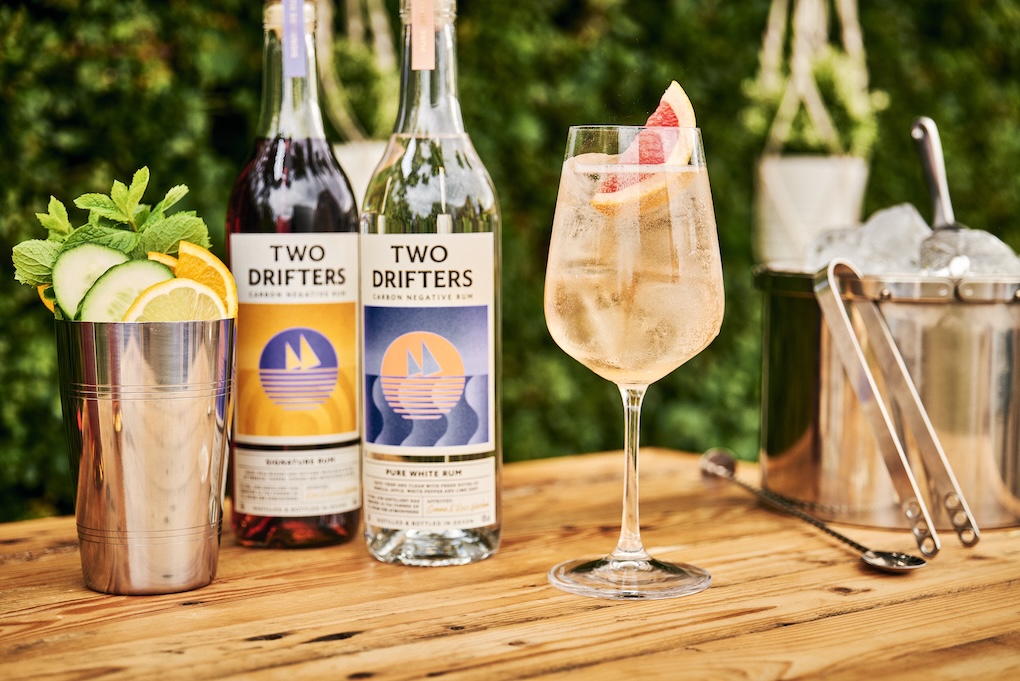
“Essentially what we’re advertising is that you can have business, but not business as usual. You can have business that’s mindful of its impact.”
For Gemma, one of travel retail’s biggest advantages is time.
“You need the rum to have the hook, but the bit that really gets the loyalty and the brand love is when you fully appreciate the story and there’s an emotional involvement.
“A lot of it can sit there being completely invisible, and I think that’s why travel retail has started to get excited about us.”
Designed to stand apart
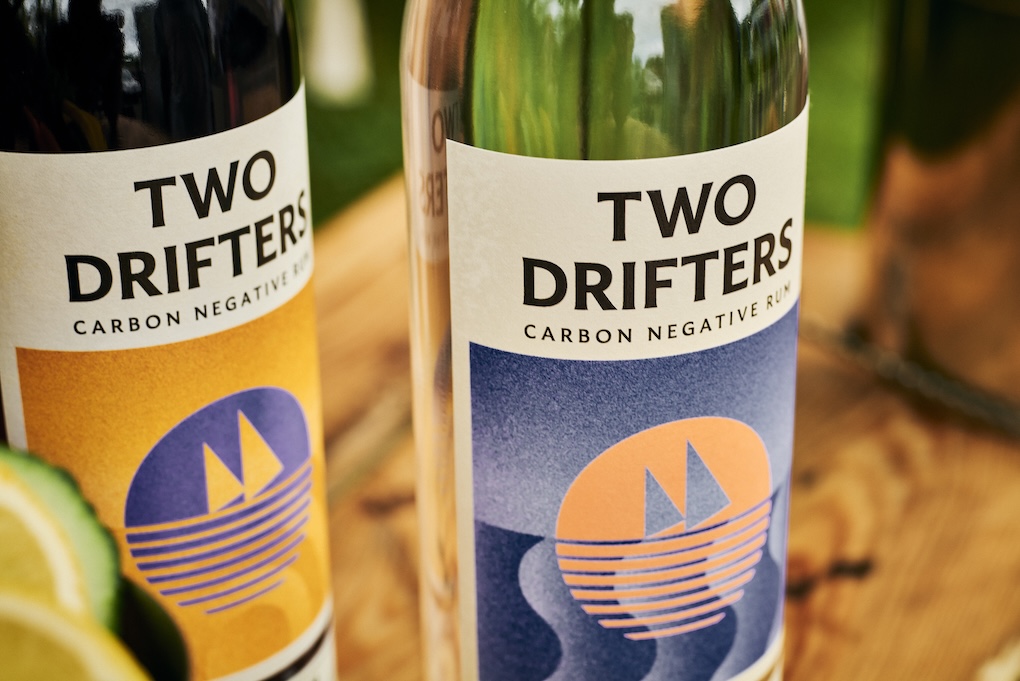
The founders are also intent on challenging some of the visual conventions of the category. Gemma says she wanted Two Drifters to look markedly different from traditional rum branding.
“There aren’t many women in rum. I didn’t want pirates on the label, or brown with treasure chests or sunken ships.
“I wanted it to be elegant, and I wanted it to be beautiful, so people could enjoy making rum cocktails.”
Asked whether Two Drifters considers itself niche, Russ describes it as “a niche brand with global aspirations”.
Gemma says greater scale could also put pressure on larger competitors.
“I really like the idea that the more successful we get and the more global reach we get, the more annoying we get to our competitors. They are going to have to up their game from a sustainability point of view.
“We’ve kind of won if they’re having to do better – genuinely do better, and not just as an elevator pitch.”
The cruise opportunity
The founders see cruise as an especially natural environment in which to turn a complex sustainability story into something more engaging.
“It would get a lot of people tasting the product and bartenders would have the opportunity to explain the story,” Russ says.
“We want to get that story and passion across, and then they can share it with their customers. They’ve got dwell time, they’re listening, they want stories and they want to remember things. That’s the perfect opportunity to get the whole brand ethos out.”
Gemma sees potential to take that thinking beyond a single branded cocktail.
“How interesting would it be to have a beverage programme that wasn’t just around the little bit of rum that’s in that cocktail, but was curated around the fact that we are such a sustainable brand?
“With spirits, we’re still not very good at talking about the provenance or how it’s made. There’s so much knowledge that we can share that is genuinely interesting because people love cocktails and talking at the bar.”
For a brand whose story can take time to explain, that may be exactly the point.
“The global travel space is a really exciting one for us,” Gemma says. “It offers the biggest potential because there is time to tell the story. And that’s what we need.” ✈
Delegates attending TFWA World Exhibition in Cannes can connect with Two Drifters Co-Founder Russ Wakeham at the Blue Caterpillar stand (Green Village J53)