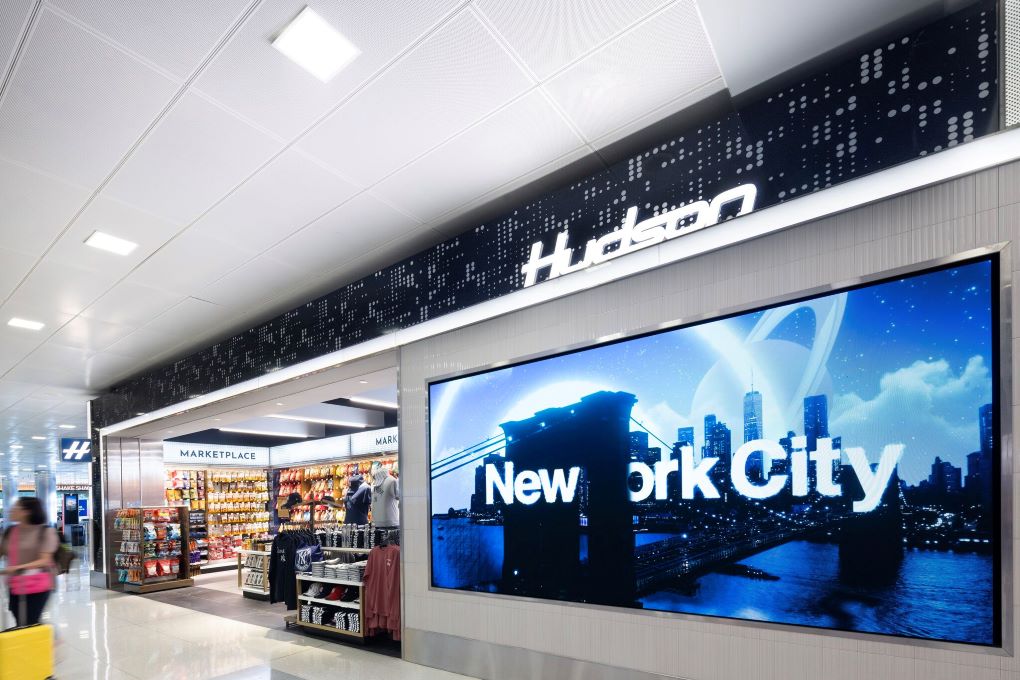
INDIA. Mumbai International Airport Ltd (MIAL) confirmed today that it is preparing to appeal last week’s shock Bombay High Court ruling ordering the airport company to call a fresh tender for the duty free contract at Chhatrapati Shivaji International Airport.
As reported, the ruling followed a claim by Flemingo International that it had been excluded unfairly from last year’s Mumbai duty free tender.
In a 184-page ruling, the Court set aside the duty free retail contract awarded by MIAL last November to DFS Group. It gave MIAL eight weeks to call a new tender.
 |
MIAL told The Moodie Report on Friday that it would “surely appeal” the decision to the Supreme Court of India, while seeking to get the deadline “extended or annulled”. Today a spokesman confirmed that intention to us, while declining to comment further. The Supreme Court of India is the highest judicial body in the country.
In arguably the most contentious part of its ruling, the Court said that even though MIAL is registered under the Companies Act it cannot be viewed as a separate entity from the state (state-owned Airports Authority of India had leased out the international airport to MIAL for 30 years).
Such a view will send alarm bells ringing through the investment community in India.
One informed observer told The Moodie Report: “MIAL maintain that they are free to operate as if private, not as a part of the state. If it goes the other way, the decision imperils virtually all the government/private sector “˜PPP’ projects in India – airports, toll-roads, power, etc. All these other entities would have to change how they do business, and may be liable for actions taken in the past. There are many interested parties watching this one, with a lot of weight on the MIAL side.”
Those interested parties obviously include DFS Group, as well as Bangalore International Airport Limited and its duty free concessionaires (The Nuance Group and Shoppers’ Stop) where Flemingo is involved in another legal action.
MIAL is a joint-venture company owned by the GVK-led consortium (74%) and Airports Authority of India (26%). It was formed in March 2006 to manage and develop Chhatrapati Shivaji International Airport, India’s busiest airport. The consortium also includes Airports Company South Africa and Bidvest.
Here we present a summary of the key aspects of the High Court ruling.
WHO WERE THE PETITIONERS?
1. Flemingo Duty Free Shop Pvt Ltd
2. Mr Vivek S. Bhatt
WHO WERE THE NAMED RESPONDENTS?
1. Union of India
2. Airports Authority of India
3. Mumbai International Airports Pvt Ltd (MIAL)
4. ITDC Aldeasa India Pvt Ltd
5. DFS Venture Singapore (Pte) Ltd
6. DFS India Pvt Ltd
WHAT WAS THE CLAIM?
The Petitioners challenged the process adopted by MIAL, beginning with the Expression of Interest (EOI) for the duty free contract, followed by the issue of a Request for Proposal (RFP) and culminating in the award of the contract (initially to ITDC Aldeasa India and then to DFS).
WHAT WAS FLEMINGO’S INVOLVEMENT IN THE BID?
Flemingo entered into a consortium arrangement with Aer Rianta International (ARI) to bid after the tender was announced on 9 October 2006. The alliance duly submitted a bid on 11 October 2006.
The partnership made a presentation to MIAL in Mumbai on 9 November 2006. MIAL subsequently sought further information regarding Flemingo/ARI’s business (sales turnover, international traffic etc). According to Flemingo, this was the last correspondence from MIAL despite several reminders. [Note: The legal action was pursued by Flemingo alone, not with ARI].
Flemingo claimed it had not been informed either orally or in writing of the decision regarding the shortlist for the award that was drawn up. It said it was “stunned” to learn that a Request for Proposal document had been issued to other participants with a deadline of 23 February 2007.
It therefore filed a petition on 20 February 2007 challenging its omission. After an initial rejection by the Division Bench on technical grounds Flemingo appealed to a higher court.
The Bombay High Court ruling (see below) outlines both Flemingo’s claims and MIAL’s defence in detail.
ON WHAT BASIS DID FLEMINGO CHALLENGE AN AIRPORT COMPANY’S RIGHT TO SELECT ITS OWN SHORTLIST?
Flemingo claimed the tender process did not set out any clear or objective criteria for evaluation of Expressions of Interest. It claimed that MIAL had not specified the importance, if any, of experience, turnover or the financial offer and that the final criteria used for shortlisting would be determined by MIAL at its sole discretion.
It claimed that meant a “level playing field” did not exist for all bidders and that MIAL could reject or accept any offer at its sole discretion, without assigning any reason.
It claimed a lack of transparency in the process and accused MIAL of acting “most arbitrarily” in shortlisting only four parties and then issuing the bid document to a fifth party (ITDC/Aldeasa).
It claimed the issuing of the document to ITDC/Aldeasa came “well after the last date” that it should have been issued, and that MIAL was responsible for “hurriedly awarding the contract to it on 26th February 2007, the very date on which the [Flemingo] Special Leave Petition was filed in the Supreme Court even though the scheduled date for awarding contract was 7th March 2007”.
It also criticised the cancellation of the ITDC Aldeasa contract on 24 November 2007 and the subsequent awarding of the business to DFS five days later “without calling for fresh tenders and considering afresh the claims of all others, including the Petitioner.”
It questioned whether the award to DFS was contrary to the express terms of the RFP and whether it was “sustainable, legal and valid”. Flemingo claimed that its exclusion from the bid was “wholly arbitrary, unreasonable and unjust”.
Critically Flemingo claimed that MIAL was an instrument of the State within the Constitution of India. It claimed the tender procedure ran “against the prescribed and well established principles of awarding of tenders/contracts in public law”.
 |
Chhatrapati Shivaji International – India’s busiest, and currently most controversial, airport |
HOW DID MIAL DEFEND ITS POSITION?
MIAL said that three critical elements in its decision-making were concession turnover, experience of space managed and total turnover.
It claimed that it had the power under the EOI to determine the final criteria for shortlisting at its sole discretion. It said that “it is not permissible to change the rules or the criteria of selection either during the selection process or after the selection process or to add an additional requirement or criteria”.
MIAL said that it could not be termed either as a State or an “instrumentality of the State” within the Constitution of India, pointing out that it was a purely private limited company.
It said that the EOI advertisement had expressly stated “the final criteria used for shortlisting would be determined by MIAL in its sole discretion” and that the tender would be issued only to those persons/consortia shortlisted by MIAL.
Essentially MIAL claimed, as do most tendering bodies worldwide, the right to choose who it wanted to participate in the process. It claimed that Flemingo had not challenged its exclusion at the time of the shortlisting and nor had its Writ Petition challenged the advertisement inviting an EOI.
It claimed that the tender conditions were unassailable and not open to judicial review, and that the Flemingo joint bid was “less meritorious” than its rivals.
MIAL pointed out that there was a free exchange of views, opinions and ideas with the nine companies that had submitted EOIs. “There was no bias whatsoever against any one nor was there any preference in favour of any one,” it claimed.
MIAL submitted, not unreasonably, that it is a commercial entity and the entire decision-making process was taken in the best interest of the company, keeping in mind the requirements of its OMDA [the operation, management and development agreement in place that sets a range of qualitative and structural targets] and the interests of passengers needing world class retail facilities.
It said that once the ITDC Aldeasa bid fell away, calling a fresh tender would have caused further delay in the setting up of world-class duty free shops and would have deprived passengers of duty free shopping, as well as causing MIAL financial hardship.
MIAL also claimed that, as long as it discharges its contractual obligation by following a competitive bidding process, it should be free to award the contract to such party as it deems fit.
THE COURT’S VIEW ON THE SHORTLISTING PROCESS
The court noted: “In our opinion, the procedure of shortlisting was gone through without determining any objective criteria, and the process was gone through in a most arbitrary manner.”
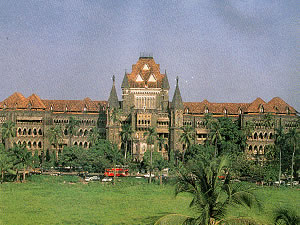 |
The Bombay High Court’s ruling on the Flemingo case has major ramifications for privatisation in India |
“Pointing out that MIAL had an obligation ‘to act fairly and reasonably’, it questioned whether drawing up a shortlist (there had been nine EOIs received) was worthwhile. In any event it should have made the criteria known to all the concerned entities and then shortlisted “on the touchstone of that criteria alone”.
The court agreed with Flemingo that at no point before the latter filed its complaint was it informed by MIAL as to why it had not been shortlisted. It said that the airport company had “acted in an arbitrary manner”.
IS MIAL A STATE OR NON-STATE ACTOR?
This section of the ruling will be closely monitored by those involved in India’s privatisation sector. The court said: “Even though Respondent No. 3 [MIAL -Ed] is a private company registered under the Companies Act, its functions in operating, managing and developing Mumbai International Airport cannot be characterised “˜Purely Private’.
It noted that both MIAL’s Shareholders Agreement and its lease refer to a joint venture between Airports Authority of India and its private partners. The court noted that MIAL performs statutory functions and exercises statutory powers. “It is not a simple lessee of public property,” it ruled. “The monies payable by the lessee to the Authority are public monies”¦ thus Respondent No. 3 is a lessee under a statutory lease exercising governmental or public functions.”
In a ruling that is bound to be picked over by constitutional and investment experts, the court said: “We find that in truth and in substance that Respondent No. 3 is an instrumentality of the State and is bound by Part III of the Constitution.”
THE DFS CONTRACT
“We find that in truth and in substance that Respondent No. 3 [MIAL] is an instrumentality of the State“ |
BOMBAY HIGH COURT |
DFS Venture and DFS India had submitted that because they had invested considerable amounts, their contract should not be cancelled.
The court was mildly sympathetic, noting that the contracts had been granted in November 2007, when the proceedings were pending. “Therefore the contract was subject to the decision in the proceedings and the contract taken by them with full knowledge of the pendency of the proceedings,” it said.
However it said it would protect the interest of DFS until MIAL “takes a decision about awarding of the contract”. It continued: “It is possible that in the fresh process also the Respondents 5 and 6 [DFS Venture Singapore and DFS India -Ed] may turn out to be the highest bidder.”
THE RULING
On the penultimate page of its 184 page ruling, the Court notes: “The petition succeeds and is allowed.”
The contract awarded on 29 November to DFS Singapore Venture on 29 November (and subsequently to DFS India) was “set aside” while MIAL was asked to “reconsider” a public advertisement of a new tender. Further, it said: “The Respondent No.3 [MIAL] shall do so as expeditiously as possible, in any case, within a period of eight weeks from today [the ruling was dated 5 June -Ed].
It said that while the DFS contract was “cancelled”, MIAL was “at liberty” to continue running the shops through DFS on the same terms until a fresh award is made.
The court’s Rule was made absolute with no order as to costs. It denied an application to stay [suspend] its order.
WHAT HAPPENS NEXT?
As indicated, MIAL will appeal the Bombay Court Ruling to the Supreme Court of India, the highest judicial court in the country. In the interim it is seeking an urgent deferral or annulment of the eight-week ruling. If unsuccessful in that period it will have little choice other than to call a new tender.
But it is a legal and constitutional minefield. Not only has a private body – part of India’s much-lauded new era of private investment in formerly state-owned sectors – been deemed to be partly an organ of the state, but also that same body has had its commercial decision-making autonomy fundamentally challenged.
If – and it is by no means a given – a fresh tender is called, then the level of interest that was witnessed first time round may not be forthcoming. Flemingo will certainly bid (though not with ARI, as that partnership is not continuing) but other international bidders may seriously question the wisdom and security of investing in India. A Flemingo victory would certainly make for an interesting retailer/landlord relationship.
One of the industry’s major players told The Moodie Report that it would not bid in the event of a second tender. And it’s notable that Dufry did not proceed with its initial interest first time around.
Since the time of that tender, one of the bidders – Alpha – has been acquired by the parent (Autogrill) of another (Aldeasa). But a return to the fray, given the history of the ITDC/Aldeasa bid, seems inconceivable.
The other shortlisted parties were The Nuance Group/Shoppers’ Stop partnership (the successful bidder for the new greenfield airports in Bangalore and Hyderabad) and the (ultimate) winner DFS. The latter is wisely saying little other than to tell The Moodie Report that it is “evaluating the document”. In reality there is little it can do until the legal process plays out.
MIAL will certainly hope to extend the current eight-week deadline hanging over it and DFS will continue to trade through the uncertainty.
If MIAL is unsuccessful in the Supreme Court, then a fresh tender is unavoidable. But that would open up a Pandora’s box in terms of a clearly – and unfairly – damaged DFS, and an international retail and investment community that may be alienated by developments and fearful of ongoing risk as much as being attracted by the opportunity.
If MIAL’s procedural approach and decision-making rights are ultimately vindicated then it could be back to business as normal. But that scenario is still a long way off. For now there’s nothing too much that is normal going on in this particular affair.
[FOOTNOTE: Click here for last week’s reaction from Flemingo Duty Free Shop Director Atul Ahuja.]
[comments]
Your post will appear – once approved – in The Moodie Forum on our home page
MORE STORIES ON MUMBAI
DFS Group begins Mumbai retail roll-out – 10/03/08
Flemingo court case over Mumbai contract set for January hearing and early 2008 decision – 12/12/07