

Introduction: In this guest piece, The Design Solution Director Nick Taylor and Director and Associate Designer Maria Mendes share the five foundations of successful airport retail design.
They also highlight how these industry learnings have been embedded in the transformation of Portugal Duty Free’s Portuguese estate.
The official opening of ARI-owned Portugal Duty Free’s retail development at Porto Airport in April this year marked the culmination of a complex five-year project in which the retailer transformed over 10,000sq m of store space across eight airports at five Portuguese locations, with in-depth design support from The Design Solution.
For Portugal Duty Free, formed by parent company ARI in 2022 in partnership with ANA/VINCI Airports, the project reflects its vision to redefine travel retail in Portugal and establish a new industry standard of shopper experience.
The core challenge
Outlining the core challenge faced by all retail operators in developing their commercial spaces, The Design Solution Director Nick Taylor says: “The pressure on airport retail to perform has never been greater. Global traffic keeps climbing while conversion and average spend are declining, but the right approach to planning and design can help the industry close that gap.
“Commercial success is a precision balancing act: the right space, the right location, a category mix that fits the passenger, the right products on shelf, marketing that builds awareness, brands that engage, pricing that feels fair. Design is a foundational element in that process.
“Great retail design doesn’t compete with the merchandise; it creates the conditions for it to shine and for the merchandise to perform at its best,” he adds.
“From my experience, I see five key industry strategies underpinning that process and these were carefully embedded in the metamorphosis of the Portugal Duty Free estate.”
Element 1: Passenger flow
Design starts with the plan, not the finishes. Entrances must be tuned to the offer, including open thresholds for accessible formats and controlled ones for luxury exclusivity. In walkthrough duty-free, the challenge is to convert a captive audience into engaged shoppers through strong adjacencies and sightlines, reaching both the grab-and-go shopper and the browser.
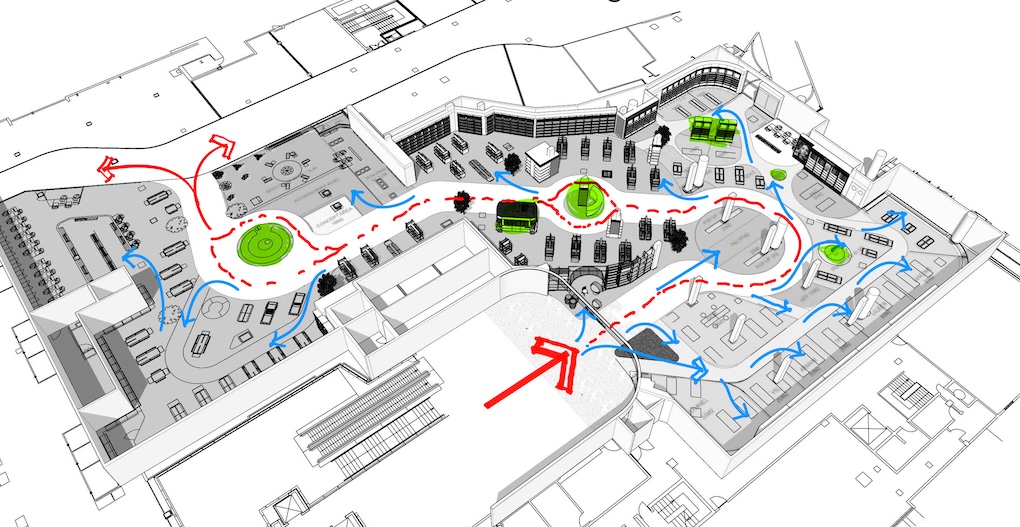
“Our starting point is the passenger journey,” The Design Solution Director and Associate Designer Maria Mendes explains. “We wanted passengers to feel naturally drawn into the stores, with the layout, sightlines and key areas helping to guide their movement. This begins with the entrance – the first sight, which sets the tone of the journey.
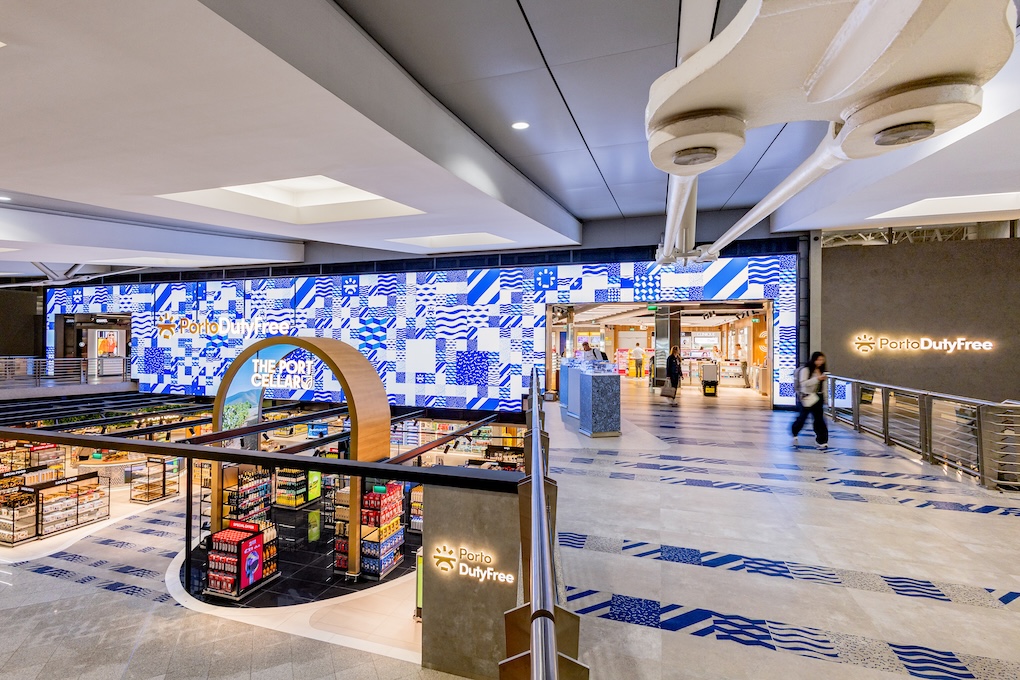
“So, the dramatic digital façade is a key element, capturing each city through its iconic views, popular foods and traditions. It gives passengers an immediate feeling of where they are travelling from.
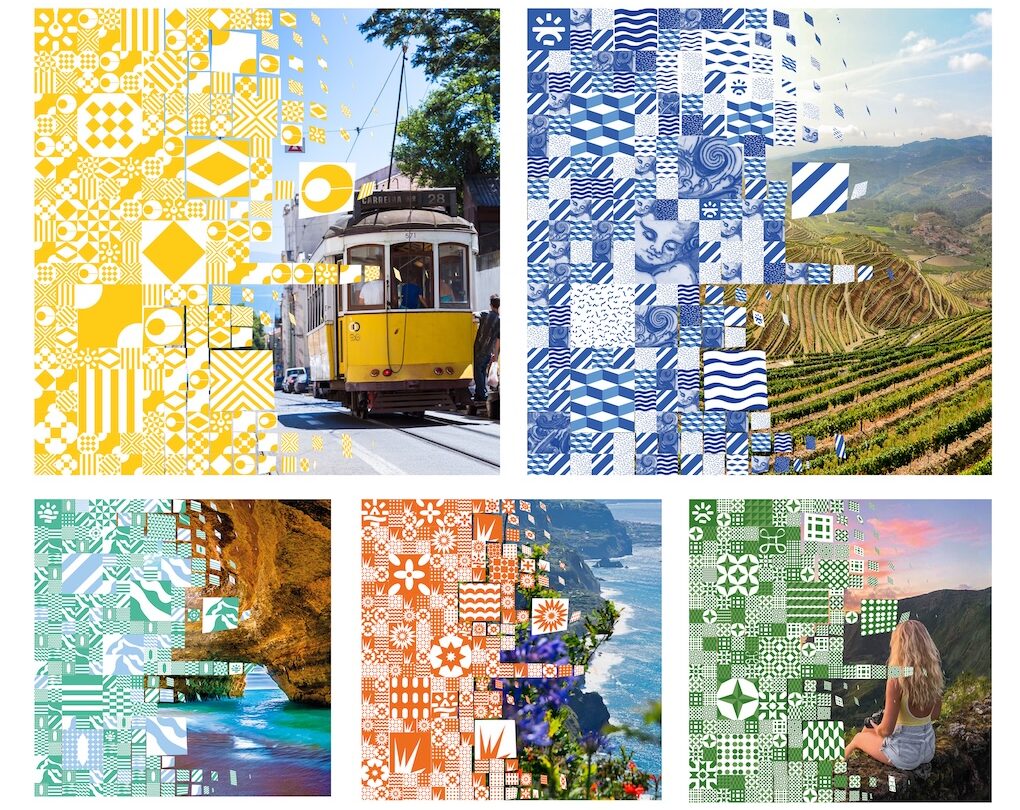
“We also made navigation part of the design: every location has its own custom design azulejo pattern, reflecting the location’s heritage, in the flooring to highlight the main walkway and feature areas, such as tills and local produce.”
Element 2: Make everything easy
Airports are stressful; retail shouldn’t add friction and passengers need to instantly grasp where categories, promotions and tills are. Clear zoning and sightlines reduce effort. Digital screens are powerful tools but only when purposeful, otherwise they become distractive noise.
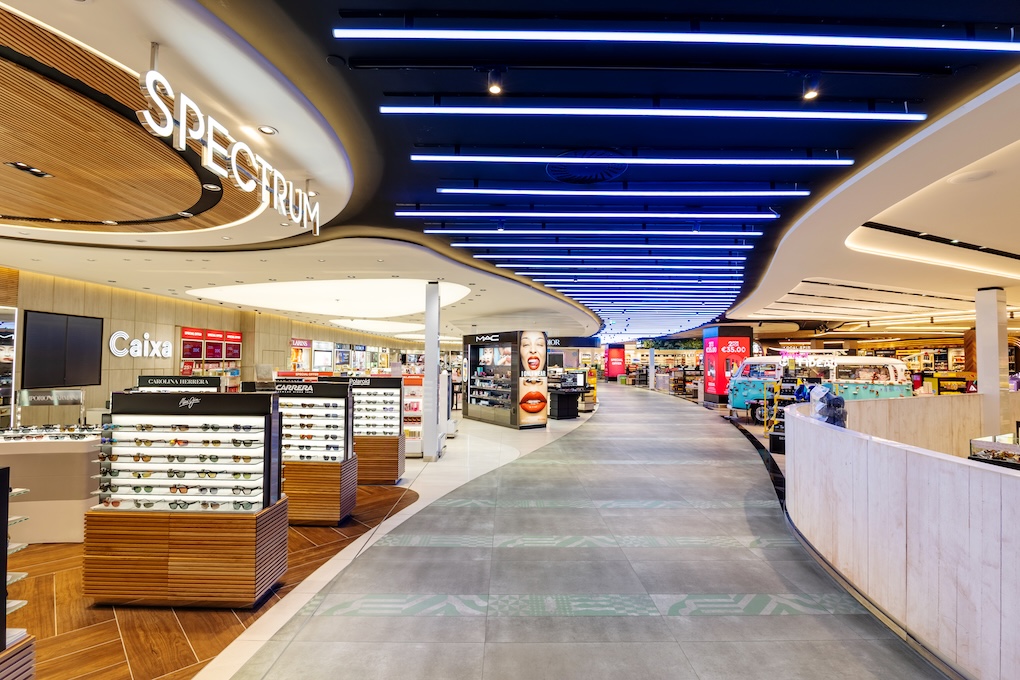
Mendes explains, “Reflecting Portugal Duty Free’s ethos, we wanted shopping to feel effortless and a spirit of calm, incorporating clear zoning to help passengers quickly understand where they are and where they need to go.
“As such, every design detail has a purpose, such as signage, promotion areas and tills positioned strategically to capture attention, guiding and drawing the passenger, making the journey easy, engaging and enjoyable. Digital is a vital element in this, not only to make the journey easy but also to inject vibrant life into the whole store experience.”
Element 3: Touch the emotions
Travel shifts mindsets, opening space for impulse buying driven by excitement, nostalgia or discovery. Multi-sensory cues build atmosphere and drive sales. Hybridisation of retail with food & beverage keeps mixed groups engaged longer, while tasting experiences turn passive browsing into purchase.
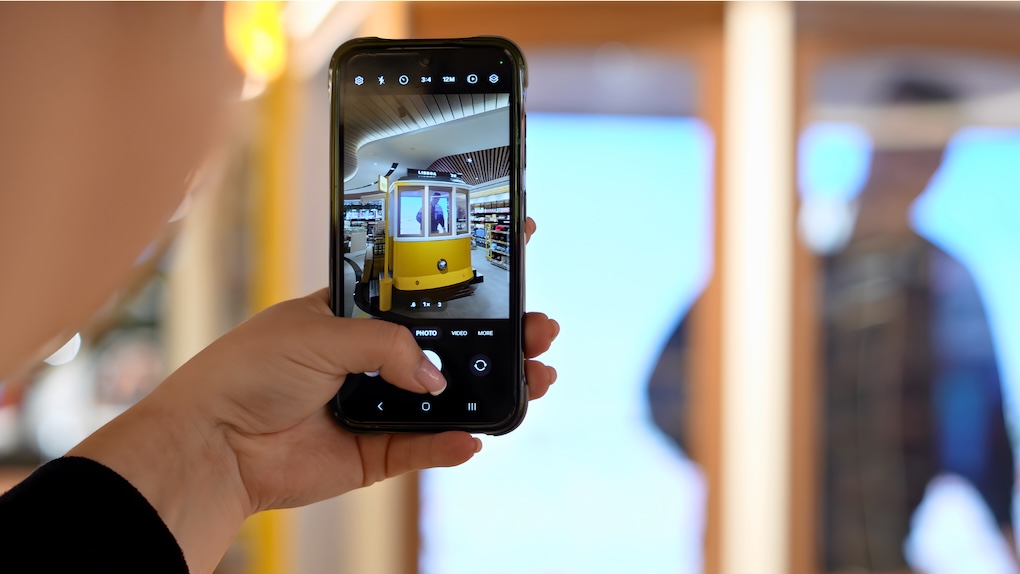
“The in-store experience is an emotional journey,” says Mendes. “We wanted to reflect the spirit of travel, sharing the excitement, anticipation and curiosity felt when you travel, and we wanted the stores to connect with that mindset.
“These emotional triggers include colour, texture, imagery and digital content to create environments that feel vibrant, memorable and inviting and, most importantly, that represent the location and give an authentic expression of the city.
“For me as a designer (and of course with being Portuguese), the most interesting part is the mix of heritage and contemporary design, where we take familiar Portuguese references and showcase them in a fresh way.”
Element 4: Feel the category
Passengers should sense a shift when entering a new category, and instantly know where they are. Beauty needs visibility and testing; liquor supports storytelling and tasting; confectionery can feel playful; luxury needs restraint and space. Materials, lighting and digital content all help to express this, and always in support of the product, never overshadowing it.
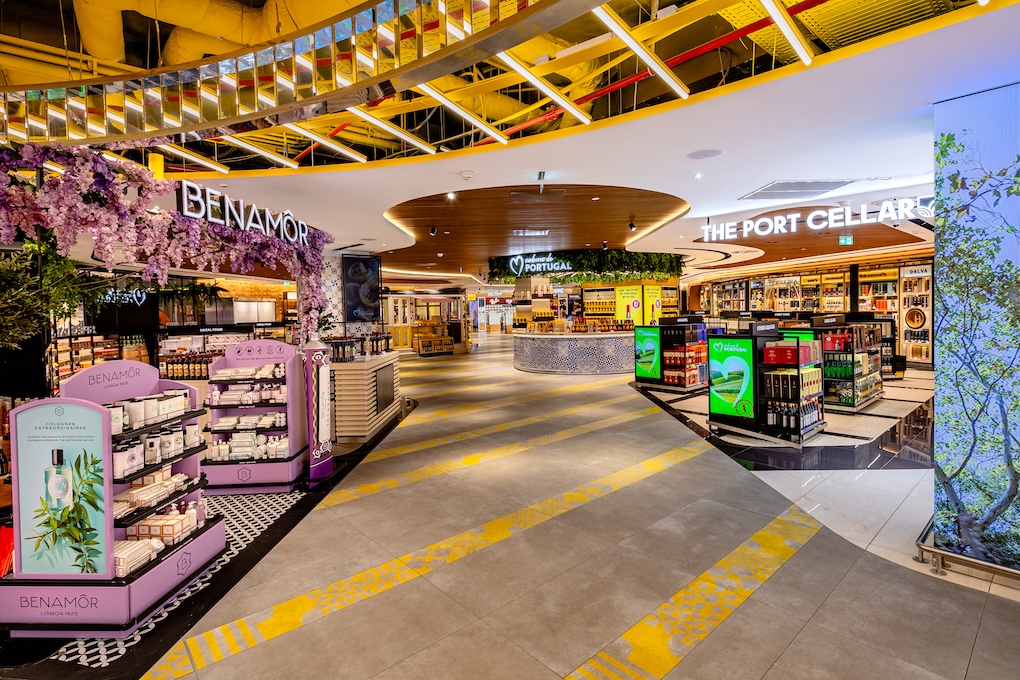
Mendes explains: “Each category needs to feel different, distinct and engaging. We used materials, colours, textures and visual merchandising to create a distinct look as passengers move through the store – but the product always comes first.
“We never forget that our design is there to support the merchandise and encourage the right type of interaction, rather than compete with it. We also wanted everything to feel connected. While each location transmits its own unique local spirit, the consistent design language brings the different categories together as one coherent Portugal Duty Free experience.”
Element 5: Tell a story
The fifth element is the embedding of a sense of place through a spirit of storytelling, thereby creating the quintessence that can differentiate travel retail from globally identical, phone-accessible brands.
Local materials, architecture, food and storytelling are woven in and are not simply decorative, thus making a space feel authentic and relevant. Giving products meaning through engaging local narratives deepens engagement and drives impulse purchases.
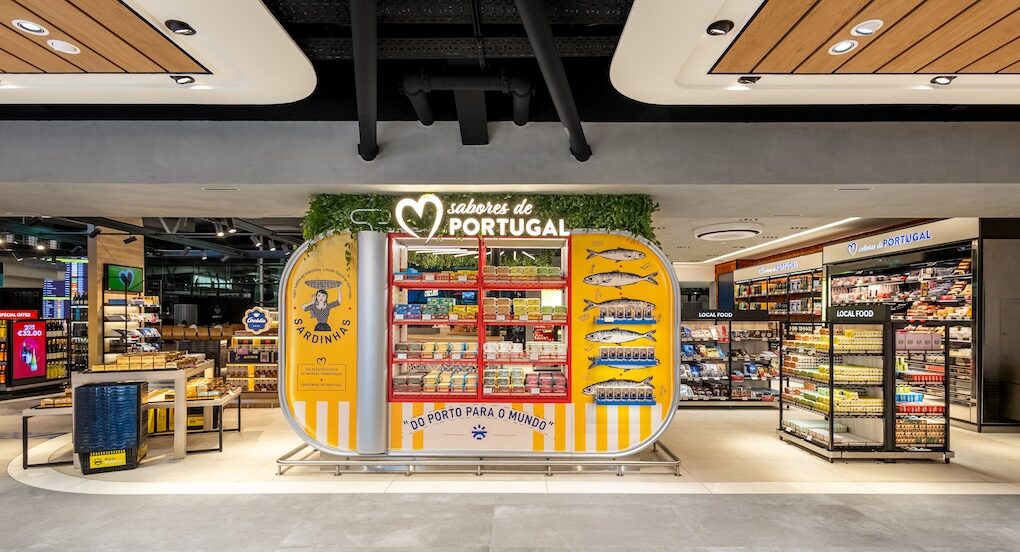
“The Design Solution was among the earliest pioneers of the concept of sense of place in travel retail, so this spirit was central to our thinking,” Mendes says. “Crucially, we didn’t want it to be clumsily expressed through one dominant feature or decoration; we wanted passengers to experience the identity of each destination throughout the journey.
“Each location has its own story to share – Lisbon draws on Avenida da Liberdade, Faro on its beautiful coast, Madeira on its natural beauty, the Azores on an Archipelago Adventure, and Porto on its distinctive blue azulejos. For me, the real achievement is the balance we achieved, creating five very different identities, but all are clearly part of one Portugal Duty Free family.”
A new benchmark for travel retail

Summarising the scale and importance of the project, Mendes says: “Looking back over this five-year project, I feel incredibly fortunate to have built such a great partnership with the Portugal Duty Free teams, creating new ways of working for the industry.
“From Lisbon and Faro to Porto, Madeira and the Azores, it has been a pleasure to work alongside Portugal Duty Free and to watch the concept grow and develop over that time. Their trust and willingness to collaborate throughout the process have made a real difference, and I’m genuinely proud of what we have achieved together.
“Finally, I’d also like to recognise the talented and committed people who have supported us along the way, including the fantastic teams at Aer Rianta International in Dublin and the Middle East, alongside the teams at JLL Portugal and Alpha Project Managers, and our contractors Mão Livre Design and KTL Group.
“Their knowledge and expertise have all played an important part in bringing the ideas from concept into reality. I’m incredibly grateful for their collaboration and everything they have brought to the process.
“Together, I think we have set a new benchmark for the industry – both in the quality of partnerships and in the finished shopper experience – and demonstrated how travel retail can optimise its relevance to the traveller.” ✈