

GERMANY/INTERNATIONAL. Retail performance, while remaining strong, saw easing third-quarter growth for German and international airport operator Fraport, which today posted solid increases in revenues and earnings for the first nine months.
The group cautioned that overall growth was easing due to difficult market, economic and regulatory conditions.
Group retail revenue rose +8.8% to €162 million in the nine months with retail EBITDA up +13% driven by a healthy +6.1% rise in spend per passenger, albeit compared with “easy” 2018 comparisons.

Retail revenue per passenger including the DTF joint venture (with Gebr Heinemann) rose by +5.63% to €3.19 in the nine-month period but by a more modest +4.9% to €3.00 in Q3. Excluding the joint venture, retail revenue increased by +6.08% in the nine months to €3.19 and by +5.36% to €2.95 in the third quarter.
Chinese passengers were the highest-spending nationality with overall volumes up +3% and retail revenue up +8% year-on-year for the nine months (see chart below). Among the top five spending nationalities, Russians, Koreans and Japanese all posted year-on-year declines in revenue per passenger for the full period.
Fraport’s group revenue increased by +12.0% year-on-year to €2,852.2 million. After adjusting for proceeds related to expansion investments at the Group‘s airports worldwide (based on IFRIC 12), revenue rose by +5.2% to €2,486.7 million.
Fraport Executive Board Chairman Dr. Stefan Schulte said: “Our industry is being impacted by the weaker global economy and consolidation of the European aviation market.

“Furthermore, regulatory interventions by the German government – such as the planned increase to the national air traffic tax – are also affecting our sector. After a phase of rapid traffic growth, airlines are cutting back their plans and thinning out their winter schedules.
“Nevertheless, we are maintaining our full-year outlook for the 2019 business year – also backed by the ongoing positive performance of our Group airports worldwide. Thanks to Fraport’s large and diversified portfolio of international airports, we are well positioned for the future.”
Fraport said that its positive performance was driven by solid traffic growth at Frankfurt Airport and the Fraport Group’s airports worldwide. “However, the growth momentum has been slowing down during the year to date,” it cautioned.


International activities boost growth in revenue and earnings
At Frankfurt Airport, key factors contributing to revenue growth included higher proceeds from ground handling services, airport and infrastructure charges, as well as security services. Retail, parking and advertising revenue also increased “significantly”, the group noted.
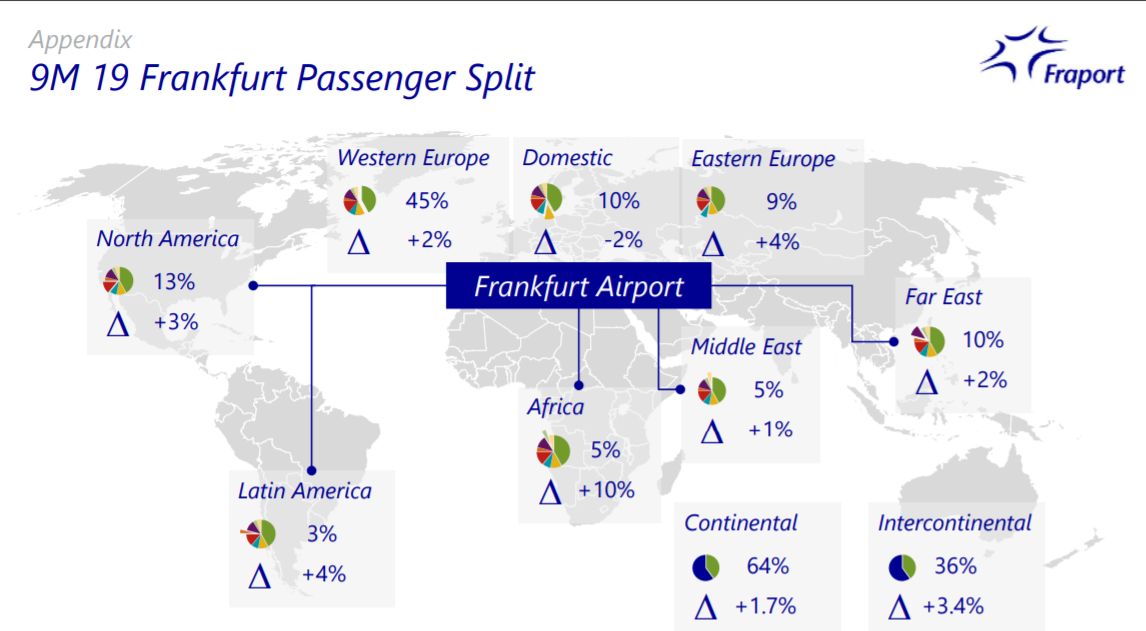
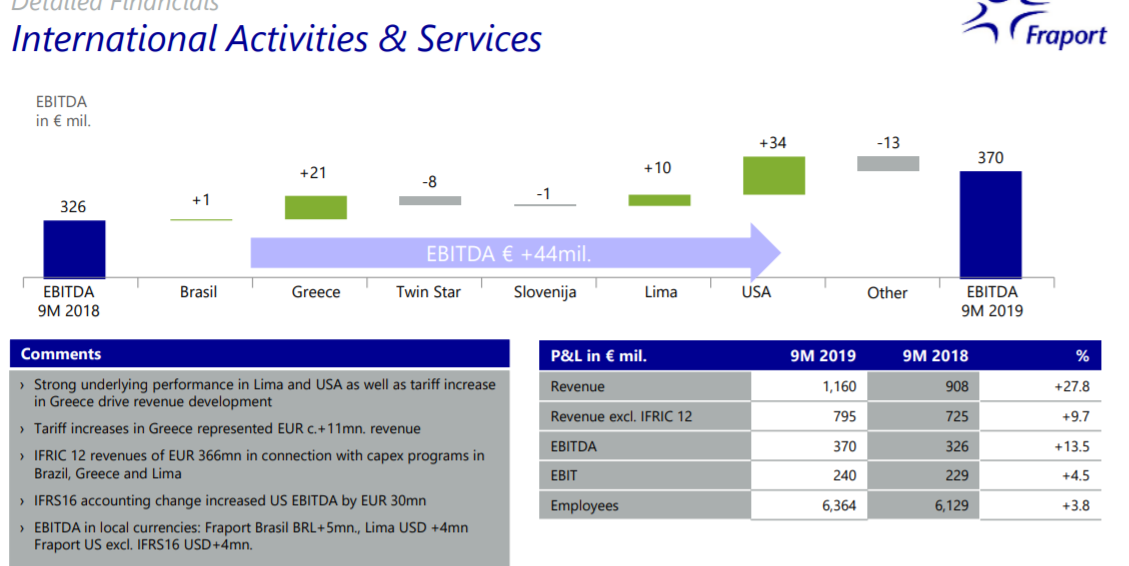

However, Fraport’s international portfolio continued to be the largest revenue driver. In particular, the Group company in Lima, Peru (up €30.5 million), Fraport Greece (up €25.4 million) and Fraport USA (up €21.8 million) contributed substantially to the Group’s adjusted revenue growth.
Group EBITDA (earnings before interest, taxes, depreciation and amortisation) rose by +7.7% to €948.2 million in the nine-month period. The first-time application of IFRS 16 had a positive effect on EBITDA, adding €34.0 million year-on-year.
Solid traffic performance achieved despite slowing growth momentum
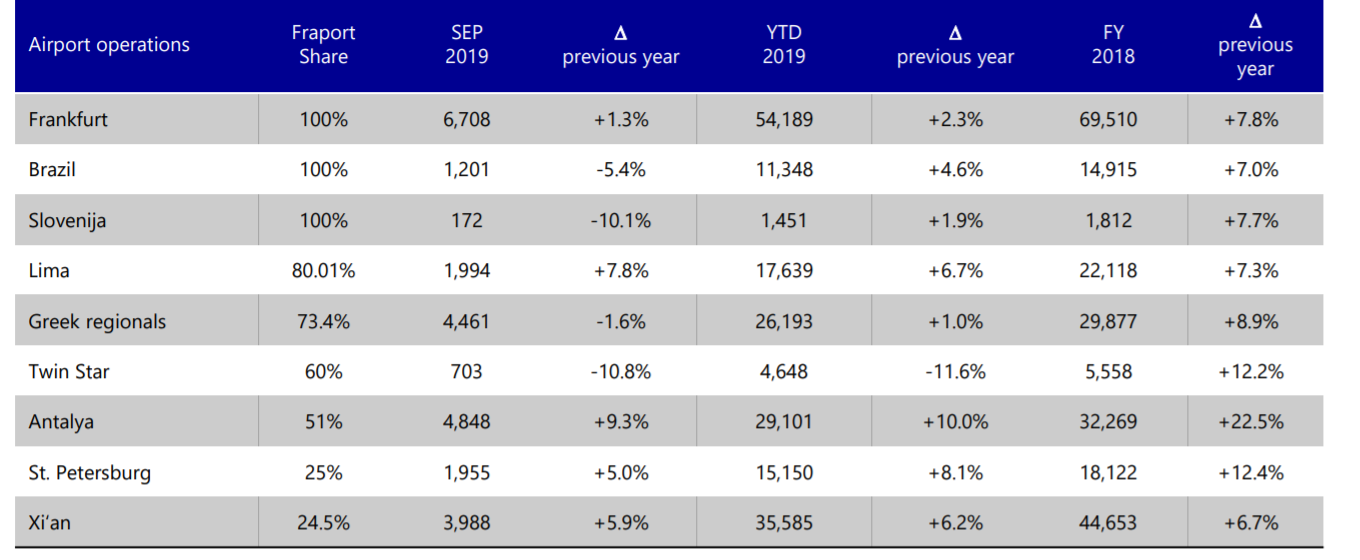
Passenger traffic at Frankfurt Airport advanced by +2.3% to about 54.2 million during the first nine months. This momentum, however, decelerated noticeably over the course of the year, Fraport said. Based on current planning by the airlines, Frankfurt Airport will see a -4% reduction in the number of flights for the 2019/20 winter schedule (effective 27 October) compared to the same schedule in the previous year. This reduction is due entirely to the -5.6% decline in European traffic, while scheduled intercontinental flights will climb by nearly +2%.


Most Fraport Group airports worldwide posted passenger traffic increases in the first nine months, despite some airlines reducing flight offerings or even filing for bankruptcy. At the Fraport ‘Twin Star’ airports of Varna and Burgas in Bulgaria, combined passenger traffic dropped sharply by -11.6% year-on-year.
*Note: From the beginning of January 2019, the mandatory IFRS 16 international financial reporting standard establishes new rules for the accounting of leases – specifically affecting the accounting of lease contracts concluded by Fraport USA. At the same time, the application of IFRS 16 alone resulted in a €32.8 million increase in depreciation and amortization.