

The Estée Lauder Companies (ELC) today (30 October) announced results for its first quarter ended 30 September, reporting a return to top-line growth as its travel retail business improved and its fragrance portfolio delivered strong momentum.
Net sales rose +4% to US$3.48 billion, with organic net sales up +3%, marking the first quarter of positive growth under the company’s Beauty Reimagined strategy.
Gross margin expanded 100 basis points to 73.4%, while adjusted operating income climbed +77% to US$255 million with an adjusted operating margin of 7.3%.
As reported, beginning this fiscal year, ELC reorganised its geographic reporting to align with leadership and accountability changes. Under the new structure, the company’s travel retail business is now reported within the Asia Pacific region, excluding Mainland China.

The change highlights the channel’s importance to overall regional performance. Asia Pacific net sales rose +8% on a reported basis and +9% organically, led by travel retail.
“Growth in Asia Pacific [was] attributable to the Company’s global travel retail business,” ELC noted, citing “higher net sales from the Company’s Asia travel retail business, primarily driven by a low prior-year base due to a challenging retail environment – including lower conversion – as well as the Company’s prior-year efforts to improve in-trade inventory”.
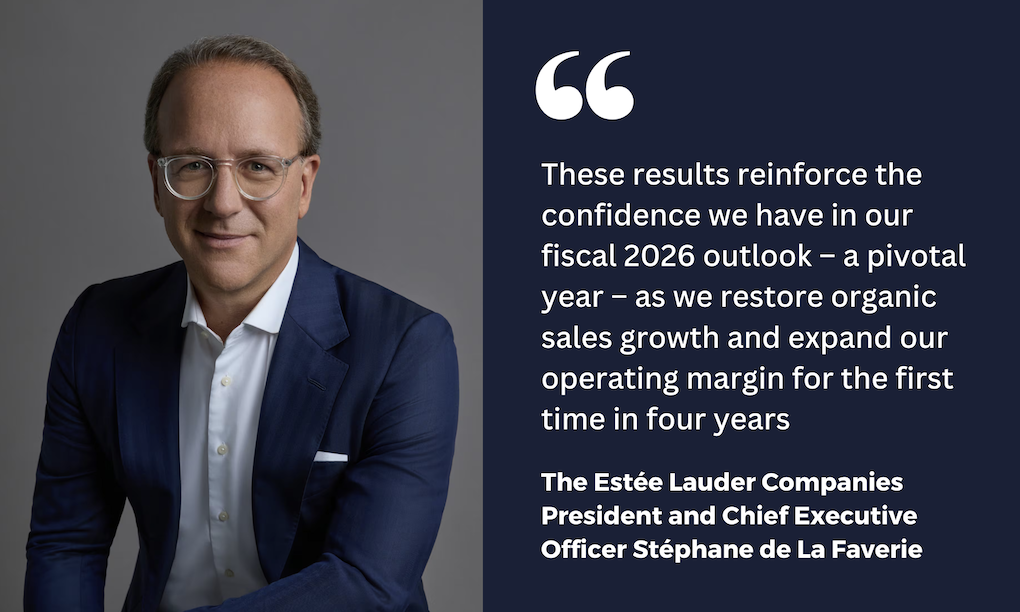
The Estée Lauder Companies President and CEO Stéphane de La Faverie said, “We had a strong start to fiscal 2026 as we execute our Beauty Reimagined strategy – returning to organic sales growth, gaining prestige beauty share in a few key strategic areas of focus and improving profitability.
{The story continues after The Moodie Davitt Report communication below}

“Encouragingly, we are building momentum across the organisation from the significant operational changes we have executed to-date to be faster and more agile.
“These results reinforce the confidence we have in our fiscal 2026 outlook – a pivotal year – as we restore organic sales growth and expand our operating margin for the first time in four years.”
ELC recorded an increase in net sales from the Europe, Middle East and Africa travel retail business, “fuelled by fragrance and benefitting from targeted expanded consumer reach as well as strategic activations from Tom Ford, Jo Malone London and Kilian Paris”.
In the key skincare segment, which grew +3%, Estée Lauder and La Mer benefitted from stronger travel retail trends in Asia.
Echoing its earlier comments on Asia Pacific growth, ELC noted, “The increases from both brands reflected higher net sales from the Company’s Asia travel retail business, primarily driven by a low prior-year base due to a challenging retail environment – including lower conversion – as well as the Company’s prior-year efforts to improve in-trade inventory.”
Estée Lauder also saw growth across its Revitalizing Supreme+, Re-Nutriv and Advanced Night Repair franchises.
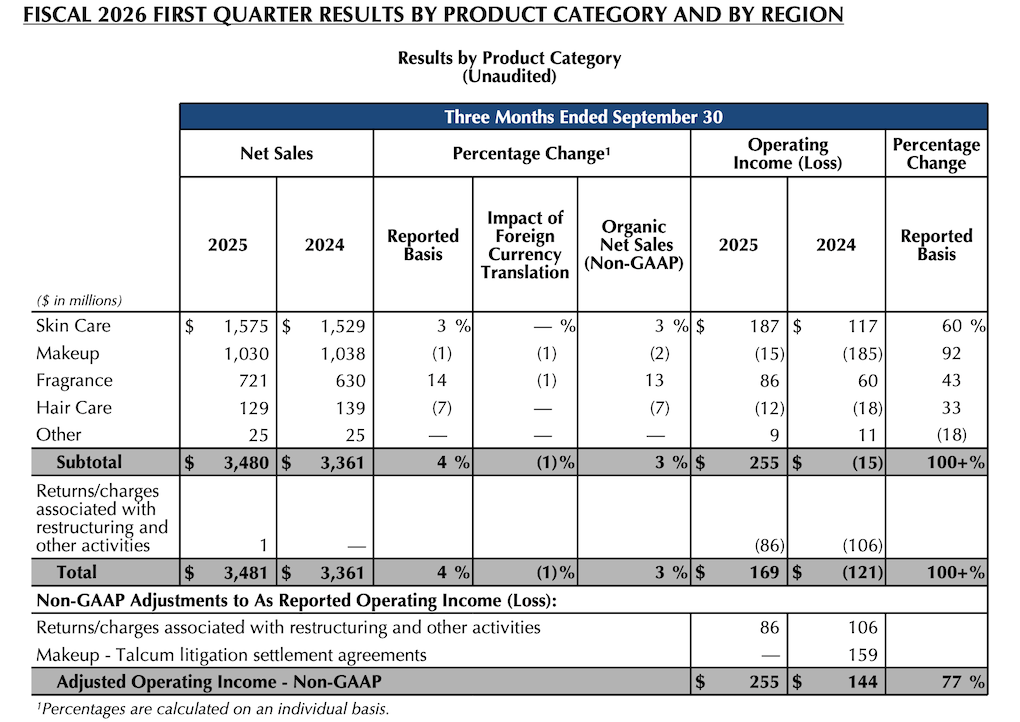
Fragrance delivered the strongest performance, up +13% organically, “driven by double-digit growth from the Company’s luxury brands, which grew high-single to strong double digits across all geographic regions”.
Growth was led by Le Labo, Tom Ford and Jo Malone London, supported by product innovation and expanded consumer reach that included travel retail activations.
Makeup was down -2% while haircare fell -7%, though both posted improved operating results thanks to the ongoing Profit Recovery and Growth Plan (PRGP).
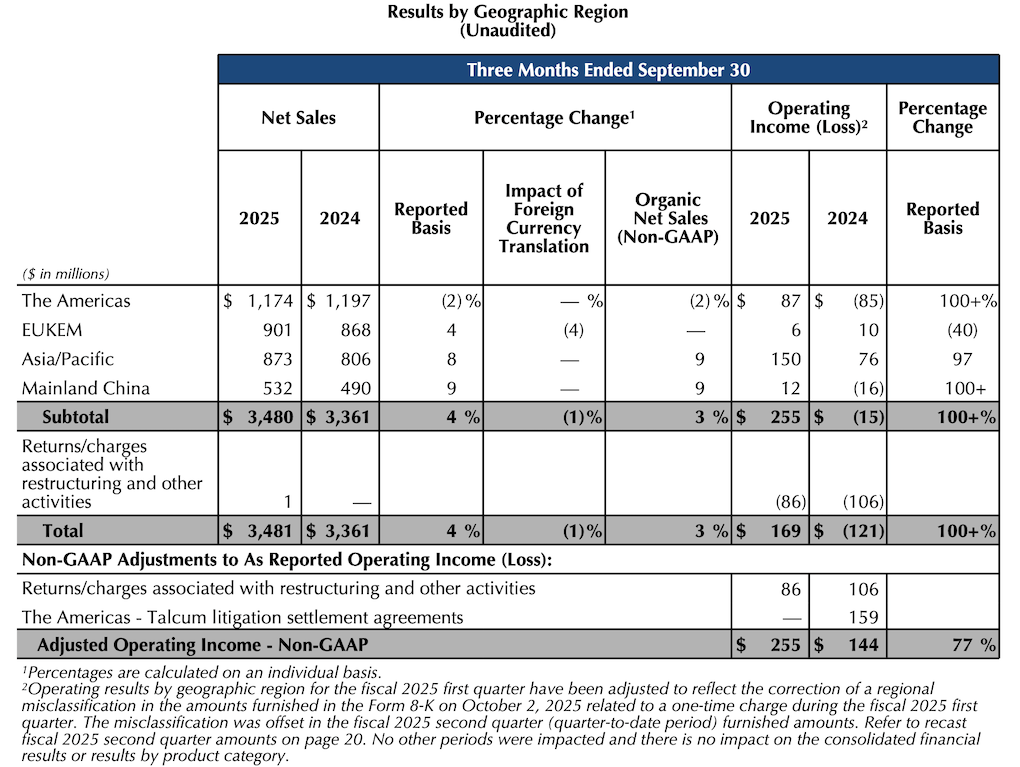
ELC said its PRGP – aimed at transforming its operating model and restoring a solid double-digit adjusted operating margin – is progressing well.
The company said, “Actions under the Company’s PRGP are expected to be substantially completed in fiscal 2027, with a majority of the full run-rate benefits expected to be realised during fiscal 2027.”
The company reaffirmed its fiscal 2026 full-year outlook, projecting reported net sales growth of 2-5% and organic growth of 0-3%. ELC continues to expect tariff-related headwinds of approximately US$100 million this fiscal year but said its mitigation actions – optimising regional manufacturing, leveraging trade programmes and increasing supply-chain agility – will offset more than half of that impact.
More to follow. ✈