
The Estée Lauder Companies (ELC) this week posted a robust second-quarter performance for the period ended 31 December 2025 as its much-touted Beauty Reimagined revival programme began to take a strong hold and the key Hainan offshore duty-free market picked up.
“We delivered excellent second-quarter results to solidify a strong first half of fiscal 2026,” said President and CEO Stéphane de La Faverie. “In this pivotal year, Beauty Reimagined has invigorated our business as we execute the biggest operational, leadership and cultural transformation in our history.
“On its one-year anniversary, we raise our fiscal 2026 outlook confident in the strength of our turnaround, even as our second half reflects previously-expected headwinds and now-greater consumer-facing investments, as we expect to restore organic sales growth and expand our operating margin for the first time in four years.”
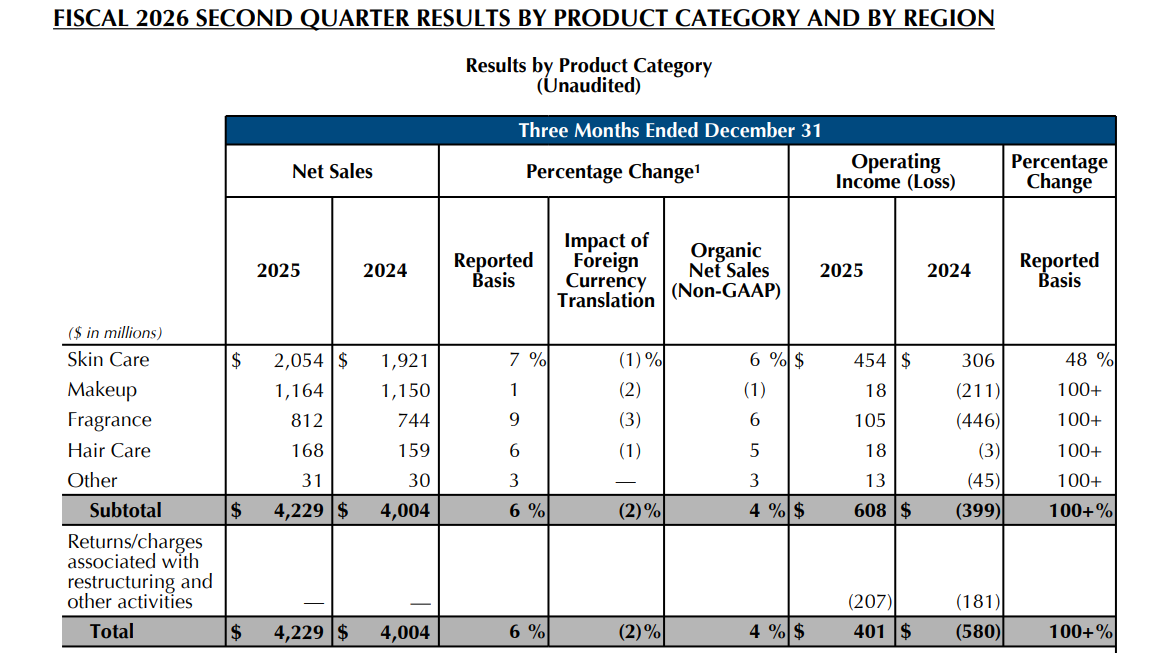
Net sales (reported) increased +6% to US$4.2 billion (+4% organic). Organic net sales increased +4%.
Travel retail grows in some areas, some North Asia markets struggle
On an earnings call, de La Faverie said, “In the first half of fiscal 2026, our global retail sales trend improved from the first to the second quarter, from down -4% to flat as the decline in travel retail moderated. Even more encouraging, our retail sales grew +4% in the first half, excluding travel retail.
“We increased our presence in travel retail across the west, including with Duty Free Americas, (the two houses announced a strategic global retail partnership last August to launch ELC brands across Duty Free Americas stores, ending a 17-year dispute) as well as new and upgraded doors for our luxury fragrances in European and Middle Eastern airports – contributing to double-digit retail sales growth for fragrance across several major retailers in the first half of fiscal 2026.
“This strategic expansion is providing a double win, driving growth and diversifying our travel retail business.”

Hainan bounces back
ELC flagged ongoing pressure in parts of Asia travel retail, with the group expecting negative trends to persist in Northern Asian travel retail (notably South Korea) outside Hainan in the second half of fiscal 2026, despite continued offshore duty-free sales momentum in the Chinese island province.
In Hainan, ELC’s retail sales grew high single digit in the quarter, led by Estée Lauder and La Mer.
The company cited a “transitory headwind” from changes to duty-free retailers servicing Beijing and Shanghai airports, including associated online businesses, which is expected to impact growth in the second half of fiscal 2026.
This is a reference to China Duty Free Group (CDFG) and Wangfujing Duty Free taking over the Beijing Capital International Airport duty-free concessions from (51% CDFG-owned) Sunrise Duty Free, and CDFG and Avolta winning the Shanghai Pudong and Hongqiao airport contracts (again with no place for incumbent Sunrise) after the recent tenders.
“We are experiencing in travel retail some level of disruption, especially when it comes to Beijing and Shanghai airports, but also the online business with Sunrise,” de La Faverie pointed out.
“As you know Sunrise has stopped operation. All the operations have been transferred with a mix of China Duty Free, Avolta and Wangfujing. So there’s a little bit of a transition that we felt in Q2 that goes into Q3. But I really believe that there’s going to be strong normalisation based on the great relationships that we have had [with all new incumbents].”

“Where we really have strong momentum and I see travel retail accelerating is indeed in Hainan. It is clearly documented that traffic is picking up in Hainan, and I’m really happy with the work the team did in Hainan in calendar 2025. We are growing and we are… gaining market share.
“What I’m also excited about is that we’re gaining market share across a more diverse portfolio of brands than we have done in the past. If you remember, all our growth was coming from Lauder and La Mer. Now we have Lauder, we have La Mer, we have MAC, we have Jo Malone, we have Tom Ford that are really performing in the channel very well.
“One of the reasons we’ve seen this performance is that we are back at driving retail with a lot of eventing – because the traffic is there but conversion was low. When we create retail entertainment, we are able to convert the consumer.
“I’m happy to report that the month of January in Hainan was in high double-digit [growth] for us, again gaining market share across many of our brands. So I’m very excited – especially going into the Chinese New Year timeframe. It is very important and a very clear indication that we are back able to convert traffic into sales.”
Also within a North Asian travel retail context de La Faverie referred to a “highly disrupted Korea” (see the 2025 figures from the Korea Duty Free Association], a segue towards how the group is transitioning its approach in North Asia from daigou-led to a consumer-led strategy underpinned by a more cautious approach to supply chain management.
“We are managing our inventory very carefully,” he explained. “We are shipping only to the demand, and we see this change being the right thing. We have very strong partnerships with CDF, with Wangfujing and with Avolta both locally and globally.”
Laser focused on events
Executive Vice President & Chief Financial Officer Akhil Shrivastava added, “We are winning in west travel retail, we are winning in Hainan by quite a distance and we are winning in markets like Japan, Thailand and other places. So, the outperformance by ELC in parts of travel retail, along with China, is significant encouragement we take for our business as we look forward.”

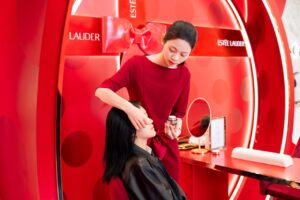
De la Faverie added, “Our teams, both in travel retail China and in China Mainland [domestic], are laser-focused in creating and eventing with VVIP reach to the consumer. So, we depend less on the high promotionality of the two major shopping festivals, 6/18 and 11/11.
“The consumer sentiment is still subdued, but when we create the right experience, not only through promotion, we are also able to convert them.”
Experience over discounts
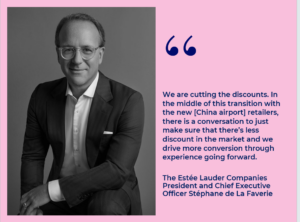
Pricing discipline will be key in China travel retail, de La Faverie insisted. “We are cutting the discounts. In the midst of this transition with the new retailers, there is a conversation to just make sure that there’s less discount in the market and we drive more conversion through experience going forward. All the channel is evolving to be much more experiential, which I think is a good thing for the long term of our brands.”
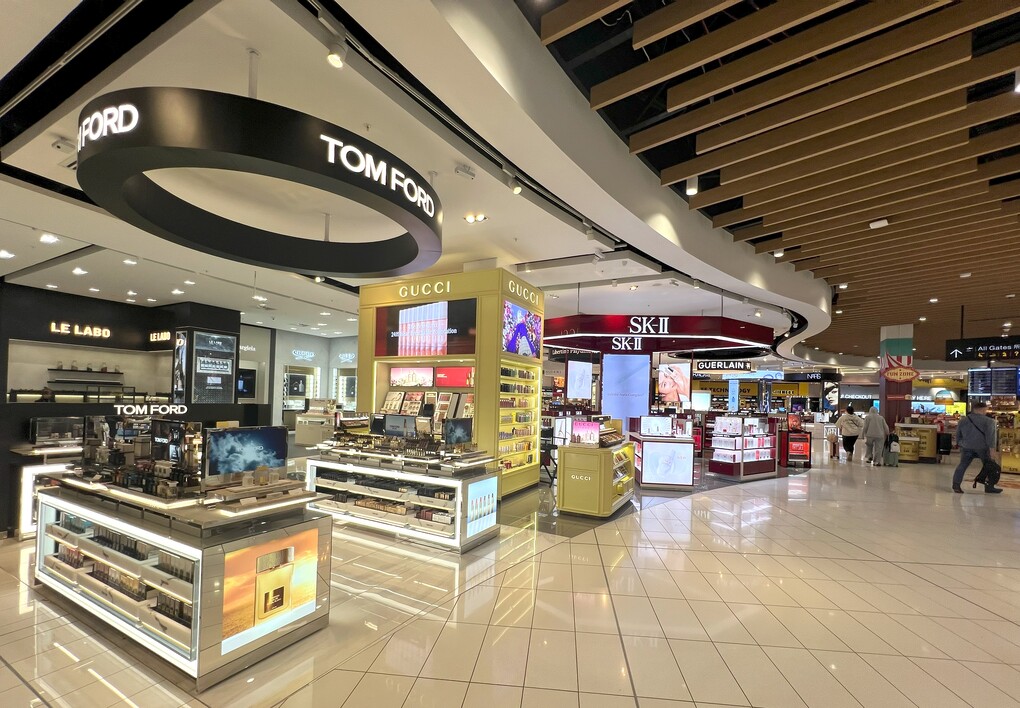
In other standout points, luxury fragrance brands continued to perform strongly across channels, with Tom Ford, Le Labo and Kilian Paris delivering high-single-digit growth globally – categories and brands that remain central to global travel retail assortments.
Consumer-facing investments increased, including store operating costs and promotional activity, as ELC sought to support innovation launches and key retail moments – a strategy that underpins its travel retail and airport retail execution globally.
The group reiterated that tariff-related headwinds (approximately US$100 million) are expected to impact profitability in the second half of the year, a factor with potential implications for pricing, margin management and assortment strategies in duty free and travel retail. ✈