


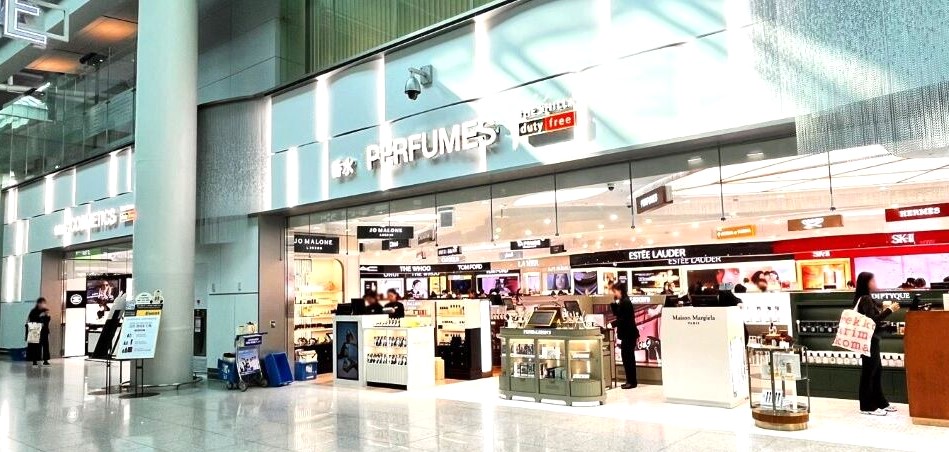
SOUTH KOREA. The Shilla Duty Free (Hotel Shilla) has confirmed to The Moodie Davitt Report it is suing Incheon International Airport Corporation (IIAC) for what it claims is unjust enrichment from penalties imposed on the retailer following its quitting of the DFI contract in Incheon International Airport Terminal 1 last year.
Local media reports (Chosun Daily and The Asia Business Daily) say the claim is for KRW106.5 billion (US$69.3 million). The Shilla Duty Free declined to comment on the specific number but said the overall facts and general context of the reports were “largely consistent”.
As reported, Shilla exited the concession on 16 April, citing heavy losses from excessive rental terms and profound changes in consumer behaviour. The ten-year contract, struck in 2023, had been due to run until June 2033.
Rival Shinsegae Duty Free followed suit the following month, citing similar reasons.
A detailed report by The Asia Business Daily said Hotel Shilla paid KRW190.2 billion (US$123.8 million) in penalties to IAAC following the early contract termination.
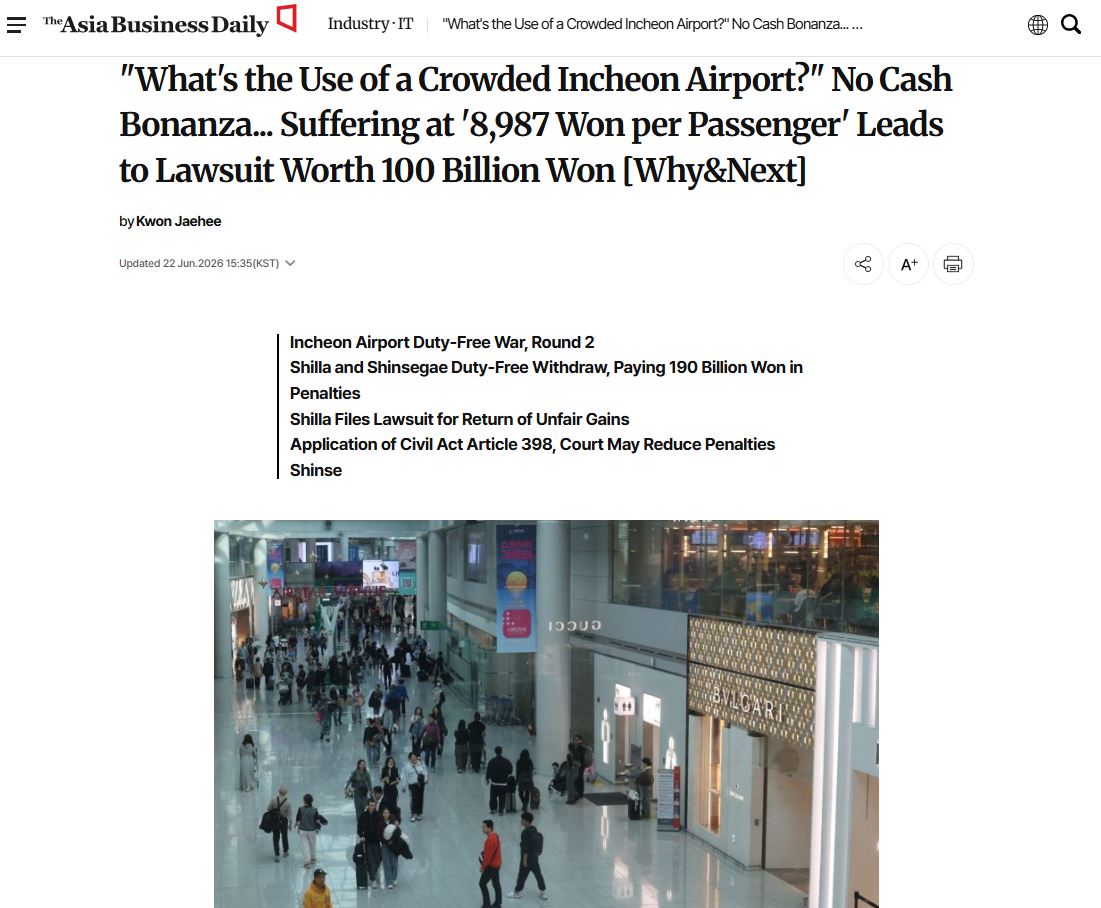
Citing financial statements disclosed by IIAC, the report said Hotel Shilla paid KRW434.7 billion (US283.2 million) in rental fees last year. The penalty imposed for withdrawal amounted to 43.75% of the annual rental fee, it noted.
“According to Article 398 of the Civil Act (Stipulation of Damages), penalties are considered a predetermined amount of compensation for damages, and if unreasonably excessive, the court may reduce them to an appropriate level. Hotel Shilla appears to be seeking a court decision based on this provision,” The Asia Business Daily wrote.
A senior industry source told The Moodie Davitt Report that he sympathised with Shilla’s position. “They are right. In several top airports, Changi for example, if you walk away you pay the difference between your contract and the next contract,” he explained.
“To the degree that this penalty is greater, it is unjust.”
As reported, prior to their respective contract exits, Hotel Shilla and Shinsegae Duty Free had demanded rent reductions and proceeded to court mediation. Incheon District Court’s subsequent mediation order proposed -25% and -27.5% rent reductions, respectively, for The Shilla Duty Free and Shinsegae Duty Free but IIAC flatly rejected the non-binding order.
Whether Shinsegae Duty Free follows its rival’s example remains uncertain. “Shinsegae Duty Free has not made any decision regarding any legal action like that pursued by The Shilla Duty Free. At this stage, we have nothing further to share on the matter,” a company spokeserson told The Moodie Davitt Report. (Main story continues following the panel below)
A question of balanceCommenting on the showdown between The Shilla Duty Free and Incheon International Airport Corporation, a veteran travel retail executive with experience of working for retailers and airports told The Moodie Davitt Report: “Under common law a landlord is entitled to some compensation if a tenant walks away from their lease. “Theoretically, this is for the remainder of the rent due (and in this case for another seven years). “However, a landlord has a legal (and moral?) obligation to mitigate their own losses (i.e. find anther tenant and maximise the rent). In a duty-free retail situation (especially in South Korea), it might take an airport six months to find another retailer (on a standard basis). “The airport company would run a tender, give retailers time to bid and for negotiation etc. It might be less than six months if they find someone to take over on a cost-plus basis to ensure continuation of service while they run another tender. “In this particular context, six months’ rent is highish but doesn’t seem overly excessive to me, especially if the rent number you quote is a MAG/fixed rent. The airport probably held a three-month MAG bank guarantee anyway (that’s pretty standard).” The source then asked, “But what if the airport can’t get the same price in the next contract as it got in the last contract [as happened with both the DF1 and DF2 concessions – Editor]? “The airport may have gone ahead and invested in infrastructure etc, based on what Shilla proposed in their contract. “So I can see arguments both ways.” |
Incheon District Court argued the fee reduction was justifed by both retailers’ rental fees exceeding sales at Incheon Airport. In a public disclosure regarding the suspension of its Incheon operations, Hotel Shilla said 2024 sales reached KRW429.2 billion (US$279.7 million), The Asia Business Daily observed.
As the report notes, the surge in rental fees followed a restructuring of the concession fee model after COVID-19 with the historic fixed rent model transitioned to a per-passenger fee model.
As reported, Hotel Shilla and Shinsegae Duty Free proposed per-passenger rental fees of KRW8,987 (US$5.86) and KRW9,020 (US$5.88), respectively, duly securing the contracts.
However, a post-pandemic surge in passenger numbers – but not in passenger spending, accentuated by unpalatable exchange rates, turned both concessions heavily into the red.
Passenger traffic at Incheon International surged +213.4% in 2023 to 56.1 million from a modest, pandemic-affected 17.9 million in 2022.
2024 saw a near +27% increase to 71.2 million, followed by a +4.1% jump to 74.1 million. Building on continued momentum in passenger demand, IIAC expects 2026 traffic to reach between 75.5 and 78.6 million this year. ✈