

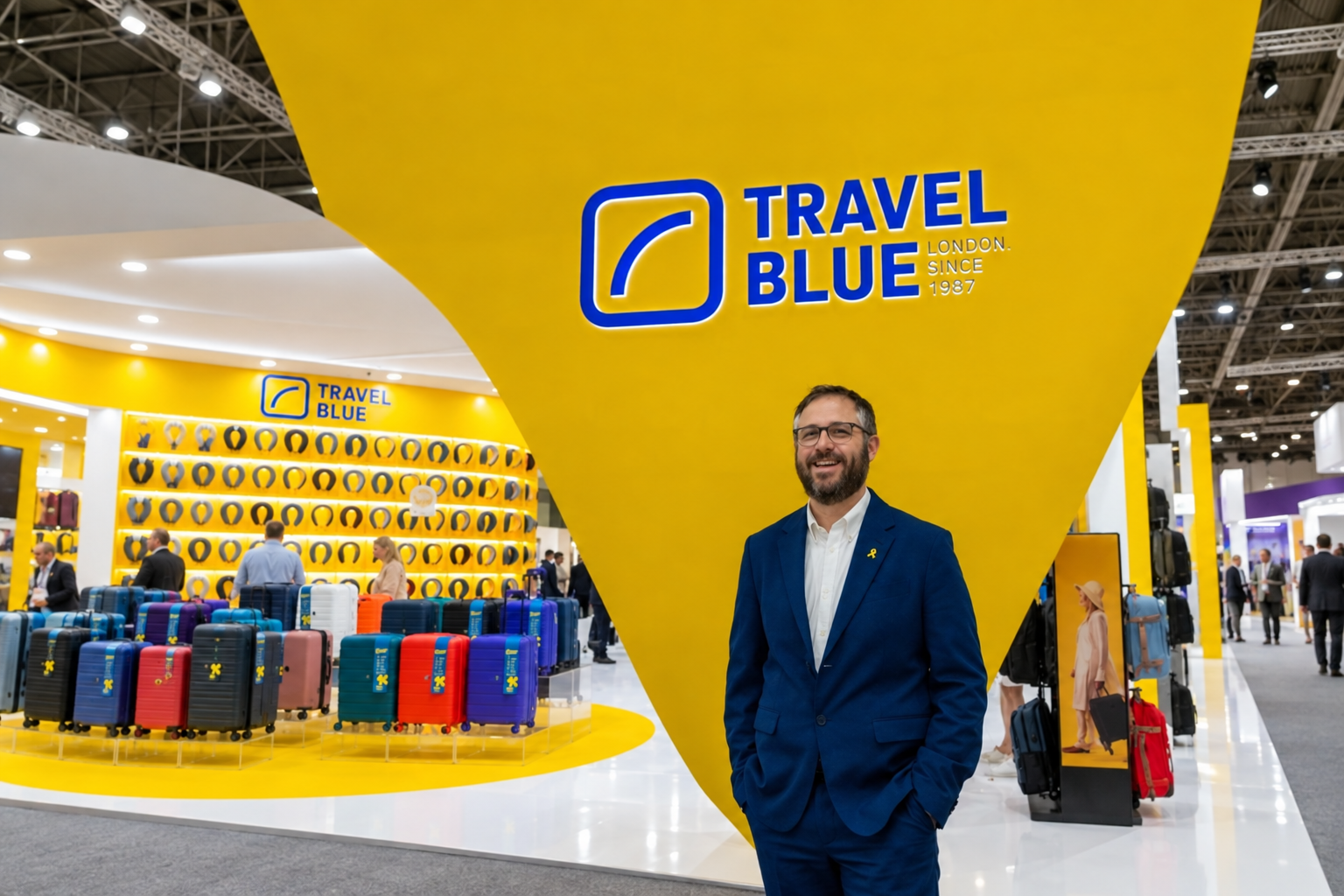
Travel Blue has set out a blueprint for increased footfall and conversion in travel retail built around unlocking the potential of the impulse-driven travel essentials category.
The company has released an updated category strategy grounded in a major research programme by industry specialist m1nd-set and underpinned by the brand owner’s 40 years of experience in the industry.
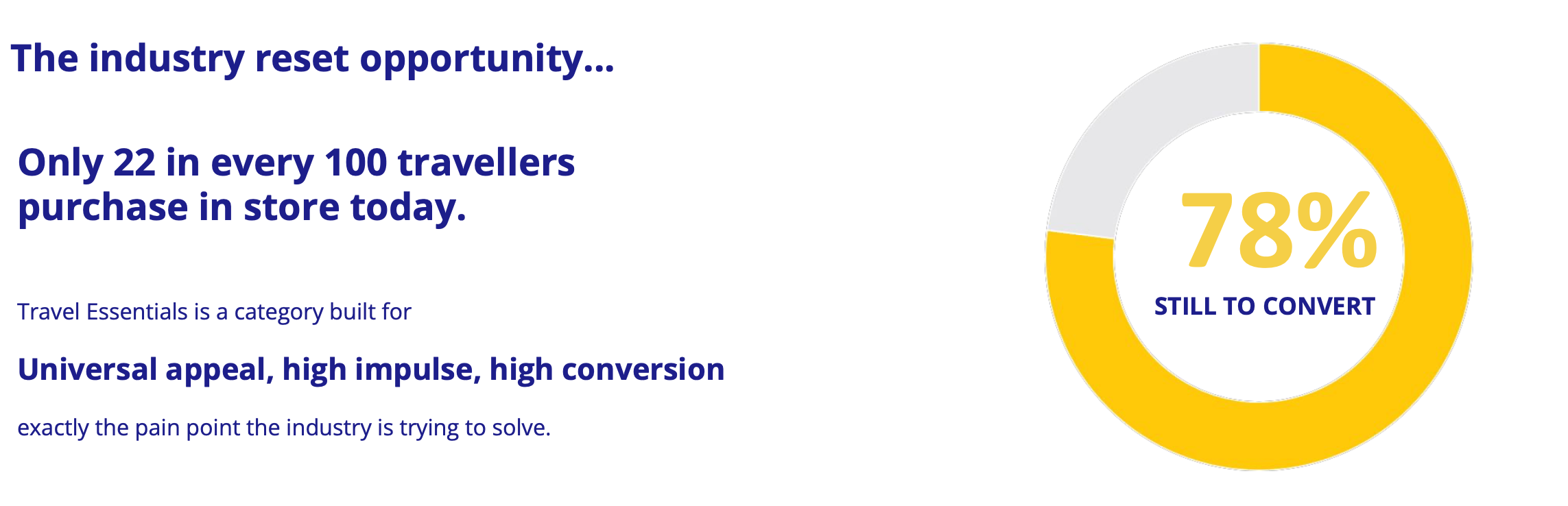
Based on a sample of over 200,000 passengers travelling through international airports worldwide (data was collected through the m1nd-set B1S Tracking Survey), the research reveals an average of 37% of travellers enter the duty-free store at airports, with just 22% of the total converted to buyers.

A greater focus on the travel essentials segment (long referred to as travel accessories) represents an opportunity to lift this figure, said Travel Blue in an interview with The Moodie Davitt Report.
“The industry is facing the lowest footfall in the last ten years, as well as reduced conversion in store, with 78% of passengers currently travelling through airports without purchasing anything,” said Travel Blue Managing Director Daniel Levin. “This presents a huge opportunity and we are calling on retailers to grasp the potential of travel essentials.”
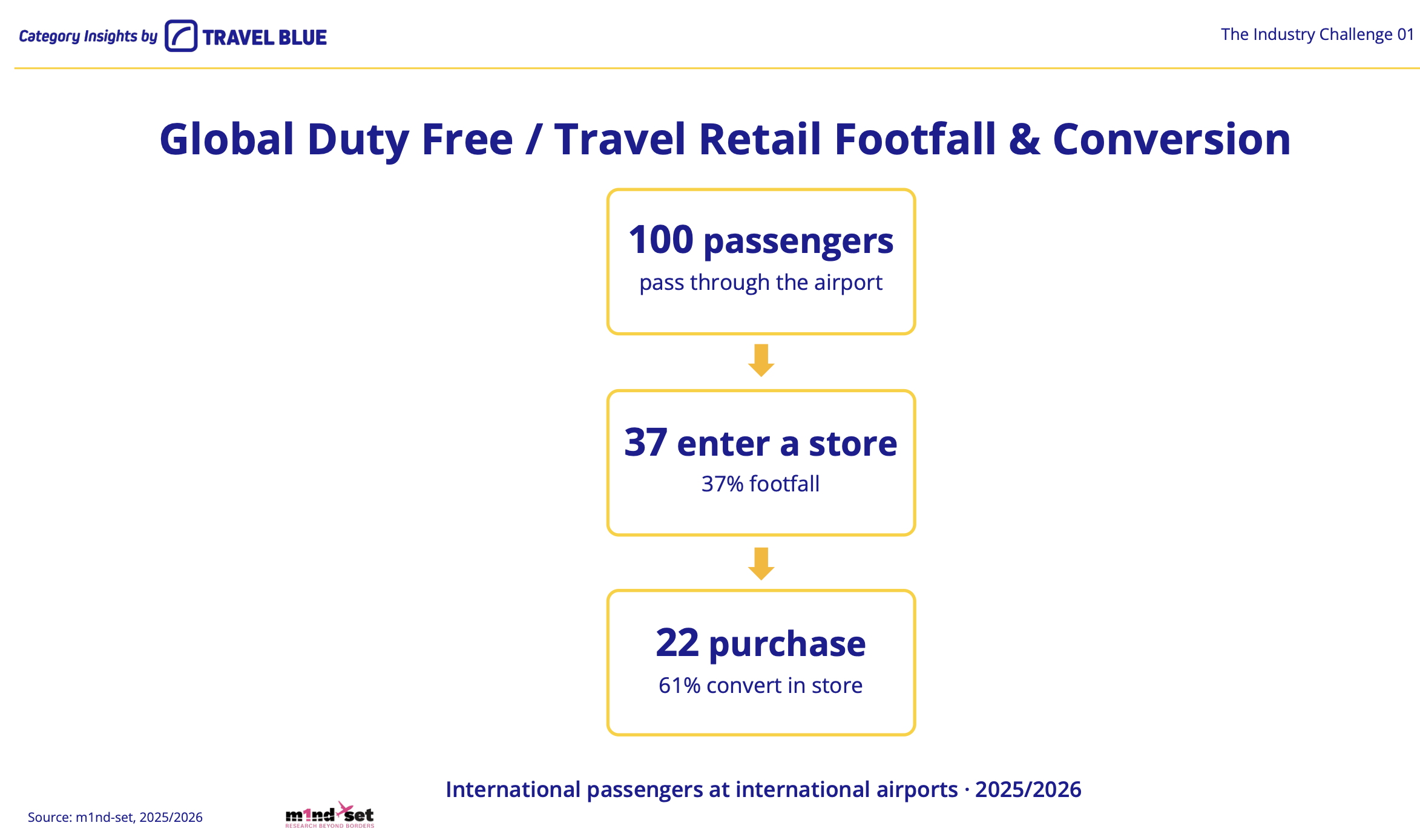
Travel Blue noted the research indicated that the industry is at a ten-year low for store footfall with conversion also declining in recent years.
Global Commercial Director Alan Brennan said, “For any stakeholder in the industry, this should be a red flag.”
Impulse purchasing – a growth dynamic
The research reveals planned purchases have given way to impulse as a key dynamic underpinning shopper behaviour. From one in five purchases made on impulse in 2021, the figure soared to one in three in 2025 (see chart below).
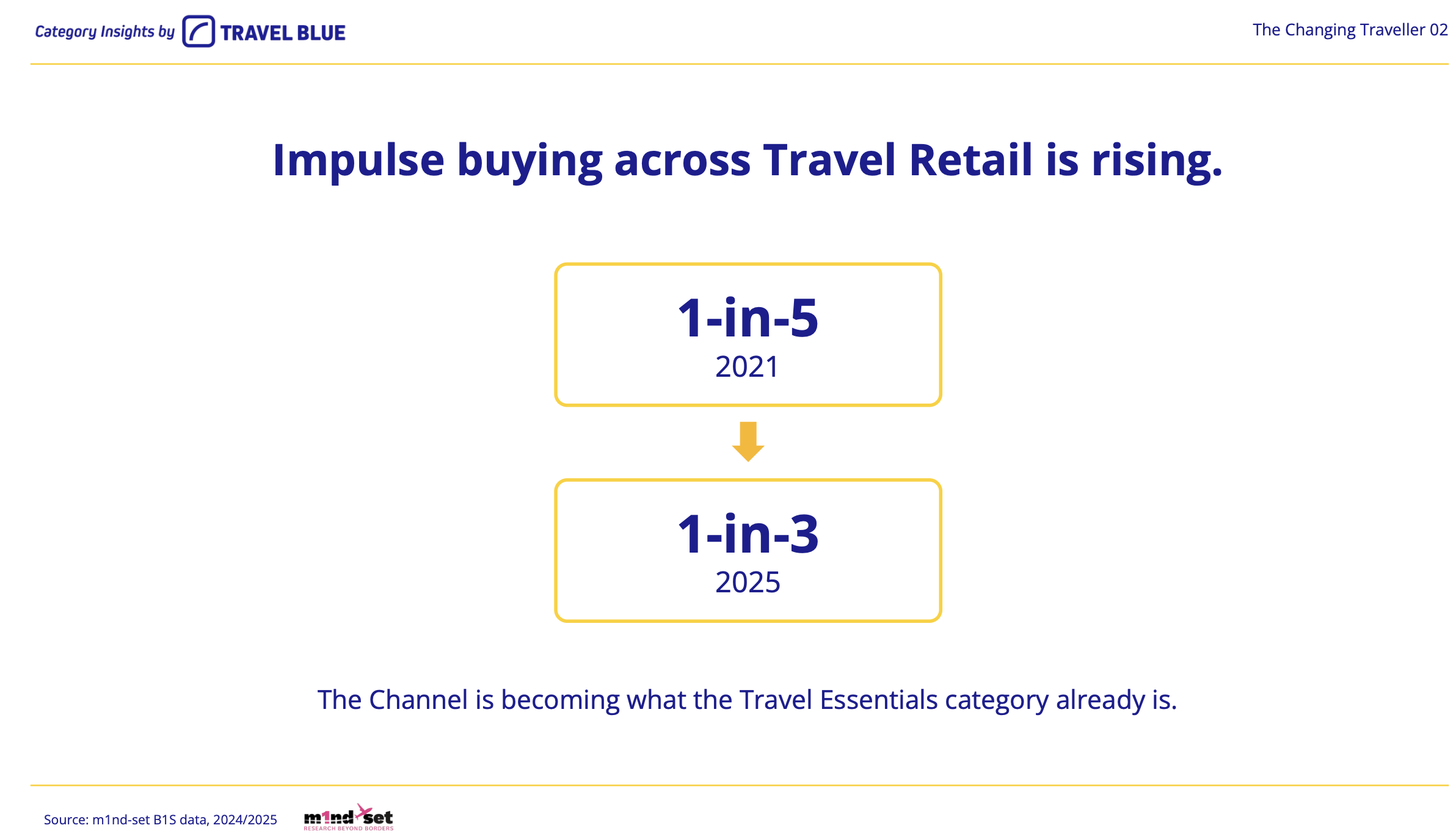
Travel Blue noted that travel essentials can help the industry respond to this shift, as a category built on impulse purchases alongside its universal appeal that speaks to all adult travellers regardless of nationality or journey purpose.
In addition, the research highlighted Gen Z over-indexes in a tendency towards impulse shopping. This group will soon represent the largest demographic of travellers.
Brennan said: “Gen Z is driving the change in the travel landscape. They are wired differently, are more impulsive and they are also open to buying. One of the challenges is they don’t necessarily see traditional travel retail as a destination within the airport journey, and that is something as an industry we need to address.”
He added: “Some people worry that Gen Z don’t spend as much as previous generations. That is not true. They just don’t want to spend it on the things they are seeing at the moment. You need to give them a reason to make quick decisions and spend money, and they will do it.”
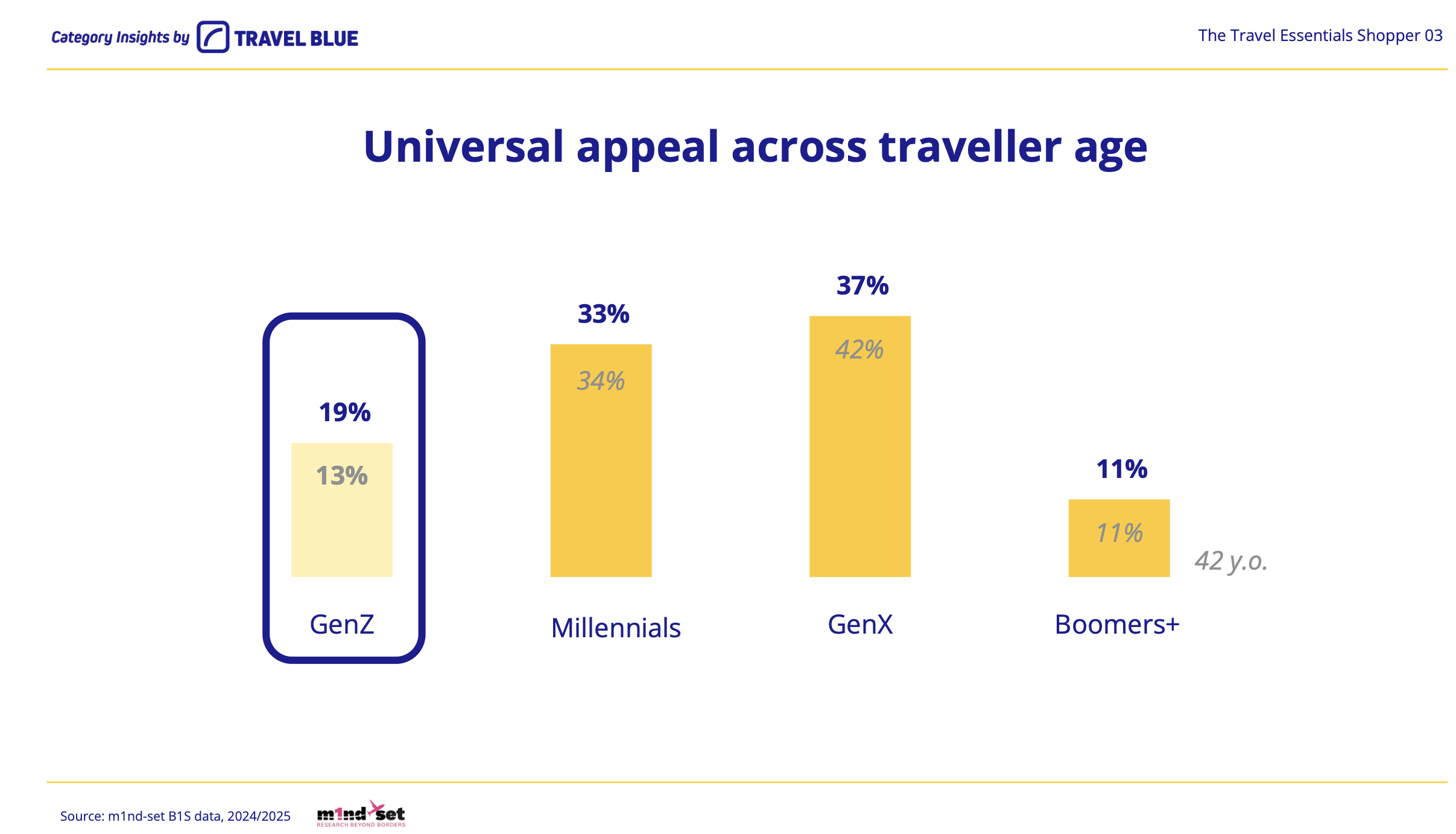
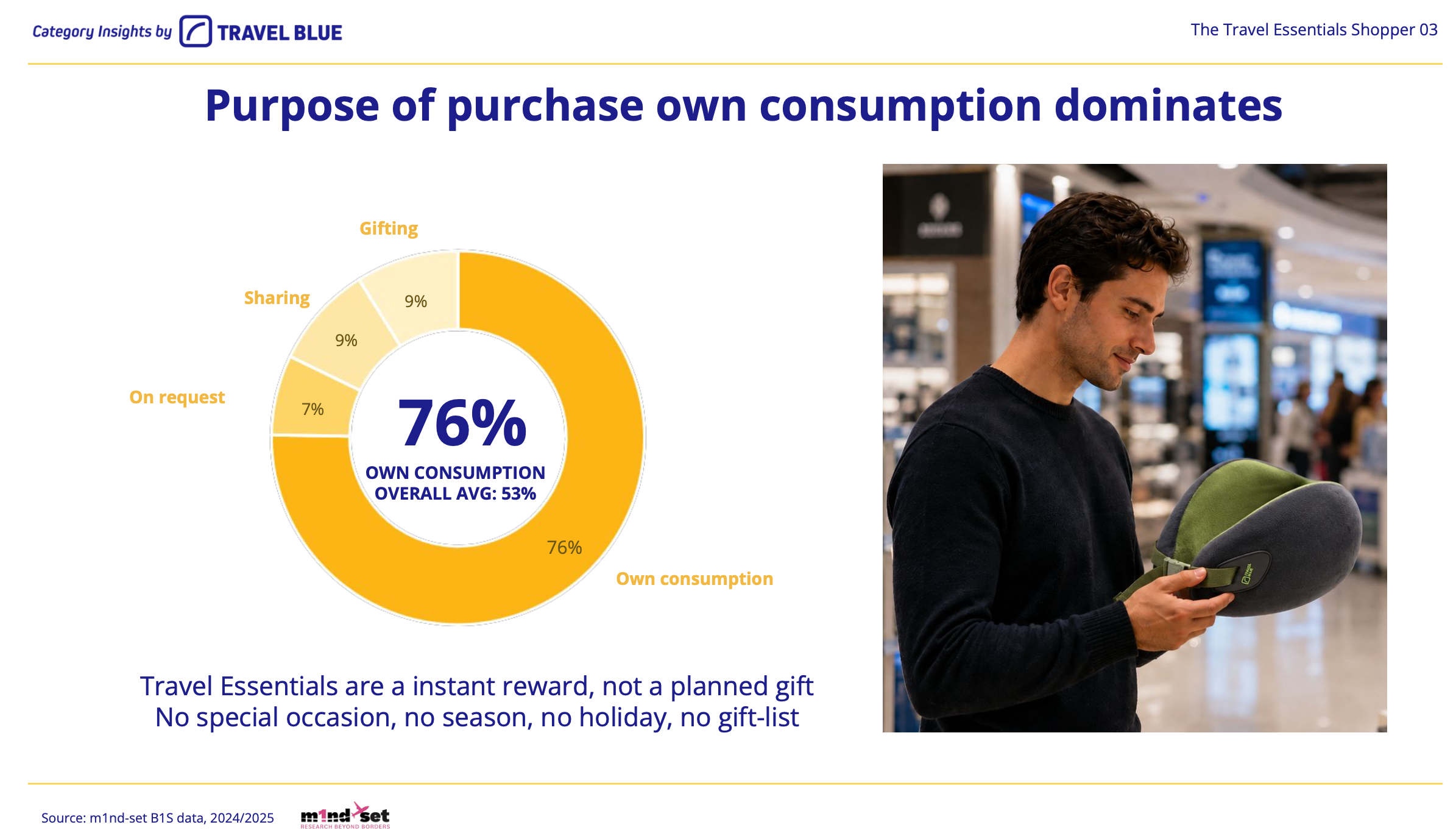
Crucially, 40% of Gen Z travellers buy on impulse, have a limited attention span at the front of the fixture, look for experience over price and 72% are first-time buyers, with a preference for self-treating, the research found. In travel retail, 53% of purchases on average are for self-consumption, but this rises to 76% in this category.
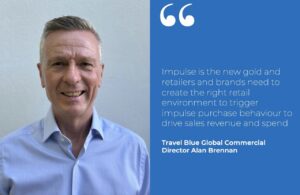
“There has been a major shift in the last couple of years from planned to impulse purchase,” said Brennan. “Impulse is the new gold and retailers and brands need to create the right retail environment to trigger impulse purchase behaviour in store to drive sales revenue and spend.”
He added, “The reality is that this group discovers at the fixture and decided in the moment. And that spells opportunity.”
Travel Blue said it is presenting a category solution, proven by the success of recent test projects, to help retailers close the gap. Travel Blue conducted two airport category pilots to demonstrate the proof of concept of its category strategy, one in Europe and another in India.
Through a five-step category strategy, sales revenue and spend per passenger increased at these stores, delivering high double-digit growth.
Key parts of the reset process include ensuring the appropriate ranges are placed in the most visible locations, with well-executed merchandising and ease of shop. These are supported by placings at high-impulse areas such as the cash till point.
Focus on the fundamentals
Travel Blue said success means getting the fundamentals right in-store in terms of visibility and navigation.
Brennan said: “We have got to make it as easy as possible for shoppers and Gen Z in particular to be able to decode exactly what the store is offering. Is it relevant for me? Can I pick it up and go? And that process has to be seamless. If they don’t understand that straight away, they move on.
“A good example is the last touchpoint in the shopper journey, the cash till point, on the assumption that they have already got something in the basket, and where there is a clear call to action to trigger behaviour. That may be a neck pillow to self-treat before a long-haul flight or a faster charger for their mobile phone.
“We have to trigger those impulses. We can entice, engage and convert but only as long as they can see the offer.”
Other key elements the research underlined are that essentials buyers come from all types of traveller and are cross-generational, though with Gen Z over-indexing.
Crucially too, shoppers in this category buy at full price and do not seek out discounts.
Levin said: “As a retailer I can have full-value sales, which drives my average spend in store. If you go into many travel retail stores there’s an overload of promotional offers; this category moves us a different direction.
“What we are saying is, instead of focusing your energy on promotions, focus your energy on making this part of the store visible, and the conversion will come by itself. It’s a simple proposition.”
In addition, those who buy travel essentials also tend to buy in other categories, with conversion notably high in confectionery, but with opportunities across categories.
“We have evidence that Travel Blue’s category process works and proof that travel essentials can unlock great opportunities for the industry,” said Brennan. “The in-market pilots showed that, once in store, shoppers not only focus on buying into travel essentials but also buy into other categories. Travel essentials is facilitating purchase and building the basket – driving revenue and profit for retailers.
“Travel essentials is a powerful enabler to address legacy challenges in the industry and it deserves a seat at the retailer’s core category table. By changing the mindset and giving the category more visibility, we believe travel essentials can move the dial and make a real difference for retailers across the channel.”
Travel Blue is exploring how collaboration with brands in other categories can work with impact in-store.
The team added there is still work to do to ensure a shift in retailers’ mindsets to focus on this category. Levin said: “This is a small category today, but its potential is big in terms of impact. It is a highly relevant category that should have a seat at the table as part of the core proposition.
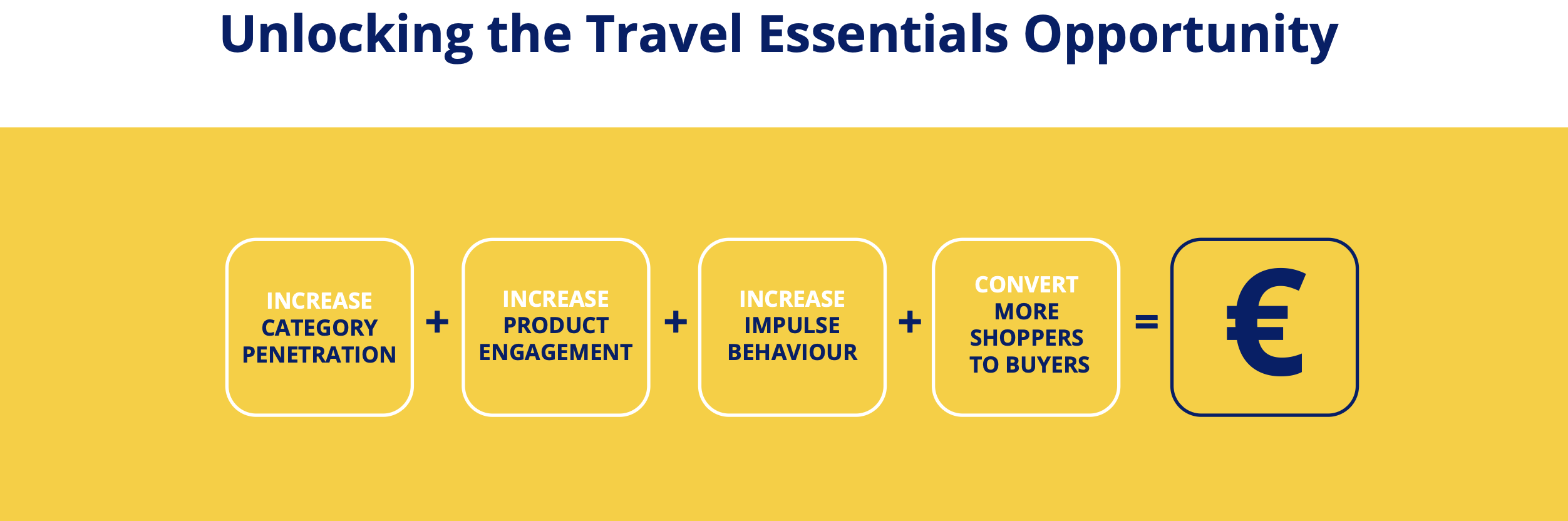
“I see this as a very exciting opportunity,” Levin added. “The passenger numbers are there – we just need to get them into the store. We can’t do this alone. We need our partners to recognise the category and work with us to ensure travel essentials fulfils its potential. It can play a key role closing the gap. Together we can crack the code and convert more travellers into store visitors and then into buyers.”
Travel Blue management said it was not demanding more space for essentials but for more attention in store planning, improved visibility to create greater engagement and the right adjacencies to encourage cross-category shopping, converting more passengers into buyers and yielding bigger spends.
“We are asking for a real shift in attitude, a commercial reset for travel essentials to give the category more relevance and focus,” said Levin. “We have 40 years’ experience in travel retail and have seen many changes. We invite our retail partners to adapt and evolve with us to ensure we maximise relevance for shoppers into the future.” ✈