

Global travel retail accessories specialist Travel Blue has introduced 140 products from its Our Blue Way collection, which will be highlighted at the upcoming TFWA Exhibition & Conference in Cannes (1-5 October).
The eco-friendly line includes adaptors, power banks and cables, all produced with sustainably made materials. The adaptors and power banks are made from recycled plastic while the cables are made using wheat straw biopolymer, which is a biodegradable alternative to some solid plastics. Wheat straw is extremely durable and leaves no toxic substance.
The sustainable collection also includes textile items such as money belts, folding bags, bags and eye masks that are now made from recycled materials.
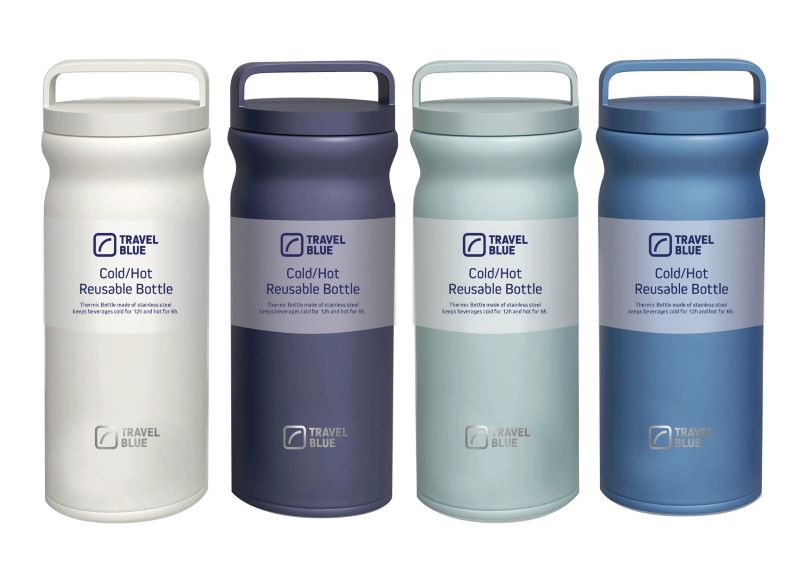
Adding to its eco-friendly range are high-performance, reusable, stainless-steel water bottles, which are a recommended substitute for plastic water bottles for travellers.
Travel Blue Group Managing Director Daniel Levin said: “Our original plan was to convert 100 products this year, increasing to 120 next year and 140 by 2025. We are delighted with our rapid progress and have already achieved our 2025 goal. 
“Our Blue Way has a triple eco-friendly benefit, offering products that are recycled, recyclable, and reduce the use of plastic. The cost of making sustainable products is clearly higher – however, as part of our commitment to Our Blue Way, we are absorbing the additional cost. This is our contribution to sustainability.”
As reported, the company launched Our Blue Way in April 2023 with travel pillows made of recycled and recyclable materials. It quickly drew support from the industry, with eight of the ten largest duty free retailers worldwide stocking these sustainable pillows.
Levin added: “Our customers supported Our Blue Way at launch and continue to buy into the expanding sustainable portfolio. Our Blue Way will be a central focus at TFWA Cannes and a great opportunity to immerse customers in our mission and the evolution and innovation of our products.”
Travel Blue Group pioneered the use of recycled and sustainable materials for its products 25 years ago when it introduced the use of recycled cardboard packaging and soy-based ink.
The company notes its commitment to this sustainability initiative by converting as many products as fast as possible, absorbing the additional cost. ✈