

SWITZERLAND. What should travel retail’s place be within the global travel & tourism economy? How does our sector plot a path through global macroeconomic and geopolitical uncertainty? What emerging consumer demands and technological change will shape our future and what kinds of partnership will be required to address them?
These were some of the questions addressed by a high-level panel of travel retail leaders on 19 January in Davos – home to the World Economic Forum this month – as The Moodie Davitt Report convened a special session to discuss the industry’s present and future. Click here for our initial story. Video highlights feature below.
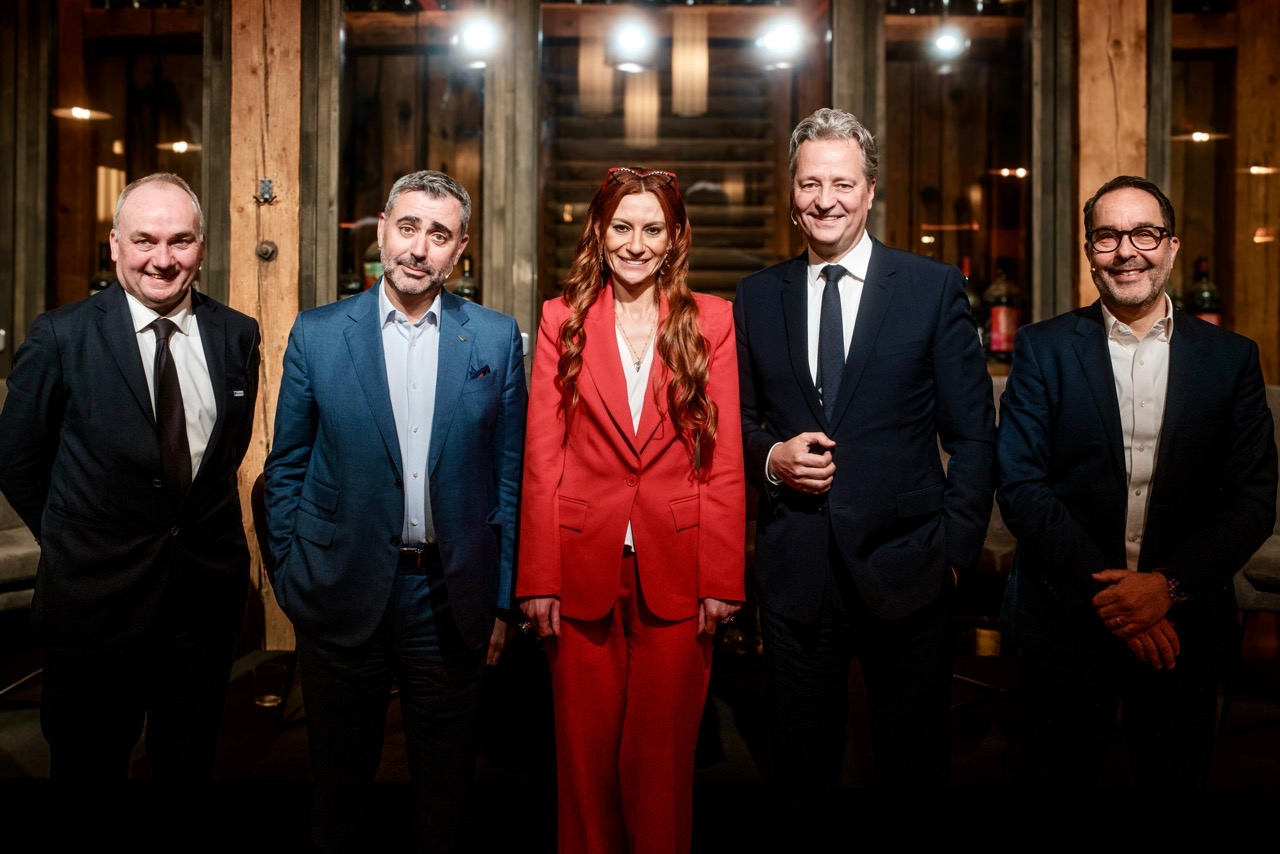
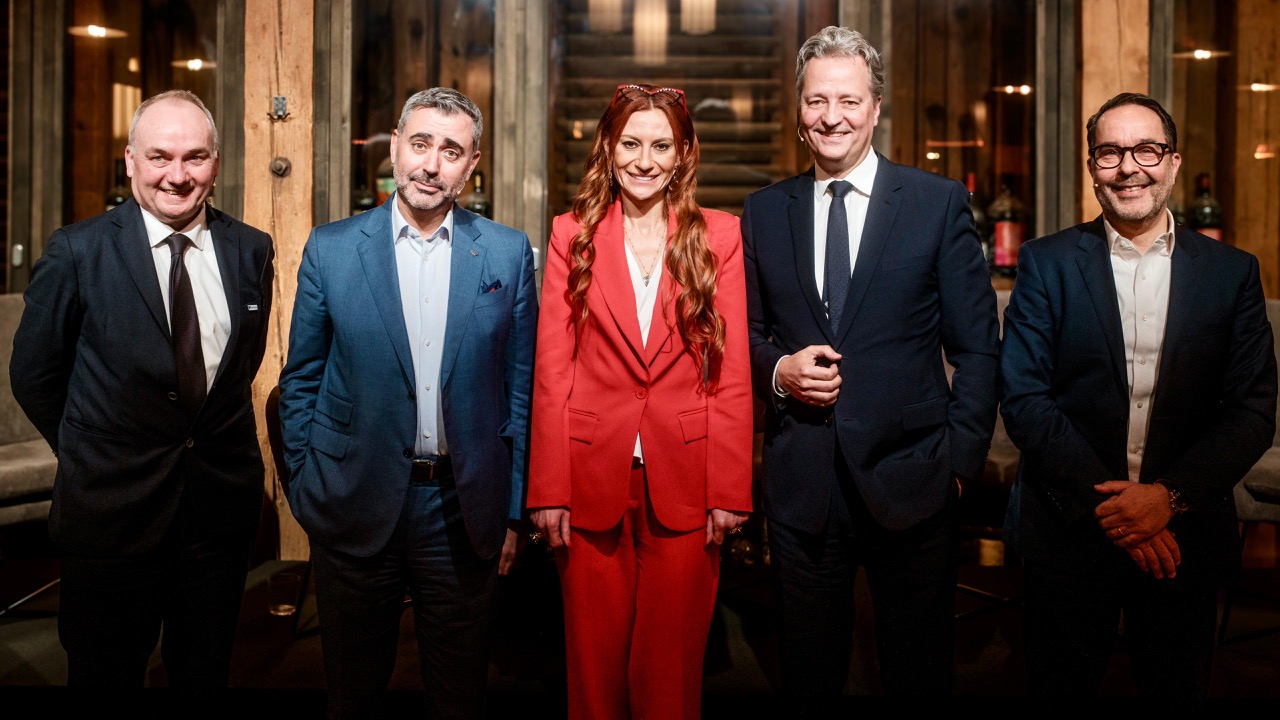
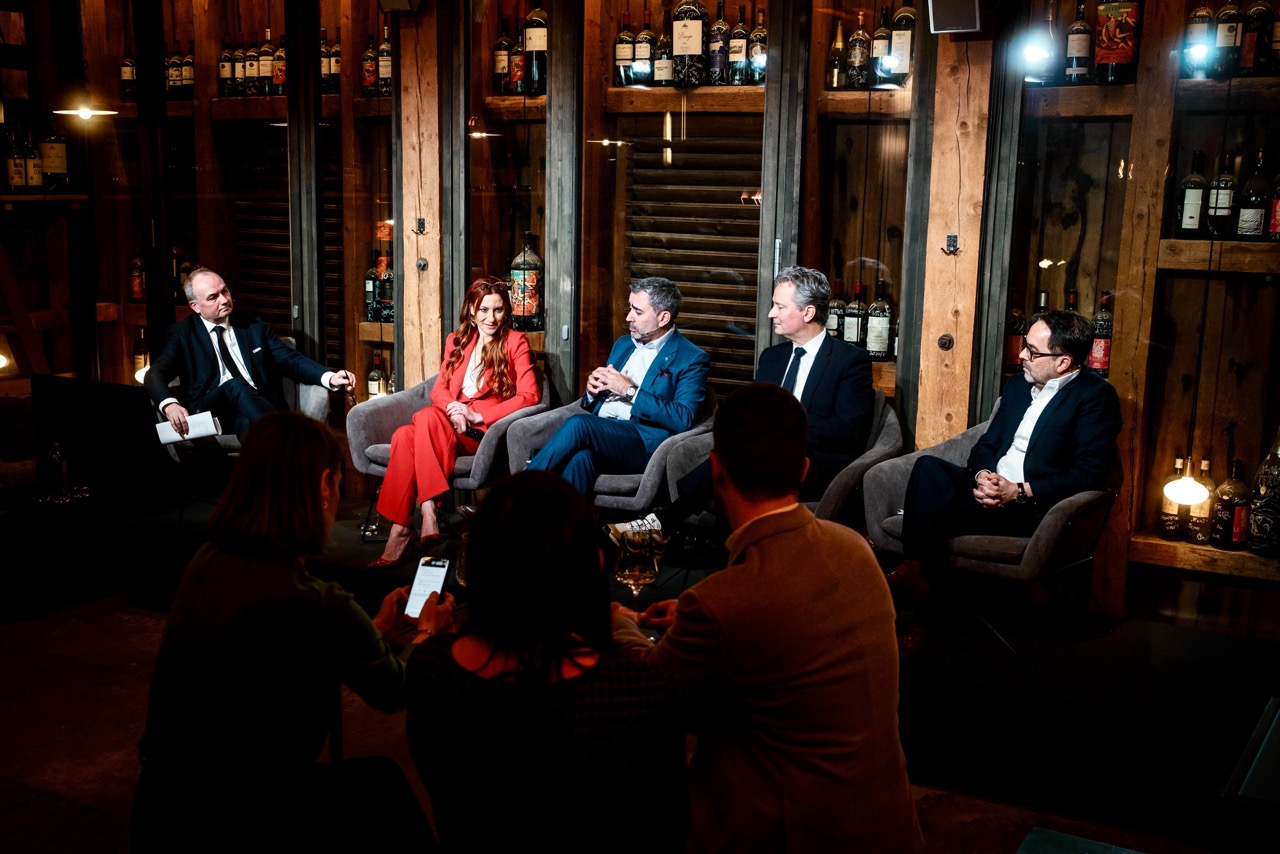
The discussion, titled ‘Navigating change in an uncertain and AI-driven world’, brought together Avolta CEO Xavier Rossinyol, Zurich Airport Chief Commercial Officer Stefan Gross, PMI Global Travel Retail Vice President Beste Ermaner, and Mondelez World Travel Retail Vice President and Managing Director Joost Rosmuller.
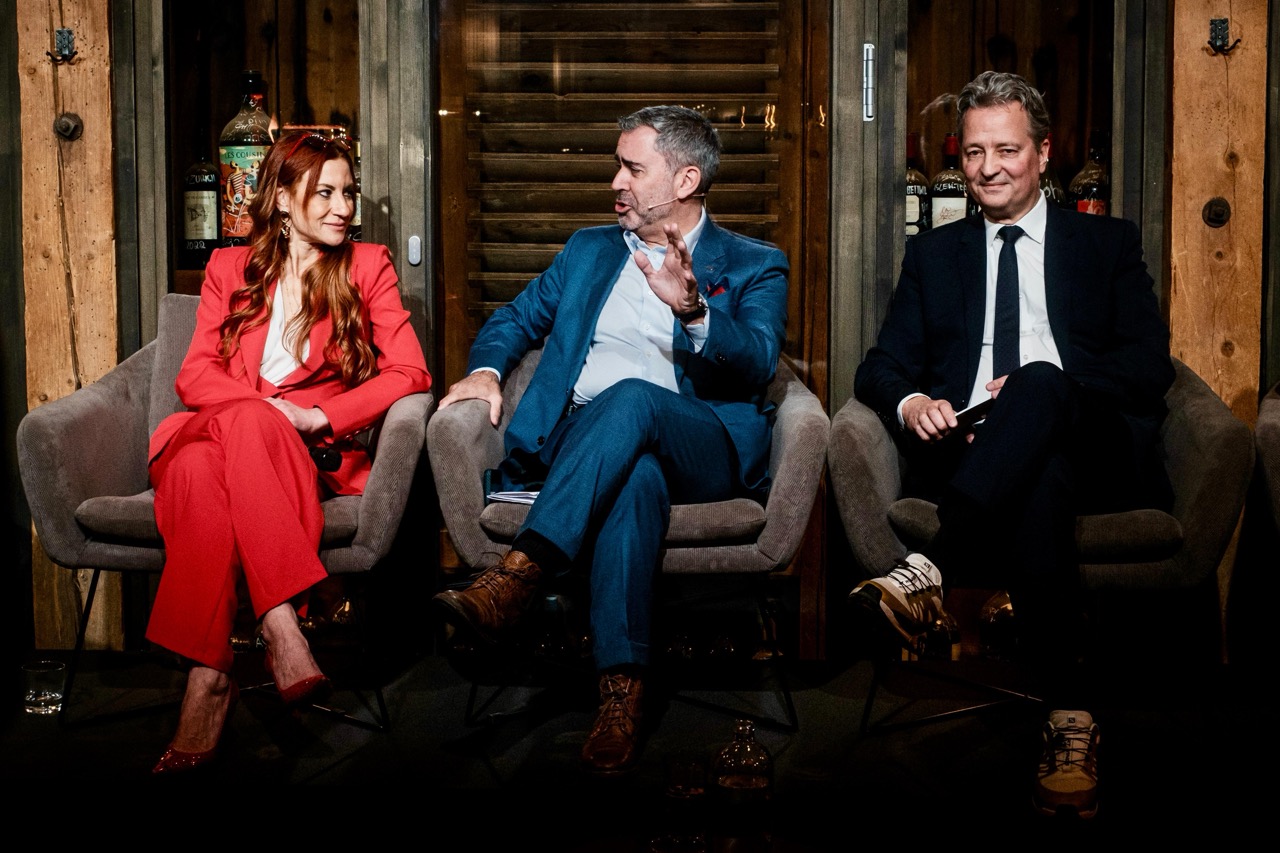
The Moodie Davitt Report President Dermot Davitt chaired the session at the Stall Valär Restaurant in Davos Platz, with representatives from the investor community, brand owners and concessionaires in the audience.
Click on the video above to access edited highlights of the Davos discussion.
Addressing the issues facing the industry, Beste Ermaner hailed the sector as resilient, noting four key factors that will influence the future.
“The macroeconomic challenges and geopolitical instability we see around us are two of them. The huge change in expectations among travellers is another, while digital disruption is the fourth. All of these will add complexity in an already challenging and complex context.
“But we see opportunities ahead too. The traditional growth model in travel retail is coming to an end. The traveller is becoming more intentional and more informed. Collectively we need to work together to shape the future and turn these challenges into opportunities.”
Of the big picture, Xavier Rossinyol said: “Everything is moving faster. The world is changing on a weekly basis and our customer is changing on a weekly basis. So if you want to do things in one-tenth of the time you need to be better organised, you need better technology, but if you do the right things it’s a huge opportunity.
“What we know is that people will keep travelling. They want different things. They want speed and they want digital alongside the personal touch; they want local and global, they want sustainability and they want good prices. They want everything and the only way to give them everything is to be much faster.
“Here, data is vital and using that data in collaboration with all our partners is what we need not only to survive but to thrive. If we get that right, we can double the size of the industry in the next ten years.”
Considering the uncertainty in the wider world, Rossinyol said it was even more important to be diversified, reducing reliance on a single market, nationality or channel.
“I call it a humble strategy, when you realise it’s impossible to anticipate what’s going to happen in the world. So you combine food & beverage with retail, you enter new geographies, and you add massive amounts of data; those are the pillars to deal with an uncertain world.
“But I am also super-optimistic. I believe that this ever-changing world, even with its challenges and crises, gives us a lot of opportunities.”
The challenge of change
On managing change, Stefan Gross said: “One big thing I am excited about is how we are seeing a big change in how people travel through the airport, a change created by technology.
“I see a future where going through the airport is more frictionless and not quite as annoying as it sometimes can be. And that brings opportunities, giving time back to people for their journey and for experiences. We see momentum behind this now, with the new technologies.”
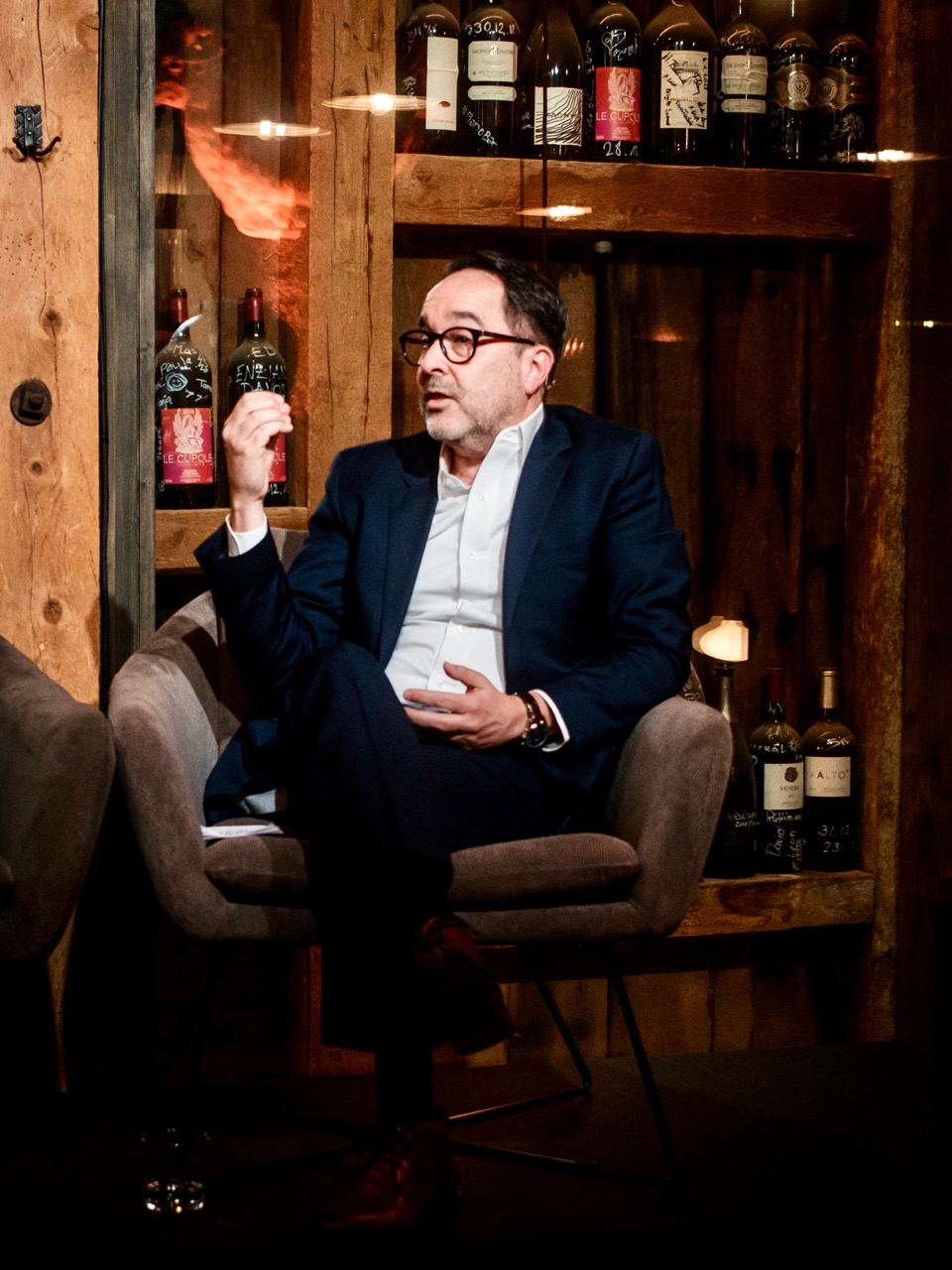
He said that the idea of what an airport should be is changing. “The old model was about driving volume and processing passengers, now it is about quality.”
Offering the Mondelez WTR view, Joost Rosmuller pointed to one major factor in the industry’s favour.
“With passenger numbers set to double in the next 15 years, what we have that domestic does not is more and more people coming through. That is the biggest tailwind that you can imagine, despite all the challenges and the tensions we see in the world.
“What we could focus on more as an industry, together with our partners, is psychology and consumer behaviour. We often look at the outcome of behaviour as a sales number, a penetration number or a transaction and that is tremendously important.
“But we need to understand traveller behaviour along the journey better. We have some of those insights through our Destination: Value project [which draws on insights gleaned from 7,200 traveller interviews across 33 airports] but still we are just scratching the surface on traveller behaviour, motivations, the context in which people travel and what makes them comfortable or happy.
“The more happy they are, the more dwell time they have, the more open they are to buying. It means us all cooperating more to share data. I am OK with sharing some data even among the competition, because I believe we can grow the category altogether.
“If we can understand this and share those insights among brands, airports and retailers, we can grow the cake.”
Ermaner couched the future for travel retail alongside the changes taking place at PMI.
“Travel retail is going through a major transformation and that is also in sync with the transformation that PMI is going through,” she said. “We are transforming our business into a Smoke-Free Future by developing scientifically substantiated smoke-free products that do not combust and are less harmful than cigarettes.
“We have a bold ambition to become substantially smoke-free by 2030, by when we aim to deliver more than two-thirds of our net revenue from smoke-free products. That is not just an ambition: already today 41% of our sales are from smoke-free products, reaching more than 42 million legal-age nicotine users in more than 100 countries.
“And in this smoke-free future, travel retail plays a really important role.”
Converting the traveller
On how to add value to travellers’ time at the airport, Gross questioned the value of too much promotional noise, and advocated a focus on encouraging exploration without being under pressure.
“As brands I would see the airport as the ideal customer recruitment environment. The value of this journey for me is that I can get customer attention span, educate people to try something with no pressure. And then we need of course commercial models that allow for that. I could say just give me the maximum rent possible and ask you [the retailer] to push existing recipes with dense, promotional, loud and often uninspirational retail.
“The contract models kill innovation. If you are squeezed, you cannot take any risks. You might be being innovative, doing something very valuable, but maybe you are not rewarded for it. The journey should be about seeing something new and interesting, and then you tell a story about it that is not simply about replenishment.”
On creating a sense of magic in the airport, Rossinyol said: “Travellers are not captive. As we see it they are ready to be charmed. One thing that is becoming more valuable, even more than the number of passengers, is the cumulative number of minutes [of their time] we have.
“In today’s world where digital has taken over so many things people are missing face time. And that is where travel retail and travel dining is unique. We have the chance to introduce new products, introduce new strategies, introduce new ways to engage with storytelling in a way that is impossible to do in many other places because people are not there.
“You still have to have the convenience products. You still have to have certain categories with some price advantages. But on top of that, we need to offer magic. We need hybrids, new brands and flexibility. We need new experiences, to mix sports with products or experiences that are event-driven, culture-driven, community-driven or sustainability-driven.
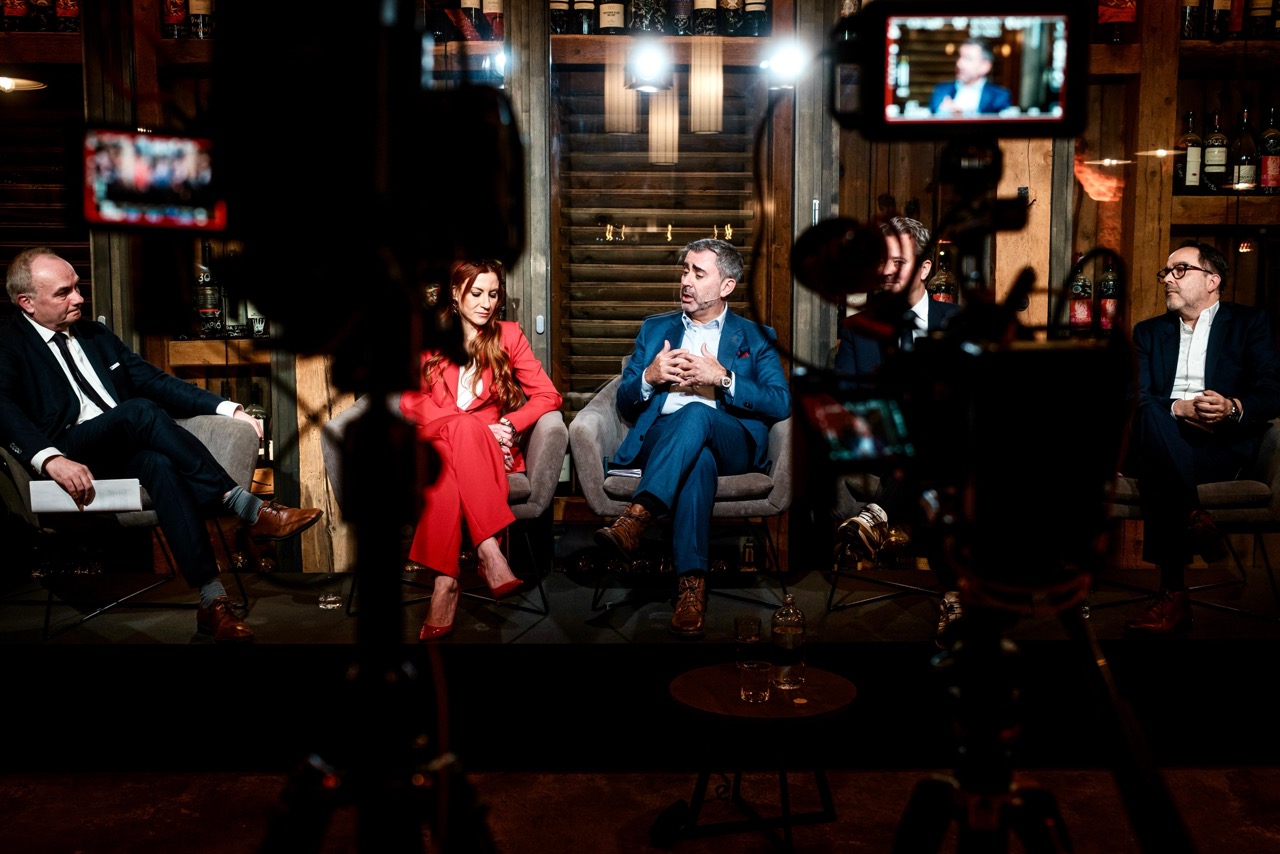
“What is the challenge?” Rossinyol continued. “The challenge is that there is not a model that somebody can design in a global head office. Maybe that was possible 20 years ago, creating the right format and then replicating it everywhere. That is not possible any more.
“What you can create is models that work, deployed in different combinations in different locations depending on the profile of the passengers; those profiles have to be what defines our offering.
“We can double the business by doing things differently, and to get there collaboration is essential. There has to be an alliance between airports, operators and brands, all of them with the same commitment and passion to double the business by investing in innovation, exploring new things and also exploring things that do not work.
“But the contract structure makes this model very difficult so to try new things we have to not be penalised for it. Our whole system needs to work towards that. If we can, I see this as the largest opportunity our industry has ever had to build dining and retail into something unique.”
The AI opportunity
AI was another core theme of the conversation, with Ermaner noting that it is not “just another technological tool but a strategic imperative”.
She said: “AI is central in terms of addressing all the pain points throughout the whole value chain. On one side AI can provide operational efficiencies in our highly complex environment. It plays a critical role in terms of forecasting, planning, supply chain, production and so on.
“But the real merit lies in how AI is going to transform and create a fully end-to-end consumer journey. It’s no longer about the moment in the store or in front of the shelf where the decision is made or where the intention to purchase comes. It comes before the passengers leave their homes. And AI will play a critical role in bringing together the complex components of travel, context, location, time and the right moment in the story for this fully intelligent journey.
“That also means it is critical we have a strong collaboration across all stakeholders in terms of seamlessly integrating data, digital and AI into our businesses.”
Rosmuller said: “AI can enable us to use a large pool of data to interpret what the consumer really wants, but AI actually is very much in support of human behaviour too. It can help reveal human behaviour in the airport and then help us to adjust passenger flows, assortments and reduce friction in the journey.
“If we use it well across the value chain, AI is going to elevate what humans experience and how well they travel through the airport.”
Gross offered the airport view, saying: “The biggest and most tangible thing that we can get from AI is if I can tell the passenger, you are fine with your time. That is the airport’s role. And then Avolta or the brands can tell the passenger, I now have exactly the right thing for you. Personalised and tailored, instead of shooting at the customer with generic, non-personalised, irrelevant noise.”
Rossinyol said that anticipating needs and predicting behaviour, rather than reacting to a shopper that has already left the store, is a huge challenge.
“We already established that we have vast numbers of passengers and a big opportunity to provide them with something unique that they want. The problem is that many times the industry discovers what they want but they are already gone.
“It is key to know who is going to be there at what times of the day. There is data that you can use to anticipate what they might want.
“AI can also help build an additional aspect operationally. Because it’s not enough to know what they might want. You also need to have it there, and you need to adapt the shops or the restaurants to their changing needs.”
Technology also enables loyalty programme Club Avolta to succeed, with over 15 million members today. Rossinyol said: “When we launched two years ago many people said it could not work, especially with many people flying once or twice a year. But that is a myopic view.
“We are getting close to 7% of the global sales of the company going through members of Club Avolta. So it is material. But again, it’s only one element. You need to think how technology can improve and transform every aspect of your business.”
Closing thoughts
Addressing a final question about how we can create a blueprint for travel retail in 2030 and beyond, the speakers each summarised their big-picture ideas.
Ermaner said: “I am optimistic about the future and this discussion reinforces that. There are three key things that lie ahead of us as we move towards 2030. One, we need to move from transactions to full end-to-end journeys. Then there is collective agility across all stakeholders, plus there is the seamless integration of data, digital and AI.
“At times we under-estimate the power of travel retail. We are not only selling products, we are driving the growth of global and national economies; we are creating jobs and we are shaping the traveller journey. We should take this wider perspective to what we do.”
Rossinyol, who also took part in a number of other panel discussions on the future of travel and retail at the World Economic Forum, said: “Financially, we are a key element in financing the airports, and therefore a key driver of the overall industry. We have 9.5 billion people travelling by air every year, and it is almost an obligation on us to try to charm all of them. Today we are addressing probably one-quarter of that number. So the other three-quarters is a big opportunity. And if we can drive a good increase in conversion, there is enough money for everybody to win.”
Taking a core message about the wider industry eco-system’s importance, Gross highlighted the vital importance of tourism as “the biggest game changer in getting rid of inequalities and poverty in the world”.
On how Mondelez WTR aims to embrace the future, Rosmuller said: “We should try to be more human in terms of understanding up and coming travel groups. We are well connected in this industry, but we must leverage that to be even more intentional.
“So do we sell for a price, or do we go for an experience? Or how do we combine both? We can also be a bit more courageous and seek to do things differently.”
The discussion summed up the pace of change in the wider world, its impact on travel retail and underlined how adapting to change with agility will help define our collective future. As the speakers each noted, securing a future that is robust will mean taking a collaborative, eco-system-wide lens to the big challenges to unlock value from the channel in the years and decades ahead. ✈
*An extended version of this article appears in The Moodie Davitt Magazine for February, which appears in coming days.
**This panel was hosted with the support of Philip Morris International.