
| Moodie Davitt Snapshots – Total market up double digits over last year but down -5.5% over previous month – Sales to Koreans remain very soft year-on-year – Foreigner-dominated downtown market up +21.6% – Inbound tourism continues to surge though department stores are prime beneficiary |
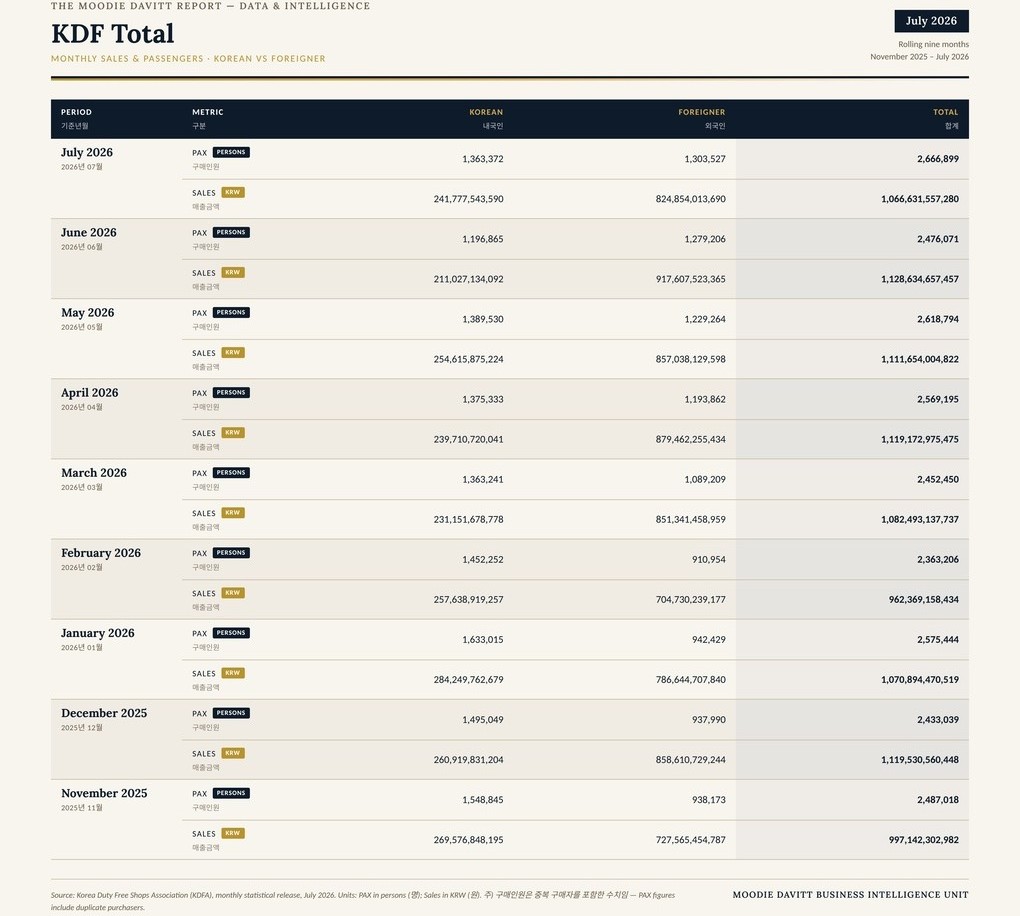
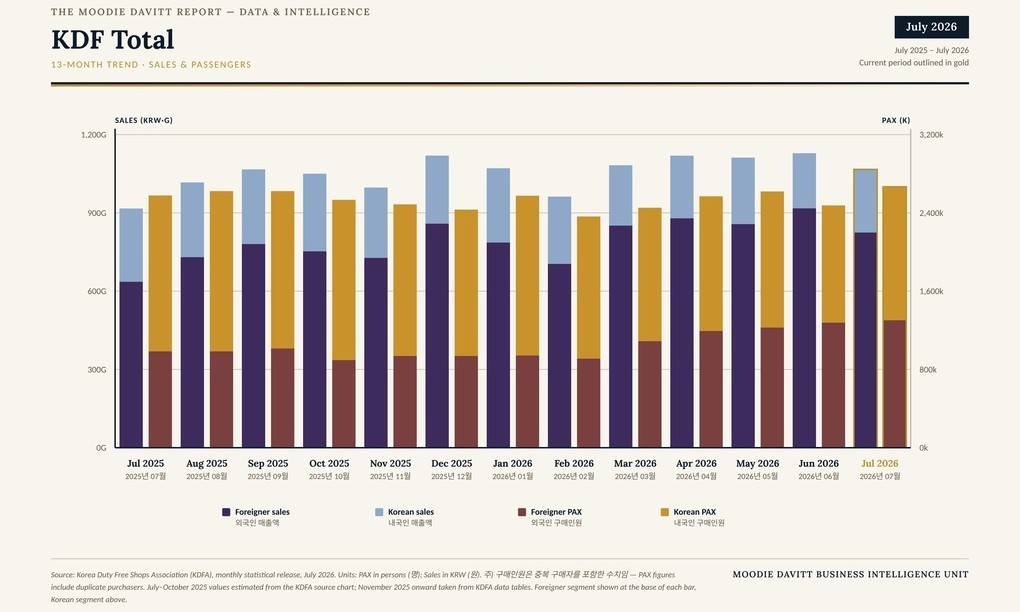
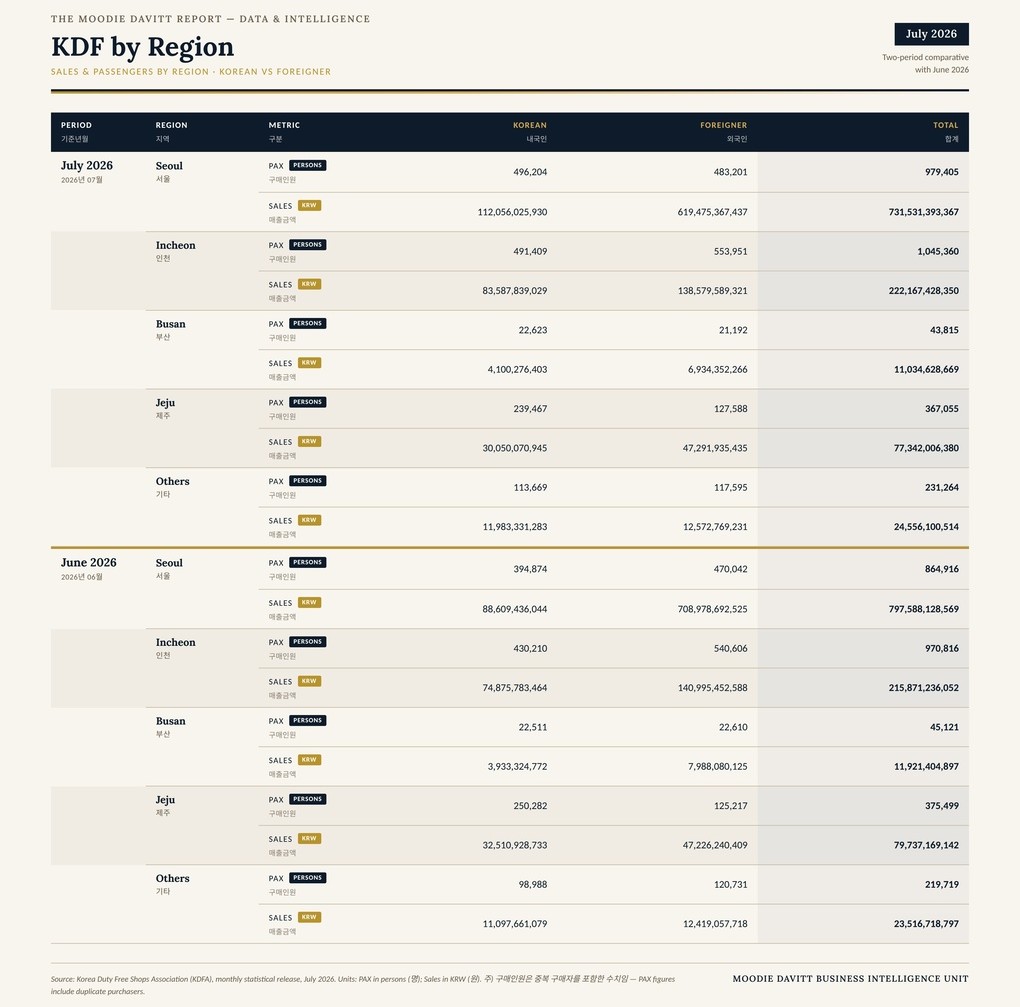
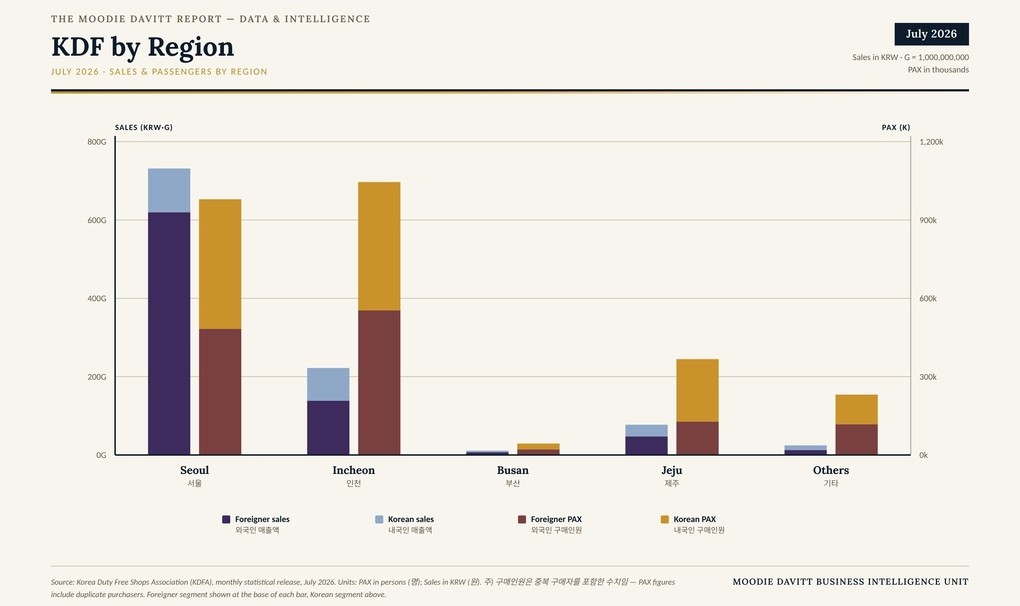
SOUTH KOREA. Sales in the world’s biggest duty-free market rose +15.9% year-on-year in July (-5.5% month-on-month) to KRW1,066,631,557,280 (US$774.3 million). Shopper numbers reached 2,666,899, up +3.4% over July 2025 and +7.7% in comparision with June 2026.
The figures (which exclude inflight retail sales), courtesy of the Korea Duty Free Association, show a strong year-on-year increase in sales to foreigners on fast-rising inbound tourism.
The Republic welcomed a record 10.7 million overseas visitors in the first half, according to the Ministry of Culture, Sports and Tourism, although the prime beneficiaries in retail terms have been department stores and specialist shops (see our indicative report on Hyundai Department Store and Hyundai Duty Free here).
Foreigner shoppers were responsible for 77.3% of total sales despite representing just 48.9% share of the customer base.
Conversely, sales to Koreans fell a disappointing 13-5% year-on-year (but rose +14.6% month-on-month) to KRW241,777,543,590 (US$175.5 million) on shopper numbers down -14.2% year-on-year (+13.9% over June 2026).
Foreign spending up sharply over last year in downtown channel
Downtown duty-free sales (worth 73.5% of the total market) reached KRW784,485,335,889 (US$569.6 million) in July, a +21.6% increase over the same month last year on a +12.7% rise in shopper numbers to 1,100,334. Compared with June 2026, sales and customer numbers were down -7.8% and up +11.9%, respectively.
Foreign nationals (predominantly Chinese) again dominated sales in the channel, accounting for a whopping 85.2% share of revenue.
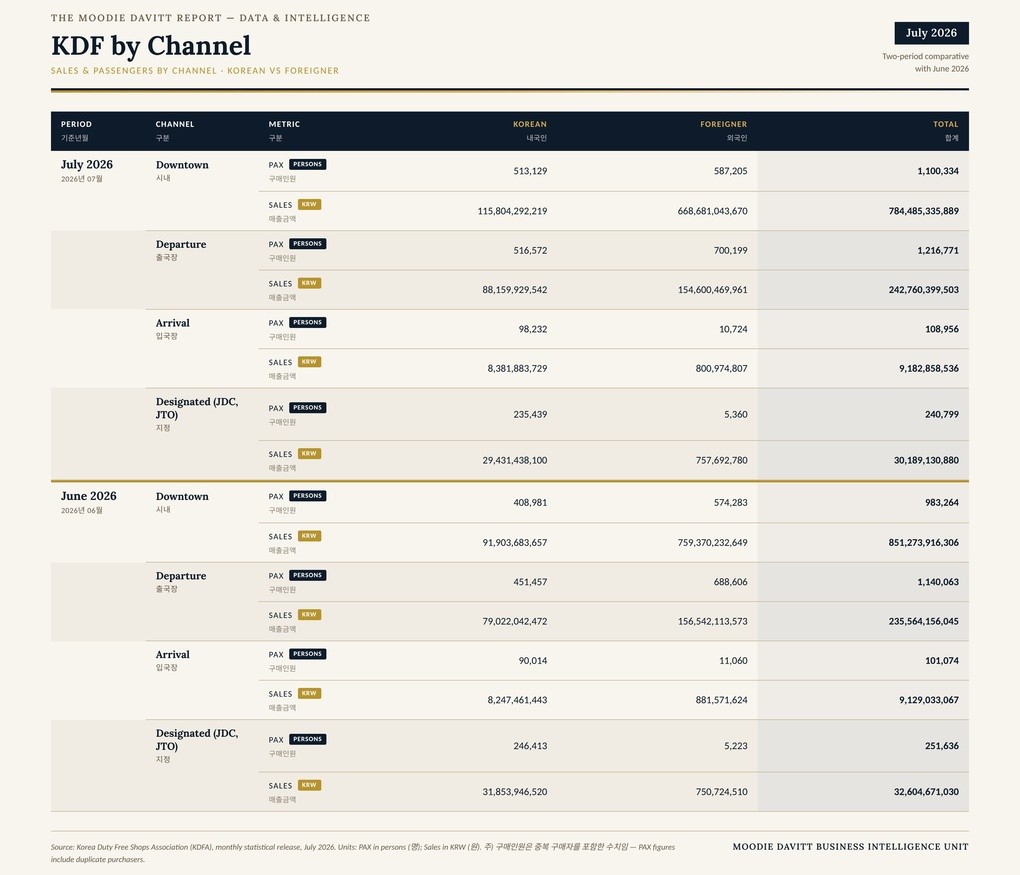
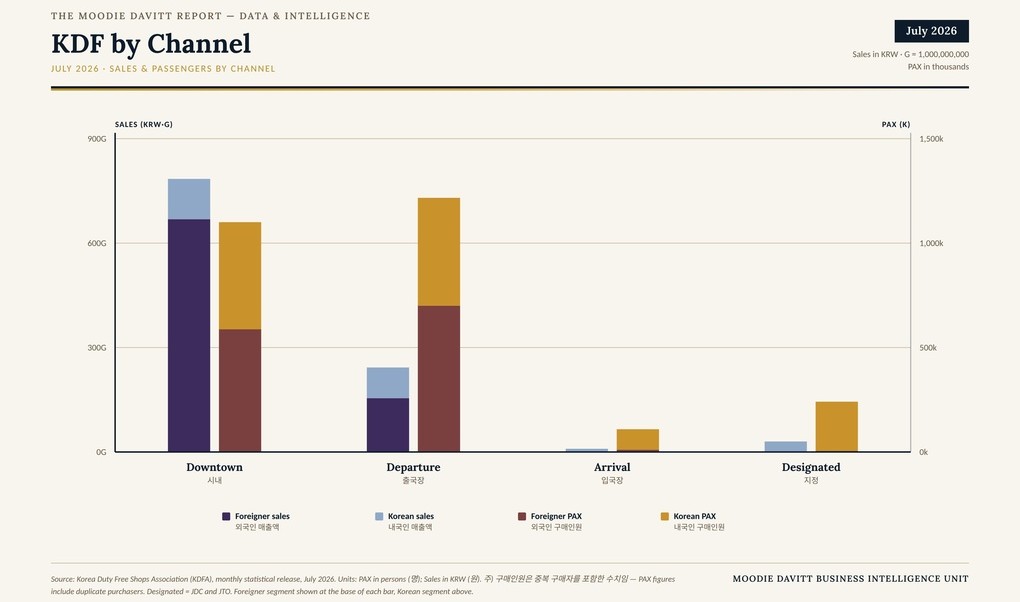
International shoppers spent KRW668,681,043,670 (US$485.5 million) in downtown duty-free stores, a +30.3% surge over July 2025 but down -11.9% month-on-month. Foreign customer numbers soared +47.6% year-on-year and +2.3% month-on-month.
Spending downtown by Korean travellers was down -12.3% year-on-year (+26% compared with June 2026) on a 513,129 shopper base, down -11.3% over July 2025 but up +25.5% month-on-month.
On-airport Korean business remains soft
Airport (departures) duty-free sales climbed +5.2% year-on-year and +3.1% month-on-month to KRW242,760,399,503 (US$176.3 million). Customer numbers rose +21% over the same month last year and +1.7% over June 2026 to 1,216,771.
Foreign shoppers accounted for a high 63.7% of sales on 57.5% of shoppers.
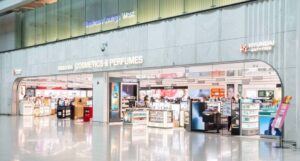
Sales to foreigners once again grew strongly, up +22.7% year-on-year (-1.2% month-on-month) to KRW154,600,469,961 (US$112.3 million) on customers numbers up by an almost sharp +21% over last year and +1.7% month-on-month.
For Koreans, it was a different story. Sales reached KRW88,159,929,542 (US$64 million), down -15.8% on the same month last year, though up +11.6% on June 2026. Customer numbers declined -15.3% year-on-year but rose +14.4% over the previous month to 516,572. ✈