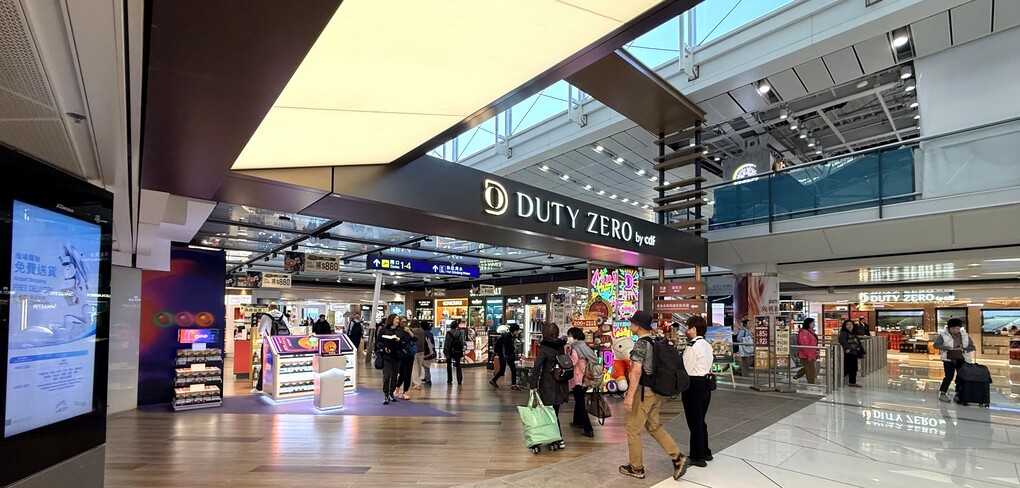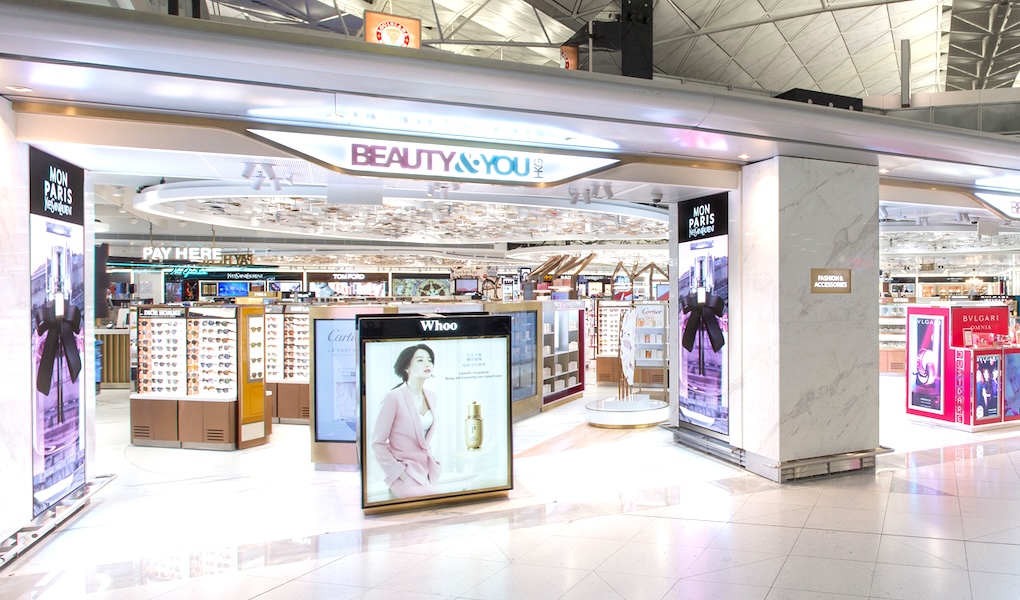


We paid a recent visit to Dakar in the company of Lagardère Travel Retail West, Central & East Africa CEO Sountou Bousso and his senior team, uncovering more about the company’s projects and progress in Senegal and the wider African market. We feature edited highlights below, with the full report in our Cannes edition, which can be accessed here (page 214).
SENEGAL. From a standing start in 2017, Lagardère Travel Retail’s African presence has climbed to cover eight national markets, with a portfolio spanning retail and dining.
And this is just the beginning, says Sountou Bousso, the high-energy, fast-moving CEO of Lagardère Travel Retail West, Central & East Africa, which has its base in his home city of Dakar, Senegal and to which The Moodie Davitt Report paid an illuminating visit in July.
Bousso’s stated ambition is to double the size of today’s business in three to five years.
That will come, he says, by adding contracts but also by store investment, lifting retail standards and boosting conversion through enhanced service and brand offerings. Alongside this sits a vision to develop the still fledgling food & beverage channel at airports and to expand into other channels such as maritime and diplomatic.
That ambition remains very much alive in the face of stiff competition from an increasingly Africa-hungry set of global travel retail players, in some markets slow-moving aviation bureaucracy, alongside the perennial challenges of managing in a regional aviation market beset by weak infrastructure and limited connectivity.
‘Only optimists need apply’ could be the slogan against the backdrop of those pressures. Fortunately, Sountou Bousso has optimism in abundance alongside a fierce work ethic, energy to burn and an ability to manage complexity and crisis with calm professionalism and a dash of humour.
And while Paris-based Lagardère Travel Retail is resoundingly a French retail-to-dining player, Bousso is building a regional operation that is proudly and unmistakeably African, and Senegalese in particular.
As we discovered on our visit, women are well represented alongside men at senior level, and most of the key decision makers in that team are under 40 years old, with people at all levels empowered to make decisions and to grow.
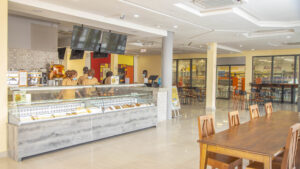
That approach is encapsulated by the success of Kepar Café, whose motorway outlet at Yéba South close to Dakar Blaise Diagne International Airport is built on local teams – many of whom had never worked in F&B before – from small communities where opportunities are scarce (more on this in our separate story on Kepar Café in our Cannes issue).
Reflecting on the company’s journey in the Senegal market to date as we tour the airside Aelia Duty Free stores, Bousso says: “When we came here in 2017 we were a disruptor. My goal when I joined in 2020 was to help Lagardère Travel Retail go from being a disruptor to a challenger in this region. We did that as we grew into new locations. That made the rest of the market sit up and take notice.
“I then wanted to go further. Now we are a leader, with eight markets managed from our Dakar headquarters, all of them run by local country managers.” Aside from Senegal the current network includes Benin, Cameroon, Gabon, Gambia, Mauritania, Rwanda and Tanzania.
Bousso adds, “We have this purpose: to serve African travellers with the best possible offer and service, making them proud of their airport and the shopping within it.
“We have changed the perception of airports in our region through our design, and the supply of international products that are trusted by the customers, which was not always the case in duty free in this region.”
Global standards
After several years of market share growth, how does Bousso assess the criteria for building the business against stiff competition and crucially, seizing further opportunities to expand, we ask?
He says succinctly: “I must deliver what I promise, and I must promise what I can deliver. When I tender or negotiate, I always showcase what we have delivered elsewhere, for example here in Dakar.
“Once we introduce other airport partners to our concepts, they understand our capabilities and expertise and are convinced. Those airports then become advocates to other airports.”
He is also firm in the view that African airports should not settle for poor- or average-quality services even if many are smaller or less advanced in infrastructure or technology terms than those in other regions.
“At Lagardère Travel Retail we do not compromise on quality. We must be best-in-class in all we do here as everywhere else. Our people in the stores are serving customers, carrying their baskets, giving advice and offering service you would expect at the best retail stores anywhere.”
Destination Dakar
That high level of attention and service is on show at Dakar Airport, home to the retailer’s flagship business in Africa.
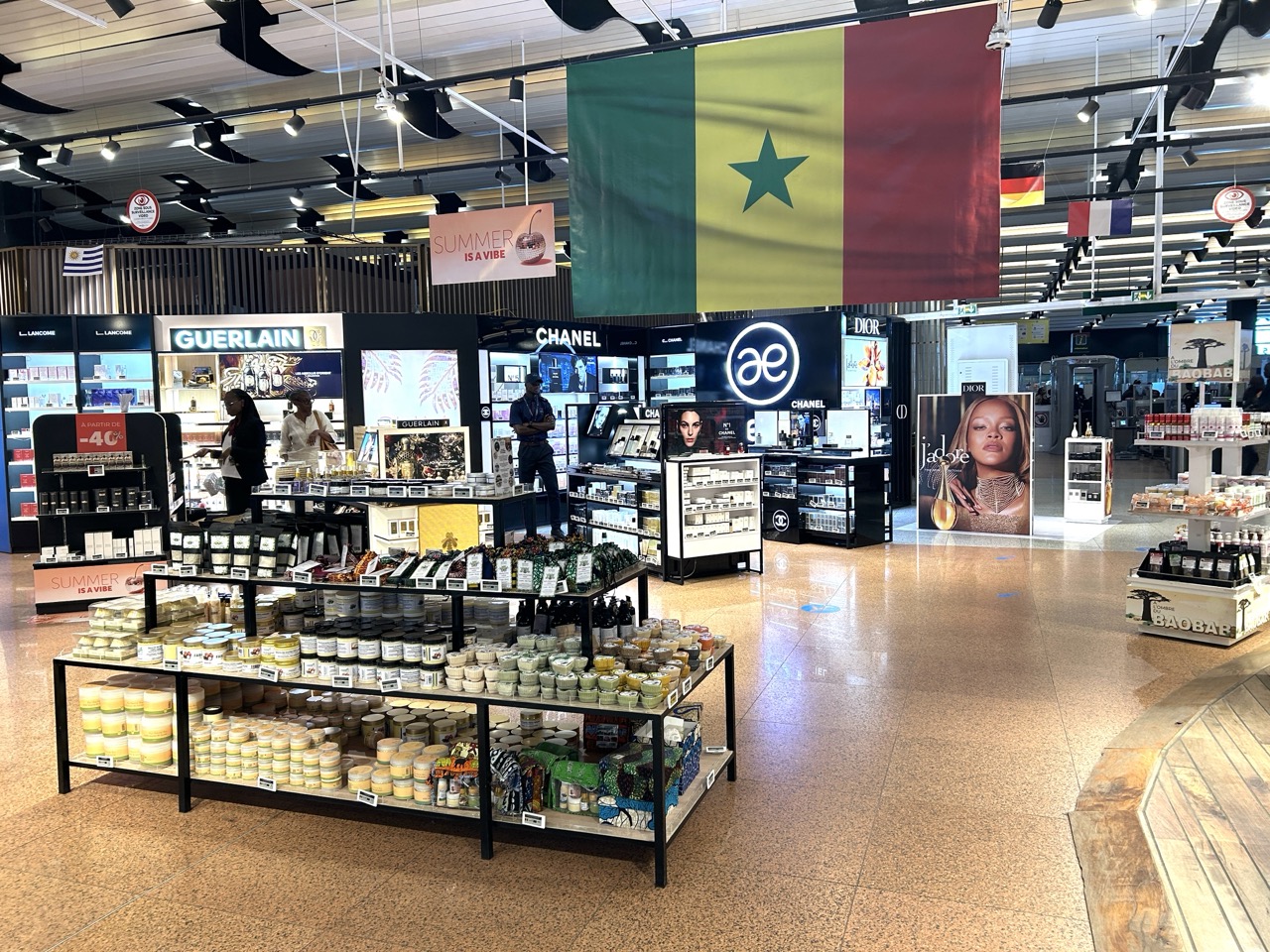
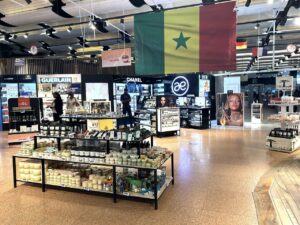
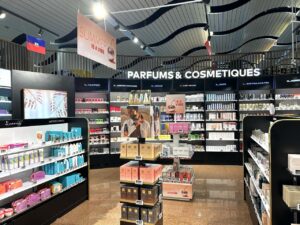
An expansion to the main departures walk-through store across 700sq m – complemented by 300sq m in arrivals – was completed in January. The Aelia Duty Free store has been carefully thought out in design, layout and mix, with a powerful emphasis on local goods, a vast beauty offer with heavy brand investment plus tailored offers from a consumer technology back wall to luxury bays.
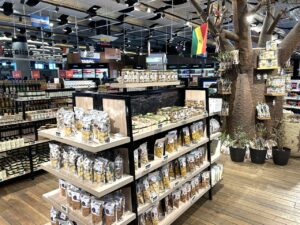
The departures environment leads on hero brands Chanel and Dior as beauty drawcards to the immediate right, but front and centre are the destination ranges. Here, Senegalese flavour sings out in the range, design installations (highlighted by a replica baobab tree at its heart) and neat touches such as floor tiles emblematic of the city and region.
The zone features a curated selection of Senegalese and African brands, including Notabané, Land of Africa, Réserve d’Afrique, Scent of Africa and Teasse, highlighting regional craftsmanship and creativity. The varied mix encompasses skincare to nuts to baobab powder.
“We source all of these products here in Dakar,” says Bousso. “The big question is how to convert these artisanal products for sale in duty free. It is not always easy to get brands to the right level of quality packaging for the travel space, but our team puts in a lot of work to make it happen so they can sell at volume.
“They source, advise brands on how to enter this space, and we decide on which brands we believe can succeed through a rigorous process. We even help finance some brands to support their growth and earn our money back through sales in the store.
“We reserve around 20% of space in all stores for local products,” adds Bousso. “We then work to ensure this space delivers 20% of the turnover too. It’s not always easy but that is our goal. It is part of our commitment to championing local.”
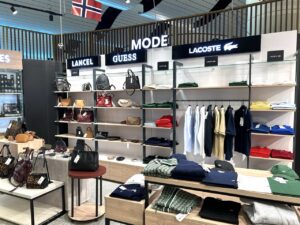
Other features of the store include a Davidoff humidor, with the walk-in element a rare feature in African duty-free.
A sampling space for spirits & wine sits close to that category, although liquor space and sales are modest in Senegal – a predominantly Muslim country – compared to other markets in the region such as Cameroon.
“We know each market well, we know the sensitivities in each, so we are empowered to decide which categories to emphasise in each market, rather than taking the same approach everywhere,” says Bousso.
“For the global brands my team knows what works and we place the relevant orders centrally. We also place our own direct orders where we believe a brand will work for us, coming from our relationships with these suppliers.”
The expansion of the store revealed in January focused heavily on beauty, with bespoke spaces for leading names such as Guerlain and niche beauty gaining space with Parfums de Marly, Trudon and others. Local brands are positioned in wall spaces close to global names, a further signal of support for these emerging names.
The store also features a well-ranged area for accessible luxury, including brands such as Lacoste, Lancel and Guess, with watches, jewellery and sunglasses on back walls.
The retail experience is enhanced by new-generation digital screens, electronic shelf labels providing more dynamic product information, and an innovative children’s retail concept – deployed earlier this year for only the second time within the Lagardère Travel Retail global network.
A showcase for Senegal
The expansion also featured the opening of a signature retail highlight at the airport, luxury store CASE BI (below). The name translates as ‘house’ or ‘home’ from Senegalese and was a concept created for the airport.
It features only artisanal Senegalese brands across fashion & accessories. Basket spends of €1,000 are not uncommon on top-quality handbags, one-of-a-kind ready-to-wear items or handmade jewellery in a lovely, upscale and elegant store setting airside.
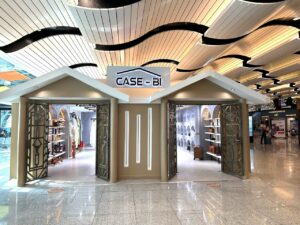
Bousso says, “We felt there was a place for a luxury Senegalese store, and it shows our belief in the craftsmanship in this market.
“We only sell goods that are handmade locally and with top quality. It is not destination merchandise as you will find in our other stores. The people who come here are treated very individually, they can sit down and take time to examine the leatherware, the ready-to-wear, the accessories, including many pieces that are one-offs. It has built a reputation among people who know and aspire to these brands and products.
“CASE BI makes a statement about our ambitions in Senegal and in Africa.”
Lagardère Travel Retail’s other sales channels, travel essentials and F&B, are also well represented at the airport.
A 100sq m Relay store carries a strong range of locally crafted products – which vary from those in the other shops – as well as snacks, press items, books and other essentials.
The company also manages several restaurants, mostly in grab-and-go format.
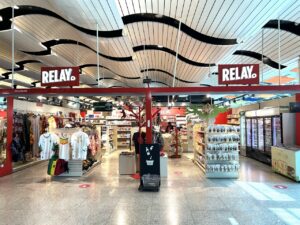
F&B is among the biggest opportunities for expansion in the region, says Bousso. “Duty free is well covered at a high level in what we do at Aelia Duty Free. Food is more social, more related to local, more technical, and it carries a lot of emotion. We can do a lot in this space.”
Although it is a far smaller store compared to departures, arrivals represents 40% of the business, with a focus on bestsellers across categories and led by spend among returning Senegalese. Fortunately, all travellers must pass through the store before exiting the airport, which helps support conversion levels.
Beyond locals, other African nationalities and French visitors lead in spending terms.
While P&C, confectionery and destination goods are vital, cigarettes remain the number one category, with generous savings in duty free compared to overseas markets.
Doubling down
For many retailers and brands, the question of when to accelerate investment in Africa is still unclear. Not so for Lagardère Travel Retail, which has its sights set on its next territory gains.
One simple statistic explains the market’s attraction. Africa is home to almost 20% of the global population, yet the continent accounts for only 2% of passenger traffic. What immense room to grow that suggests.
But as Bousso notes, seizing the opportunity of long-term demand is not so easy when travel is made difficult by red tape, the lack of open skies agreements between governments and by financial struggles at many airlines (Air Senegal among them).
“The logistics of travel is difficult in Africa and the cost of travel is very high. That also influences the capability of people to spend.”
Understanding the spending habits of those who do travel is vital. Beyond the larger hubs most airports in the region serve under 3 million passengers per year, yet all represent opportunity, says Bousso. “Each market in Africa has its own reality. We need to understand and address the different needs of travellers in each one. When we move into a new market, we learn quickly.
“Even at smaller airports there are many people who have money and are good shoppers. When we present them with the right offers, we can generate very good business.”
He adds: “While African travellers may differ place by place, they also know what good looks like. They will spend on quality in Africa just as they do in Dubai. That is why we have to bring the same standards they see in other markets to those we work in across East and West Africa, with no compromise on quality.”
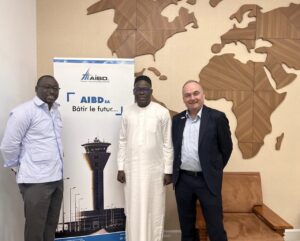
For brands too, the clear message is that opportunity exists.
“Our presence and Lagardère’s reputation offers the brands a route to market in this region,” says Bousso.
“The brands fear uncontrolled markets and often don’t want to come but we can offer reassurance.
“That reputation also helps us tell our story to airports. They can see we have power behind us and the airports recognise this.”
In concluding our walk through the airport, we return to a theme we began discussing earlier: how does a disruptor turned challenger turned leader prepare to fight the next battle?
Bousso says: “First, at a personal level, I am still very energised for this role. If the leadership team in Paris wants me to lead this venture, I need variety in what I do, and that includes moving forward and opening up new markets. I get excited by the challenge of growth.
“Then, when competition comes, we accept it. We have gone from disruptors to leaders. Now the others are chasing us. If I want to stay ahead, I must run faster. And we are going to continue running faster.”
*Our full on-location report from Dakar appears in our September/October Magazine. Click here for access and turn to page 214. ✈