
INTERNATIONAL. As airport lounges reach a broader travelling public, operators face a more complex strategic task: accommodating rising demand while protecting the experience passengers are paying for. Aspire Pre-Flight Hospitality Global SVP Executive Lounges David Collyer discusses a market increasingly shaped by segmentation, direct bookings and the economics of premium hospitality with our Senior Business Editor Mark Lane.
The airport lounge sector’s growth brings a paradox. As access becomes more widely available, the qualities that make a lounge desirable – space, comfort, attentive service and separation from the bustle of the terminal – become harder to guarantee.
For operators, the challenge extends beyond opening more doors. It involves deciding who those doors serve, how access is managed and what distinguishes one hospitality proposition from another.
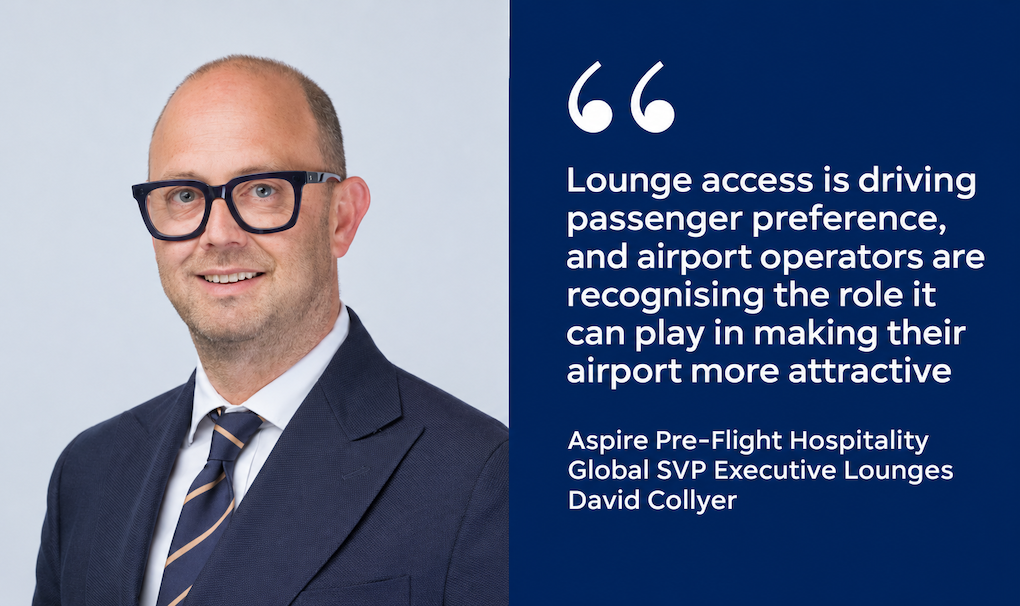
Aspire Pre-Flight Hospitality Global SVP Executive Lounges David Collyer describes a business increasingly borrowing its strategic approach from hotels: tiered products, differentiated experiences and investment guided by traveller profiles.
Aspire, part of Swissport, welcomes 6.4 million guests annually, he says, with 16 openings and refurbishments planned for 2027.
The business’s international reach was further reflected in six wins at this week’s World Luxury Travel Awards, spanning airport lounges in Toronto, Newcastle, Perth, Copenhagen, Casablanca and Zurich – recognition across four continents and categories ranging from domestic airport lounges to VIP hospitality.
That development pipeline and international recognition underline Aspire’s position as a leading global operator. More revealing, however, are the strategic choices shaping its expansion.
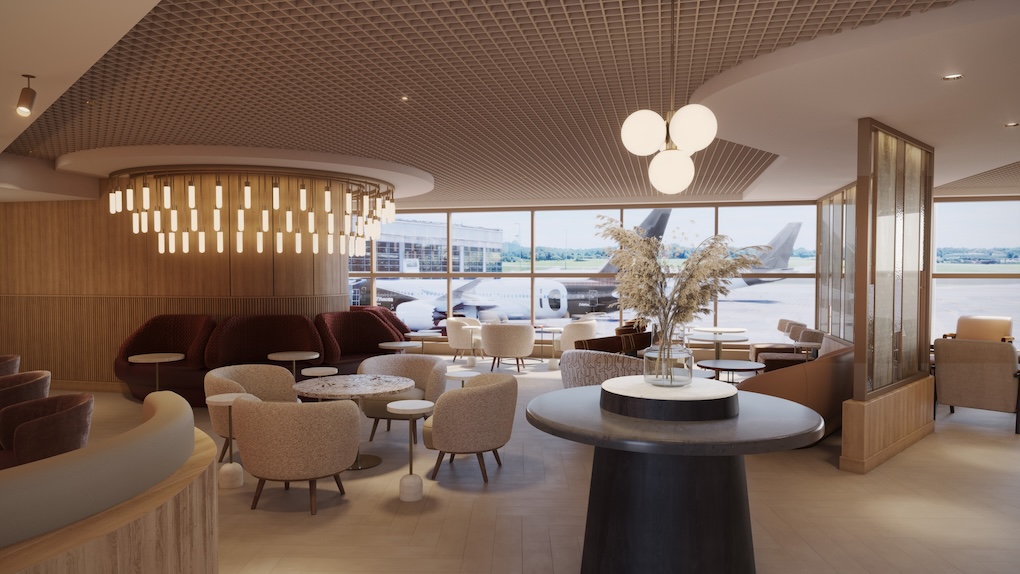
Growth follows the traveller
Collyer identifies the Middle East and North Africa and Asia as particularly interesting growth regions. His explanation of market selection, however, goes beyond a geographical expansion map.
“Ultimately, it’s less about specific geographies,” he explains. “We take a host of factors into account when we’re thinking of opening a new lounge, including traveller demographics and habits and other hospitality investments in the region, such as new hotel openings.
“We’re looking for markets with a strong concentration of affluent travellers and a focus on premium tourism, rather than targeting specific geographic locations.”
The distinction matters. Passenger growth alone says relatively little about demand for a particular lounge proposition. Spending capacity, journey purpose and expectations influence the opportunity.
Aspire uses first- and third-party data to inform expansion. Collyer also points to the changing aviation market: “Within global travel, the market is being driven by the significant growth in demand for Business and First-class seats. In turn, we are particularly focused on premium travel locations.”
The investment logic connects the airport with the wider hospitality economy. Understanding the traveller becomes as important as securing the space.
When access becomes a capacity question
Perhaps the most consequential shift Collyer describes concerns how passengers enter the lounge.
Airline contracts, financial institutions, access programmes and direct customers bring different commercial relationships into the same finite space. Managing that mix becomes central to revenue and service.
“More guests than ever before are paying for lounge access and an awareness that guests can pay for access directly is growing,” he says.

“Equally, consumers are getting more savvy and realising that a direct booking gets you a better deal and guaranteed access whereas with partnerships, access is typically subject to availability.”
Stronger direct demand has consequences for other channels.
He continues, “The increase in direct bookings therefore means there is less capacity for guests looking to access our lounges via our card partners.
“To mitigate this, however, we’ve launched a pre-booking option with card companies to avoid disappointing our customers at the desk.”
Adoption is only now reaching double digits among cardholders, Collyer says. “Would you go to a restaurant or hotel without booking these days and expect availability?”
For operators and partners, this is more than a communications exercise. Reservations make demand more manageable, while changing how passengers use a benefit whose appeal may have rested partly on spontaneity.
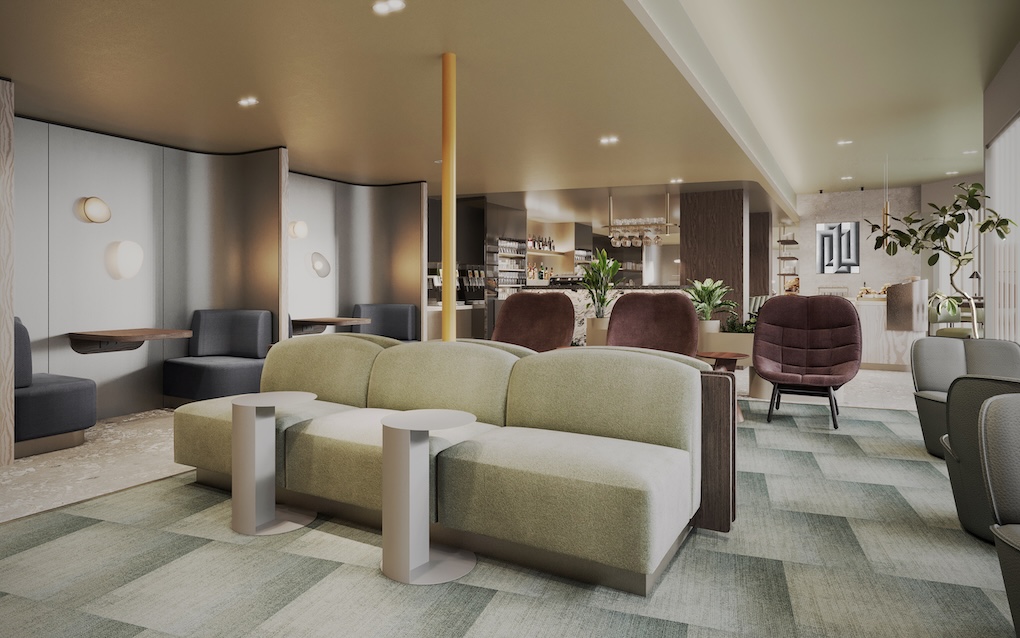
Segmentation and the promise of comfort
Wider access raises a fundamental question: how many expectations can one lounge satisfy?
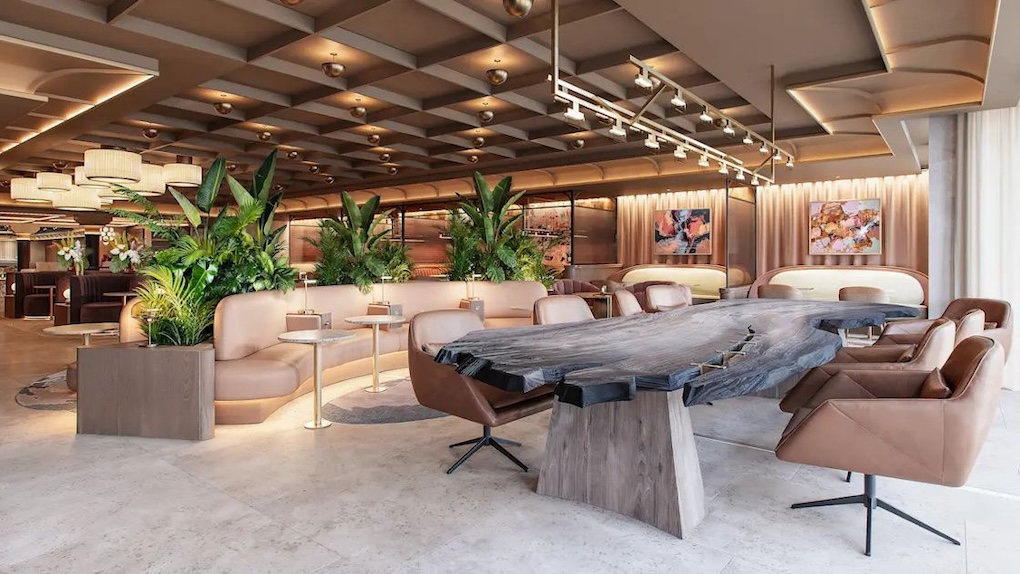
Aspire’s answer is a three-tier structure comprising Aspire Lifestyle, Luxe by Aspire and Suite by Aspire.
“Overall, as we predicted when launching our tiered product strategy, the mix of guests in our lounge is changing and will continue to evolve,” Collyer says. “We understand that to stay competitive, we need segmentation to provide the appropriate guest experience to today’s modern travellers.”
The hotel analogy is clear. Customers attach different values to privacy, service, food and personal space. Differentiated products offer a way to serve those preferences more precisely.
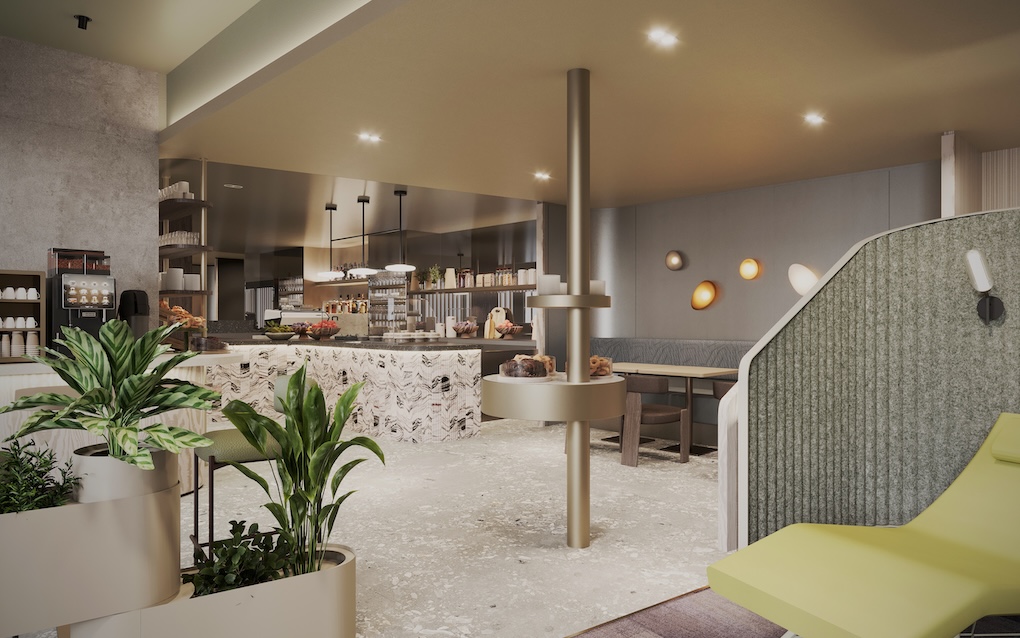
Yet premiumisation also depends on getting the basics right. Collyer cites Aspire research suggesting 28% of UK consumers define airport luxury as a comfortable seat – a finding that informed a design collaboration with students from London’s Central Saint Martins College of Art.
The winning chair, by Aya Maria El Omeira, addresses several practical passenger needs.
“The design provides privacy, keeps luggage safely within sight, and incorporates a surface for working or relaxing,” he says. “It is also about creating a sense of privacy, ease and reassurance.”
That interpretation of comfort is instructive. The premium passengers seek can be attached as much to feeling settled and in control as to the surroundings themselves.
A commercial role beyond the lounge door
For airports, Collyer argues, lounges have acquired a strategic value extending beyond their own financial performance.
“Expectations have changed significantly, and the value of lounges now extends well beyond profitability. Lounge access is driving passenger preference, and airport operators are recognising the role it can play in making their airport more attractive.”
He points to London City Airport: “We’re building the airport’s first lounge, creating a new proposition for passengers who might previously have chosen Heathrow in part because of its lounge offering.”
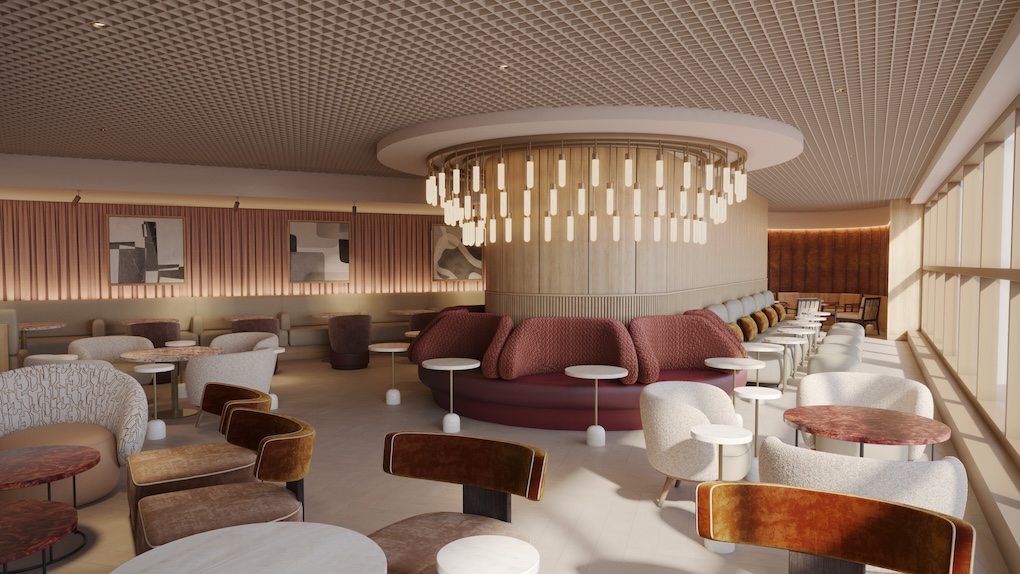
The extent to which hospitality provision influences airport choice will depend on the alternatives available to each traveller. Nevertheless, the proposition raises an important question for airport commercial teams: how should lounge value be measured across the wider estate?
A lounge can strengthen an airport’s appeal while concentrating food, drink and dwell time within its own footprint. Understanding its relationship with terminal spending therefore matters alongside assessing its standalone returns.
Collyer’s answers do not quantify that relationship. But they do reinforce the case for incorporating lounge development into broader commercial planning, with access arrangements, location and passenger segmentation considered together.
Hospitality becomes the differentiator
As lounge provision expands, seating, refreshments and connectivity become less distinctive. Competition shifts towards the quality and coherence of delivery.
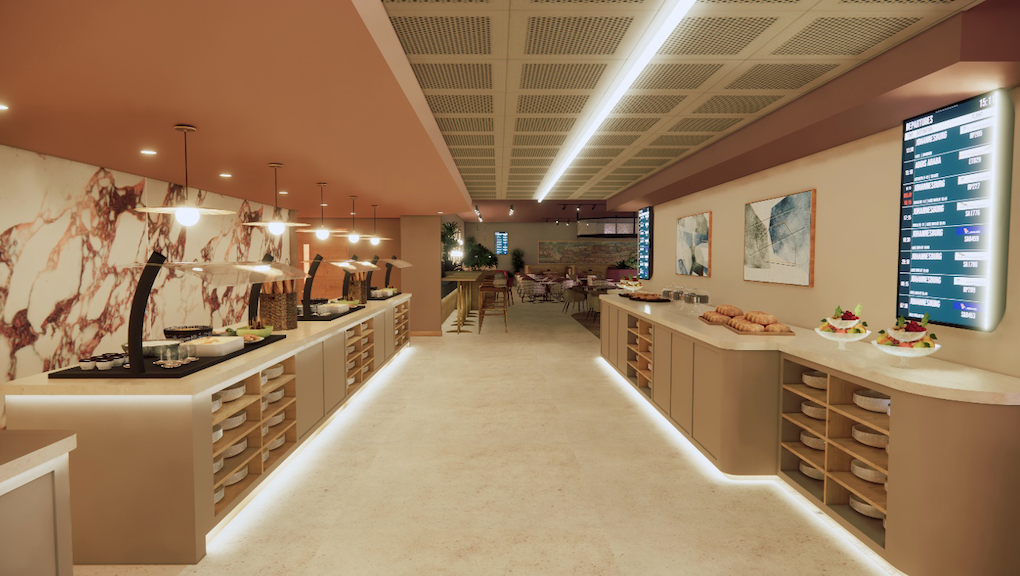
“Following lounge design, guests tell us that food & beverage is the second most important component of their pre-flight experience,” Collyer says. “That’s why we are investing heavily to transform the culinary experience within our lounges.”
Aspire’s CURA proposition combines global service standards with local products and partnerships. At its second American Express co-branded lounge in Canada, at Calgary International Airport, partners include local restaurant Charcut and cocktail and wine bar Missy’s.
“Partnerships like these enable us to curate a true sense of place that celebrates and showcases the best of what the region has to offer,” notes Collyer.
For network operators, the strategic challenge is combining dependable standards with local relevance. For consumer brands, it suggests opportunities to engage passengers through hospitality and discovery.
Technology, meanwhile, is being directed towards operational friction. Collyer describes AI and machine-learning systems that monitor crowding and identify tables needing cleaning, supported by headsets to improve staff communication.
The return depends on how effectively those tools support people.
“Our people are the ones who bring our hospitality experience to life, and I always say they represent at least 50% of the guest experience,” says Collyer. “That’s why investing in them matters so much.”
Recruitment, training and progression consequently sit at the centre of the investment case.
The constraints behind sector expansion
Collyer remains confident about the sector’s capacity to absorb further investment.
“Based on our experience and data, I don’t foresee an oversupply of lounges,” he says. “As traveller needs have changed, those lounges which have evolved to keep up with the market will offer the supply to the industry.”
Network growth, however, still requires the right product and capacity at individual airports. Collyer’s assessment of the principal constraint is revealing.
“Our biggest challenge to growth is having the right team and resources to deliver our ambitions and the highest-quality pre-flight hospitality for all our guests worldwide. That’s why it’s so important for us to invest in these areas of the business.”
Sustainability also informs operating decisions. He cites LEED certification at Aspire’s lounge at Billy Bishop Toronto City Airport, an on-site bakery, efficient ovens and wine on tap, which he says removes the need for approximately 9,000 glass bottles annually.
Looking ahead, he expects “further segmentation and premiumisation”, including products such as Aspire’s developing PRIVE offering.
That direction makes the growth equation more demanding. Operators must align product, distribution and service across an increasingly varied customer base. For passengers, the test remains straightforward: whether the experience inside justifies the decision to enter. ✈
 The Moodie Davitt Report also publishes Airport Hospitality World, the latest edition to our wide-ranging, market-leading travel retail and airport non-aeronautical revenues publishing and event portfolio. Airport Hospitality World covers all forms of airport lounges across international and domestic terminals, including various definitions as follows:
Plus other hospitality-related platforms:
Excitingly, the long-established Airport Food & Beverage (FAB) + Hospitality Conference & Awards will embrace Airport Hospitality World from the 2026 edition – the event’s 15th anniversary. |