

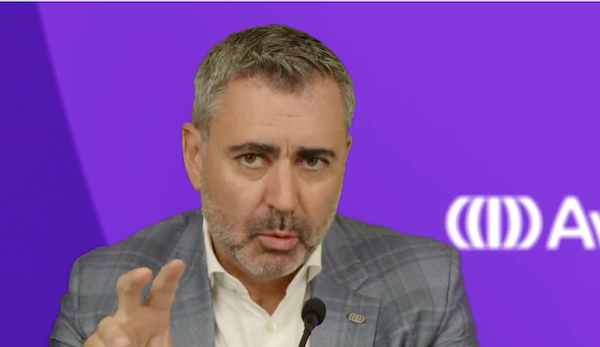
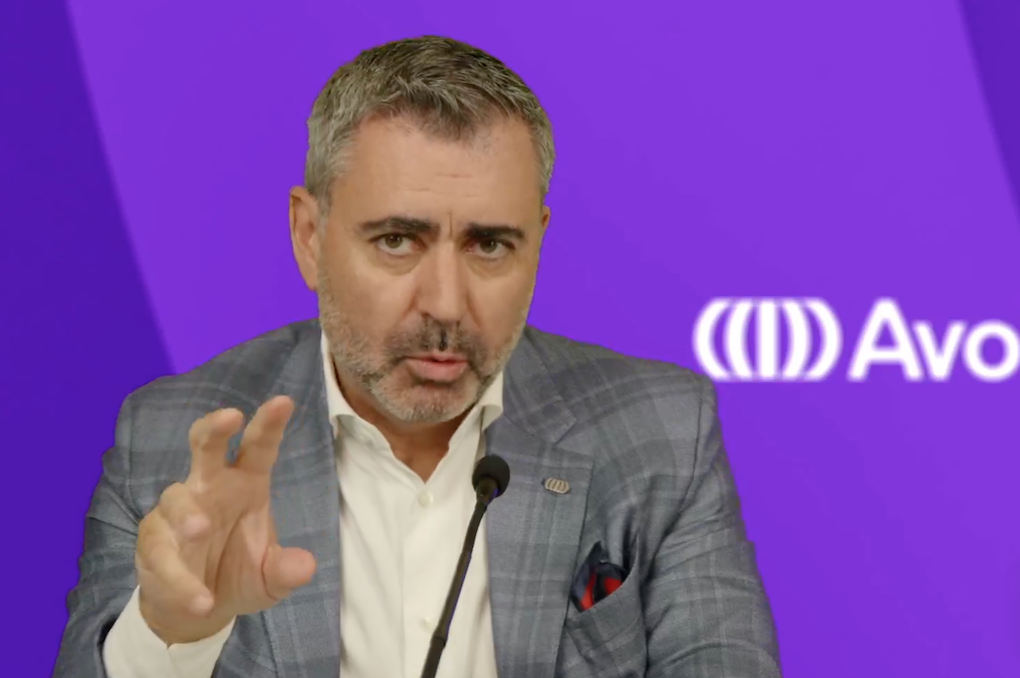
SWITZERLAND/INTERNATIONAL. Avolta CEO Xavier Rossinyol used the travel retail to dining group’s H1 earnings call today to underline that the company’s long-term investment strategy remains firmly on track.
He also acknowledged the challenges of geopolitical upheaval, operational growing pains at landmark airport projects and softer-than-expected passenger trends in several key markets.
As reported, the travel retail and food & beverage market leader revealed core turnover climbed to +3.1% at constant exchange rates and +3.7% on an organic basis to CHF6,437 million (US$7,898 million) in the half.
Excluding the impact of war in the Middle East, organic growth was +5.2% year-on-year. Organic sales growth improved after a “muted April”, in the words of the company, rising +2.9% in Q2 and +4.6% without the impact of the Middle East conflict.
The second half of the year has begun positively, with July to date organic growth hitting +4.1% year-on-year (+4.8% excluding the Middle East).
Those figures only tell part of the story. Throughout the analyst presentation and subsequent Q&A, Rossinyol repeatedly returned to the idea that the headline numbers mask a business continuing to invest aggressively for future growth while navigating what he described as a series of largely temporary headwinds.
“If we discount the effect of the Middle East crisis, this organic growth would have been +5.2%,” Rossinyol noted. Likewise, he added, excluding both the geopolitical disruption and the start-up costs associated with major new airport contracts, EBITDA margin would have reached approximately 9.5%.
“We remain cautiously optimistic,” he said, adding that while volatility remains, the business is seeing “progression over the next months and quarters on the positive side”.
Middle East disruption weighs on EMEA
Much of today’s discussion centred on the continuing impact of the Middle East crisis, which has been the single biggest external factor affecting Avolta’s first-half performance.
Rossinyol acknowledged the conflict continues to create uncertainty across global aviation, particularly within the EMEA region, but stressed its effects have already begun to ease.
“The crisis has less effect than it had at the beginning of the war,” he observed, adding that the remaining headwinds are becoming “progressively less and less”.
Later, responding to analyst questions, he reiterated that while geopolitical developments remain outside Avolta’s control, operational indicators are moving in the right direction.

“What we are seeing is a lower effect now than three months ago, but it’s still an effect,” he commented. “When I put everything together, what we feel comfortable at this stage to say is that we see a progressive improvement. We think quarter two is probably the bottom.”
Cautious optimism was a recurring theme. Rather than predicting a sharp recovery, Rossinyol preferred to emphasise Avolta’s ability to absorb external shocks through the breadth of its portfolio.
“One thing we’ve been saying for a few years now is we are more resilient than the other companies in the industry because of our size,” he told analysts, pointing to the group’s continuing focus on cash generation during periods of heightened volatility.
Major contract challenges
If geopolitics represented the principal external challenge, the biggest internal issue concerned the margin dilution amid investment in some of Avolta’s highest profile contract wins – at Shanghai Pudong International Airport (see our story here) and concession wins for various terminals at New York John F. Kennedy International Airport.
Far from attempting to downplay the margin impact, Rossinyol used the opportunity to explain why such projects inevitably create short-term financial pressure before becoming meaningful contributors to earnings.
Unlike typical concession openings, which may affect results for only a few weeks, both Pudong and New York JFK involve exceptionally large operations spanning thousands of square metres, multiple terminals and extensive staffing, logistics and construction programmes.
“Typically you will see effects of a few weeks or three months,” he explained, “now you’re seeing two very large groups of concessions, and that take numerous months instead of a few weeks.”

In Shanghai, the learning curve has been particularly steep, he added. Beyond the normal challenges of opening new stores, Avolta has had to establish entirely new duty-free supply chains and navigate regulatory procedures that, until now, had been the preserve of domestic Chinese operators.
“Mainland China duty free came with an even higher level of challenge on legal authorisations,” Rossinyol said, describing it as territory “only Chinese companies had experience on”.
He was keen to frame these issues as evidence of strategic progress rather than operational weakness. “If we have these major effects in 2026, it’s because we signed two groups of very material contracts that over time will be positive.”
Avolta expects returns on both projects to improve steadily through the remainder of this year, although Rossinyol cautioned investors that full operational maturity is unlikely before 2027.
“Every month is a little bit better,” he said. “The effects should be fading away quarter on quarter.”
Later, he suggested both projects should be “almost normalised” during 2027, with only limited additional upside extending into 2028.
China and Japan strengthen Asia strategy
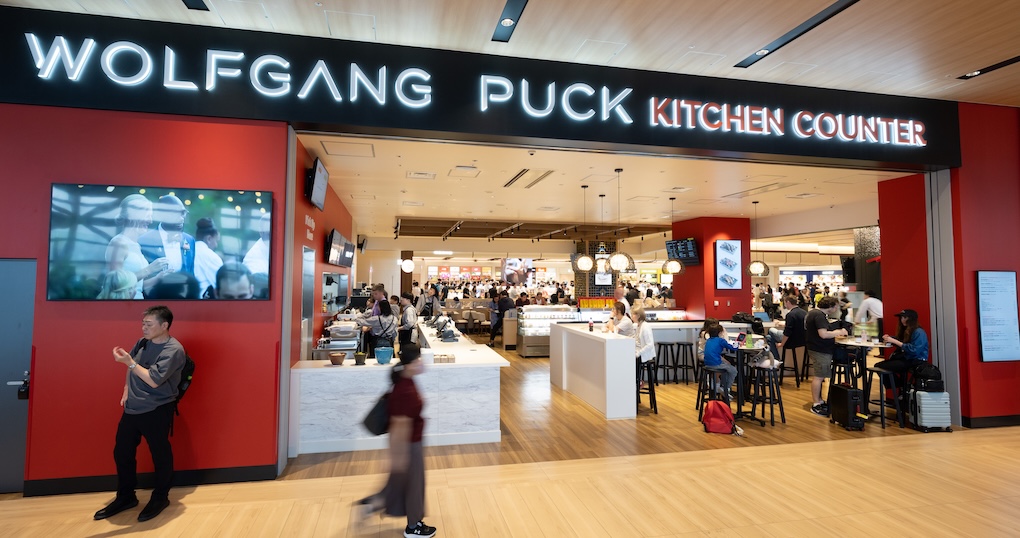
Rossinyol noted the first-half period marked two strategically significant milestones in Asia: the landmark duty-free concession at Shanghai Pudong and its entry into Japan through both food & beverage operations at Kansai International Airport (see our story here) and the acquisition of DFS Okinawa (see our story here).
Rossinyol described Pudong as an historic breakthrough, while Japan provides an equally important long-term platform. “We were recently only in food & beverage, but not in retail,” he explained. “Now we are with retail and food & beverage.”
He described Japan as “a very large market in our industry, but very difficult to enter”, making the Okinawa acquisition strategically valuable beyond its immediate financial contribution.
The business also brings increased exposure to luxury brands, Rossinyol observed, saying it will strengthen Avolta’s expertise in a category that could prove increasingly important in future concession bids around the world.
Importantly, however, Rossinyol stressed the acquisition satisfied the company’s strict financial discipline. “We didn’t do the acquisition to get the profit somewhere else in a distant future,” he said. “In itself, it’s accretive… but on top of that brings some more structural benefits.”
Digital transformation gathers pace
Perhaps the strongest sense of long-term ambition came during Rossinyol’s discussion of digital transformation, where he painted an increasingly sophisticated picture of how data is becoming one of Avolta’s most valuable competitive assets.
The scale alone is striking – of an estimated 10.2 billion annual passenger journeys a year worldwide, Avolta interacts with around 2.5 billion. During 2025 the group served around 700 million customers, while Club Avolta membership has already surpassed 20 million since launching in October 2024.
For Rossinyol, however, the loyalty programme is valuable not simply because of its size. “It’s not only the members,” he explained. “We can use the understanding of the members in Club Avolta… and then extrapolate some of that behaviour to non-Club Avolta members.”

The implications extend across almost every aspect of the business. Dynamic pricing, dynamic assortment, inventory optimisation, workforce planning, targeted digital advertising and camera analytics are all being developed to better understand passenger behaviour and ultimately increase spend per traveller.
“We believe that through that we can improve pricing, improve assortment, optimise inventory and manage better our team members,” Rossinyol added.
He also revealed expanded pilots in dynamic pricing across five locations, alongside trials involving dynamic assortment and enhanced camera analytics capable of understanding how customers – and crucially non-customers – move through stores.
Passengers, he argued, increasingly expect more personalised retail experiences. “Passengers behave in a different way,” he said, citing generational purchasing differences as one example of how better data can shape merchandising, marketing and store operations.
While acknowledging implementation sometimes takes longer than he would prefer, Rossinyol insisted the direction of travel remains clear. “We have done a lot, not enough, but it’s going in the right direction,” he contended.
A diversified portfolio
Questions also focused on regional performance, where Avolta reported positive organic growth across all four operating regions despite varying local challenges.
EMEA inevitably bore the brunt of Middle East disruption, while North America experienced softer passenger trends as airlines prioritised yield over capacity and dealt with the knock-on effects of the Spirit Airlines bankruptcy.
Latin America faced temporary security concerns in parts of Mexico alongside currency volatility, while Asia Pacific delivered particularly strong growth despite the Shanghai Pudong start-up costs.

Rossinyol repeatedly cautioned against over-interpreting quarterly regional fluctuations. “The volatility is higher than if you go to the group and for the full year,” he observed, arguing that diversification remains one of Avolta’s greatest strengths.
Even where passenger numbers softened, spend per passenger has generally remained positive, he added, supported by the breadth of the company’s retail and food & beverage portfolio.
“When you put everything together… I think it shows that our portfolio, both geographically and in segment business, is pretty resilient,” he said.
Investing through the cycle
Rossinyol reiterated the company’s capital allocation priorities: investing first in existing concessions, new contract wins and technology; pursuing only selective, accretive acquisitions; and steadily strengthening the balance sheet through continued deleveraging.

That philosophy helps explain why Avolta remains comfortable reaffirming its medium-term target of 5-7% growth despite the current turbulence.
Rossinyol closed the presentation by thanking Avolta’s 70,000 employees around the world, describing them as “the heart of this company” and crediting their efforts for navigating an exceptionally demanding operating environment.
Taken together, Rossinyol’s central message was broadly positive: despite a first half shaped by conflict, operational complexity and market volatility, the company will continue to invest in the projects, technologies and markets that will define its next phase of growth. ✈