
 | |
|  |
 |  |
CL World Brands launched a range of new products in Cannes, including limited-edition vintage Scotch whisky and Cognac | |
Editor’s introduction: Late October and it’s the eve of the annual TFWA World Exhibition in Cannes. René Dafflon is preparing to unveil the CL World Brands Global Duty Free portfolio to the travel retail trade. It’s a new portfolio within a new division of a relative newcomer to the channel. But CEO Dafflon is no new boy in the business.
The former CEO of Nuance Global Traders (the precursor to The Nuance Group) knows the duty free trade inside out. And having watched the drinks sector closely from a retailer’s perspective he is determined to make an impact as a supplier through a committed and focused approach to a product category that has not always enjoyed undivided support from the liquor majors down the years.
Over lunch just before the Cannes show Dafflon told Martin Moodie how the division plans to put its stamp on the market.
CL World Brands Global Duty Free is a comparative newcomer to the business. Can you give us some background to the division?
It is owned by CL Financial which is a Trinidad and US company. Its roots are in Trinidad and Tobago, while its operational headquarters are in Palm Beach in the US.
CL Financial created a new financial entity at the start of this year, called CL World Brands Global Duty Free.
CL Financial’s core business is insurance and banking and they are heavily involved in real estate in the Caribbean, in hotels and so on. They are strongly involved in energy and oil and gas. They own Angostura, the rum distillery and the bitters; they added Burn Stewart Distillers [in February 2003], added Cruzan rum which they later sold to V&S and they acquired Thomas Hine in [July] 2003.
Basically the strategy is in the mid-term to become the number four to six company in the world liquor market.
They also wanted to focus on speciality and niche products. In doing so they decided that in key markets they wanted to control their distribution, which led to them having a domestic company for UK business [Paragon Vintners].
They cover the market themselves in the US, Caribbean, Canada and have their own distribution company in France. They also just acquired Chateau Online, which is the biggest online trader for liquor.
Why such a concerted move into the duty free business?
Because in the portfolio we have some beauties, especially Hine. It’s a Cognac which was not always taken care of properly in the past by [former owner] LVMH. It has big potential and we have seen the first excellent reaction to the brand at the Singapore show in May for the Asian market. Hine is a great name in Asia and doing well in other locations around the world such as Heathrow.
In whisky we’re doing some duty free exclusives which we’re going to show in Cannes.
I have this conviction that there are passengers out there looking for specialities. There are many of these passengers and they simply aren’t satisfied with the current offer. Yet you don’t need that much space to offer a range of quality specialities.
We have a nice collection. Also we have an involvement in a vodka brand which is number two on the Polish market called Sobieski. It’s not a marketing vodka, it comes from the oldest distillery in Europe.
So what prompted you personally to return to the travel retail channel?
What challenged me to move back into the duty free business was this collection of specialities. It’s exciting. We have to start on an individual brand approach at this stage but our vision is to have this speciality-based portfolio in a shop-in-shop concept. And we can do it.
Are you happy with the portfolio as it stands or are you planning to expand?
If the group wants to move to a position of number four to six worldwide in the mid-term, then this only can be done through acquisitions. So I think the portfolio we are showing at Cannes is nice but it’s probably not the same that we will show in Singapore next May and certainly different from Cannes next year.
Is the company serious about acquisitions in the near future?
Yes definitely. It’s a real culture in the company not to get too excited by quarterly results but to really look long term.
I believe that the move Pernod Ricard made recently [in acquiring Allied Domecq in association with Fortune Brands – Ed] is the most important move in the liquor sector for a long time. This will stir up the market for the next few years and our group is prepared to look at any opportunity that arises.
That’s the exciting thing about this – to have some specialities, to have something to talk about, and to cater for a customer that was not properly on the priority list in the past.
It’s always exciting to start something new. You don’t have the structures; you’re not organised and then you come out with your first catalogue – it’s very exciting.
Clearly it’s early days for you. But while the division is a newcomer to the channel it has not exactly come from left field – it’s backed by a big group that already had a strong position in the drinks industry. So right from the start people have to take you seriously. You’re also an experienced individual who knows the business inside out. And you have an intriguing portfolio.
We have the Burn Stewart portfolio. In duty free we’ll focus on Bunnahabhain, Tobermory, Black Bottle and Scottish Leader. But the sexiest whisky is [Islay single malt] Bunnahabhain. One retailer said to me, “Thank you, you have Bunnahabhain, my favourite whisky; Another leading Asian airport said, “That’s great, you’re bringing back Hine Cognac.”
We have that discovery aspect about our portfolio, which is fascinating – it’s what we’re all about.
Besides Hine we also have Monnet Cognac which is very strong in certain parts of the world [notably Nordic markets – Ed].
Black Bottle looks outstanding on the shelves but it’s also a great entrance to the single malts as it’s a blend with a high collection of single malts. You can easily go from a standard blend into Black Bottle and then into single malts.
Why the emphasis on specialities?
I always felt there was a problem with duty free stores – under one roof how could you pretend to be the specialist for perfumes, the specialist for jewellery, the specialist for watches, whisky or whatever? It doesn’t work any more.
At a time when the business was simply about “˜brands for less’ the [brand-building] work was done domestically and the consumers simply went to duty free for the saving – but the saving is not the argument anymore.
The industry should stop preaching to people that they can save money at the airport – there are many other reasons and much better reasons and much more sustainable reasons than just the savings factor.
When you go through customs – even if you travel a lot – you change. You’re not part of the mass any more. And you don’t want to be called cheap. Ok some might go for a bargain – but if you go on holiday by the second day you’re investigating the local market. Why? Because you want to discover something else.
We’re now entering the A-380 era where boarding will take a long time. Passengers will have a long time and they will want to read, to touch and to smell and they want to learn. That’s why they are travelling – otherwise they would stay at home. So our specialities will appeal.
Also, behind liquor – and contrary to perfume – there is culture and stories. We have distilleries that go back to 1780 and 1846 and therefore you have something to tell. If you open a bottle of 75 Hine today you have 30 years of story in the bottle, years that have seen a complete change in the world.
Was the drive towards a centralized duty free division your recommendation?
My recommendation was to have the duty free separated from the domestic distribution. In my time at Nuance I always had a hard time talking to local market guys because I don’t care what’s happening in the next village, I care what’s happening in the next airport and definitely what’s happening around the globe.
So I told CL that if they want to be successful in duty free they should use it as a window. It should be centralised. But the move into duty free was one they had in mind already. It was just a question of how.
So you devised the “˜how’. What sort of structure have you put in place? Do you work through group-owned companies or distributors?
Both. We have one person responsible for sales, Jacques Ielli, [International Sales Director] who was with Weitnauer forever. He’s probably been in duty free much longer than me. And we have Lynsey Farrell as Business Development Manager, looking after certain key European markets.
Whenever we can, we use the set-up locally, where we have one. But all duty free sales are going through one point.
The timing of your move seems interesting”¦
Is the timing right? I definitely believe so. I travel intensively and I just don’t see anything that makes me stop inside the stores.
And even though we’re currently talking about small brands the group is planning to invest heavily in advertising next year so that we will move into airline magazines and work with 5-star hotels and so on to really position the product – not just sell it.
CL WORLD BRANDS GLOBAL DUTY FREE’S CANNES LAUNCHES
H by Hine: Following the success of this premium Cognac on the UK market, Hine has released this Petite Champagne Cognac exclusively on the duty free market in a one-litre bottle. It is a blend of over 15 Petite Champagne Cognacs. Eric Forget, Cellar Master, describes the Cognac as a floral style with hints of jasmine, iris and vanilla on the nose and delicate and velvety on the palate. Its elegant packaging incorporates the key colours of the distinctive Hine livery: red, cream, gold and bronze.
Vintage exclusive duty free edition 1975, 1976 and 1981 – Early Landed: Three fine vintages are now available in attractive and daring packaging. Hine is acknowledged worldwide as the specialist in vintage Cognacs, holding stocks of all the finest years. The 1975 vintage was equally as good for both wine and Cognac. The 1976 Vintage proved to be an exceptional year producing a dark cognac, while the 1981 Early Landed an “extraordinarily harmonious” vintage, said the firm. All three vintages are described as different in style and taste, and are especially prized by connoisseurs.
Bunnahabhain (single malt Islay) 18yo: The 18yo whisky from the Isle of Islay is described as having a welcoming, fragrant nose releasing honeyed nuts and a sea-induced salty tang. Beautifully balanced, the palate is influenced by mellow sherried nuts and shavings of natural oak wood. The whisky is contained in oak glassware dressed in dark green labelling and neck wrap with complementary gift tube and booklet. Retail price is €64.
Bunnahabhain (single malt Islay) 25yo: The long-awaited release from the Bunnahabhain Distillery has little remaining in the oak casks. The whisky has sweet caramel dessert aromas, while sweet berries and cream progress into roasted nut and malt. The whisky is contained in oak glassware dressed in uncoated cream stock with gold foil/dark chocolate brown branding and a complementary hessian-lined alderwood gift box and leather tied insert. Retail price is €209.
Tobermory (single malt isle of Mull 1972): The product will be exclusive to duty free and a limited edition. Tobermory Distillery is the only distillery on the island of Mull. The chestnut-gold single malt was left to rest in American oak casks in 1972. Now bottled, the liquid remains unchillfiltered and at natural cask strength, 49.7% abv. Sweet toffee apples on the nose hint of its cask finish as the liquid has been matured in Oloroso sherry casks before being filled into traditional green flint bottles. Each bottle has been personally hand numbered and comes in a bespoke black gift box with a scroll detailing tasting notes from Michael Jackson, the world’s best selling and most internationally published writer on whisky. A specially designed limited-edition logo has been created and displayed on a lead neck hanger sealed authentically using hand-dipped black wax. With only 897 bottles available, the retail price is £150.
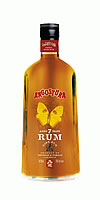
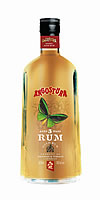
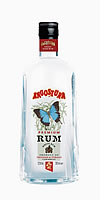
Angostura rum, Butterfly Line:
·Angostura Premium White Rum
·Angostura 5yo Gold Rum
·Angostura 7yo Dark Rum
CL Brands Strategy
– To build an international drinks company
– Based on premium brands primarily in the spirits sector
– Concentrating on niche brands with individual strengths
– Starting with the investment portfolio of C L Financial Limited
– Followed by some key acquisitions
Principal Group Companies
Burn Stewart Distillers – Scotland
Angostura Ltd – Trinidad & Tobago
Thomas Hine & Co. – France
E.A. Scheer – Holland
ChateauOnline – France
For details, contact Jacques Ielli, International Sales Director, tel. +41 79 816 40 23 or email: Jacques.ielli@clwbdutyfree.com
MORE ON CL WORLD BRANDS GLOBAL DUTY FREE