

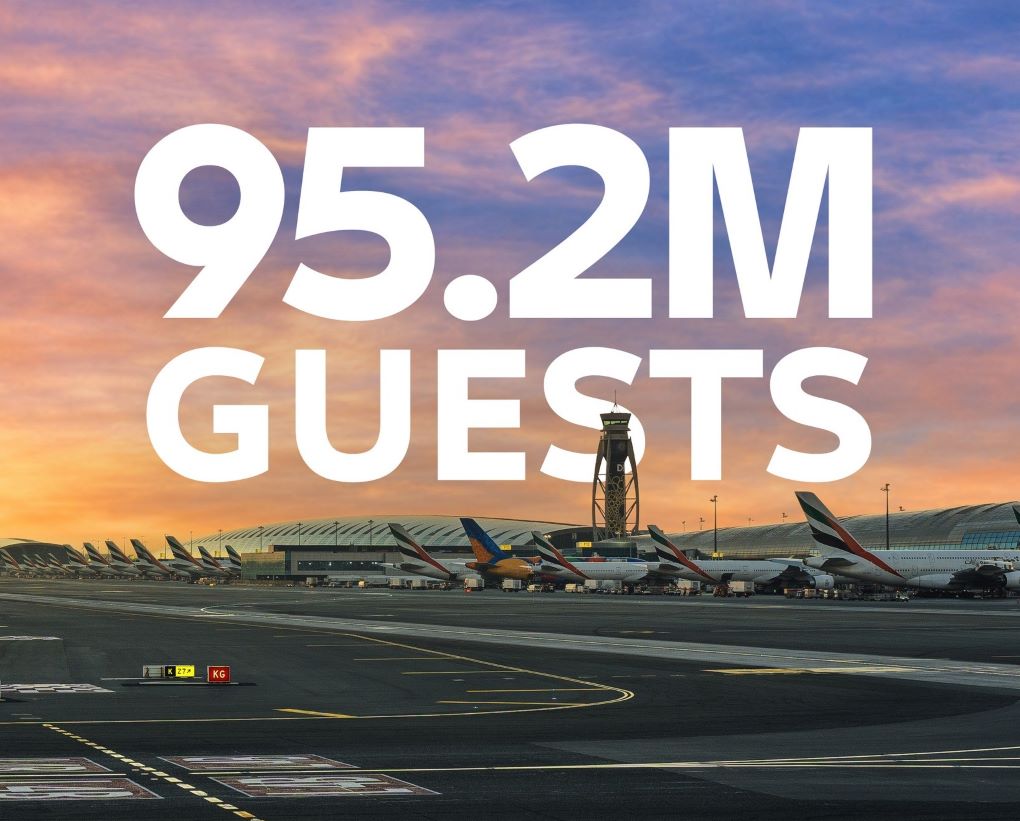
UAE. Dubai International Airport (DXB) served 95.2 million passengers in 2025, marking a +3.1% year-on-year rise and breaking its previous records for annual international traffic.
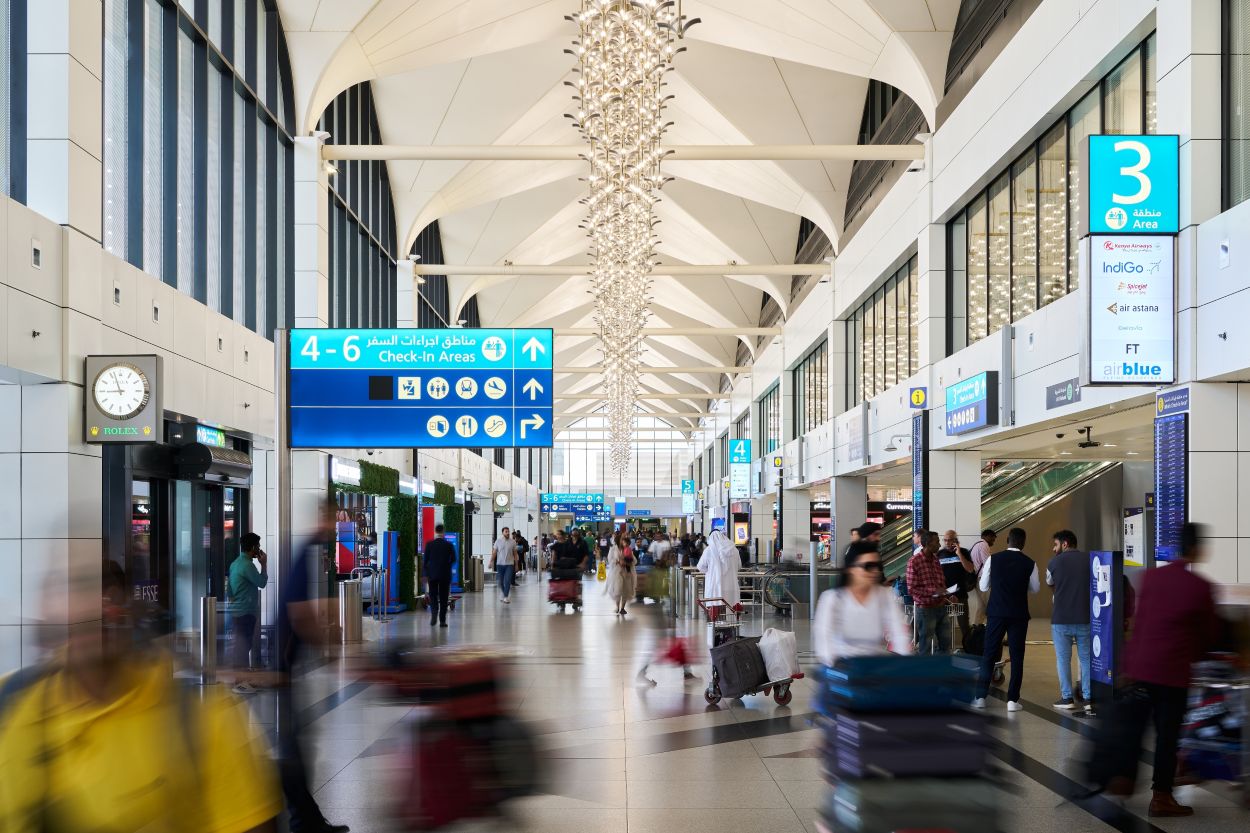
The airport company noted that the milestone demonstrates sustained record-level performance, with the airport recording its busiest day, month, quarter and year, while operating at maximum capacity and maintaining strong operational performance.
December was a peak month for the airport, with 8.7 million passengers, up +6.1% year-on-year, and closing a record fourth quarter of 25.1 million passengers, up +5.9% from the same period in 2024.
Flight movements rose +5% year-on-year in Q4 to 118,000, contributing to a total of 454,800 for the year, a +3.3% increase from 2024.
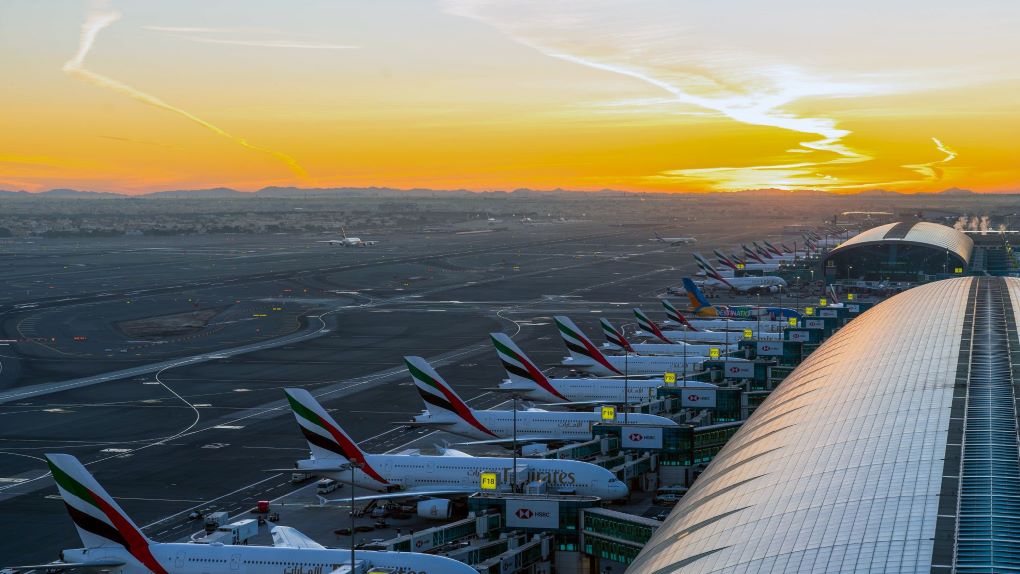
The average number of passengers per movement remained steady at 214 despite expanded flight operations, a result of deploying larger aircraft and maintaining high load efficiency.
The airport maintained a steady annual load factor of 77.6%, marking only a slight 0.5-point change.
Consistent performance amid growth
Dubai Airports attributed its 2025 success not to isolated surges, but to sustained operational strength, supporting a high-level passenger experience. This performance was achieved through careful planning and seamless coordination across the oneDXB community, comprising airlines, partners and government stakeholders, the company noted.

Even with high traveller volumes, 99.35% of departing passengers cleared passport control in under ten minutes, while 98.8% of arriving passengers were processed within 15 minutes. Security check wait times remained under five minutes for 98.9% of guests.
Broad and balanced global connectivity
The top source markets for DXB in 2025 were led by India at 11.9 million passengers, followed by the Kingdom of Saudi Arabia at 7.5 million, UK at 6.3 million, Pakistan at 4.3 million, and USA at 3.3 million.

Several markets recorded notable growth, with China up +16.6% year-on-year to 2.5 million passengers, Russia rising +6% to 2.8 million, Türkiye increasing +6.7% to 2.2 million, Egypt expanding +14.3% to 1.8 million, and Italy climbing +12.5% to 1.6 million.
London continued to be DXB’s top city destination with 3.9 million passengers, followed by Riyadh at 3 million, Mumbai and Jeddah at 2.4 million each, and New Delhi at 2.2 million.
DXB concluded the year with connections to 291 destinations across 110 markets, served by 108 international airlines, bolstering its status as the world’s most connected hub.
Dubai Airports CEO Paul Griffiths said: “Airports are often defined by moments of intensity, but long-term performance is defined by how well those moments are sustained. In 2025, DXB showed that record traffic is no longer an exception, but part of its operating reality.
“That consistency at scale reflects the maturity of the system and the strength of collaboration across our oneDXB airport community to deliver excellence under growing demand.
“We expect traffic to approach 99.5 million in 2026, supported by close coordination across the sector and the oneDXB community.”
Looking forward, Dubai Airports highlighted its commitment to steady growth and consistently high passenger experience, prioritising careful management of demand and capacity over short-term surges.
Dubai Airports also emphasised the continued development of DWC as a complementary hub, enabling the emirate to stay prepared for evolving global aviation demands. ✈