



INTERNATIONAL. Leading travel retailer Dufry Group aims to achieve climate neutrality across its operations by 2025. The company has developed a series of SBTi-based (Science Based Targets initiative*) goals to reduce its carbon emission footprint.
The reduction strategy covers Scope 1 and 2 emissions across its operations and follows the SBTi 1.5°C pathway**. Dufry also plans to reduce Scope 3 emissions below the 2°C pathway set by SBTi “through tight collaboration and engagement with brand partners and logistics service providers,” it said.
Dufry said it has conducted a comprehensive analysis of its carbon emissions profile to define SBTi-based reduction targets covering global operations and its complete business model. Science-based greenhouse gas emission targets consider the level of decarbonisation required to meet the goals of the Paris Agreement – to limit global warming to well-below 2°C above pre-industrial levels and pursue efforts to limit global warming to 1.5°C.
Dufry’s emission reduction targets follow the SBTi criteria and recommendations and will be submitted to SBTi for validation.
Scope 1 and 2 emissions (following the SBTi’s 1.5°C pathway) will be eliminated by implementing energy efficiency measures at different levels, by using green electricity and by compensating remaining unavoidable emissions with carbon offsetting initiatives.
For Scope 3 emissions, Dufry will follow the under 2°C SBTi pathway with two separate sets of initiatives and objectives. Through supplier engagement programmes, Dufry aims at ensuring that by 2027, its procurement volume will be 50% covered through suppliers having SBTi validated emission-reduction targets. At the same time, through collaboration with its logistic partners, Dufry plans to reduce its logistics carbon footprint by -28% by 2030.
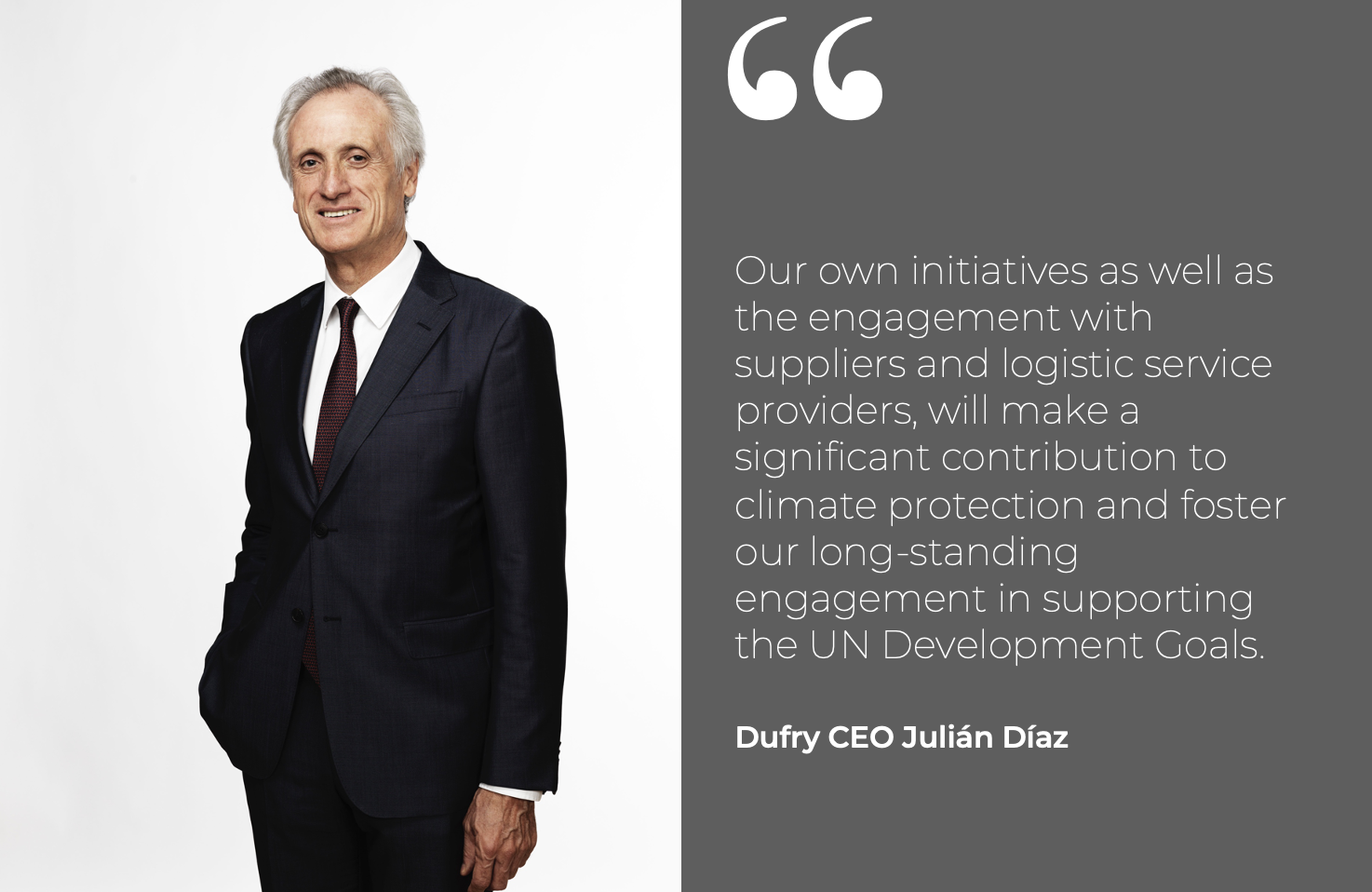
Dufry CEO Julián Díaz said: “The definition of our emission reduction targets is an important step of our overall ESG engagement, which we continue to evolve through important initiatives in different areas. Reaching climate neutrality by 2025 for our own Scope 1 and 2 emissions and reducing our Scope 3 emissions respectively will considerably improve our carbon footprint globally.
“Our own initiatives as well as the engagement with suppliers and logistic service providers, will make a significant contribution to climate protection and foster our long-standing engagement in supporting the UN Development Goals.”
*The Science Based Targets initiative (SBTi) drives climate action in the private sector by enabling companies to set science-based emissions reduction targets. It is a partnership between not-for-profit climate organisation CDP, the United Nations Global Compact, World Resources Institute (WRI) and the World Wide Fund for Nature (WWF).
** Business Ambition for 1.5°C is an urgent call to action from a global coalition of UN agencies, business and industry leaders, in partnership with the Race to Zero.