

Flexibility the name of the game as currency headwinds buffet Korean duty-free retailers

The enduring global appeal of K-beauty continues to underpin Shinsegae Duty Free’s strength in the skincare category but sales are being hit by the stricken Korean Won {Image: Shinsegae Duty Free}

SOUTH KOREA. As the much-weakened Korean Won comes under increasing pressure against the US Dollar, leading travel retailers tell The Moodie Davitt Report they are adjusting their strategies to manage exchange rate volatility.

As noted in our recent report, Korean duty-free retailers price in US Dollars, unlike their department store counterparts’ Won-based proposition. With tax refunds thrown in, department store pricing is often cheaper than duty free, leading to a surge in tourist-related shopping.
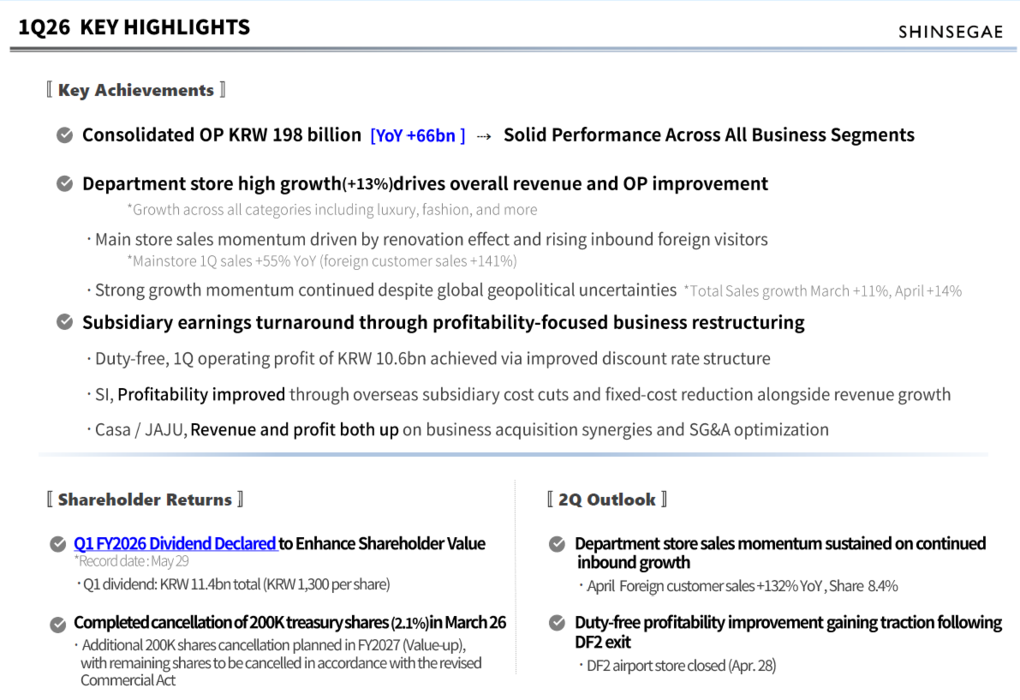
A tale of two channels: In a performance that reflects a key and growing channel shift within the country’s tourism-related retail sector, Shinsegae Department Store posted a remarkable +90% year-on-year increase in sales to tourists during the first quarter. Click on the image to read our coverage.

As a result, travel retailers are deploying a range of promotions, pricing mechanisms and focus on K-culture products to benefit from a remarkable 2026 surge in inbound tourism that is expected to escalate further during the peak summer travel season.

South Korea posted a first-quarter record of 4.76 million foreign tourist arrivals, up +23% year-on-year, according to Ministry of Culture, Sports and Tourism. The figure represents the highest first-quarter total on record, achieved in the face of geopolitical tensions in the Middle East that emerged in March.

The weak Korean Won combined with deteriorating political relations between China and Japan have helped drive a sustained inbound tourism surge. The 2,045,992 visitor tally in March represented an all-time monthly high. {Source: Korea Tourism Organization; Trading Economics}
After the famine comes the feast. With the COVID-ravaged 2020-2022 period consigned to the past, 2026 is set to be the strongest year in history for Korean inbound tourism.
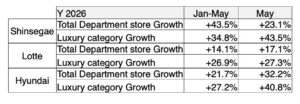
Boosted by the weak Korean Won and rocketing inbound tourism, department store sales have been soaring through early 2026 with luxury a standout. Click on the table to enlarge. {Figures: Industry sources}

The Korean Won-US Dollar exchange rate climbed to KRW1,560 earlier this week, the highest level in nearly two decades.
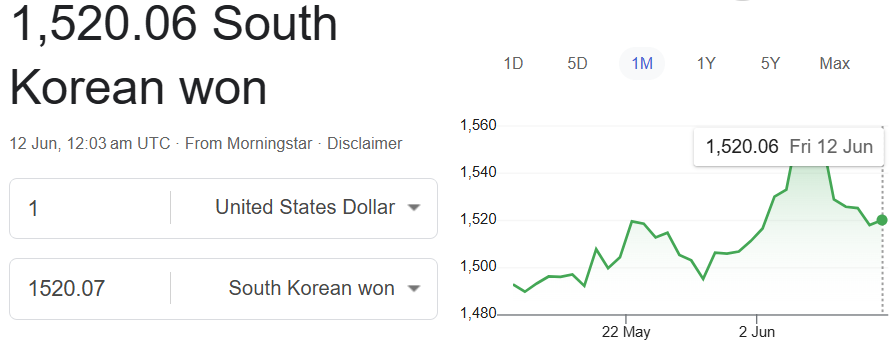
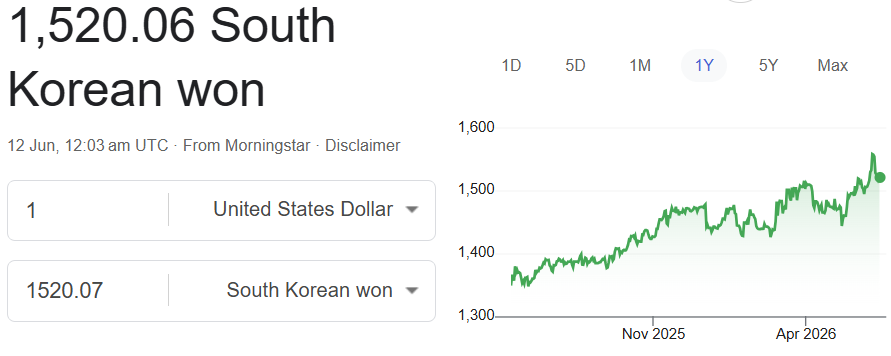
The charts tell the story of the weakening Korean Won, making department store shopping an attractive proposition for tourists {Source: Google, click on graphics to expand}

Lotte Duty Free told The Moodie Davitt Report a prolonged period of elevated KRW/US$ exchange rates would increase procurement costs and further strain profitability across the duty-free industry.

A company pokesperson said, “As the exchange rate continues to fluctuate in the mid-KRW1,500 range, there is a growing recognition across the industry that there are limits to how much of this burden can be absorbed internally.
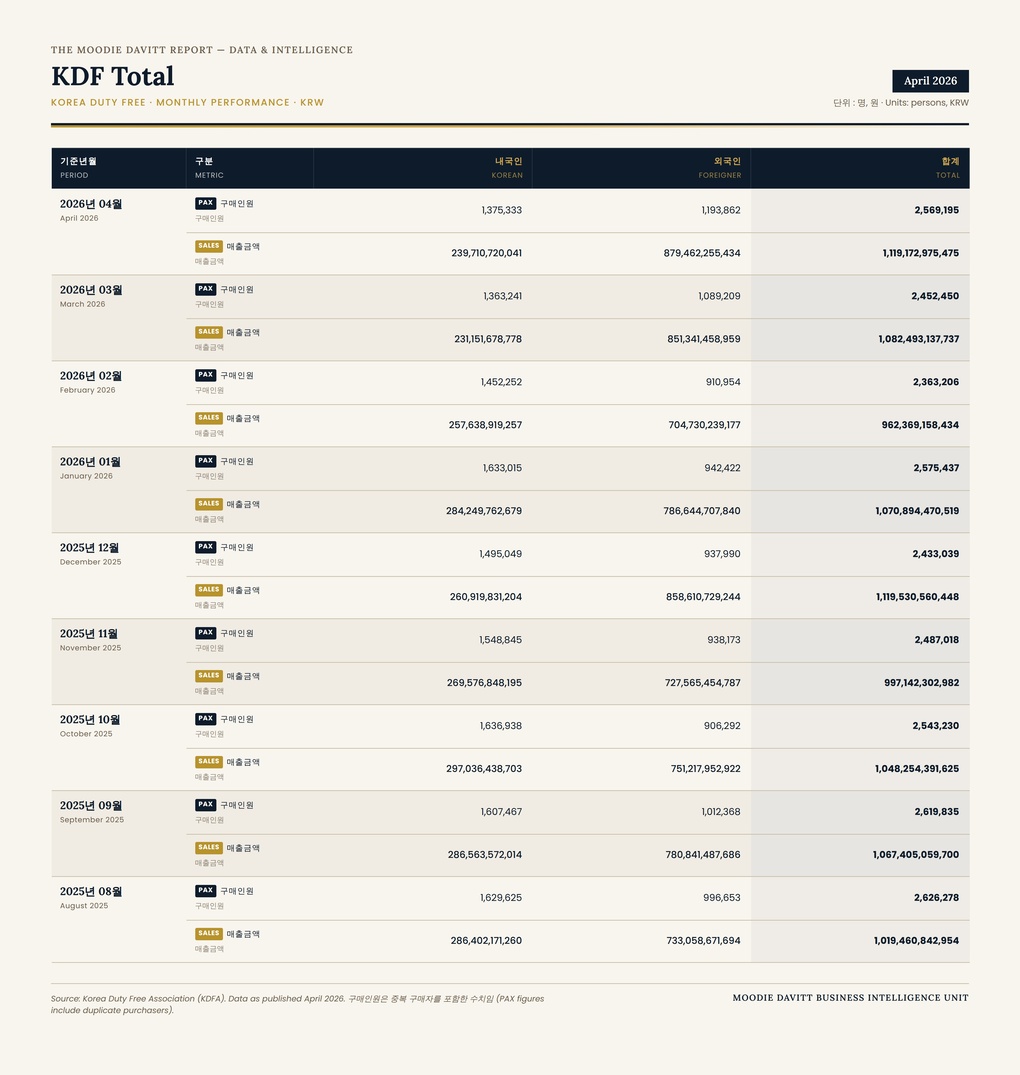
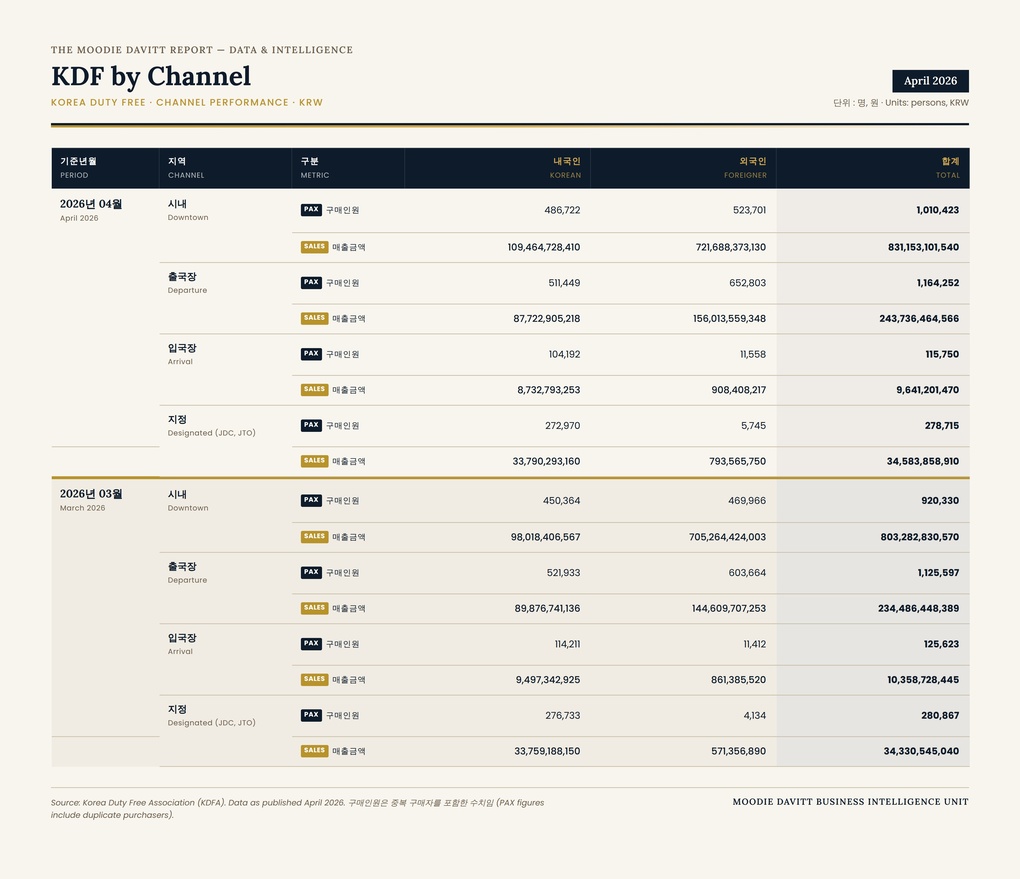
Total market figures (above) and channel breakdown (below) for April underline the fact that increased tourism does not automatically equate to increased duty-free sales. Duty-free sales nationwide (excluding inflight retail) in April fell -5.5% year-on-year. The key downtown duty-free channel saw a sharp -10.5% year-on-year fall in foreigner spending. Figures courtesy of Korea Duty Free Association. {Graphics: Moodie Davitt Business Intelligence Unit; Click on the images to expand}

“For domestic customers in particular, the price advantage of duty-free shopping inevitably becomes less attractive under a strong US Dollar environment. As a result, the industry is concerned prolonged exchange rate volatility could weigh on domestic demand.

“Over the coming months, maintaining a balance between price competitiveness and profitability will remain one of the industry’s key priorities.”
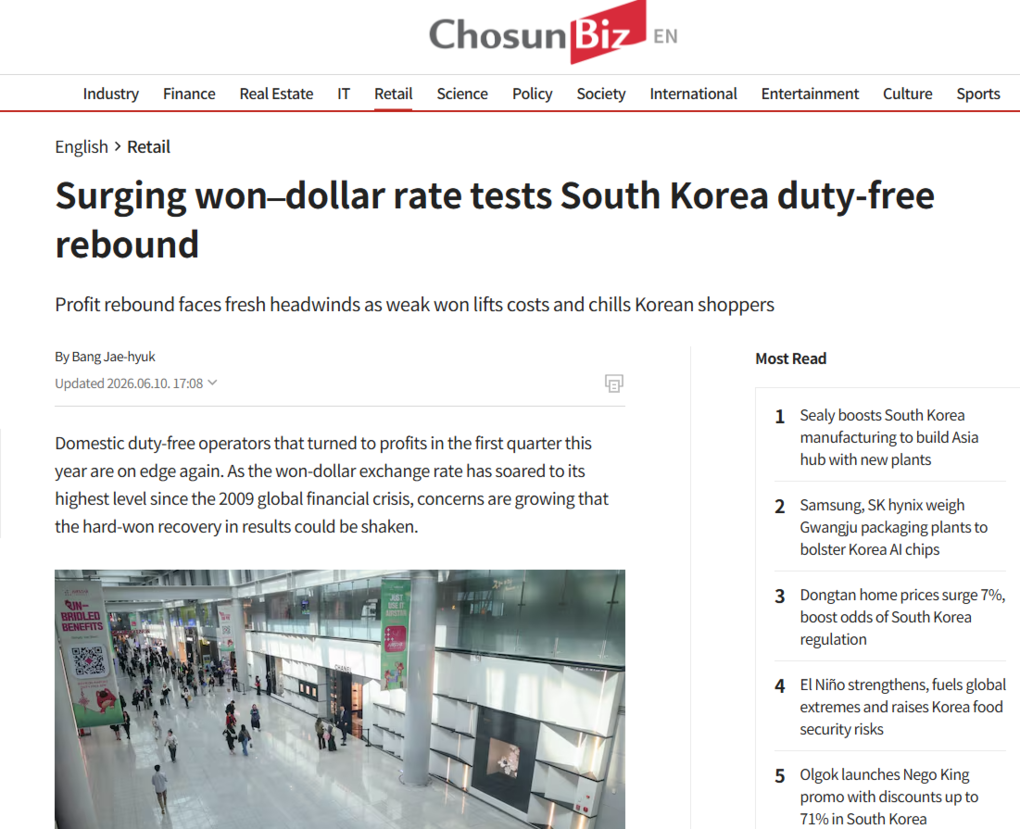
Influential Korean business title Chosun Biz reported this week on the exchange rate burden weighing on the duty-free retail channel. “Duty-free shops buy and sell goods based on Dollars. When the exchange rate rises, purchase costs increase and consumers feel a heavier price burden,” the report notes. “For Korean customers in particular, the price advantage of duty-free shopping inevitably diminishes.“ Click here to read the full insightful report.

Taking a more upbeat view, a Shinsegae Duty Free spokesperson said while exchange rate volatility is creating headwinds for the sector, the company remains cautiously optimistic heading into the peak summer travel season.

The travel retailer highlighted continued resilience in travel demand, particularly from international visitors to the Republic.

K-pop-up: Shinsegae Duty Free fused K-culture, K-pop and K-beauty with a pioneering immersive retail experience at its Myeong-dong, Seoul store in April, bringing together global content sensation KPop Demon Hunters with leading K-beauty brand Anua for a limited-time pop-up

The spokesperson told The Moodie Davitt Report, “At Shinsegae Duty Free, we are seeing continued growth from a more diversified customer base, including travellers from Japan, Southeast Asia and Europe, alongside our traditional customer segments.

“This diversification helps reduce dependence on any single market and provides greater resilience against external economic fluctuations.

“While a stronger US Dollar may affect short-term profitability, we believe sustained inbound tourism demand and a differentiated shopping experience will continue to support sales growth throughout the summer season.”

As reported, April sales to Koreans were down across both channels, partly driven by Korean duty-free retailers pricing in US Dollars.

Sales to foreigners also declined -6.2% year-on-year (+3.3% over March 2026) to KRW879,462,255,434 (US$576 million), even as the customer base surged +23.9% year-on-year and +9.6% month-on-month to 1,193,862.

While acknowledging the challenges posed by exchange rate volatility, Shinsegae said it remains confident the fundamentals of travel retail are strong.
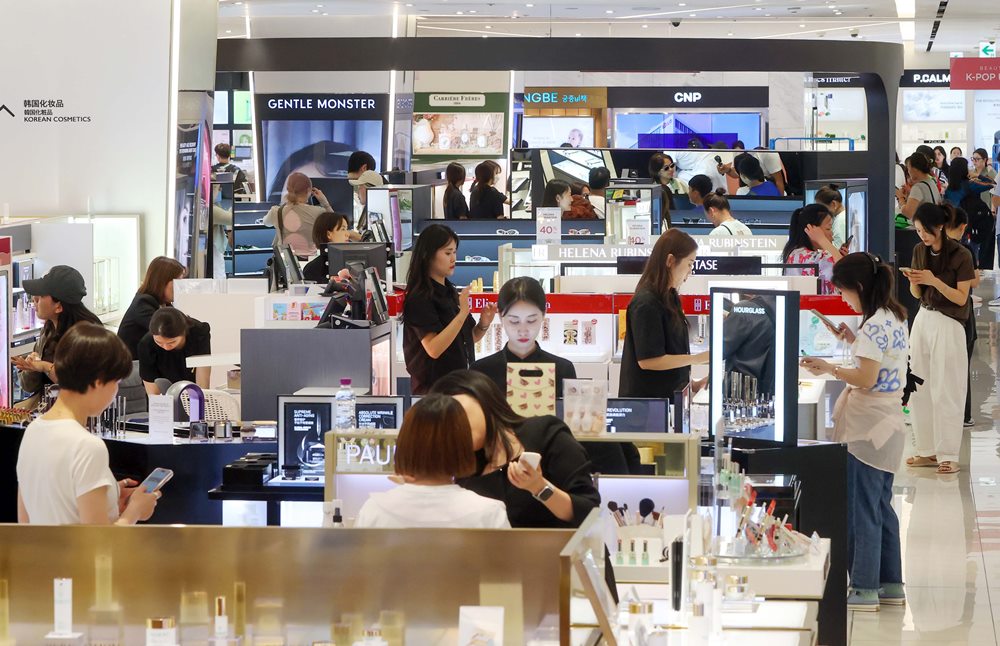
The company said, “We have observed some changes in purchasing behaviour, particularly among Korean travellers who are becoming more value-conscious and increasingly focused on promotional benefits when making purchasing decisions.

“At the same time, international visitors continue to view Korea as an attractive shopping destination. In particular, travellers from Japan, Southeast Asia and Europe are showing strong interest in luxury brands, beauty products and fashion items.

“To respond to evolving consumer behaviour, we are strengthening targeted promotions, enhancing loyalty benefits and expanding product categories that continue to demonstrate strong demand.”
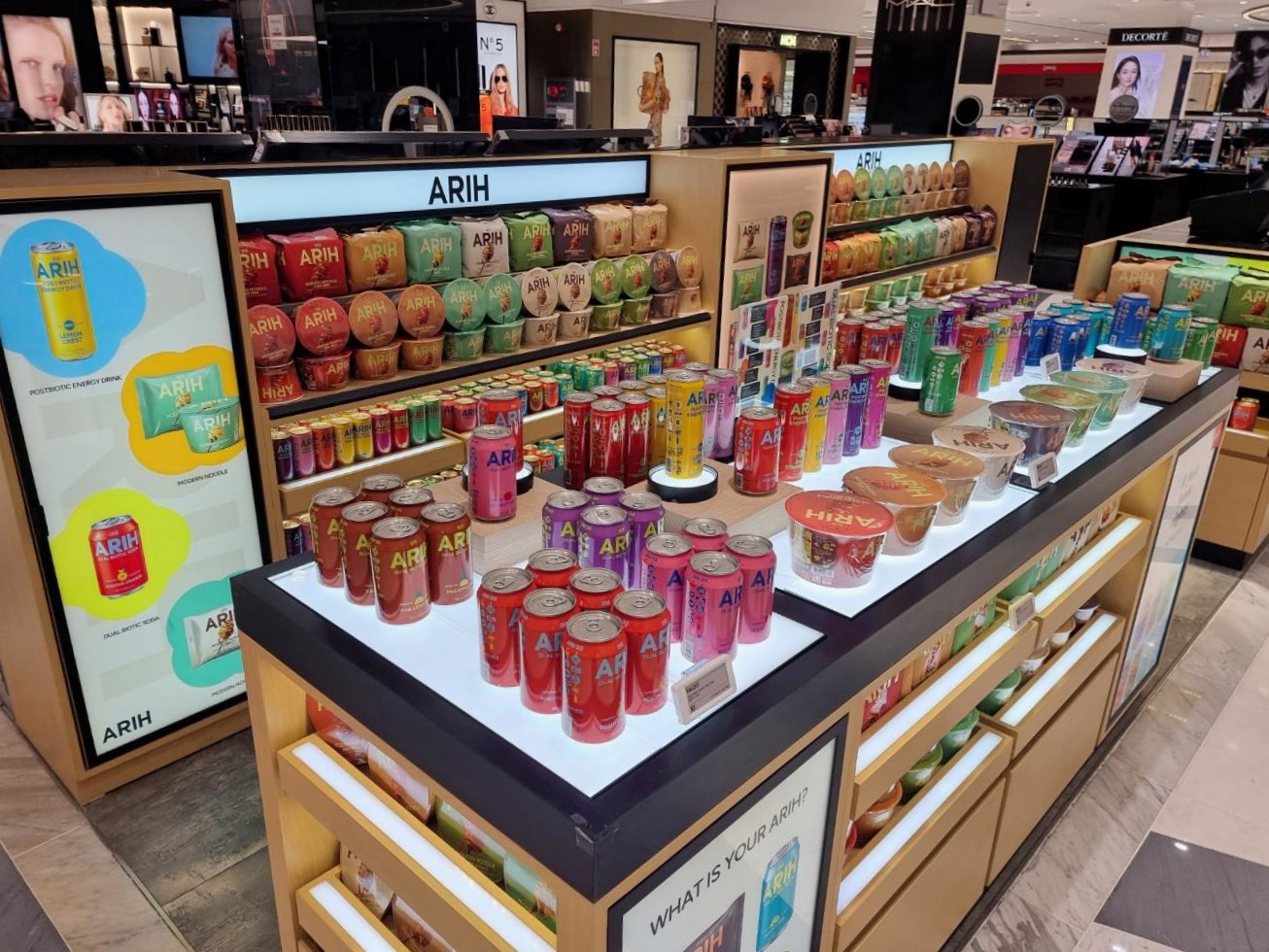
Lotte Duty Free is driving the K-food boom with exclusive travel retail distribution of BTS-backed Arih, tapping into K-pop star power and growing global appetite for K-food {Image: Lotte Duty Free}

Lotte Duty Free also pointed to similar purchasing patterns among domestic and international shoppers. The company said, “The weaker Korean Won has enhanced the attractiveness of shopping in Korea for international visitors, while purchasing behaviour has become more diversified beyond luxury goods and bulk purchases to include categories such as K-beauty, fashion and food products.

“On the other hand, domestic travellers have become increasingly price-sensitive as the stronger US Dollar raises the cost of overseas travel and spending. Consumers are therefore taking a more cautious approach when purchasing higher-priced products.”

Building buffers against the greenback’s strength

In response to a stronger US Dollar, Lotte Duty Free lowered its benchmark exchange rate to KRW1,450 per US Dollar in March and continues to closely track currency movements. This benchmark is used to convert Korean-made products purchased in Won into US Dollar selling prices.
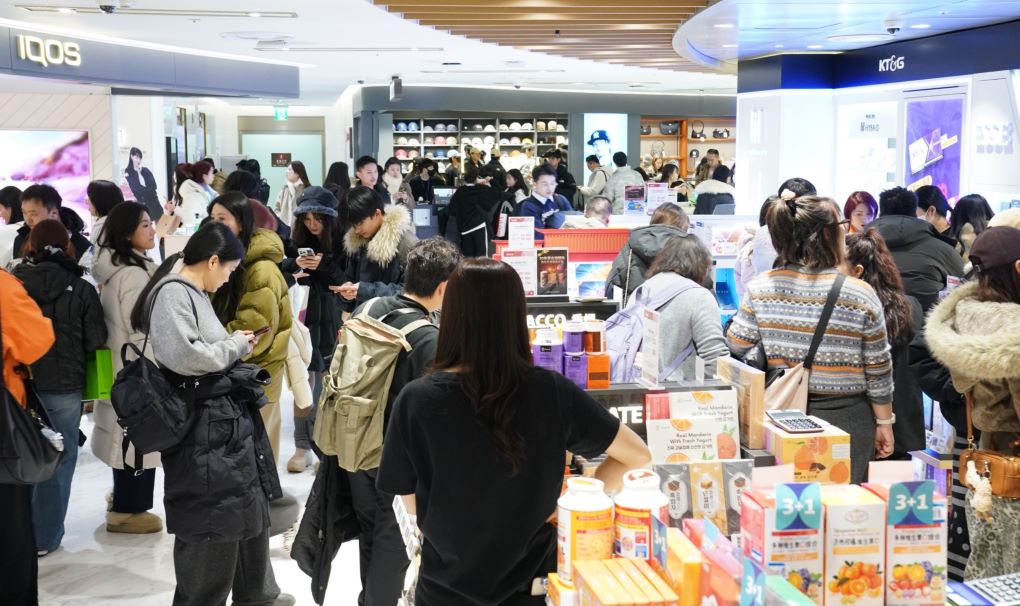
A bustling Lunar New Year period at Lotte Duty Free in February, supported by targeted campaigns for cruise tour groups and FITs, saw strong performances in the cosmetics and luxury categories, including handbags and watches

The retailer said, “Raising the benchmark exchange rate effectively lowers the US Dollar-denominated retail price, helping improve price competitiveness for customers. Industry estimates suggest a KRW50 increase in the benchmark exchange rate can reduce the effective selling price by approximately 3-4%.

“In addition, as higher exchange rates increase the financial burden on domestic travellers, we are operating exchange rate compensation promotions across all downtown stores.”

Shinsegae is adopting a multi-faceted strategy to sustain competitiveness amid exchange rate volatility.

The company said, “Rather than relying solely on price adjustments, we are strengthening customer value through various promotional programmes, including partnerships with card issuers, duty-free points benefits and targeted marketing campaigns.

“These initiatives help offset the perceived impact of currency movements and enhance overall value for travellers.

“At the same time, we continue to optimise inventory management and product assortment, focusing on categories with strong demand and differentiated appeal.

“Recent growth in fashion, luxury accessories and lifestyle technology products demonstrates travellers remain willing to spend on compelling products despite currency headwinds.”

Downtown growth strategy

Recent downtown duty-free sales reflected mixed market dynamics, with overall performance under pressure despite continued growth in customer numbers.

In April, foreign shoppers represented a whopping 86.8% of sales on a 44.5% share of the customer base.

However, sales to foreigners fell -10.7% year-on-year (+2.3% month-on-month) to KRW721,688,373,130 (US$472.7 million).
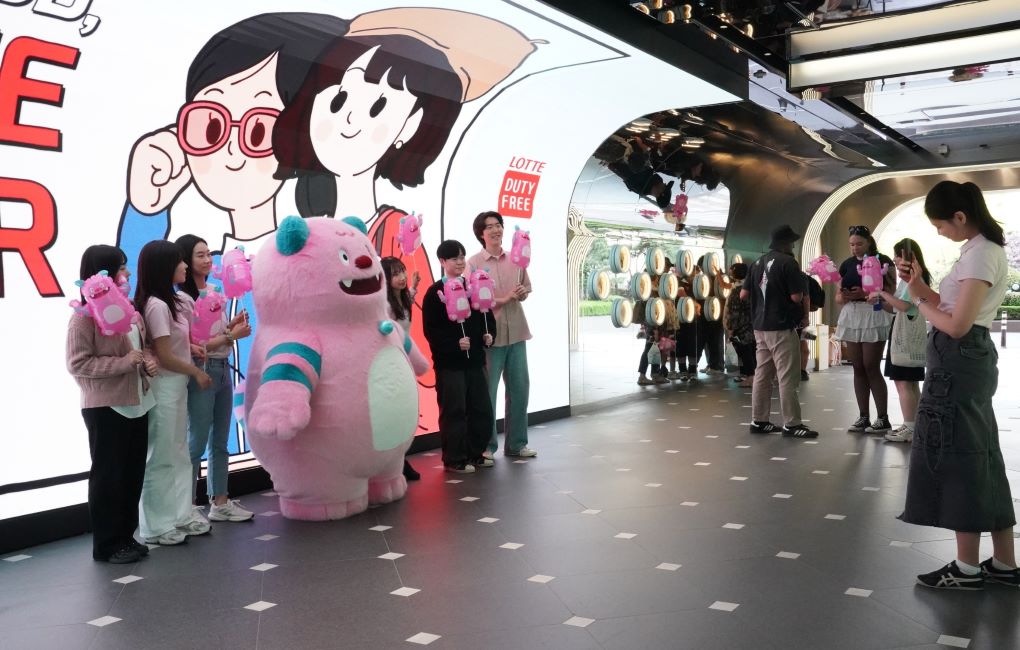
Lotte Duty Free has launched a campaign in collaboration with Seoul’s official mascot, Hechi, to strengthen K-culture marketing and enhance the company’s allure to international visitors

From the time of the THAAD crisis through the devastating COVID-19 pandemic, Korean travel retailers relied overwhelmingly on Chinese daigou resellers. That unofficial channel, though much-reduced by official crackdowns, reamins important but an ability to appeal to free independent travellers (FITs) will be critical to sustainable long-term growth in Korean duty free.

‘K-everything’ the key

Lotte Duty Free said, “Our downtown stores, led by the Myeong-dong main store, will continue to serve as a key hub for both FITs and group tourists visiting Korea by strengthening experiential content linked to K-culture.

“At the same time, we are focused on enhancing brand competitiveness to drive customer traffic and increase average spending per customer.

“We will continue expanding K-food, K-beauty and K-culture offerings while attracting more FIT customers and increasing in-store engagement, allowing us to sustain the growth momentum of our downtown business despite the strong US Dollar environment.”
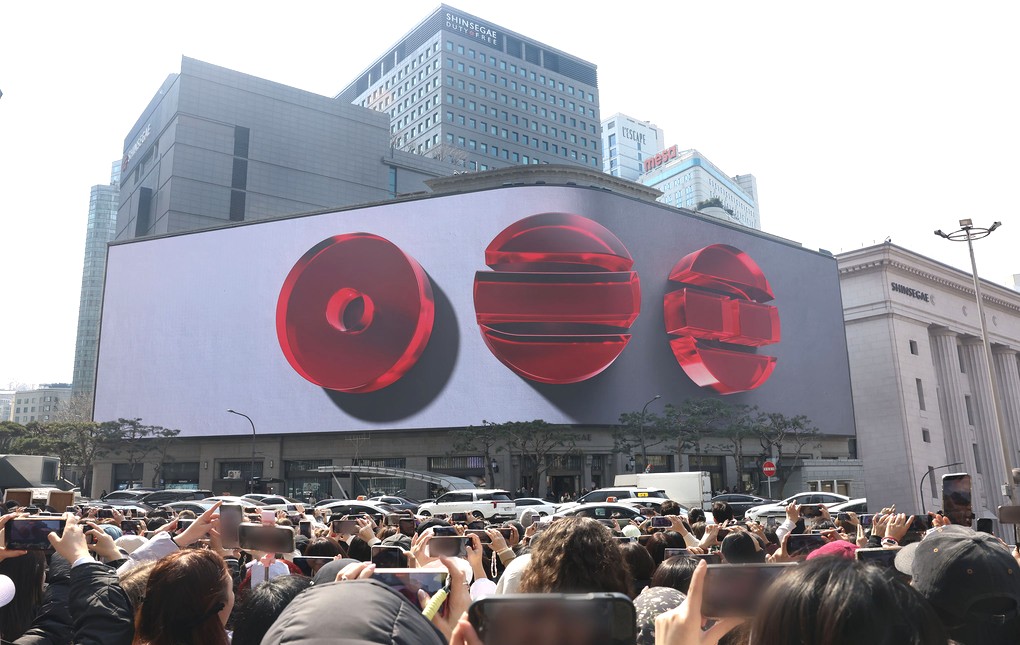
Foreign customer activity and sales at Shinsegae Duty Free’s Myeong-dong, Seoul store rose notably from 13 to 19 March, during peak tourist traffic linked to the BTS comeback concert. The broader Shinsegae Department Store complex also showcased a BTS commemorative video at Shinsegae Square.

Shinsegae Duty Free, meanwhile, said it is leveraging product differentiation, personalised promotions and a premium shopping environment to support continued growth amid the challenging currency environment.

The spokesperson said, “Our downtown business has benefitted from the recovery and diversification of inbound tourism, and we intend to build on that momentum through customer-focused experiences rather than competing solely on price.

“We are enhancing our merchandise offering with exclusive brands, new store concepts and emerging lifestyle categories that resonate with today’s travellers.

“We are also expanding marketing activities tailored to different nationalities and travel segments, reflecting the increasingly diverse visitor profile we are seeing at our downtown stores.”

A long history of pricing in US Dollars

With the Won-Dollar rate surging to the highest level since the 2009 global financial crisis, making US$-denominated Korean duty-free pricing increasingly unattractive, why do Korean travel retailers continue to price in the US currency?

A simple question perhaps but one that prompts a multi-faceted answer, writes Martin Moodie.

Long-established custom and practice forms part of the logic, as changing a 46-year-old system would involve regulatory complexities at every level.

Historical context is needed.

When one witnesses the sophistication of modern-day Korean society, the global surge in ‘K-Everything’ (title of the new CNN docuseries exploring how South Korea evolved into a cultural superpower across music, film, food, beauty and fashion) and the sheer economic might of the chaebols (conglomerates) that dominate Korean society, it is hard to believe the Republic was among the world’s poorest countries through the 1960s and 70s.

In fact, it was not until 1988 – the year of the Seoul Olympics – that the Republic officially graduated from developing-country status.

When the South Korean duty-free industry was officially established in January 1980 through the opening of the Lotte Duty Free store in Seoul’s Myeong-dong district, it was seen as a critical opportunity to accumulate foreign currency during the country’s nascent economic development.

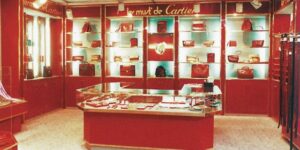
In February 1980 Lotte Duty Free unveiled its inugural luxury boutique. The Cartier opening would be followed by many other renowned international names, keen to tap the then Japanese-dominated group tour business. Today, several heavyweight luxury brands are increasingly sceptical about the value of downtown duty-free shops. {Photo: Lotte Duty Free}

At that time South Korea restricted – both legally and economically – the freedom of overseas travel for ordinary citizens. That meant most downtown duty-free shoppers were expatriates or Japanese tourists (the latter starved of premium and luxury goods at home due to a heavily protected local market).

Korean retailers bought and sold in the famed US greenback, a system that remains to this very day.

When Korean outbound travel was finally liberalised on 1 January 1989 (it had been strictly controlled until then to prevent ‘capital flight’ of hard currency, i.e. US Dollars), Korean downtown duty-free entered a period of explosive growth.

However, the now long-entrenched US Dollar pricing structure remained intact, anchored by customs codes, financial regulations and the greenback-based buying system.

Retailer tools to boost price competitiveness

Roll forward 37 years and is the Won-based retail pricing system fit for purpose? Based on the stricken state of the Korean currency, one could argue not, though exchange rates are by definition a ‘swings and roundabouts’ proposition.

Retailers have some tools at their disposal to ease the consumer (and their own) pain. As noted in our main article, Lotte Duty Free lowered its benchmark exchange rate to KRW1,450 to the US Dollar in March.

The retailer said: “Raising the benchmark exchange rate effectively lowers the US Dollar-denominated retail price, helping improve price competitiveness for customers. Industry estimates suggest a KRW50 increase in the benchmark exchange rate can reduce the effective selling price by approximately 3-4%.

“In addition, as higher exchange rates increase the financial burden on domestic travellers, we are operating exchange rate compensation promotions across all downtown stores.”

The Moodie Davitt Report asked two senior Korean airport and downtown executives if they saw any change in the system going forward.

“No,” replied one emphatically. “Duty-free retailers buy the products in US$ and Korea Customs Service requires retailers to post prices in the same currency.

“And duty-free retailers can provide counter measures in terms of high Dollar support to customers.”

But is that enough to stop the current haemorrhaging of the downtown duty-free business and the eroding allure of duty-free shopping to Korean nationals? Doubtful.

Another retailer commented: “Duty free was initiated by law 60 years ago to collect foreign currency when Korea was much poorer. Korea Customs Service regulations urges the retailer to set tag price in US$. Instead the retailers flexibly adjust discount rate to compromise exchange rate hikes.

“The recent sales downturn of duty-free retail, particularly at Incheon International Airport, stems mainly from a change of consumption culture and behaviour.

“Of course, the high exchange rate is also an influence. In 1997 [when the Republic faced economic collapse and avoided national bankruptcy by securing a US$58 billion bailout from the International Monetary Fund], the exchange rate was almost KRW2,000 to the US$.

“Korean duty-free retailers earned a lot of money from the hike in foreigners’ purchases.

“Today, as Korean travellers increase in numbers, the exchange rate negative impact is increasing. However, if the tag price currency changes to KRW, we have to change the tag price for every item every day.

“It is impossible. Korean currency is not that strong to be accepted by foreign people as having a steady exchange value.”

An unnamed Korean duty-free retail executive told Chosun Biz: “The exchange rate is a double-edged sword,” adding, “When the Won weakens, Korean products become relatively cheaper for foreign tourists, but Korean customers cut spending and demand for overseas travel can shrink.”

A double-edged sword, indeed. But for now – and perhaps some considerable time – Korean travel retailers are feeling the sharp edge of the blade.

{Sources: The past, present and future of the South Korean duty-free industry – Allen Hong for The Moodie Davitt Report; Surging Won-Dollar rate tests South Korea duty-free rebound – Chosun Biz; Industry sources}

Food & Beverage The Magazine eZine