


UK. Global architecture and design firm Gensler has extended its retail design collaboration with Manchester Airports Group (MAG).
The agreement builds on a three-year retail planning and interior design project for the expansion of London Stansted Airport, as MAG builds towards serving more than 43 million passengers annually.
Gensler’s appointment will now see it support MAG’s wider airports portfolio, including Manchester Airport and East Midlands Airport, and continue its work at Stansted, as the operator continues to evolve its commercial offer.
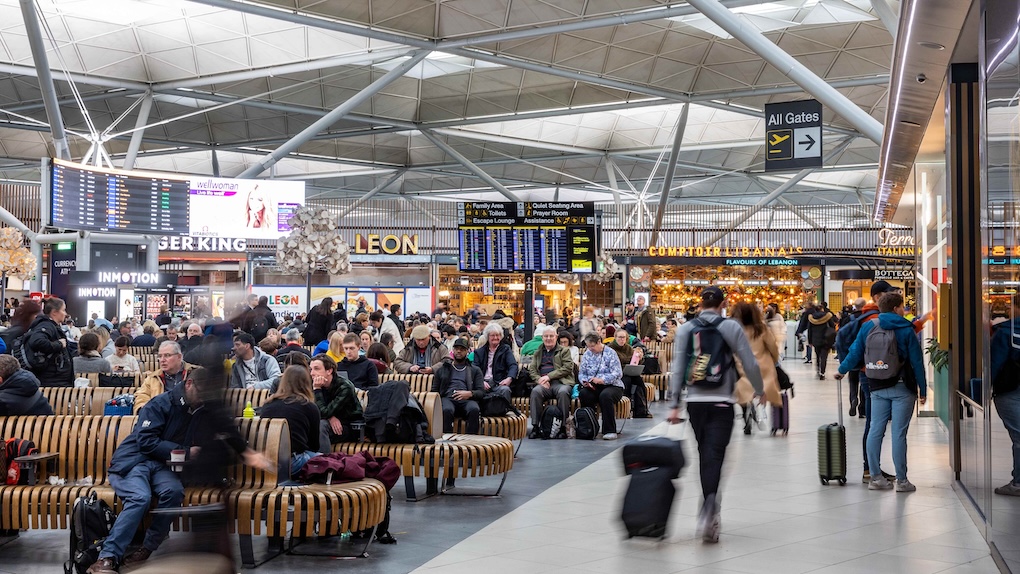
Under the five-year contract, Gensler will deliver retail design and management services spanning shell and core through to fully fitted-out environments.
The role will involve close collaboration with MAG project teams and stakeholders to create retail units aligned with changing tenant requirements while optimising operational performance and long-term value creation.
Gensler Regional Aviation Practice Leader Isabella Leone said: “Retail spaces today must work harder than ever, combining operational efficiency with strong brand experiences.
“We’re pleased to support the delivery of environments that help maximise non-aero revenue streams for the airports and create engaging destinations for customers.”

Performa X – data-assisted design
Gensler’s contract win follows continued momentum in its aviation practice, highlighted by the March launch of its PerformaX tool, which reflects a broader shift towards data-assisted design in airport environments.
The approach uses behavioural modelling, including heatmapping and agent-based simulations, to analyse how passengers move, dwell and interact with retail and terminal spaces, enabling designers and airport operators to test and refine layouts before construction.
This methodology has already been applied at Stansted, where PerformaX has been used to assess visibility, sightlines and dwell patterns as part of the airport’s long-term growth strategy.
Insights from the modelling have informed design decisions aimed at improving wayfinding, reducing stress points and increasing exposure to retail, while supporting a more intuitive passenger journey.
The tool also enables designers to map emotional states alongside physical movement, structuring terminal environments around different passenger needs – from calm, dwell-focused areas to more dynamic retail and discovery zones.
According to Gensler, the result is a more integrated approach to commercial planning, where passenger experience and revenue performance are increasingly developed in tandem. ✈