“This is not a wait-and-see moment. Before long, nearly all retailers will have to grapple with the fact that a significant percentage of their customers will not be human users but rather AI agents. The challenge will be to get out in front of it now, before your rivals do.”
This warning comes from McKinsey, who project that agentic commerce could generate between US$3 trillion and US$5 trillion in global retail revenue by 2030, in what many see as the most transformative evolution in retail since the emergence of ecommerce, writes Fred Spratt*.
This is not a distant prospect. AI assistants are already driving significant purchasing behaviour, with a recent Morgan Stanley survey showing that 40% of monthly ChatGPT users in the USA have made a purchase based on an AI recommendation.
Now, as then, those who are slow to adapt are liable to be left behind and travel retail will be no exception. Agentic commerce brings huge opportunities but also asks major commercial questions that could reshape entire business models and need to be planned for now.
A new way of shopping
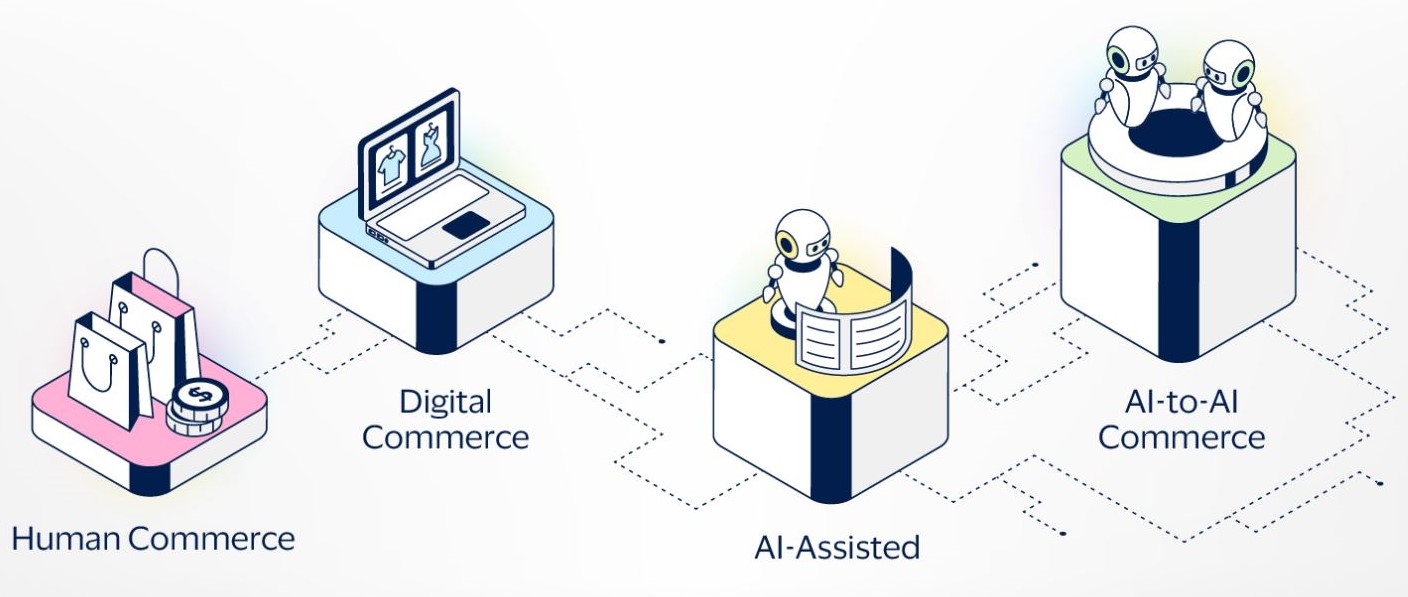
What exactly is agentic commerce? In simple terms, it is where AI agents act as end-to-end personal shopping assistants, including making purchases on your behalf.
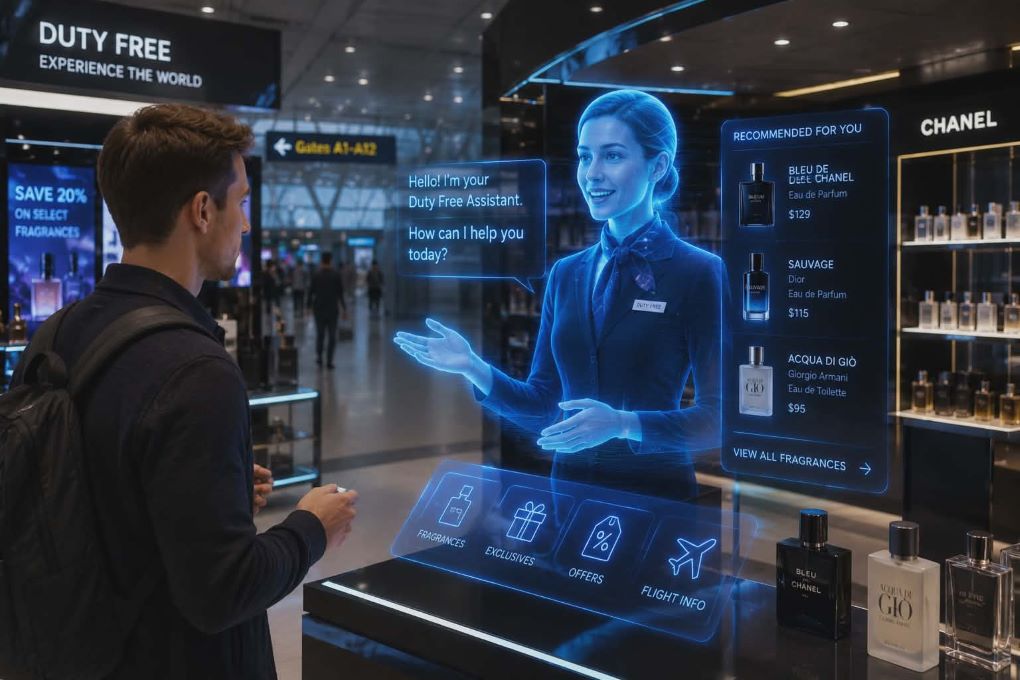
Currently, a traveller might ask ChatGPT which perfume to buy at the airport and will be given some recommendations. With agentic commerce, their AI agent will find the best option, compare prices, apply loyalty points and complete the purchase, even before the traveller reaches the airport.
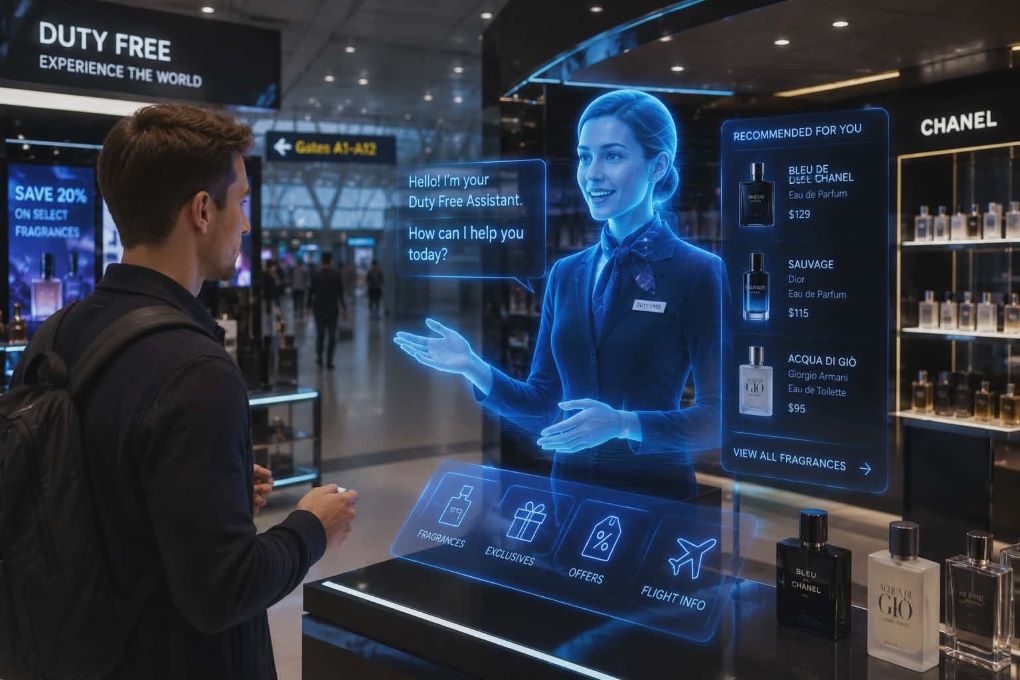
This brings not just change but opportunity. AI assistants connected to our diaries and familiar with our preferences can detect shopper intent early. In a travel context, the assistant may see a flight booking in your calendar and start suggesting purchases well ahead of your trip.
This could be significant and incremental, with a recent US consumer survey by Visa showing “nearly 40% of Americans have made a purchase they normally would not have considered as a result of using an AI agent or tool”.
For retailers and brands, one immediate consequence is that the customer may no longer be human but an AI agent acting on their behalf. This means, as a foundational step, ensuring that their digital presence and ecommerce platforms are optimised for AI agents to read, research, compare and transact.
Getting this right is a major undertaking in itself, but it is only the tip of the iceberg.
The shift to an agentic model brings practical implications that touch every part of the existing travel retail business model. These pose fundamental commercial and operational questions – including ones around pricing, margins, supply chain and even the role of the physical store itself – that landlords, retailers and brands alike need to be solving now.
Pricing competition will be unprecedented
Among the many tasks an AI agent will perform is finding the best available price. This means directly pitching airport retailers against each other as well as domestic retailers, potentially both in the shopper’s home country and where they are travelling to.

Price checking is not new in travel retail – apps such as Jessica’s Secret are well established for those who actively seek the best deal. However, with agentic, this comparison happens automatically. Combined with the global adoption of AI and its unprecedented processing capabilities, this takes retailer price competition to a new level.
With pricing already under pressure, brands and retailers will need to find creative solutions to avoid a race to the bottom and protect their margins. Several options exist, including established practices such as retailer-exclusive products and value-added services, notably gift personalisation.
There are also new possibilities that AI provides, such as proposing tailored, cross-category bundle deals that other retailers may not be able to offer.
Each approach brings its own complexities, requiring close collaboration between retailers and brands on everything from exclusive product pipelines to promotional guidelines and funding mechanics. All of this needs to be worked through.
Operational changes
One of agentic commerce’s biggest upsides is the increased opportunity to sell to the shopper no matter where they are, be it inside or outside of the airport and, often, some time ahead of their trip. These orders could then be picked up in store, at the gate or even home-delivered.
Pre-ordering is, of course, nothing new to travel retail but, again, the scale of AI adoption may significantly increase this channel.
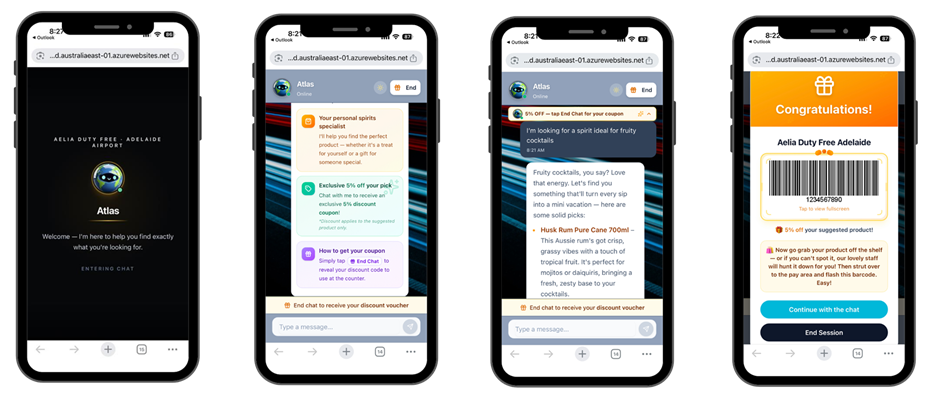
In a market primarily structured for in-person sales, this raises important questions around how orders will be fulfilled and may require substantial changes to supply operations inside and outside the airport.
How much change will, in part, be driven by how big the pre-order business becomes, but even small adjustments in route-to-market are often deeply complex. Whether delivering to gate or to home, there are logistical challenges to solve with knock-on effects for warehousing, inventory levels, working capital and payment terms.
The future role of the store
These questions lead to perhaps the biggest one of all: in an agentic era, what becomes the role of the physical store?
The answer will largely depend on where agentic commerce lands on the spectrum between cannibalisation and incrementality. If the majority of agentic transactions are additional to those made in person, the store continues to thrive alongside a new channel.
However, in the more extreme scenarios, where agentic commerce absorbs a significant share of in-store sales, footfall may drop materially and the economics of the physical store come under serious pressure. That poses fundamental questions for landlords, retailers and brands alike.
Even in the most disruptive scenario, there will likely always be a role for a physical store, namely to do what an AI agent cannot. But what kind of store? There is a range of possibilities, each with diverse practical and financial consequences.

At one end, stores could evolve into streamlined, transactional environments optimised for impulse and last-minute purchases. At the other, stores could become primarily experiential spaces: brand showrooms offering immersive shopper experiences.
Both imply very different store designs, ranges and investment levels from brands and retailers.
Between these two poles sit numerous other scenarios, each with their own implications. As agentic continues to develop at pace, all stakeholders need to be agile to adapt to the shifting landscape.
The time to act is now
This article only scratches the surface of a small selection of the commercial questions that agentic commerce will raise for travel retail.
In some ways, these challenges are not new – the industry has grappled with issues such as price comparisons and ecommerce before. But the staggering speed and scale at which AI and agentic technology is developing means these pressures will scale up to unprecedented levels.
Whether as a landlord, a retailer or a brand, the window to prepare is narrowing. There are significant opportunities to be captured by those who are alive to the shifting dynamics and prepare for multiple scenarios.
In a rapidly changing landscape, waiting for clarity before acting may be tempting. History has shown us that this is often a costly strategy. ✈
*Fred Spratt is an independent commercial strategy consultant with a specialist focus on preparing global travel retail for the AI transformation. He spent ten years with Bacardi from December 2013, much of it involved with travel retail.