


Haribo is heading to next week’s TFWA Exhibition in Cannes (Bay Village 39) with its 2027 strategy, spanning new product innovation, shopper insights, engagement initiatives and packaging developments.
The strategy comes as the confectionery sector continues to navigate disruption from prolonged regional conflicts and global economic headwinds. Haribo’s response is centred on three pillars: recovery, execution and sustainability, designed to support its next phase of growth.
The focus comes as Haribo works to consolidate a series of recent product launches and adapt to changing packaging regulations in Europe, its largest market. Its latest shopper research will further shape the strategy, with the findings to be presented to industry partners in Cannes.
Driving recovery and growth
A key element of Haribo’s strategy is rebuilding the business through more effective route-to-market operations, faster logistics and improved product availability at the point-of-sale, helping address ongoing challenges across the category.
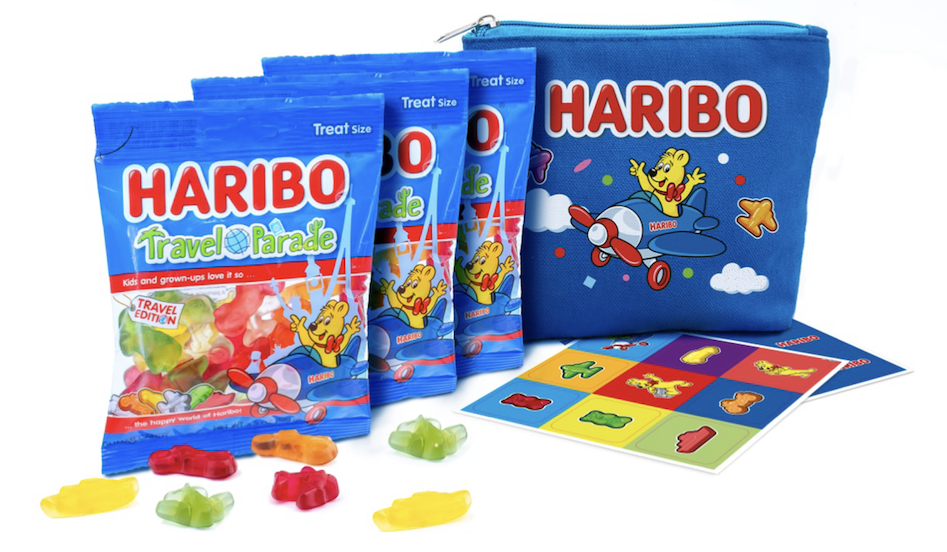
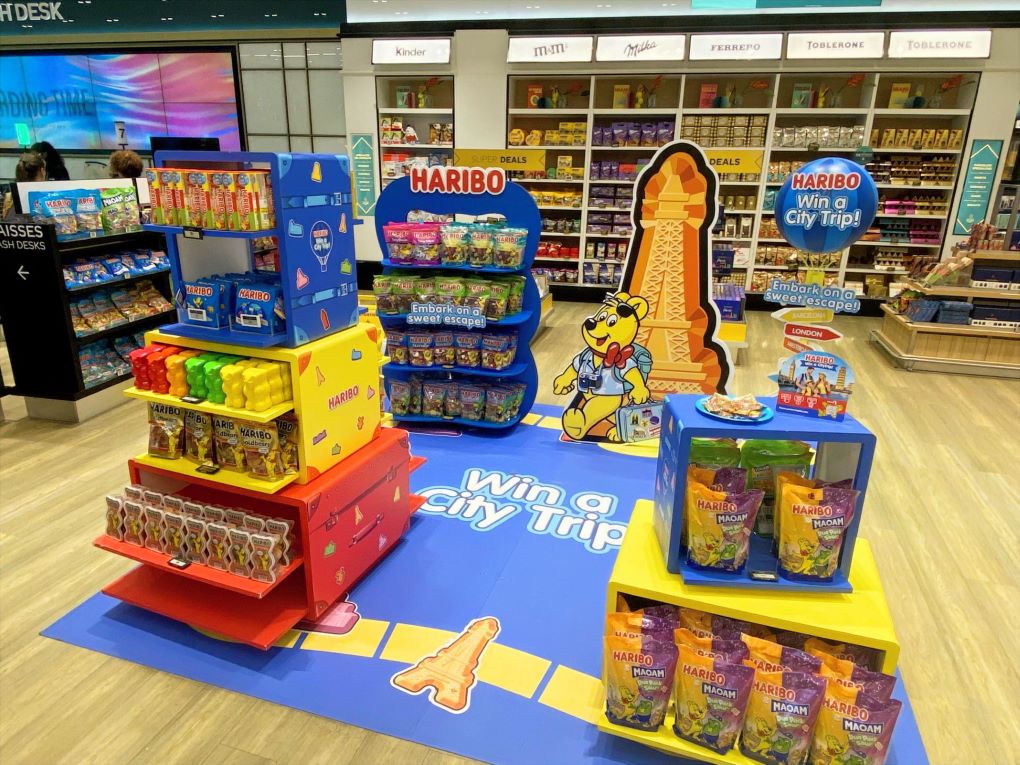
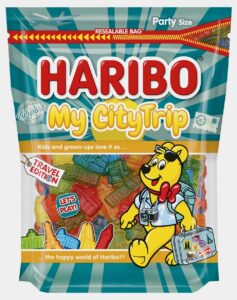
Innovation is another strategic priority. Haribo has rolled out 15 new SKUs across travel retail over the past three years, including four ‘in-and-out’ and seasonal products, two sense-of-place ranges, one gifting product and multiple sharing novelties.
Haribo Director Marketing and Trade Marketing Travel Retail Elisa Fontana said, “It’s been a lot of intensive work, and it’s a great satisfaction when a buyer tells you it’s annoying that our novelties are so interesting they can’t sacrifice one for another.
“A core reality is that the store shelves are not elastic, and we need to give the market time to execute what we’ve developed and make sure every NPD gets the right share of space, distribution and visibility.
“Meanwhile, we’re continuing to build our campaign to increase shopper engagement, discovery and sense of place. For the mid-term, we’re still looking at products that create excitement, uniqueness and exclusivity.”
Understanding today’s shoppers
 Gifting is becoming less of a purchase priority among travellers, with snacking and self-consumption now emerging as the main drivers, according to Haribo’s latest shopper research and industry data from m1nd-set’s Mapping the 10-Year Evolution of the Global Duty Free Shopper – Part 1 (August 2026).
Haribo’s research shows gifting playing a smaller role in the purchase journey, cited by 15% of respondents as a purchase motivation and 10% as a reason to visit a store.
Personal consumption, by comparison, is increasingly shaping the purchase journey, spanning everything from on-the-go snacking to immediate consumption and sharing with travel companions, particularly among Gen Z.
The findings also identify Haribo as the most preferred brand for sharing, supporting strong performance across its party-size formats, while smaller pouches continue to serve impulse and self-consumption occasions.
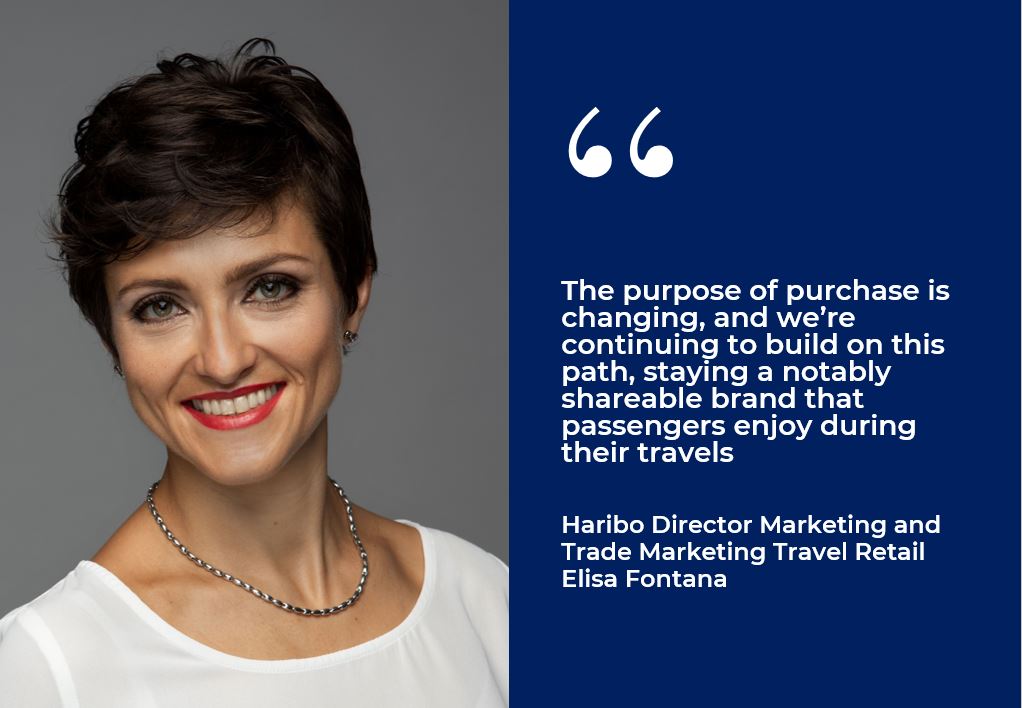
Fontana added, “The purpose of purchase is changing, and we’re continuing to build on this path, staying a notably shareable brand that passengers enjoy during their travels.
“So consolidation, monitoring of execution, gap analysis and crisis recovery wherever possible are our priority short-term strategies.
“We look forward to meeting friends and colleagues in Cannes and plan wider and deeper sharing of our research findings with our industry partners.”
Preparing for packaging reform
Haribo is also preparing a new packaging roll-out in response to the requirements of the EU’s Packaging and Packaging Waste Regulation.
With almost every industry facing changes under the regulation, the first requirements began taking effect in August, with additional measures set to be introduced across the region through to 2040.
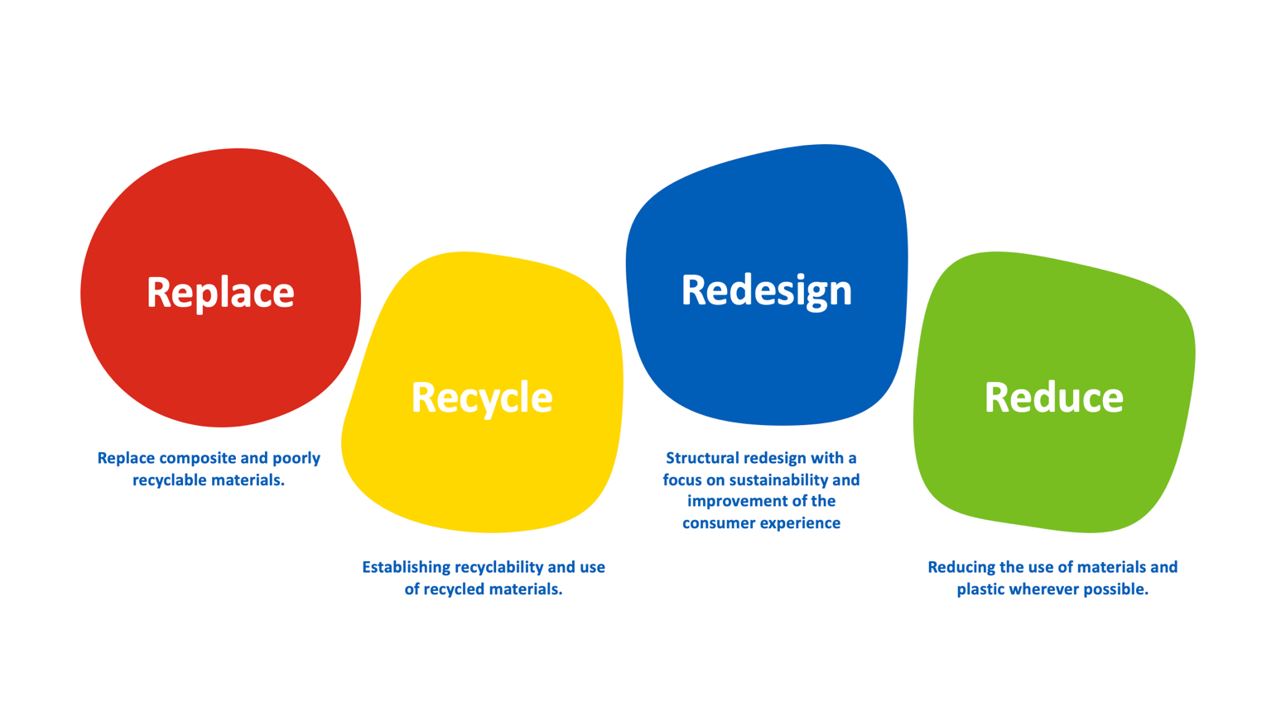
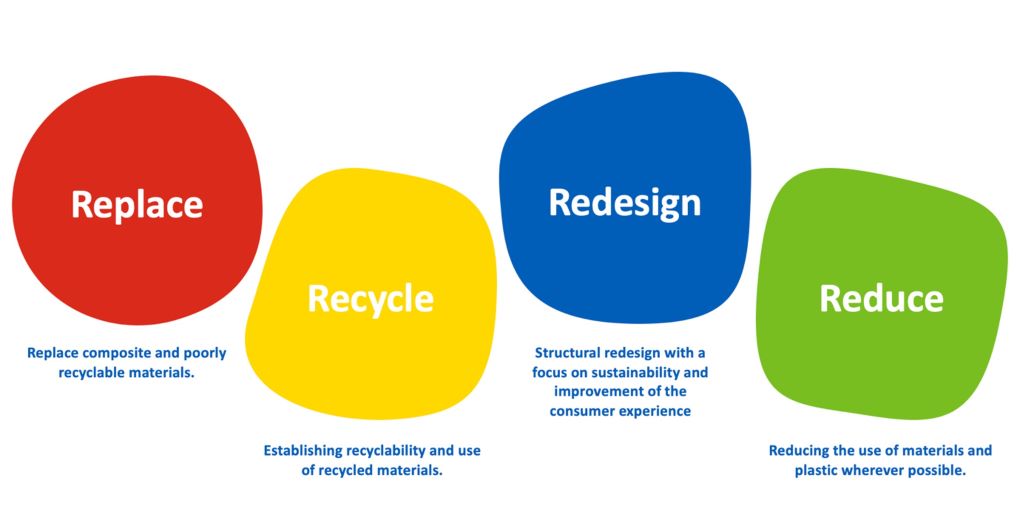
Haribo is responding by redesigning its primary and secondary packaging around a four-part framework:
- Replace – phasing out composite and poorly recyclable materials
- Recycle – building in recyclability and the use of recycled content
- Redesign – structural changes that prioritise sustainability while improving the consumer experience
- Reduce – cutting material and plastic use wherever possible
Together, the measures aim to use less packaging, reduce waste and improve recyclability across the brand’s travel retail portfolio. ✈